
It starts with a friendly message — a charming profile, rare listening, daily attentions — and ends months later with drained savings and a double penalty: lost money AND love that never existed. Romantic scams are the cruelest digital fraud — some of the heaviest damages, victims of all ages and backgrounds, and a taboo that protects scammers: shame. Understanding it to protect yourself, recognizing it in a loved one, and knowing how to help without judging — a guide on a subject that deserves better than mockery.
The mechanism: professional manipulation, not naivety
Let’s destroy the founding myth (“you have to be gullible”): romantic scams are an industry — organized teams, tested scripts, dozens of victims led in parallel — exploiting universal psychological mechanisms: the affective bombardment (constant attention, messages from morning to night, a relationship that develops QUICKLY and intensely — emotional dependence is built methodically), the soft isolation (“others wouldn’t understand our story” — the relationship kept secret, cut off from outside looks that would see through it), the perfect mirror (the profile matches your tastes, values, and wounds — gathered in conversation and from your networks: the soulmate is custom-made), and the inaccessibility scenario (military on a mission, engineer on a platform, humanitarian doctor, widowed expat — professions that explain EVERYTHING: the distance, the impossibility of meeting, strange hours, and soon the need for money); THEN the money — never upfront: after weeks or months of emotional investment, the first emergency (small — the package stuck in customs, the broken phone), a test that commits (“who gives once will give again”), then the escalation (the accident, the blocked inheritance, the plane ticket to FINALLY meet — a meeting that always fails at the last moment, restarting the cycle): the victim doesn’t finance a stranger — they “help the love of their life”: that’s the cruelty, and the effectiveness.
Scammers don’t just trick people by chance. They use carefully planned steps: making you feel loved quickly, cutting you off from friends, pretending to be your perfect match, and then asking for money in a way that feels urgent. It’s not about being stupid—it’s about being manipulated by professionals.
A 60-year-old woman in France met a man online who claimed to be a British engineer working in Nigeria. After three months of daily messages, he asked for €5,000 to pay for a visa to visit her. She sent the money, but the meeting never happened. The scammer then asked for more for “customs fees.” By the time she realized, she had lost €15,000.

The signals that (almost) never deceive
The detection grid — for yourself and for loved ones: the impossible meeting — THE cardinal signal: weeks of intense relationship without EVER a spontaneous video call or meeting (endless excuses: the connection, the mission, the broken camera — and now short, blurry video calls possibly faked: our deepfake guides): a relationship that can’t be seen or shown isn’t a relationship — it’s a script; the abnormal pace — immediate intensity (“I’ve never felt this” at day +10), declarations before any meeting, life plans by week 3; the inconsistencies — the fluctuating French, the slipping details (children’s ages, the city), the too-perfect photos (the reverse image search — our guides — unmask stolen photos in thirty seconds: THE number one technical reflex, to do from the first exchanges), the time difference that doesn’t match the story; the request for discretion and the denigration of your “jealous” loved ones; and the money in all its forms — the bank transfer, gift cards, cryptocurrencies, the package to receive (which makes you a mule — see the box), or the “joint investment” (the sentimental-financial hybrid on the rise: the trading platform “he uses” — our investment scam guides: the perfect scammer couple): ANY request for money from a person never met in person is the absolute alarm — without exception, no matter the story.
The right reflex. Establish the three-proof test before any serious online attachment — legitimate, polite, non-negotiable: the spontaneous video call (offered by YOU, now or at a time YOU choose — not a scheduled slot: a real human accepts, the script collapses), the photo with instructions (the selfie with a specific gesture requested on the spot — impossible with stolen photos), and the reverse image search of the profile’s photos. A sincere person passes all three with a smile — and understands the caution (they share it: it’s even an excellent first topic for real conversation). Who avoids all of them has already answered you.
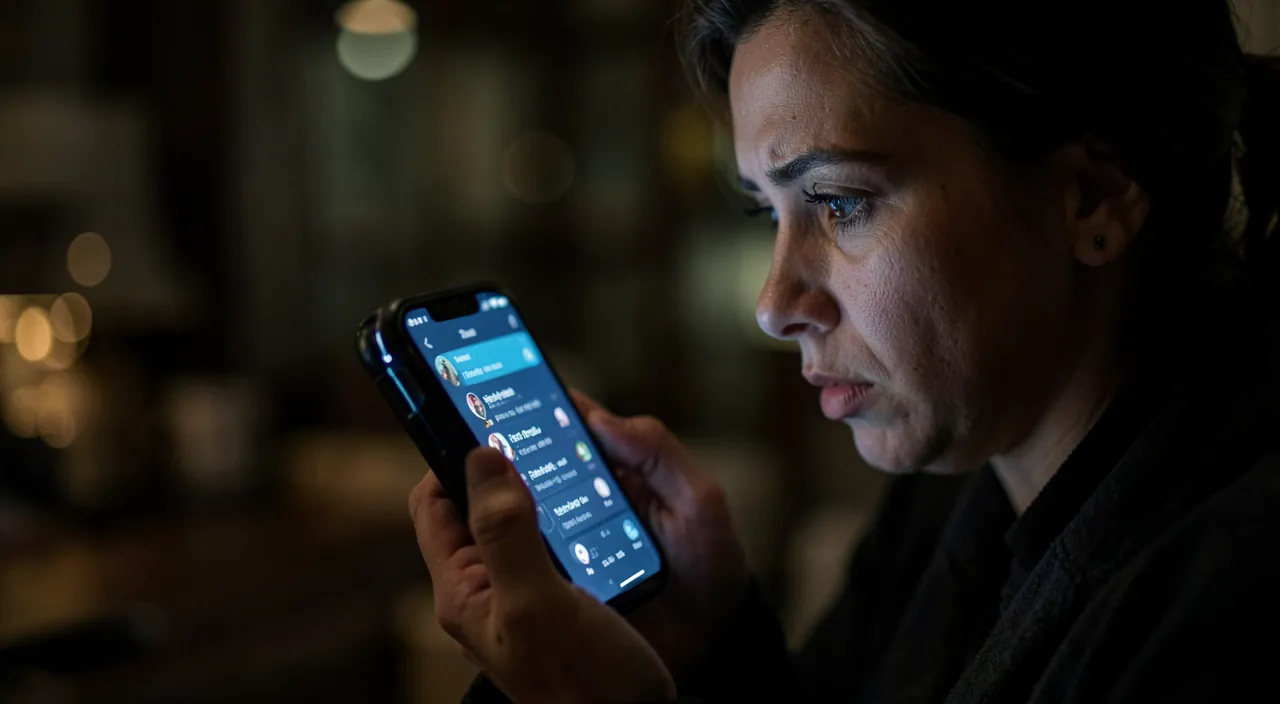
Helping a loved one caught in the web: the delicate art
The most frequent — and hardest — case: it’s not YOU, it’s your mother, your brother, your friend — and the frontal confrontation (“it’s a scam, wake up!”) almost always fails (the victim, emotionally invested and worked against their “jealous” entourage, chooses the scammer — the isolation strengthens): the method that works: maintain the connection above all (keep the door open, don’t mock, don’t set ultimatums — on the day of doubt, they must be able to turn to you); question without accusing (open-ended questions that make them think: “have you video-called? what’s stopping the meeting? do you find that normal?” — doubt that comes from THEMSELVES is the only one that sticks); bring neutral facts (the reverse image search done TOGETHER “just to check, you never know,” an article about a similar case — “it reminded me of you, what do you think?”); alert the bank if transfers are leaving (the bank can slow down, question, report — and your documented report helps even without the victim’s consent for protectable adults); and prepare for after — when the bubble bursts, the victim faces the loss, the shame AND the grief of a relationship that was real FOR THEM: the welcome without “I told you so,” the support with the steps (see below), and attention to distress (psychological consequences are serious — professional help is offered): you don’t save someone BY force — you stay there, factual and loving, until doubt sets in.
After the fact: the steps that matter (and measured hope)
Getting out of a scam, in concrete steps: cut clean — block everywhere (the exposed scammer recycles: threats, blackmail with intimate conversations — our sextortion guides: you never pay —, or the “second scam” of the fake investigator offering to recover funds for a fee: the same scammer, or a colleague, exploiting the victim file — ANY promise of paid recovery is a scam squared); document — conversations, profiles, transfer references captured BEFORE blocking (the file does the rest); the bank — immediate report, attempt to recall recent transfers (rarely successful but never useless — speed matters), contest what can be; the complaint — systematic (the damage always justifies it: it feeds investigations — these networks fall regularly — and conditions possible compensation), with the official reporting platform as a complement; the platforms — the profile reported (dating sites and networks delete and sometimes warn other victims); and the rebuilding — reconnected entourage, psychological help if needed, and the story transformed, when strength returns, into a vaccine for others (victims who testify — anonymously if necessary — are the best prevention that exists: shame changing sides). Honest hope: money rarely comes back in full — dignity, however, is fully recovered: being manipulated by professionals has never been a fault.
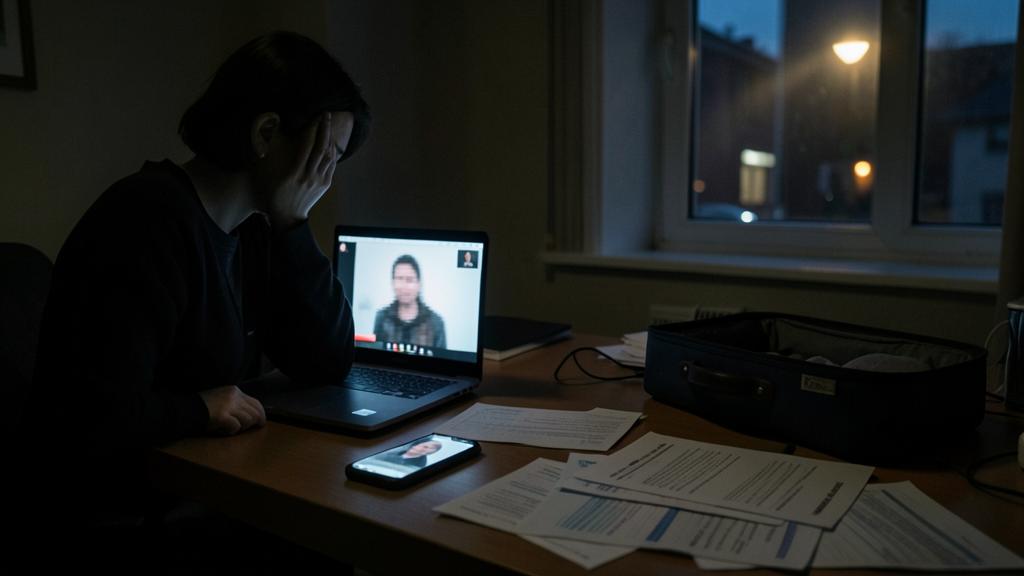

Warning: the victim can become an accomplice without knowing it. Two legal pitfalls to know absolutely: the financial mule — “receive this transfer and send it back, it’s to unlock my bonus”: the money passing through your account is from OTHER victims — you’re now a link in money laundering (closed accounts, possible prosecutions — even in good faith, the trouble is real); and the package mule (receiving and resending packages — potential receiving). The absolute rule therefore expands: you don’t SEND money to a stranger never met — and you don’t RECEIVE it either, you don’t transfer funds or packages, no matter the love story wrapping it. If it’s already done: the bank and the complaint as soon as possible — the spontaneous step protects, silence worsens.
Frequent questions
Do serious dating sites protect against these scams?
They moderate (verified profiles, detection, reports — use them) but no filter stops a motivated scammer — and the scam quickly migrates OFF the platform (“let’s continue on WhatsApp”: the early shift away from the moderated site is in itself a small signal). Protection remains behavioral: the three proofs, never money — on all sites, and also on social networks and online games, where the approach is increasingly happening (the first charming message from a stranger follows the same rules everywhere).

How to approach the subject with an isolated parent WITHOUT offending or spying?
In general prevention, not suspicion: the shared article (“we were talking about it, it’s crazy these stories”), the story of a case, the three proofs presented as THE modern norm for online dating (“everyone does this now”) — and the underlying message, warm: “if you meet someone, I’ll be happy — introduce them to me quickly.” Loneliness is the breeding ground for scams: the maintained family bond is the deepest prevention there is.
A real long-distance relationship also exists: how not to become paranoid?
The line is clear and reassuring: the real person SHOWS THEMSELVES (spontaneous video call, natural proofs, meetings that eventually happen) and NEVER asks for money — the two criteria cut everything, without judging distance or the speed of feelings. Caution isn’t closure: it’s what allows you to open up safely — beautiful online stories exist, and they all pass the three-proof test laughing.
What to remember
Romantic scams are a manipulation industry — affective bombardment, perfect mirror, isolation, inaccessibility scenario, then the escalation of “emergencies” — and not a story of naivety: they’re outsmarted by simple rules held absolutely — the three proofs (spontaneous video call, photo with instructions, reverse image search) before any serious attachment, and never money in any form (neither sent, nor received, nor transferred — the mule is a legal trap) with a person never met in person. For loved ones caught in the web: the maintained connection, questions rather than accusations, neutral facts, the bank alerted — and the welcome without triumph the day the bubble bursts, followed by the steps (block, document, bank, complaint, reports — and absolute mistrust of “funds recoverers”). Shame is the number one accomplice of these networks: every open conversation, every testimony makes it change sides — this one understood, around you.
Concerned about your security, an app to check or clean? Our assistance service guides you step by step.
Leave a Reply
You must be logged in to post a comment.