
The wedding where you have to say a few words, the farewell party, grandma’s 80th birthday, the toast that freezes the table in anticipation: speaking in public is anxiety-inducing, and the blank page of the speech to write is even more so. AI becomes a fantastic writing partner—not to write A TEXT FOR YOU that is generic and cold, but to help you structure your memories, find the right tone, and transform your material into a speech that moves. Here’s how to write the speech people will remember—while keeping your voice and your heart.
The first trap to avoid: the generated speech
Let’s set the rule that governs everything: a good speech is valuable for what it has of PERSONAL—true anecdotes, details only you know, genuine emotion. “Write me a wedding speech” produces perfect, forgettable generic content (clichéd phrases, overused metaphors—the table smells like copy-paste): no one is moved by a text that could belong to anyone. The right division of labor: you provide the MATERIAL (memories, anecdotes, what the person means to you, the trait that defines them) and the EMOTION; AI helps with the WORKSHOP—structuring the chaos of your ideas, finding a hook, balancing humor and emotion, tightening the length, suggesting a closing. AI is the co-screenwriter who shapes your experience—never the author who invents a life it doesn’t know. The speech that will make the audience laugh or cry is yours: AI just helps it come out.
The method: from mess to a speech that moves
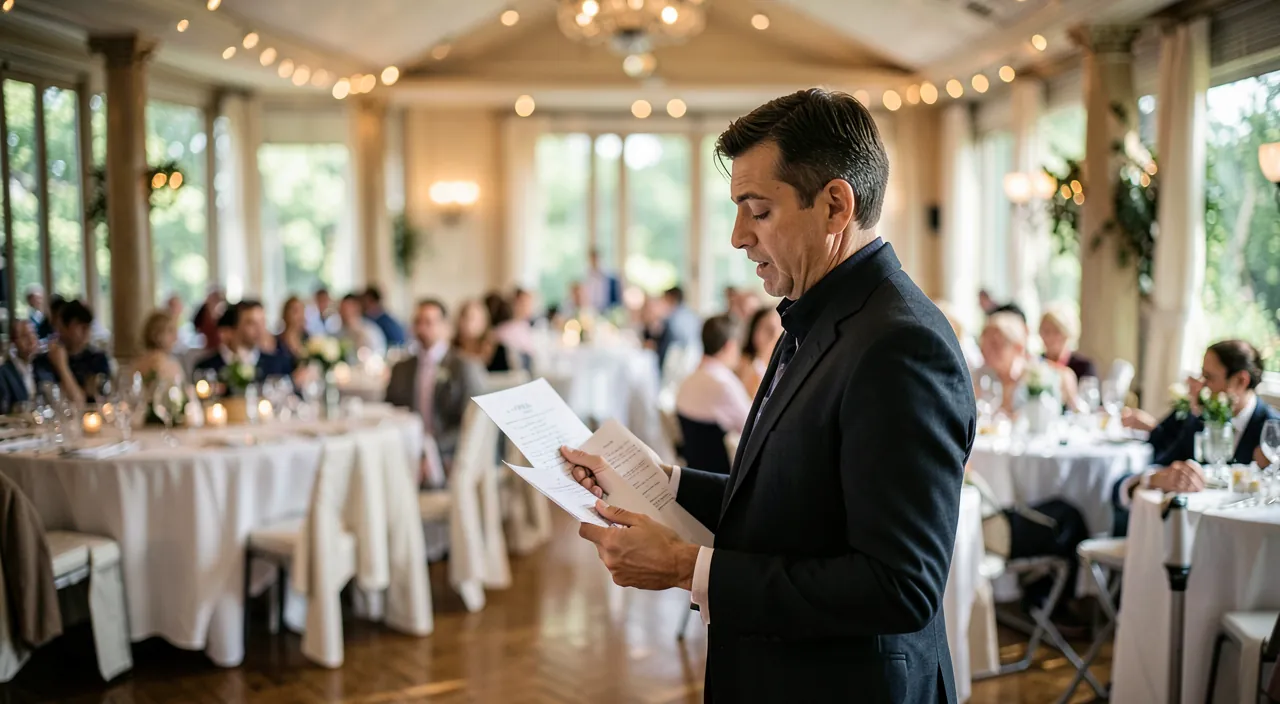
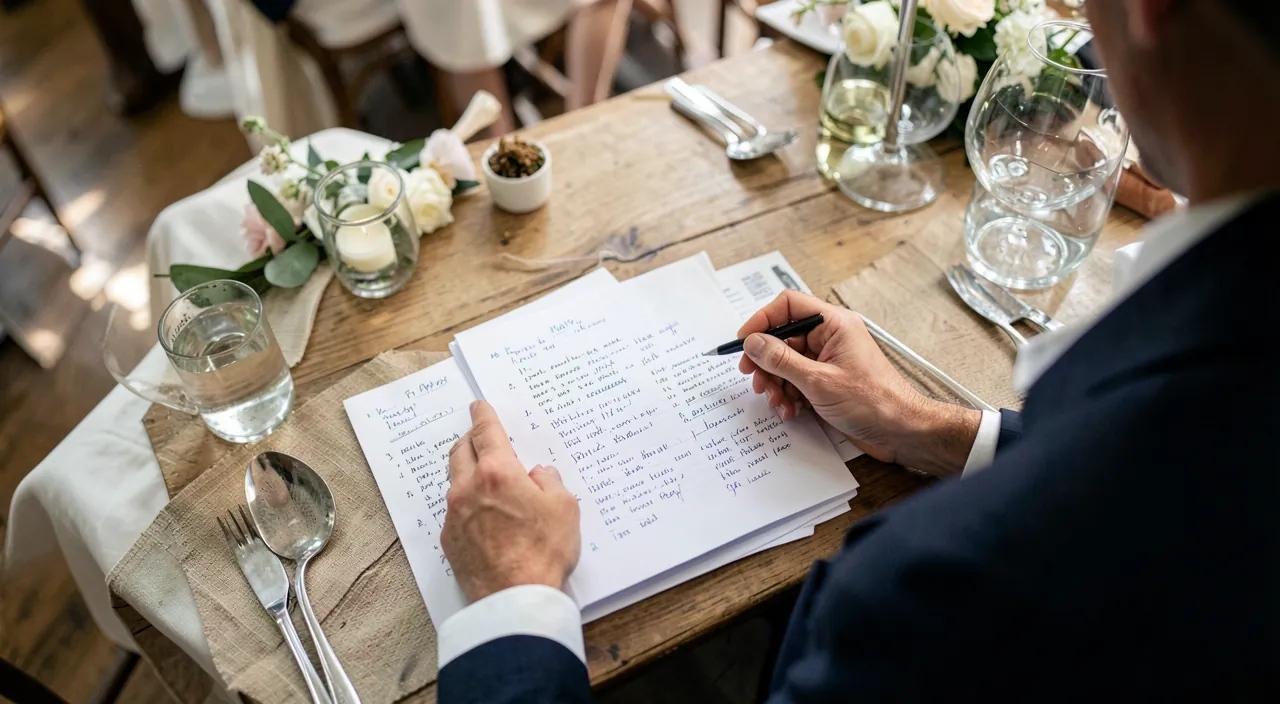
The process that works: 1. Dump everything—tell the AI everything (memories, qualities, funny or moving anecdotes, what you want to say—even in disarray: our writing guides: raw material first); 2. Pick a thread—the AI helps identify ONE ANGLE (“what if the whole speech revolved around their generosity?”: the red thread that gives structure instead of a disjointed list of qualities); 3. Structure—the hook that grabs (an anecdote, a question, a strong image—never “good evening everyone, I’m going to talk about…”), the rhythmic development (humor, emotion, humor—the alternation that holds attention), the closing that lingers; 4. Balance—SHORT IS KING (two to four minutes: a speech that’s too long is the nightmare of guests—the AI helps cut the fluff), verified humor (the joke that lands, not the one that hurts), sincere emotion without pathos; 5. Make it your own—the text read OUT LOUD and adjusted to YOUR way of speaking (the word you’d never say, replaced: the speech should sound like you, not the AI—our proofreading guides). And repetition: saying the text multiple times turns nerves into ease (the AI can even listen and suggest where to breathe).
AI doesn’t write your speech for you—it helps organize your thoughts. You provide the personal stories and emotions, and AI helps arrange them into a coherent, moving speech. The key is to keep your authentic voice.
For a 60th birthday speech, you might tell the AI: “My dad always fixed things for everyone, even when he was exhausted. Once, he stayed up all night repairing a neighbor’s roof during a storm.” The AI could structure this into a speech about his generosity, balancing humor (like his grumbling about “one more leak”) with emotion (how it taught you about kindness).
The right reflex. Start by answering three questions BEFORE writing—that’s your gold material: “what specific moment sums up this person?” (the anecdote worth a thousand adjectives), “what have they brought to ME?” (emotion comes from the personal), “what image do I want to leave at the end?” (the closing). Give these answers to the AI instead of a vague “write a speech”: the text that comes out has a soul, because it starts with yours. The memorable speech isn’t the best-written—it’s the most authentic.
Major occasions
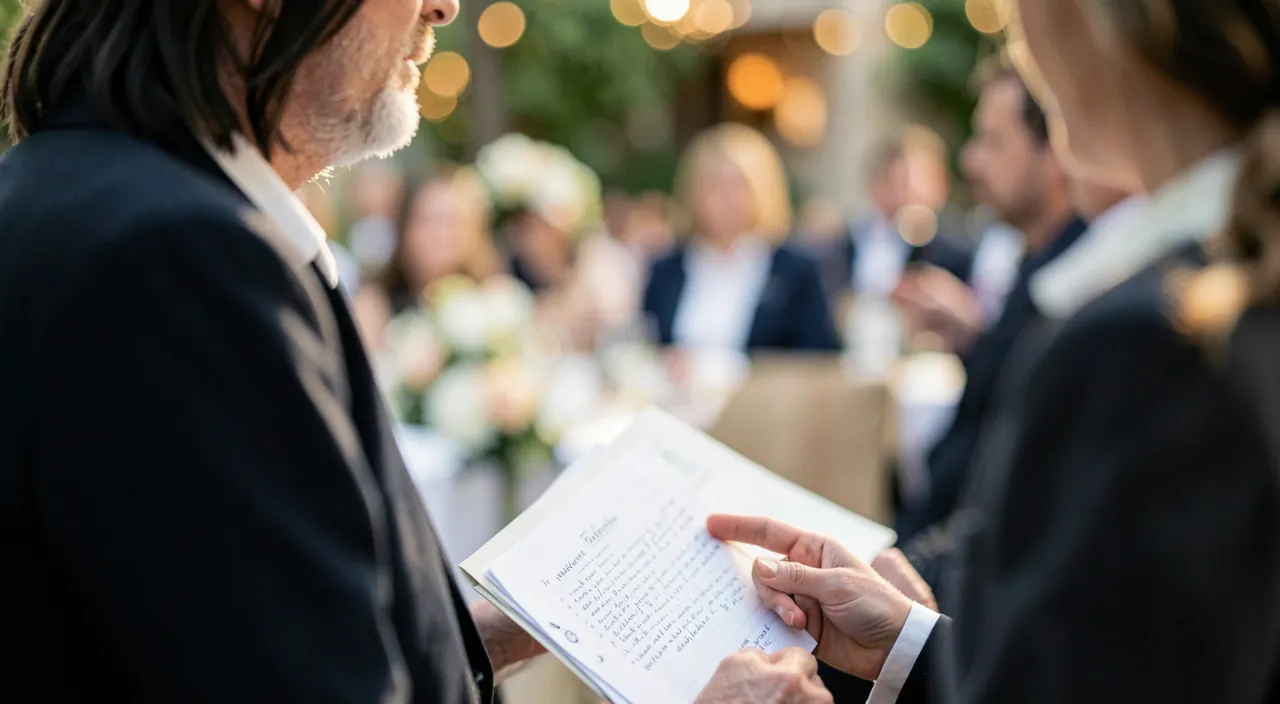
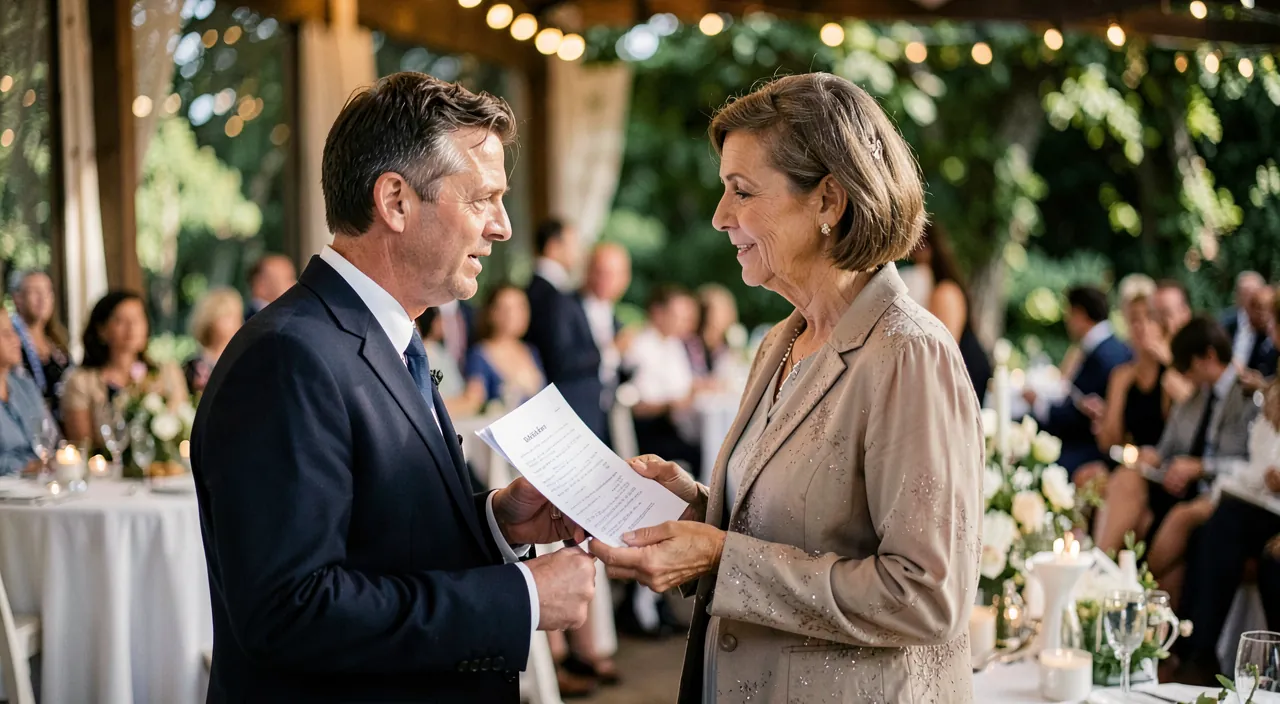
Adapted to every moment: the wedding—the best man, the parent, the friend: the anecdote that celebrates the couple, the balance between the inside joke and the emotion, the final blessing (and the trap to avoid: private jokes the audience won’t get, the ex mentioned, humor that’s too heavy-handed—the AI helps filter); the birthday—especially big milestones (50, 70, 80 years): a life’s journey summarized with tenderness, memories from multiple generations woven in; the farewell party or professional tribute—celebrating a career, a colleague, without falling into clichés; congratulations and thanks—the year-end toast, the word for a success; and the most delicate, the eulogy—where the AI helps structure overwhelming emotion, find the words when they’re missing, celebrate a life: with absolute delicacy (the text remains deeply yours—the AI supports the formatting of a moment where you’re overwhelmed, it doesn’t write the grief: our life story guides). For each occasion, the same principle: your material and your heart, the AI’s workshop—and the repetition that turns nerves into presence.
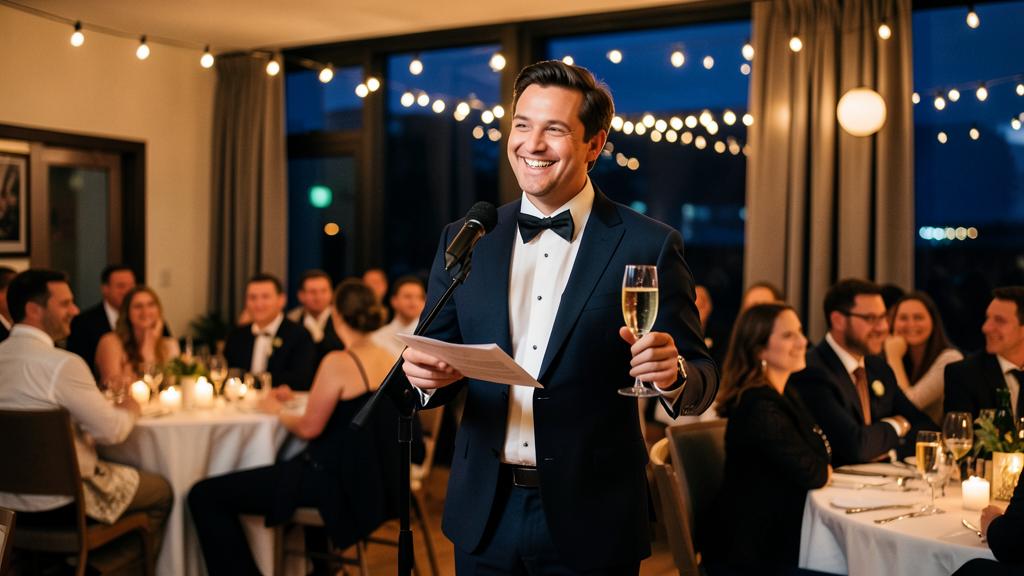
Beware of the speech that doesn’t sound like you—and made-up details. Two pitfalls: the borrowed tone—if the text contains words or turns of phrase you’d never use, the audience will feel it (the disconnect between the speaker and their text sounds fake—read aloud and replace anything that doesn’t sound LIKE YOU: imperfect authenticity moves more than borrowed perfection); and the invented facts—the AI shaping the content may add a “plausible” detail that never existed (the wrong date, the embellished anecdote): in a speech, every fact must be TRUE (loved ones know the truth—the made-up detail stands out and unsettles). The rule: “don’t ADD ANY DETAIL I didn’t give you.” The perfect speech isn’t the one that shines—it’s the one where everyone recognizes the person being celebrated AND the speaker: the real, always the real.
Frequent questions
Is it “cheating” to get help from AI for a speech?
No more than asking a friend for advice or reading examples: what matters is that the speech is YOURS—your memories, your emotion, your words. AI as a co-screenwriter who structures and refines is a tool, like a draft and proofreading. The “cheating” would be reading a generic text you don’t feel: the audience would notice. Fed by you and delivered with heart, an AI-assisted speech remains entirely yours.
I have stage fright: can AI help beyond the text?
Yes: it helps prepare for speaking (marked breaths, pauses, rhythm), to rehearse (say the text, ask for feedback), and to anticipate (the blank, the rising emotion—how to handle it). And the advice that’s worth everything: REPEAT OUT LOUD multiple times (nerves come from improvisation—the mastered text gives confidence). A discreet cheat sheet of key points in your pocket completes it: no one will blame you for glancing at it.
How long should a good speech be?
Short—almost always shorter than you think: two to four minutes for a toast, five max for a main speech. A speech that’s too long is THE UNIVERSAL REGRET of guests (and of the newlyweds watching the meal drag on): better to leave the audience wanting a little more than to bore them. The AI helps cut: “halve it while keeping the essentials” is one of the best requests you can make.
What to remember
The memorable speech isn’t the best-written—it’s the most TRUE, and AI helps bring it to life without replacing you: you provide the material (specific anecdotes, emotion, what the person represents) and the heart; AI does the workshop (structuring, finding the hook, balancing humor and emotion, tightening, suggesting the closing). The method: dump everything, pick a red thread, structure, balance (short!), make it your own. With two safeguards: the tone must sound LIKE YOU (every borrowed word replaced), and zero made-up details (loved ones know the truth). For stage fright, repetition changes everything. Whether it’s a wedding, a birthday, a farewell, or a tribute, the principle doesn’t change: your voice, your experience, supported by a patient co-screenwriter. The audience won’t remember the pretty phrases—they’ll remember being moved: and that comes from you.
Want to master AI and make it a true daily asset? Our training programs support you at your own pace.
Leave a Reply
You must be logged in to post a comment.