
Motivating yourself to move, tracking your progress, taking care of your health**: these apps help you stay active. Step counting, workout tracking, coaching, sleep or nutrition monitoring: they cover all aspects of well-being. But how to use them effectively, without getting discouraged? This guide helps you make the most of these apps to move more and live better.
Why these apps work
The main obstacle to an active lifestyle isn’t lack of time, but lack of motivation and tracking. That’s exactly where these apps excel: they make your efforts visible, celebrate your progress, and turn activity into a concrete goal. Seeing your progress, reaching milestones, receiving encouragement: these small psychological triggers, when well-used, sustain motivation far better than willpower alone.

These apps work because they show you your progress in a way that keeps you going. Instead of just trying to be active, you see your achievements, which makes you want to keep going.
The main categories
- Activity tracking: steps, distance, calories, daily.
- Fitness apps: guided programs, from beginner to advanced.
- Well-being tracking: sleep, meditation, stress management.
- Nutrition tracking: to become aware of your eating habits.
The right reflex. Set realistic and progressive goals. An app that offers an achievable target sustains motivation; an overly ambitious goal discourages from the first days. Better to aim small and consistent than big and fleeting: it’s consistency that changes habits.
Motivation through tracking
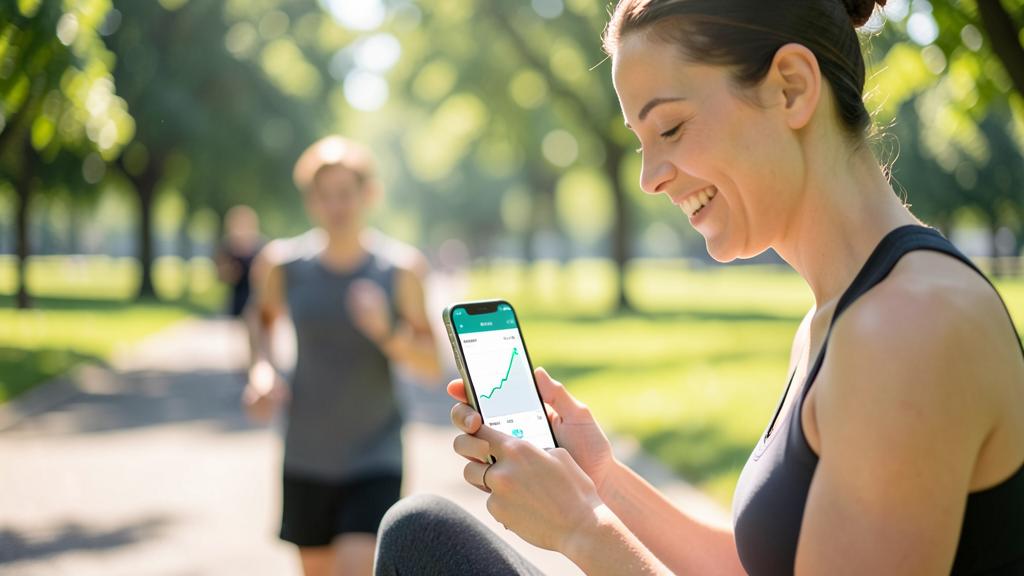
Seeing your progress is a powerful driver**. A rising curve, a weekly goal achieved, a streak of active days: these visual feedbacks make you want to continue. Some apps add a social or fun dimension—challenges, sharing, rewards—that strengthens commitment. The key is to find what motivates you, as everyone reacts differently: choose the app whose features resonate with you.
Imagine you use an app like Strava to track your runs. You set a goal of running 10 km per week. After a month, you see your progress in a graph, and you’ve completed 4 weeks in a row. The app celebrates your streak, and you feel motivated to keep going. That’s how tracking works as a motivator.
Staying realistic about the data
These apps provide useful but indicative measurements**. Step counting, calorie estimates, or sleep analysis show trends, not absolute truths. The point is to track your evolution over time, not obsess over precise numbers. And above all, no app replaces medical advice: for health issues or intense programs, professional guidance remains essential.
To keep in mind. Don’t let these apps turn into an obsession: the goal is to feel better, not to stress over step targets or calories. If tracking generates anxiety instead of well-being, take a step back. Health is also mental balance: these tools should serve your serenity.

Frequently asked questions
Do you need a connected device (watch, bracelet)?
No: your phone alone is enough for basic tracking (steps, activity). A connected device refines measurements and adds features, but isn’t essential to start.
Are these apps reliable?
For general public tracking and trends, yes. But their measurements remain indicative: don’t take them as medical diagnoses.

Key takeaways
Health and fitness apps are precious allies to stay active: they provide motivation and tracking, the two ingredients most often missing. Set realistic goals, let progress visualization carry you, and find the app whose features truly motivate you. Stay realistic about indicative data, and keep balance: these tools are here for your well-being, not to stress you. Used well, they help you move more and live better in the long run.


Curious to discover our apps?
Leave a Reply
You must be logged in to post a comment.