
Behind every activity, every business, every project, there is a STORY: why you started, what drives you, your journey, your values. Telling this story on your website—often on an « About » page, « Our Story, » or « Who We Are »—is far more powerful than one might think. People don’t just buy a product or service: they buy a story, a person, values they identify with. A well-told brand story creates an emotional bond, makes you HUMAN and memorable, sets you apart, and builds trust. An « About » page is often one of the most visited on a site: might as well make it a real asset. Be careful to stay authentic and avoid hollow or pretentious narratives. Let’s explore why telling your story matters, how to do it well, and the pitfalls to avoid.
Why tell your brand’s story
Telling your story has an often underestimated power; let’s see why. Creating an EMOTIONAL BOND: a story moves, engages; we connect to a narrative; emotion creates the bond; powerful. Making you HUMAN: behind the brand, a person, a journey; humanizing reassures; we prefer humans to faceless entities; important. STANDING OUT: your story is unique; it sets you apart from competitors; standing out; an asset. Inspiring TRUST: knowing your journey, your values, reassures; we trust what we understand; credible; useful. Creating IDENTIFICATION: the visitor recognizes themselves in your values, your story; they choose you for that; engaging; clever. We buy a STORY: people buy a person, values—not just a product; the narrative sells; human first; important. Being MEMORABLE: a great story sticks in the mind; people remember you; lasting impact; useful. Giving MEANING: your « why » gives meaning to what you do; meaning engages; deep; useful. The « ABOUT » page is highly visited: it’s one of the most consulted; people want to know who you are; a real challenge; important. Turning a visitor into a FAN: a story that moves creates attachment; more than a customer, a fan; loyal; useful. In short, telling your brand’s story has an often underestimated power: it creates an EMOTIONAL BOND (a story moves and engages: we connect to a narrative far more than to a product sheet), makes you HUMAN (behind the brand, there’s a person, a journey: we prefer doing business with humans rather than anonymous entities), sets you apart (your story is unique: it distinguishes you from competitors), and inspires TRUST (knowing your journey and values reassures). It creates IDENTIFICATION (the visitor recognizes themselves in your values and chooses you for that), because people actually buy a STORY, a person, values—not just a product. A great story makes you MEMORABLE (it sticks in the mind), gives MEANING to what you do (your « why » engages), and can turn a simple visitor into a true FAN attached to your brand. Notably: the « ABOUT » page is often one of the most VISITED on a site—people want to know who you are. Might as well make it a real asset: your story, well told, is one of your best tools to create connections and stand out. Let’s see how to tell it well.
When you tell your brand’s story, you’re not just listing facts – you’re showing who you really are. People connect with real people, not faceless companies. Your story should explain why you started, what you believe in, and what makes you different. That’s what makes customers choose you over others.
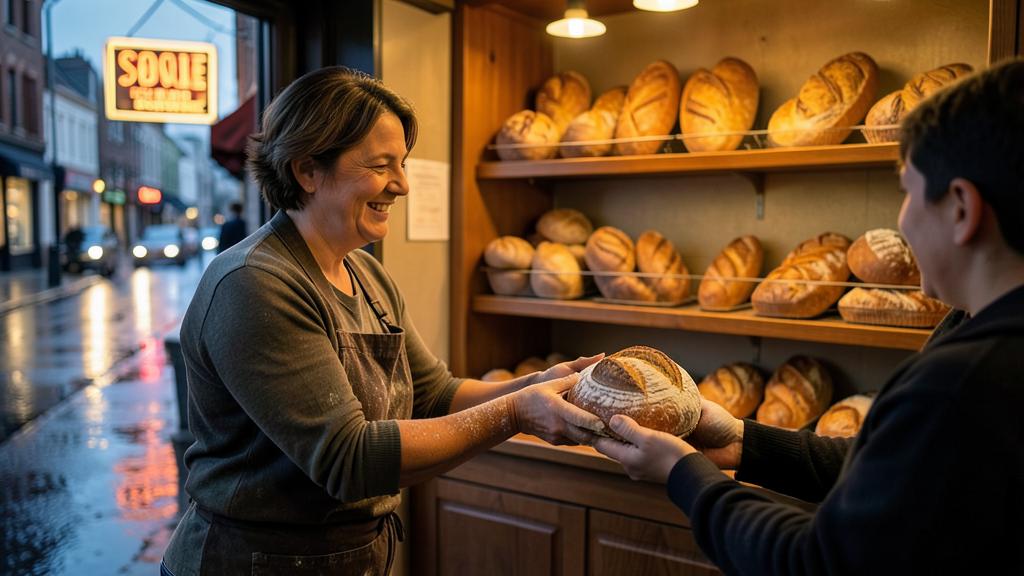
A small bakery might tell how the owner, Sarah, started baking at 12 in her grandmother’s kitchen. She shares how she struggled at first but kept going because she loved creating joy through fresh bread. Customers don’t just buy bread – they buy into Sarah’s passion and story. This emotional connection makes them loyal fans, even when a chain bakery opens nearby with lower prices.
How to tell your story effectively
Here are the principles for telling a story that resonates; let’s follow them. Start with the WHY: why did you start? What drives you? The « why » resonates; start there; essential. Stay AUTHENTIC: tell your true story, sincerely; authenticity resonates; don’t artificially romanticize; important. Be HUMAN: talk about the person or people, the journey, the emotions; humanity creates connection; embody it; useful. Share your VALUES: what matters to you, your way of doing things; values create identification; important; key. A real NARRATIVE: a beginning, milestones, a thread; tell it like a story, not a list; captivating; advice. TOUCHING DETAILS: an anecdote, a key moment, a spark; details bring it to life; concrete; useful. Speak to the VISITOR: connect your story to what you offer them; make it relevant; pertinent; useful. Stay SINCERE, not pretentious: avoid self-congratulation, bragging; humility resonates; natural; advice (we’ll come back to this). VISUALS: photos of you, your team, key moments; embody the story; concrete; useful. A TONE that’s you: your voice, your personality; that it sounds like « you »; authentic; important. In short, to tell your story well: start with the WHY (why did you start? What drives you?—the « why » resonates more than the « what »), stay AUTHENTIC (tell your REAL story, sincerely: authenticity creates connection, don’t artificially romanticize), be HUMAN (talk about the person or people, the journey, the emotions: humanity creates connection), and share your VALUES (what matters to you, your way of doing things: values create identification). Build a real NARRATIVE (a beginning, milestones, a thread: tell it like a story, not a list of dates), with TOUCHING DETAILS (an anecdote, a key moment, a spark: details bring the story to life). CONNECT your story to what you offer the VISITOR (to make it relevant), stay SINCERE and not pretentious (avoid self-congratulation: humility resonates more than bragging), embody the narrative with VISUALS (photos of you, your team, key moments), and adopt a TONE that’s YOU (your voice, your personality). In short, a great brand story starts with your « why, » stays authentic and human, shares your values, tells itself like a living story, and sounds sincere: that’s what creates the emotional bond and makes you unforgettable.
The secret to a story that resonates: start with your « why, » tell it authentically and humanly, and connect it to your values. A brand story that resonates isn’t a boring biography or a list of achievements: it’s a sincere narrative that creates a connection. Here’s how to build it. Principle 1: start with the WHY, not the WHAT. The classic mistake is to talk about WHAT you do (your activity, your products, your dates)—which moves no one. What resonates is the WHY: why did you start? What drove you, what fuels you, what gets you up in the morning? What need, passion, or conviction is at the origin of your journey? It’s this deep motivation that creates the connection, because it reveals who you truly are. So start with your « why »: it’s the beating heart of your story. Principle 2: tell it AUTHENTICALLY and HUMANLY. Your story must be TRUE and sincere: don’t invent a fabricated heroic narrative, don’t artificially romanticize. Authenticity is felt, and it’s what resonates. Make it HUMAN by talking about the PERSON or people behind the brand (you, your team, your journey), with their emotions, doubts, and sparks—not a corporate, abstract « we. » People connect with humans, not entities: show the face and heart behind your activity. Don’t be afraid to share the challenges overcome, key moments: that makes the story alive and endearing (a story that’s too smooth and perfect sounds fake). Principle 3: connect to your VALUES and what you offer. Your story must reveal your VALUES—what matters to you, your way of working, what you believe in. These values create IDENTIFICATION: the visitor who shares them recognizes themselves in you and chooses you for that. And subtly connect your story to what you BRING to your customers: how does your journey and your values translate into benefits for them? (Example: « Because I myself experienced this problem, I put so much care into solving it for you. ») Principle 4: build a real, living NARRATIVE. Don’t make a list of dates or facts: tell a STORY, with a beginning (the starting point, the « why »), milestones (the journey, key moments), and a thread. Use CONCRETE details and anecdotes (a spark, a memorable moment): it’s the living detail that makes a narrative memorable, far more than a dry chronology. Principle 5: embody and personalize. Add AUTHENTIC visuals (photos of you, your team, your beginnings, real moments—not stock images), and adopt a TONE that’s YOU (your voice, your personality—warm, passionate, simple). The story should sound like YOU. In short, the secret to a story that resonates: start with your WHY (what drives you, the origin of your journey: far more moving than the « what »), tell it AUTHENTICALLY and HUMANLY (true, sincere, embodied by real people with their emotions and sparks—not a smooth corporate narrative), connect it to your VALUES and what you offer (to create identification), build a real, living NARRATIVE (a thread, milestones, concrete details, not a list of dates), and embody it (authentic visuals, a tone that’s you). A story told this way creates an emotional bond, makes you human and memorable, and turns visitors into people who choose YOU—for who you are, not just what you sell.

Where and how to use your story
Once your story is written, here’s how to use it effectively; let’s follow these leads. The « ABOUT » page: the natural home of your story; one of the most visited pages; take care of it; important. A preview on the HOMEPAGE: a few words about your story right from the start; make them want to learn more; effective; useful. In your COMMUNICATION: reuse your story on your networks, materials; a consistent identity; clever; useful. Guide toward ACTION: after the story, a call to contact you/discover; turn emotion into action; effective; important. KEEP it up to date: evolve your story with your journey; a living story; maintain; advice. Make it READABLE: spaced out, well presented, pleasant to read; don’t discourage; polished; useful. Not TOO LONG: enough to resonate, not a novel; the essential that moves; concise; advice. With VISUALS: photos that embody the story; visuals reinforce; concrete; useful. COHERENT with your brand: tone, style in your image; coherence; polished; useful. Adapted to MOBILE: readable on mobile too; many access it; essential; important. In short, once your story is written, use it well: the natural home is the « ABOUT » page (one of the most visited: take special care of it), but also put a PREVIEW on the homepage (a few words to make them want to learn more). REUSE your story in all your COMMUNICATION (social networks, materials: for a consistent identity), and after telling it, GUIDE toward action (a call to contact you or discover your offers: to turn emotion into engagement). Keep your story UP TO DATE (evolve it with your journey: a living story), make it READABLE (spaced out, well presented, pleasant to read) and not TOO LONG (enough to resonate, not a novel: the essential that moves). Embody it with VISUALS (photos that bring the story to life), ensure its COHERENCE with your brand (tone, style in your image) and its display on MOBILE. Well placed and well used, your story isn’t just a mandatory « About » page: it’s a powerful connection tool, present in all your communication, that creates a bond with your visitors and turns them into customers attached to your brand.
Warning: stay authentic and sincere, avoid hollow or pretentious narratives, and don’t drown your story in clichés. A poorly told brand story can sound fake and backfire: here are the pitfalls to avoid. First point, the most important one: stay AUTHENTIC and SINCERE. Your story only resonates if it’s TRUE. Don’t invent a fabricated heroic narrative, don’t artificially romanticize your journey, don’t claim values you don’t embody. FAKE is felt: a story that’s too perfect, too smooth, or obviously « marketing » sounds hollow and raises suspicion, instead of creating connection. Sincerity—even modest, even with its imperfections—resonates infinitely more than a fabricated narrative. Tell YOUR true story, with your true motives and true values: it’s this truth that creates the connection. Second point: avoid HOLLOW narratives, clichés, and corporate speak. The classic trap: an « story » filled with empty phrases and clichés you read everywhere— »a passionate team, » « committed to excellence, » « strong values, » « putting the customer at the heart… » These phrases SAY NOTHING, tell no real story, and move no one (they could be on any website). Avoid these ready-made formulas: instead, tell the CONCRETE and the SPECIFIC (your true « why, » a real anecdote, a real key moment, values illustrated by facts). The specific and concrete resonate; the generic slips. Third point: avoid PRETENTION and self-congratulation. A story isn’t an occasion to brag: a narrative too focused on your « exploits, » your « genius, » your superlatives (« the best, » « number 1 ») sounds pretentious and repels. HUMILITY and sincerity resonate far more: talk about your passion, your journey (including its difficulties), what motivates you, rather than congratulating yourself. A humble and true story inspires more sympathy and trust than a triumphalist narrative. Fourth point: don’t make it TOO LONG and keep it READABLE. An interminable story (a block of several screens) bores and isn’t read. Tell the ESSENTIAL that resonates, concisely and rhythmically; space out the text, present it pleasantly (short paragraphs, visuals). A story developed enough to move, but not a novel: find the right balance. Fifth point: connect the story to the VISITOR, don’t talk ONLY about yourself. A story solely centered on you, with no link to what you offer the visitor, can seem self-centered: subtly connect your journey and your values to what the customer gains (how does your « why » translate into benefits for them). The story must also concern them. Sixth point: stay COHERENT with reality. Your story and displayed values must match what your customers actually experience: a gap between a beautiful story of values and a disappointing customer experience would destroy trust. Don’t promise, in your story, a soul that your service doesn’t deliver. In short: stay AUTHENTIC and SINCERE (fake is felt; your true story, even modest, resonates more than a fabricated narrative), avoid HOLLOW narratives and CLICHÉS (« passionate team, » « strong values »: these empty formulas tell nothing; prefer the concrete and specific), flee PRETENTION and self-congratulation (humility resonates more than bragging), don’t make it TOO LONG (the essential that resonates, readable and spaced out), connect the story to the VISITOR (not just about you), and stay COHERENT with the reality of your service. By avoiding these pitfalls, your story will be authentic, concrete, humble, and touching; by falling into them, it will sound hollow or pretentious and backfire. Sincerity and concreteness are the keys to a story that truly creates connection.
Frequent questions
My activity is small or ordinary: do I really have a story to tell?
Yes, absolutely: every activity has a story (why you started, what drives you, your values), and a small, sincere story often resonates more than a grand corporate narrative; don’t underestimate your journey, it’s precisely its authenticity that creates the bond. Let’s see. YES, everyone has a story: every activity, even small, has a story; a why, a journey, values; don’t say « I don’t have one »; encouraging. The WHY always exists: why did you start? There’s definitely a reason; it’s your story; start there; essential. The small TOUCHES MORE: a small, sincere story often moves more than a grand corporate narrative; the authenticity of the small touches; an asset; reassuring. AUTHENTICITY, your strength: being a small, human structure is an asset (proximity, sincerity); value it; don’t hide it; advice. No need for EXPLOITS: a story doesn’t need to be extraordinary; the true and human suffice; don’t aim for the spectacular; sensible. Your VALUES matter: what you believe in, your way of doing things; values create identification; share them; useful. The PERSON behind: you, your passion, your journey; the human interests; embody; important. « Ordinary » for YOU, not for them: what seems ordinary to you interests the visitor; people like knowing others; don’t underestimate; encouraging. PROXIMITY: a small activity can play the proximity, the relationship; an advantage over the big; leverage that; clever. The ADVICE: yes, every activity has a story (your why, your journey, your values); a small, sincere story often resonates more than a grand narrative; don’t underestimate your journey, its authenticity is precisely its strength. In short, yes, absolutely: even a small activity, even an activity you consider « ordinary, » has a STORY to tell—and you must never believe the opposite. Every activity has an origin and a « WHY »: why did you start? There’s definitely a reason—a passion, a need, a desire, a spark, a journey that led you there. That’s your story, and it exists no matter the size of your activity. Better yet: a SMALL, sincere story often resonates MORE than a grand corporate narrative. The AUTHENTICITY of a small, human structure—the proximity, the sincerity, the real person behind the activity—creates a far stronger bond than the smooth « corporate » narrative of a large company. Being small isn’t a handicap here, it’s an ASSET: you can play the card of proximity, human relationship, true and modest story. And rest assured: a story doesn’t NEED to be extraordinary or spectacular to resonate. No need for exploits, a heroic journey, or an epic adventure: the TRUE and the HUMAN suffice. What seems « ordinary » to you (your ordinary journey, your simple motivations) is actually INTERESTING to the visitor—because people like knowing the people they do business with, understanding who you are and what drives you. What seems trivial to you is precisely your singularity and your humanity. So focus on what you HAVE: your « why, » your passion, your journey (even modest), your VALUES (what you believe in, your way of doing things), and the PERSON you are. That’s all of it, told sincerely, that makes a great brand story. In short, never say « I don’t have a story » or « my activity is too ordinary »: you have a story, and its strength is precisely its AUTHENTICITY. A small, true, and human story creates a powerful bond—often far more than a grand, fabricated narrative. Tell yours.
What length for my « About » page or story?
Enough to RESONATE and give meaning, but not a novel: a few well-told paragraphs suffice; what matters is the quality of the narrative (authentic, concrete) and readability, not length; focus on the essential that resonates. Let’s see. Not too short, not too LONG: enough to tell and resonate, not a block; the balance; aim for the right; principle. QUALITY comes first: a well-told narrative is better than a long text; it’s the quality, not the length; take care of the substance; essential. The ESSENTIAL that resonates: the why, the journey, the values, a few details; the essential suffices; don’t dilute; advice. A few PARAGRAPHS: often, a few good paragraphs suffice; concise and touching; don’t aim for length; useful. Too LONG bores: an endless text isn’t read; people tune out; stay concise; important. Too SHORT lacks: a few dry words don’t create a bond; you need enough to tell; develop a minimum; nuance. READABILITY: space out, structure, short paragraphs; pleasant to read; polished; useful. VISUALS space it out: photos that pace the narrative; the text breathes; embodies; useful. Depending on your STORY: a rich story deserves more, a simple one less; adapt to what you have to say; logical. The ADVICE: enough to resonate and give meaning, but not a novel; a few well-told paragraphs suffice; what matters is the quality of the narrative (authentic, concrete) and readability, not length; focus on the essential that resonates. In short, there’s no absolute ideal length for your « About » page or story, but a clear principle: ENOUGH to resonate and give meaning, but NOT a novel. What counts isn’t the LENGTH, but the QUALITY of the narrative: a well-told, authentic, and concrete story in a few paragraphs is infinitely better than a long, diluted text. Focus on the ESSENTIAL that resonates: your « why, » your journey (key moments, not every detail), your values, and a few anecdotes or living details that touch. Often, A FEW WELL-WRITTEN PARAGRAPHS suffice to create the bond. Avoid the two extremes. Too LONG: an endless story (a block that spans several screens) BORES and isn’t read to the end—the visitor tunes out. Too SHORT: a few dry phrases aren’t enough to tell a true story or create an emotional bond—you need enough to develop a minimum. Find the right balance between the two. READABILITY is as crucial as length: no matter the word count, SPACE OUT your text (short paragraphs, clear structure), make it pleasant to read, and incorporate VISUALS (photos that pace and embody the narrative, and make the text « breathe »). A well-presented and spaced-out story is read with pleasure, even if a bit developed; a compact block is off-putting, even if short. Finally, adapt to YOUR story: a rich story, with a beautiful journey and key steps, deserves to be a bit developed; a recent or simpler activity will be told more briefly—don’t artificially pad to « make it long. » In short: aim for a few well-told, authentic, and concrete paragraphs, spaced out and pleasant to read, focusing on the essential that resonates—not a novel that bores, nor a few dry words that don’t create a bond. The quality and readability of the narrative always trump its length.

Should I talk about myself personally or stay « professional »?
Talk about yourself, with balance: the human and personal create the bond (far more than a cold, impersonal discourse), provided you stay relevant and sincere; you can be both personal AND professional—it’s not contradictory. Let’s see. TALK about yourself, yes: the human creates the bond; talking about the person behind resonates; dare the personal; advice. Personal > COLD: a human discourse resonates more than a cold corporate tone; the human engages; prioritize it; important. Personal AND professional: being personal doesn’t prevent being pro; the two go together; not contradictory; nuance. With BALANCE: talk about yourself in relation to your activity (your journey, your why); relevant, not a dump; measure; advice. Stay RELEVANT: the personal that sheds light on your activity, not your entire private life; the link to the subject; target; important. SINCERE, not exhibitionist: share sincerely, without dumping everything; measured authenticity; balance; advice. The HUMAN reassures: showing who you are inspires confidence; we prefer humans; embody; useful. Depending on your COMFORT: share what you’re comfortable with; respect your limit; at your discretion; sensible. Depending on the ACTIVITY: some activities lend themselves more to the personal; adapt to the expected tone; pertinent; logical. The ADVICE: talk about yourself with balance; the human and personal create the bond (far more than a cold tone), provided you stay relevant (in relation to your activity) and sincere; you can be personal AND professional; measure according to your comfort. In short, yes, you MUST talk about yourself personally—because the HUMAN and the PERSONAL create the bond, far more than a cold, impersonal discourse. But do it with BALANCE. The false opposition to discard: « personal OR professional. » It’s NOT contradictory: you can, and must, be both PERSONAL and PROFESSIONAL. Talking about yourself, your journey, your passion, and your values doesn’t make you « less serious »: on the contrary, it makes you HUMAN and endearing, while remaining credible. A COLD, impersonal corporate tone (the distant « we, » corporate speak) moves no one and doesn’t inspire a bond; a human, personal tone, on the other hand, creates the connection and trust (we prefer doing business with a person than an anonymous entity). So YES, show who you are, the person behind the activity. BUT with a few nuances. Talk about yourself IN RELATION to your activity: your journey, your « why, » what led you there, your values—that’s what interests and is PERTINENT. It’s not about dumping your entire private life or irrelevant personal details; keep the link to the subject (your activity, what you offer). Stay SINCERE without being exhibitionist: share with authenticity what sheds light on who you are and why you do what you do, without falling into the dump. Finally, measure according to YOUR COMFORT and your ACTIVITY: share what you’re comfortable with (respect your personal limit; some are more comfortable than others to tell their story), and adapt to the expected tone in your field (some activities lend themselves more to the personal, warm register than others). In short: yes, talk about yourself—the human creates the bond far more than a cold discourse—but with balance (in relation to your activity, sincere without dumping everything, measured according to your comfort). You can perfectly be personal AND professional: it’s even the best combination, the one that makes you both credible and endearing. Don’t hide behind an impersonal « we »: show the real person, it’s she who creates trust and the bond.
What to remember
Behind every activity, there is a STORY—why you started, what drives you, your journey, your values—and telling it on your site (« About » page, « Our Story ») is far more powerful than one might think. Because people don’t just buy a product: they buy a STORY, a person, values they identify with. A well-told story creates an EMOTIONAL BOND, makes you HUMAN and memorable, sets you apart, inspires TRUST, and can turn a visitor into a fan—especially since the « About » page is often one of the most visited on a site. The secret to a story that resonates: start with your WHY (what drives you, the origin of your journey: far more moving than the « what » of your activity), tell it AUTHENTICALLY and HUMANLY (true, sincere, embodied by real people with their emotions and sparks—not a smooth corporate narrative), connect it to your VALUES and what you offer the visitor (to create identification), build a real, living NARRATIVE (a thread, milestones, concrete details and anecdotes, not a list of dates), and embody it (authentic visuals, a tone that’s you). Talk about YOURSELF personally: the human creates the bond far more than a cold discourse, and you can be both personal AND professional. Rest assured: even a small, « ordinary » activity has a story—and a small, sincere story often resonates MORE than a grand corporate narrative, because its authenticity is precisely its strength (no need for exploits, the true and human suffice). But avoid the pitfalls: stay AUTHENTIC and SINCERE (fake is felt: a too smooth or fabricated story sounds hollow), flee HOLLOW narratives and CLICHÉS (« passionate team, » « strong values »: these empty formulas tell nothing—prefer the concrete and specific), avoid PRETENTION and self-congratulation (humility resonates more than bragging), don’t make it TOO LONG (the essential that resonates, in a few well-told, spaced-out, and readable paragraphs: quality trumps length), connect the story to the visitor (not just about you), and stay coherent with the reality of your service. To use it well: take care of the « About » page, put a preview on the homepage, reuse your story in all your communication, guide toward action after telling it, and embody it with authentic visuals. In short, your brand story, told with sincerity, concreteness, and humanity, is one of your most powerful tools to create bonds and stand out: it turns visitors into people who choose YOU—for who you are and what you believe in, not just what you sell. Don’t neglect this page: tell your true story, and let it touch those who read it.

Your activity deserves a real online presence: showcase site, store, SEO—we create the site that’s you.
Leave a Reply
You must be logged in to post a comment.