
The abrupt awakening — that shrill ringtone that jolts you out of sleep — isn’t the best way to start the day. Your phone can offer a much gentler and more pleasant wake-up: a progressive alarm that gradually increases in volume, soothing music, light that simulates a sunrise, or waking up at the optimal moment of your sleep. Waking up gently helps you start the day in a better mood, less stressed, and more rested. These features are often already in your phone (or in dedicated apps), simple to set up. Let’s see what a gentle wake-up brings, how to set it up, and the good habits for a truly pleasant wake-up — without forgetting to actually get up, of course!
Why and how to wake up gently
A gentle wake-up changes the start of the day; let’s see why and how. The problem with the ABRUPT wake-up: a shrill ringtone that jolts you out of sleep is unpleasant and stressful; it can give a sense of discomfort upon waking; starting the day like this isn’t ideal; the abrupt wake-up is tiring. The PRINCIPLE of the gentle wake-up: waking up PROGRESSIVELY, gently, rather than abruptly; a ringtone that increases, soothing music, progressive light; a more natural and pleasant wake-up; starting gently. The PROGRESSIVE ringtone: a ringtone that starts softly and GRADUALLY increases in volume; it wakes you up gently instead of making you jump; many alarms offer this; a simple first step. The SOOTHING MUSIC: choosing soft, pleasant music (instead of a shrill ringtone) makes the wake-up enjoyable; a melody you like to start with; the sound influences the mood; personalize. The PROGRESSIVE LIGHT: some alarms (or connected lamps) simulate a SUNRISE, a light that gradually increases before the time; the body wakes up naturally with the light; a very gentle wake-up (we’ll come back to this). The wake-up at the right MOMENT: some apps try to wake you up at the OPTIMAL moment of your sleep (light sleep) within a given range; for a less painful wake-up; a « smart alarm » function (we’ll come back to this). The BENEFITS: a gentle wake-up helps you start in a better MOOD, less stressed, with a more rested feeling; the start of the day is more pleasant; waking up better helps you live your day better; a real plus. Often ALREADY in the phone: these features are often integrated into the phone’s clock/alarm app; or in dedicated apps; no need to buy; it’s within reach; explore your alarm. Easy to CONFIGURE: setting up a gentle wake-up is simple (choose the ringtone, activate the options); a few settings are enough; accessible to everyone; personalize. Personalize ACCORDING to yourself: everyone has their preferences (music, light, progressive ringtone); test and keep what suits you; the right alarm is the one that wakes YOU up pleasantly; adapt. What it SERVES for: to start the day gently, in a better mood and less stressed, thanks to a progressive and pleasant wake-up; the comfort of the morning; start your day well. The main idea: waking up gently, rather than abruptly, helps you start the day better — in a better mood, less stressed, with a more rested feeling. The abrupt wake-up (a shrill ringtone that jolts you out of sleep) is unpleasant and stressful; your phone offers much better: a PROGRESSIVE ringtone (that starts softly and increases in volume), SOOTHING MUSIC (rather than an aggressive ringtone), PROGRESSIVE LIGHT simulating a sunrise (the body wakes up naturally with the light), or a wake-up at the OPTIMAL MOMENT of your sleep (« smart alarm » function). These features are often already integrated into the clock/alarm app of your phone (or in dedicated apps), and simple to configure. Each person having their preferences, test and keep what wakes you up pleasantly. Waking up better is starting your day better: a comfort accessible to everyone.
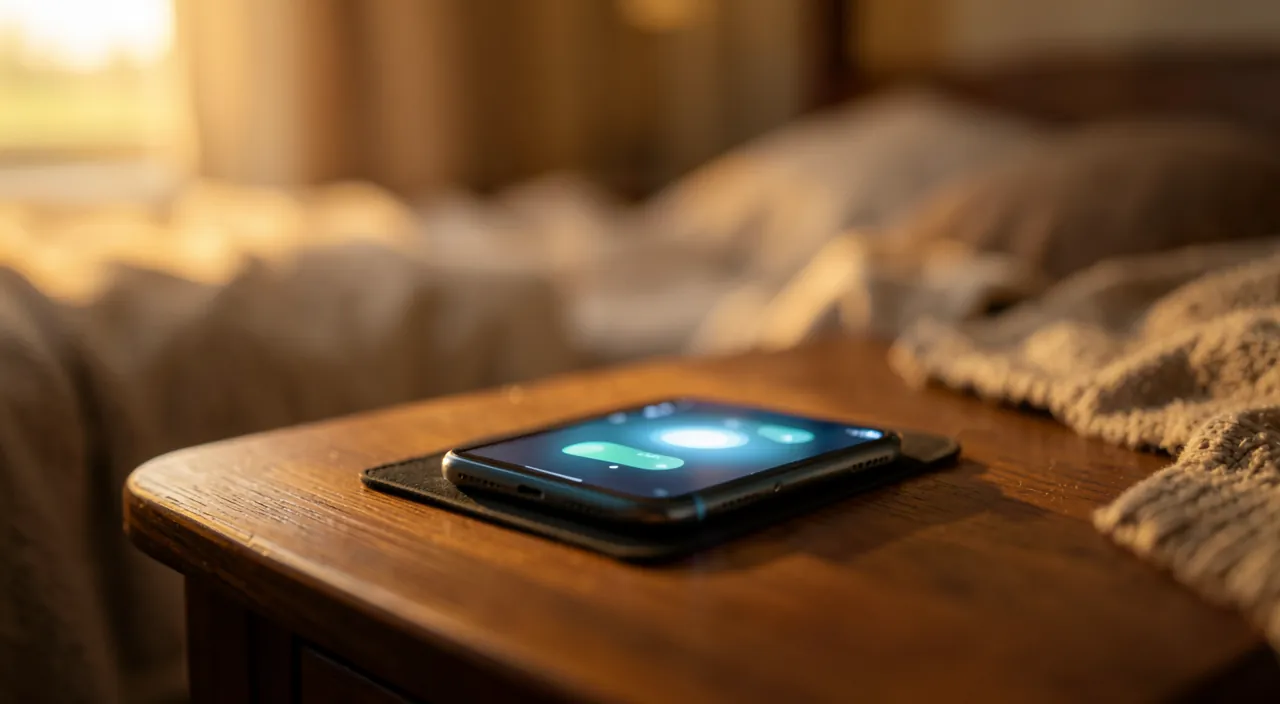
How to set up a gentle wake-up
Here’s how to configure a pleasant wake-up, step by step. Explore the OPTIONS of your alarm: in your phone’s clock/alarm app, explore the alarm options; ringtone, progressive volume, music, vibration; discover what’s offered; personalize from there; start by exploring. Choose a PLEASANT ringtone: choose a SOFT and pleasant ringtone (not shrill); a soothing melody, a nature sound, a music you like; the sound of the alarm influences the mood; choose carefully. Activate the PROGRESSIVE volume: activate the PROGRESSIVE volume option if it exists (the sound increases softly); you are woken up gently, without a jolt; a simple and effective option; activate it. Wake-up with MUSIC: some alarms allow you to wake up with MUSIC (a song, a playlist); starting with a music you like is pleasant; explore this possibility; melodious wake-up. The LIGHT (connected lamp/app): for a bright wake-up, a connected « sunrise » lamp or an app can simulate a progressive light; the body wakes up with the light; a very gentle wake-up (we’ll come back to this); to consider. The « SMART ALARM »: some apps offer to wake you up at the optimal moment (light sleep) within a time range; activate it for a less painful wake-up; an advanced function; test it (we’ll come back to this). Set the right TIME: set the wake-up time leaving enough sleep time; a gentle wake-up doesn’t compensate for lack of sleep; go to bed at a reasonable time; sufficient sleep matters (we’ll come back to this). Avoid WAKE-UP on screen: ideally, avoid looking at the screen (notifications, emails) right after waking up; a gentle wake-up aims to start calmly; don’t plunge back into stress immediately; preserve the morning calm. The SOFT vibration: if you prefer or complement with vibration, choose a soft vibration; useful if you don’t want sound (sleeping partner); adapt according to your situation; personalize. TEST and adjust: test your alarm for a few days, adjust (ringtone, volume, time); find what wakes you up well; the right alarm is refined; adapt to your feeling. In summary, to set up a gentle wake-up: explore the OPTIONS of your phone’s alarm app, choose a PLEASANT ringtone (soft, soothing, or a music you like), activate the PROGRESSIVE VOLUME (the sound increases softly, without a jolt), consider the PROGRESSIVE LIGHT (connected « sunrise » lamp or app) and the « SMART ALARM » (wake-up at the optimal moment of sleep). Set the right time leaving enough sleep, avoid diving into the screen right after waking up, adapt with vibration if needed, and test/adjust over a few days. These simple settings transform your wake-up; the progressive volume, a pleasant ringtone, and the light are the keys to a gentle wake-up.
The two keys to a gentle wake-up: the progressive volume and the light that simulates a sunrise. Among all the ways to soften your wake-up, two stand out for their effectiveness and simplicity. The first, immediately accessible to everyone: the PROGRESSIVE VOLUME. The principle is simple but makes all the difference: instead of a ringtone that starts at full volume and jolts you out of sleep, the volume starts VERY SOFTLY and GRADUALLY increases over several seconds or minutes. Result: your brain emerges from sleep gently, drawn toward wakefulness by a sound that gradually intensifies, rather than brutally extracted by a sonic shock. It’s far less stressful, and you often wake up before the sound even reaches its maximum. Most phone alarm apps offer this option (sometimes called « progressive volume increase » or similar): activate it, it’s the simplest and most effective gesture to soften your wake-up. Combine it with a PLEASANT ringtone (a soft melody, a nature sound, or a music you like, rather than a shrill and aggressive alarm): the type of sound matters as much as its progression. The second key, particularly effective for a natural wake-up: the LIGHT that simulates a SUNRISE. Our body is naturally programmed to wake up with daylight: it’s the light that, in the morning, signals to our organism that it’s time to wake up. The light alarm exploits this natural mechanism: before the wake-up time, a light starts to turn on very faintly, then PROGRESSIVELY increases in intensity (like a sunrise), so that your body begins to emerge from sleep gently and naturally, bathed in light, before the ringtone even triggers. The wake-up is then much gentler, and you often feel more rested and in a better mood. How to benefit from it? In two ways: either with a CONNECTED LAMP or a special light alarm designed for this (which you program to simulate dawn), or with some APPS that use the phone screen to display a progressive light before the alarm (less powerful than a real lamp, but a start). If you invest in a connected lamp or a light alarm, place it near your bed, facing you, and program the light rise about 15 or 20 minutes before the sound wake-up time. Many people find this light wake-up much more pleasant, especially in winter when it’s still dark at wake-up time (the body then lacks the natural light signal). You can combine both approaches for an ideal wake-up: the PROGRESSIVE LIGHT that starts to wake you up naturally in advance, then the SOFT and PROGRESSIVE SOUND that takes over gently at the set time. In summary, for a truly gentle wake-up, focus on these two keys: activate the PROGRESSIVE VOLUME of your alarm (with a pleasant ringtone) — simple, free, and immediate — and consider the PROGRESSIVE LIGHT simulating a sunrise (connected lamp, light alarm, or app) — particularly effective because it wakes the body naturally. These two approaches, alone or combined, transform the abrupt wake-up into a progressive and pleasant awakening, to start the day on the right foot.
Your phone can wake you up gently in two main ways: by gradually increasing the alarm volume (so it doesn’t startle you) and by simulating a sunrise with light (which helps your body wake up naturally). These simple features make mornings less stressful and more pleasant.
Imagine you set your phone alarm for 7:00 AM. With progressive volume, it starts at a barely audible level at 6:50 AM and gradually gets louder until 7:00 AM. Meanwhile, a smart lamp next to your bed begins emitting a soft glow at 6:40 AM, slowly brightening like a sunrise. By 7:00 AM, you’re already half-awake from the light, and the gentle sound completes the process. This is much better than being jolted awake by a loud alarm at full volume.
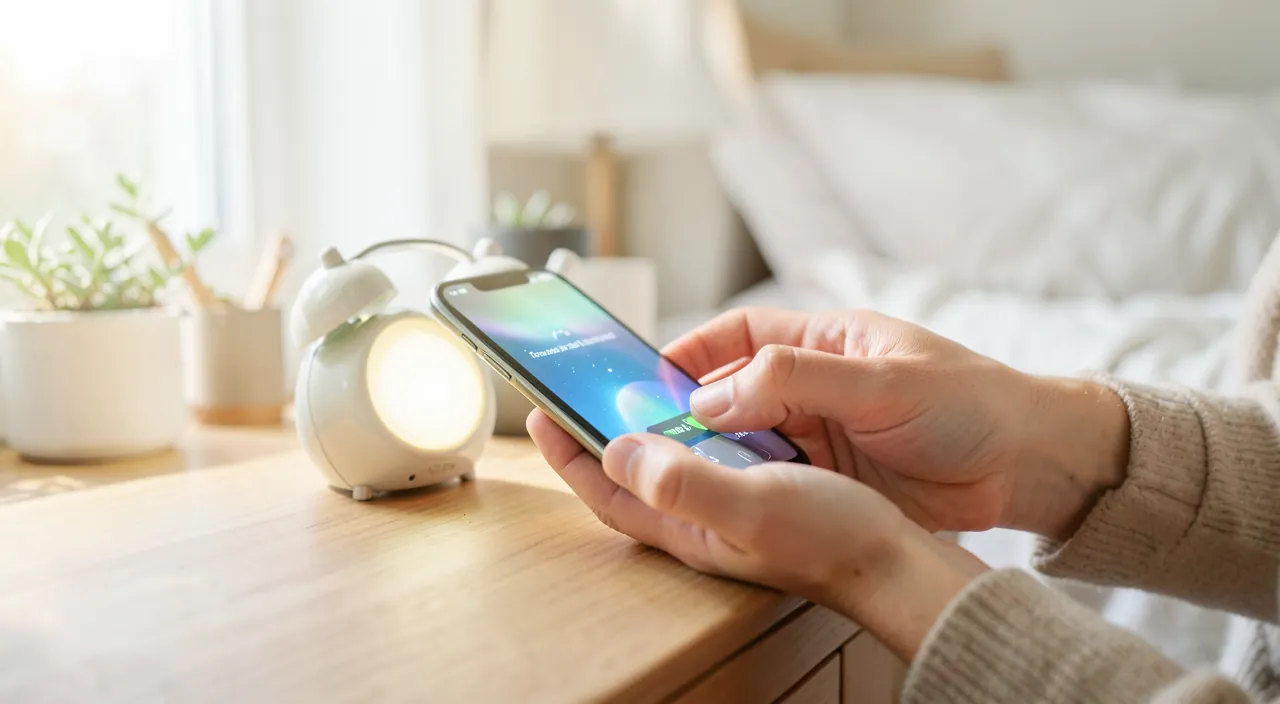
Good habits for a truly pleasant wake-up
A good wake-up also depends on good sleep and morning habits; here’s the essential. SLEEP enough: the most important; a gentle wake-up doesn’t compensate for lack of sleep; go to bed at a time that allows enough sleep; well-rested is the real key to a good wake-up; sufficient sleep comes first (we’ll come back to this). REGULAR hours: going to bed and waking up at regular times helps the body wake up more easily; regularity stabilizes sleep; a regular rhythm facilitates wake-up; anchor regular hours. Avoid SCREENS in the evening: screens before bed can disrupt falling asleep; limit them in the evening to sleep better (and wake up better); the evening influences the morning; protect your sleep. Don’t ABUSE the « snooze »: repeatedly postponing the wake-up (snooze) fragments sleep and makes wake-up more painful; better to get up at the first wake-up; repeated snooze harms (we’ll come back to this); limit it. GET UP anyway: a gentle wake-up aims to wake you up pleasantly, but you still have to GET UP; don’t fall back asleep; the goal is to start, not to linger indefinitely; get up (we’ll come back to this). The MORNING light: open the curtains, expose yourself to daylight upon waking; natural light helps the body fully wake up; let the day in; light really wakes you up. A PLEASANT morning ritual: associate wake-up with a pleasant moment (a quiet coffee, a stretch, a calm moment); a pleasant ritual motivates you to get up; make the morning attractive; pleasure helps. Avoid NOTIFICATIONS right after waking up: don’t dive into emails/social media as soon as you open your eyes; a calm wake-up is better than an immediate stress influx; preserve the morning calm; defer screens. MUSIC or soft sounds: extend the gentle wake-up with pleasant music, calm sounds in the morning; a soft ambiance to start; the sound influences the morning mood; create an atmosphere. ADAPT to your rhythm: everyone has their rhythm (morning person, night owl); adapt your habits to YOU; the right wake-up respects your nature; personalize according to your internal clock; listen to yourself. In summary, for a truly pleasant wake-up: SLEEP enough (a gentle wake-up doesn’t compensate for lack of sleep — that’s the real key), keep REGULAR hours, avoid screens in the evening (to sleep better), don’t abuse the « snooze » (which fragments sleep), GET UP anyway (the gentle wake-up wakes you up, but you have to get up), expose yourself to MORNING light, associate wake-up with a PLEASANT ritual, avoid diving into notifications right after waking up, and adapt to your rhythm. These habits complement the gentle wake-up; sufficient sleep, regular hours, and getting up without lingering are the keys to a successful morning.
Warning: a gentle wake-up doesn’t replace sufficient sleep, and you still have to get up — beware of repeated « snooze. » Two common-sense points allow you to get the most out of a gentle wake-up, without fooling yourself. The first: a gentle wake-up doesn’t REPLACE sufficient sleep. This is an obvious fact that we easily forget in the enthusiasm for beautiful alarm functions: however pleasant and progressive it may be, an alarm can do nothing against lack of sleep. If you go to bed too late and don’t sleep enough, you’ll wake up tired, no matter how gentle the ringtone or how beautiful the simulated sunrise. The real key to a good wake-up and a day in shape isn’t in the alarm settings, but in the QUANTITY and QUALITY of your sleep: go to bed at a time that allows you to sleep enough (according to your needs), keep regular hours (the body wakes up much more easily with a stable rhythm), and take care of your sleep (limit screens in the evening, a quiet and dark bedroom). The gentle wake-up is an excellent COMPLEMENT — it makes the transition from sleep to wakefulness more pleasant — but it comes AFTER sufficient sleep, it doesn’t replace it. Don’t count on a beautiful wake-up to « make up » for short nights: it’s sleep itself that you need to take care of first. The second point: you still have to GET UP, and beware of the « snooze » (the alarm delay) in repetition. The gentle wake-up aims to wake you up pleasantly — not to lull you indefinitely or let you fall back asleep. Yet a temptation lurks: repeatedly postponing the alarm (pressing « snooze » for « just five more minutes, » several times in a row). This habit, so common, is actually counterproductive and makes the wake-up MORE painful, not less: by falling back asleep in short stretches between each alarm, you fragment your sleep and start new cycles that you interrupt immediately, which often leaves you more groggy and tired than if you had gotten up at the first wake-up. Repeated snooze gives the illusion of gaining rest, while it degrades the quality of these last minutes and complicates wakefulness. Better to set your alarm at the time you REALLY need to get up (even if you push it back a bit if you were giving yourself these « five minutes » anyway), and GET UP at the first wake-up, without chaining delays. To help you get up: expose yourself to light (open the curtains, or use the light alarm), and associate getting up with a pleasant moment (a coffee, a pleasant ritual) that makes you want to start. A gentle wake-up WELL USED wakes you up progressively then invites you to get up; a gentle wake-up MISUSED (with repeated snooze and falling back asleep) loses all its interest. In summary, keep these two common-sense principles: a gentle wake-up NEVER compensates for lack of sleep (first take care of the quantity and regularity of your sleep — that’s where the real key is), and you still have to GET UP at wake-up without abusing the « snooze » (which, in repetition, fragments sleep and makes wake-up harder). The gentle wake-up is a precious ally for a pleasant morning, provided you accompany it with good sleep and the will to get up: it’s this combination that guarantees you start the day rested and in a good mood.
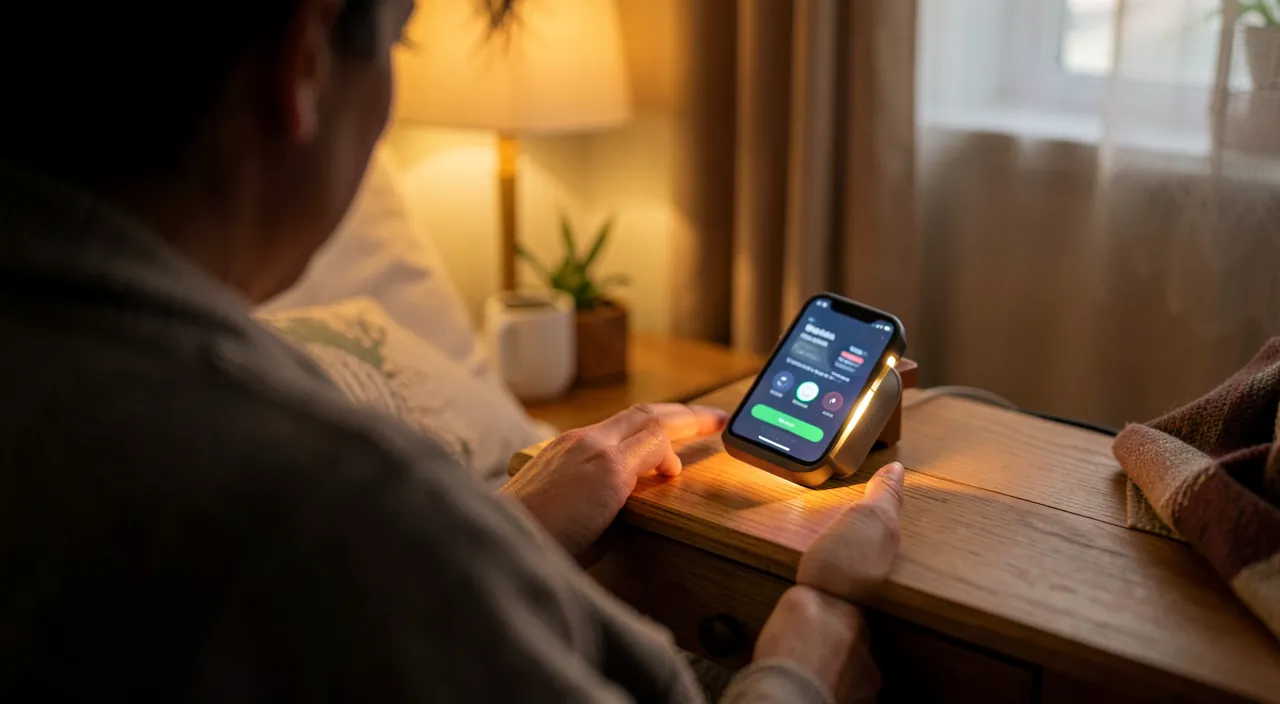
Frequent questions
How to make my wake-up less abrupt?
Activate the progressive volume (the sound increases softly), choose a soft ringtone or pleasant music, and consider a progressive light (sunrise): these settings transform an abrupt wake-up into a gentle awakening. Let’s see. The PROGRESSIVE volume (key): activate the PROGRESSIVE volume option of your alarm (the sound starts very softly and increases); you are woken up gently, without a jolt; it’s the simplest and most effective setting; activate it as a priority. A PLEASANT ringtone: replace the shrill ringtone with a SOFT sound (soothing melody, nature sound) or MUSIC you like; the type of sound influences the wake-up mood; choose pleasant; the sound matters. The PROGRESSIVE light: consider a light alarm (connected « sunrise » lamp or app) that turns on a light gradually increasing before the alarm; the body wakes up naturally with the light; very effective (especially in winter); to test. The « SMART ALARM »: some apps wake you up at the optimal moment of your sleep (light) within a range; the wake-up is then less painful; an advanced function; try it if available. The SOFT vibration: if you complement with vibration, choose it soft; or use it alone (without sound) if needed; adapt to your situation (partner); personalize. Avoid SNOOZE: paradoxically, not abusing the delay (snooze) makes the wake-up less painful; snooze fragments sleep; get up at the first wake-up for a clearer awakening; snooze worsens. The DAYLIGHT: upon waking, open the curtains, expose yourself to natural light; it helps the body fully wake up; let the day in; light really wakes you up. ENOUGH SLEEP: an abrupt wake-up is also due to lack of sleep; sleep enough (go to bed earlier); well-rested, you wake up more easily; sleep is the base; take care of it. TEST and adjust: test these settings for a few days, adjust (sound, volume, light, time); find what gently wakes YOU up; the right alarm is refined; adapt. The ADVICE: for a less abrupt wake-up; activate the progressive volume, choose a soft/music ringtone, add a progressive light if possible, avoid snooze, expose yourself to daylight, and sleep enough; test and adjust. In summary, to make your wake-up less abrupt, several simple settings transform the experience. The most effective and immediate: activate the PROGRESSIVE VOLUME of your alarm (the sound starts very softly and gradually increases, waking you up gently without the jolt of a ringtone that starts at full volume). Complete by choosing a PLEASANT ringtone — a soothing melody, a nature sound, or a music you like — rather than a shrill and aggressive alarm: the type of sound matters as much as its progression. To go further, consider the PROGRESSIVE LIGHT: a light alarm (connected « sunrise » lamp or app) that turns on a light gradually increasing before the alarm wakes the body naturally (particularly pleasant in winter, when it’s still dark). Some apps also offer a « smart alarm » that wakes you up at the optimal moment of your sleep. Beyond the settings, a few habits help: don’t abuse the « snooze » (repeated delay fragments sleep and makes wake-up more painful — get up at the first wake-up), expose yourself to DAYLIGHT upon waking (open the curtains), and especially SLEEP enough (a wake-up is all the more abrupt as you lack sleep: go to bed at a reasonable time). Test these settings and habits for a few days and adjust according to your feeling to find what wakes you up most pleasantly. By combining a progressive volume, a soft sound, possibly a progressive light, and sufficient sleep, you’ll transform your abrupt wake-up into a gentle awakening, to start the day on the right foot.
Is the light alarm (sunrise) really effective?
Many find it effective and pleasant: the progressive light wakes the body naturally (like dawn), making the awakening gentler, especially in winter; the effect varies from person to person, but it’s worth trying. Let’s see. The NATURAL principle: our body is programmed to wake up with LIGHT (dawn signals wake-up); the light alarm exploits this mechanism; a progressive light before the alarm wakes the body naturally; it’s based on our nature. How it WORKS: before the wake-up time, the light turns on very faintly then gradually increases (like a sunrise); the body emerges from sleep gently, bathed in light, before the ringtone; a gradual and natural awakening. A GENTLER wake-up: many find this wake-up much gentler and pleasant; you often feel more rested and in a better mood; the transition from sleep to wakefulness is softened; a real comfort for many. Especially in WINTER: the light alarm is particularly appreciated in WINTER, when it’s still dark at wake-up time; the body then lacks the natural light signal; artificial light replaces it; very useful when mornings are dark. The effect VARIES: effectiveness varies from person to person (sensitivity to light, habits); some love it, others less; like everything, it’s individual; you have to test; the effect is personal. How to BENEFIT: a CONNECTED LAMP or a dedicated light alarm (programmed to simulate dawn), or some apps using the screen (less powerful); choose according to your budget/wish; several ways to try. Place it WELL: place the lamp near the bed, facing you, and program the light rise 15-20 minutes before the sound time; the right placement and timing matter; install it correctly; optimize the effect. COMBINE with sound: combine the progressive light (which wakes you up in advance) and the soft progressive sound (which takes over at the time); the ideal duo; the light prepares, the sound confirms; associate them. An INVESTMENT: a real lamp/light alarm is a small purchase; for those who are bothered by abrupt wake-up or dark mornings, it may be worth it; evaluate according to your need; a comfort investment. TRY to judge: the best is to TRY (with an app first, or a lamp); you’ll see if it suits you; personal experience decides; test before judging. The ADVICE: the light alarm is often effective and pleasant (progressive light that wakes you up naturally, especially in winter), even if the effect varies from person to person; try it (dedicated app or well-placed lamp), possibly combined with soft sound. In summary, yes, the light alarm (simulating a sunrise) is generally found effective and pleasant by many people, even if the effect varies from individual to individual. Its principle is based on a NATURAL mechanism: our body is programmed to wake up with LIGHT (it’s dawn that, naturally, signals to our organism that it’s time to wake up). The light alarm exploits this mechanism by turning on, before the wake-up time, a light that PROGRESSIVELY increases in intensity (like a sunrise), so that the body emerges from sleep gently and naturally, bathed in light, before the ringtone even triggers. Result: a much gentler wake-up, with often a feeling of being more rested and in a better mood. It’s particularly appreciated in WINTER, when it’s still pitch black at wake-up time and the body lacks the natural light signal — artificial light then comes in very usefully. That said, effectiveness varies from one person to another (depending on light sensitivity and habits): some love it, others are less sensitive. To benefit from it, you can use a CONNECTED LAMP or a dedicated light alarm (to be programmed to simulate dawn, by placing it near your bed facing you, with a light rise 15 to 20 minutes before the sound time), or first test with some APPS that use the phone screen (less powerful, but a good preview). The ideal is to COMBINE the progressive light (which naturally wakes you up in advance) and a soft and progressive ringtone (which takes over gently at the set time). As the effect is personal, the best is simply to TRY — with an app to start, then a dedicated lamp if the approach appeals to you — to judge for yourself. For many, especially those who are bothered by abrupt wake-up or dark winter mornings, it’s a real comfort worth discovering.
Why shouldn’t you abuse the « snooze » button (alarm delay)?
Because falling back asleep in short stretches between each delay fragments sleep and makes the wake-up MORE painful, not less: better to set the alarm at the right time and get up at the first wake-up. Let’s explain. What is SNOOZE: the « snooze » (delay/reminder) allows you to postpone the alarm by a few minutes by pressing a button; many use it several times to « grab » a few minutes; a very common habit; but counterproductive. FRAGMENTED sleep: by falling back asleep in short stretches between each delay, you FRAGMENT your sleep; you start new cycles that are immediately interrupted; this chopped sleep is of poor quality; it doesn’t really rest. MORE GROGGY, not less: these interrupted naps often leave you MORE groggy and tired than if you had gotten up at the first wake-up; snooze worsens the feeling of fatigue; the effect is the opposite of what’s sought. The ILLUSION of rest: snooze gives the ILLUSION of gaining rest (« just five more minutes »), but these fragmented minutes don’t rest; you think you’re resting, you’re tiring; a false good idea; don’t be fooled. A MORE painful wake-up: each new alarm pulls you out of a restarted sleep; the final wake-up is harder; snooze makes awakening more painful, not gentler; it complicates getting up. The SOLUTION — the right time: set the alarm at the time you REALLY need to get up (not earlier « to snooze »); if you were giving yourself these minutes anyway, push back the alarm by that much; set it right. GET UP at the first wake-up: get up at the first wake-up, without chaining delays; awakening is clearer, less groggy; getting up all at once is better than lingering; a frank wake-up is more effective. HELPS to get up: to help you get up at the first wake-up; light (curtains, light alarm), a pleasant ritual, a gentle progressive wake-up; these helps advantageously replace snooze; facilitate the real get-up. ENOUGH SLEEP: if you always want to snooze, it’s maybe a lack of sleep; go to bed earlier; well-rested, you get up more easily; the real remedy is to sleep enough; take care of sleep. The ADVICE: don’t abuse snooze (it fragments sleep and makes wake-up more painful); set the alarm at the right time, get up at the first wake-up, help yourself with light and a pleasant ritual, and sleep enough to no longer need to delay. In summary, you shouldn’t abuse the « snooze » button (the alarm delay) because, contrary to what we think, it makes the wake-up MORE painful and not less. The mechanism is as follows: by postponing the alarm by a few minutes, again and again, you fall back asleep in short stretches between each delay; but this fragmented sleep is of very poor quality — you start new sleep cycles that you immediately interrupt, which often leaves you MORE groggy and tired than if you had gotten up at the first wake-up. Snooze gives the ILLUSION of gaining rest (« just five more minutes »), but these chopped minutes don’t really rest: you think you’re resting while you’re degrading the quality of your awakening, and each new alarm pulls you out of a restarted sleep, making the final wake-up harder. The solution is simple: set your alarm at the time you REALLY need to get up (rather than earlier « to be able to snooze »; if you were giving yourself these minutes anyway, simply push back the alarm time by that much), and GET UP at the first wake-up, without chaining delays — a frank and clear awakening is much more effective than a lingering and fragmented wake-up. To help you get up immediately, rely on real helps: light (open the curtains, or use a light alarm), a gentle progressive wake-up, and a pleasant morning ritual that makes you want to start. Finally, if you systematically want to snooze, it’s maybe a sign of lack of sleep: the real remedy is then to go to bed earlier and sleep enough, because well-rested, you naturally get up much more easily. In short, replace the counterproductive habit of snooze with an alarm set at the right time, a get-up at the first wake-up, and sufficient sleep: you’ll wake up more rested and in a better mood.
What to remember
Waking up gently, rather than abruptly, helps you start the day better: in a better mood, less stressed, with a more rested feeling. The abrupt wake-up (a shrill ringtone that jolts you out of sleep) is unpleasant; your phone offers much better, with features often already integrated into its alarm app (or in dedicated apps), simple to configure. The two keys to a gentle wake-up: first, the PROGRESSIVE VOLUME — activate this option so the sound starts very softly and gradually increases, waking you up gently without a jolt (the simplest and most effective gesture), and combine it with a PLEASANT ringtone (soft melody, nature sound, or music you like, rather than an aggressive alarm). Then, the PROGRESSIVE LIGHT simulating a SUNRISE — particularly effective because it wakes the body naturally (our organism is programmed to wake up with light), especially in winter when mornings are dark: take advantage with a connected lamp, a light alarm, or an app. You can combine both (the light that wakes you up in advance, the soft sound that takes over). Some apps also offer a « smart alarm » that wakes you up at the optimal moment of your sleep. But a gentle wake-up isn’t enough alone: you need good habits. The most important point: a gentle wake-up doesn’t REPLACE sufficient sleep. However pleasant it may be, it can do nothing against lack of sleep: the real key to a good wake-up is to SLEEP ENOUGH (go to bed at a reasonable time), with REGULAR hours (the body wakes up much more easily with a stable rhythm) and quality sleep (limit screens in the evening). Another common-sense point: you still have to GET UP, and beware of the « snooze » (the alarm delay) in repetition: falling back asleep in short stretches fragments sleep and makes awakening MORE painful, not less (it’s an illusion of rest). Better to set the alarm at the time you really need to get up, and get up at the first wake-up, helping yourself with daylight (open the curtains) and a pleasant morning ritual that makes you want to start. Also avoid diving into notifications and emails as soon as you open your eyes: preserve the morning calm. Each person having their rhythm and preferences, test these settings and habits for a few days and adjust according to your feeling. In short, a gentle wake-up — progressive volume, pleasant ringtone, possibly light simulating dawn — transforms the start of the day into a progressive and pleasant awakening, provided you accompany it with sufficient and regular sleep and the will to get up without lingering. It’s this combination — good sleep, gentle wake-up, and good morning habits — that guarantees you start the day rested, calm, and in a good mood. Waking up well is starting well: a comfort accessible to everyone, within reach of a few settings.

Want to go further with your phone and apps? Our practical training is made for you.
Leave a Reply
You must be logged in to post a comment.