
A SME paralyzed by ransomware, a firm whose customer data is leaking, a microbusiness ruined by a fake transfer: cybercrime has changed in scale — and in targets. Gone are the days when only large corporations interested attackers: automated and industrialized, the attacks cast a wide net, and small businesses, less defended, have become prime targets. In 2026, cybersecurity is no longer just an IT issue: it’s a matter of economic survival. Overview of real threats — and defenses accessible even without an IT department.
Why small businesses are targeted
The attackers’ reasoning is economic: why bother with a fortress when thousands of doors are slightly ajar? SMEs and microbusinesses combine attractive factors: light defenses (no dedicated team, minimal budgets), valuable data nonetheless (customer files, bank details, access to larger partners’ systems — the « supply chain attack » has become classic), and willingness to pay ransoms, due to lack of backups and the vital pressure to resume operations. The attacks are no longer artisanal: it’s an industry — ransomware kits rented turnkey, automated phishing campaigns, generative AI making lures increasingly credible. You’re no longer « too small to be of interest »: you’re exactly the right size for the net.

The real threats
- Ransomware: data encryption and ransom demand, often doubled with a threat of disclosure. The resulting downtime — days or weeks — is often more costly than the ransom itself.
- Wire fraud: fake email from the CEO, fake supplier reporting a « bank account change, » urgency and confidentiality required — losses sometimes fatal, based solely on social engineering.
- Phishing and access theft: the gateway to almost everything else — a stolen email login, and the attacker reads, impersonates, bounces.
- Professional email compromise: the attacker quietly installs in an inbox, observes for weeks, then strikes at the time of a payment.
- Data leaks: customers, HR, health — with its triple cost: operational, reputational, and regulatory (protection obligations apply to all, not just giants).
Cybercriminals target small businesses because they often have weak defenses, valuable data, and may pay ransoms quickly. Attacks are now automated and use AI to trick people, making them harder to spot.
In 2025, a French bakery chain with 50 stores paid €20,000 in ransom after a phishing email compromised its accounting system. The downtime cost €100,000 in lost sales, and their cyber insurance refused to cover the claim because they lacked proper backups.
The right reflex (the foundation that changes everything). Four measures, accessible without experts, block most common attacks: two-factor authentication on all emails and critical accesses (the measure with the best return in all of cybersecurity); regularly tested backups, including one offline — the anti-ransomware life insurance; updates applied everywhere without delay; and a double validation procedure for any transfer or bank account change — a call to the known number, systematic, no exceptions (especially) in case of displayed urgency. This foundation costs almost nothing; its absence can cost everything.
The human factor: first weakness, first defense
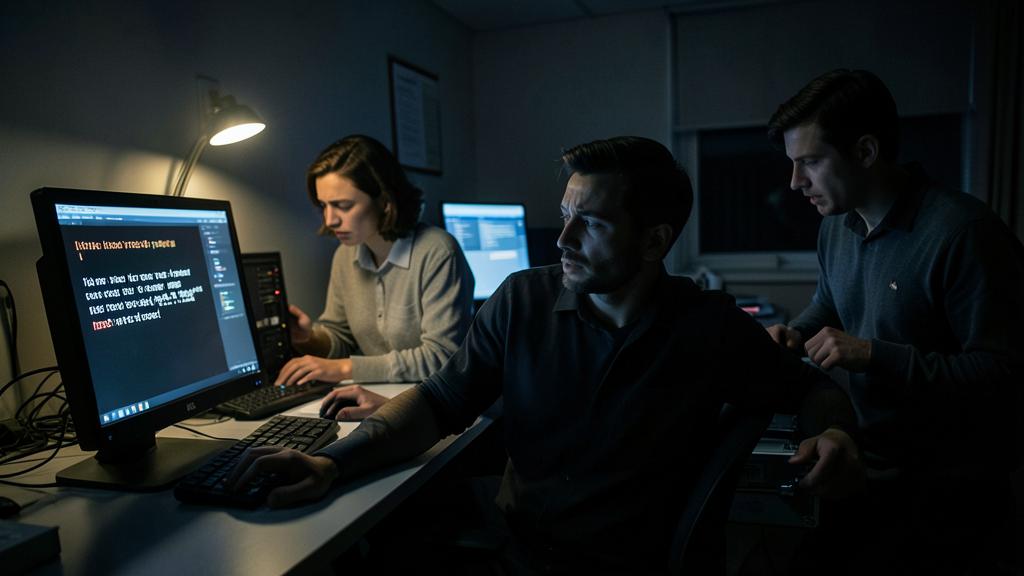
The vast majority of incidents start with a human being tricked — a click, an attachment, an urgency believed at face value. This is bad news that hides good news: training your team is the most cost-effective defense. In practice: regular and lively awareness (real examples, fake phishing exercises) rather than a signed-forgotten charter; simple and well-known rules — you never validate a payment based solely on an email, you report any doubt without fear; and a culture of reporting without blame: the employee who admits a suspicious click within the hour is a hero, not a culprit — it’s early detection that limits damage, and the fear of punishment that worsens it by delaying the alert.

Preparing for the worst: the plan that saves
The question is no longer « if » but « when » — and the difference between a managed incident and a disaster lies in preparation. The bare minimum, even for a small business: knowing who to call (IT provider, cyber insurance if applicable, public assistance for victims); having offline contacts (a paper directory is useful when everything is encrypted); knowing the first steps — isolate affected machines, do not shut down abruptly, do not pay without advice, preserve evidence; and having tested your backups — an untested backup is a hypothesis, not protection. Add the notification obligations in case of personal data leaks: knowing them in advance avoids discovering them in panic.
What not to do. Paying a ransom in a hurry is almost always a mistake: no guarantee of recovery, funding of crime, and signaling your « payer » profile for future attacks. Before any decision: isolate, have a professional assess (decryption tools exist for some strains), check backups, file a complaint. The ransom is the last resort of an unprepared organization — be the prepared organization.

Frequently asked questions
What budget to protect yourself properly?
The foundation (two-factor authentication, backups, updates, transfer procedures, awareness) mainly costs rigor. Beyond that, support from a provider and possible cyber insurance are scaled to the activity — always cheaper than a week of complete shutdown.
Is the cloud safer than my servers?
For a small business, generally yes: large professional services are better defended than a local server without an expert. Provided you secure what remains your responsibility: the accesses (two-factor authentication!), the shares, the backups.

Is cyber insurance worth it?
It is developing and can cover business interruption and crisis management assistance — useful, but never a substitute for basic measures: insurers increasingly require them as a condition of coverage.
What to remember
Cybercrime has been industrialized and now primarily targets the least defended: for SMEs and microbusinesses, the question is no longer whether they are a target — they are — but whether they are a difficult target. The good news lies in the asymmetry of remedies: a simple foundation (two-factor authentication, tested and offline backups, updates, double validation of transfers) and a trained team that reports without fear blocks most real attacks. Add a minimal plan for D-Day — who to call, what to do, what not to do — and the likely incident becomes a bad moment rather than an existential threat. In cybersecurity as elsewhere, survival belongs to the prepared: prepare while it’s calm.



Is your business protected? Let’s do an audit.
Leave a Reply
You must be logged in to post a comment.