
« What are we eating tonight ? » — the most asked question in domestic life, and one of the most underestimated mental loads: composing, varying, balancing, using up leftovers, sticking to the budget, pleasing everyone — 700 times a year. AI steps into the kitchen exactly there: weekly menus in one request, recipes built on what’s left in the fridge, shopping lists generated, adaptations to diets and tastes. Here’s how to make it a real help — that simplifies without standardizing, and respects the essential: the pleasure of eating.
The full-empty fridge: cooking what you have
The most immediately magical use: the recipe from leftovers. List what’s lying around — « three carrots, half a roasted chicken, cream, a bit of rice, a lemon » — and ask for three meal ideas: the AI composes (it knows classic pairings and basic techniques) and details the steps — time, quantities, variations. The refinements that make the difference: specifying the real constraints (« 20 minutes max, a picky child, no oven »), asking for the simple version first (the AI loves sophistication — « weekday recipe, not restaurant » sets the tone), and photographing the fridge or pantry — vision assistants inventory from the image: the photo + « what can I make with this tonight ? » combo is the ultimate anti-waste gesture. This reflex alone changes two measurable things: waste (wilted vegetables find a home before the trash — dozens of kilos per household per year) and the resort to « takeout by default » — the budget item no one dares to calculate.
AI helps turn random fridge items into real meals. Just list what you have and it suggests recipes, even with special needs like time limits or picky eaters. This reduces food waste and saves money by preventing last-minute takeout.
You have 2 eggs, 3 slices of bacon, and half a bell pepper. Ask AI: “What can I make with these in 15 minutes?” It might suggest a quick frittata with step-by-step instructions, using exactly what you have.
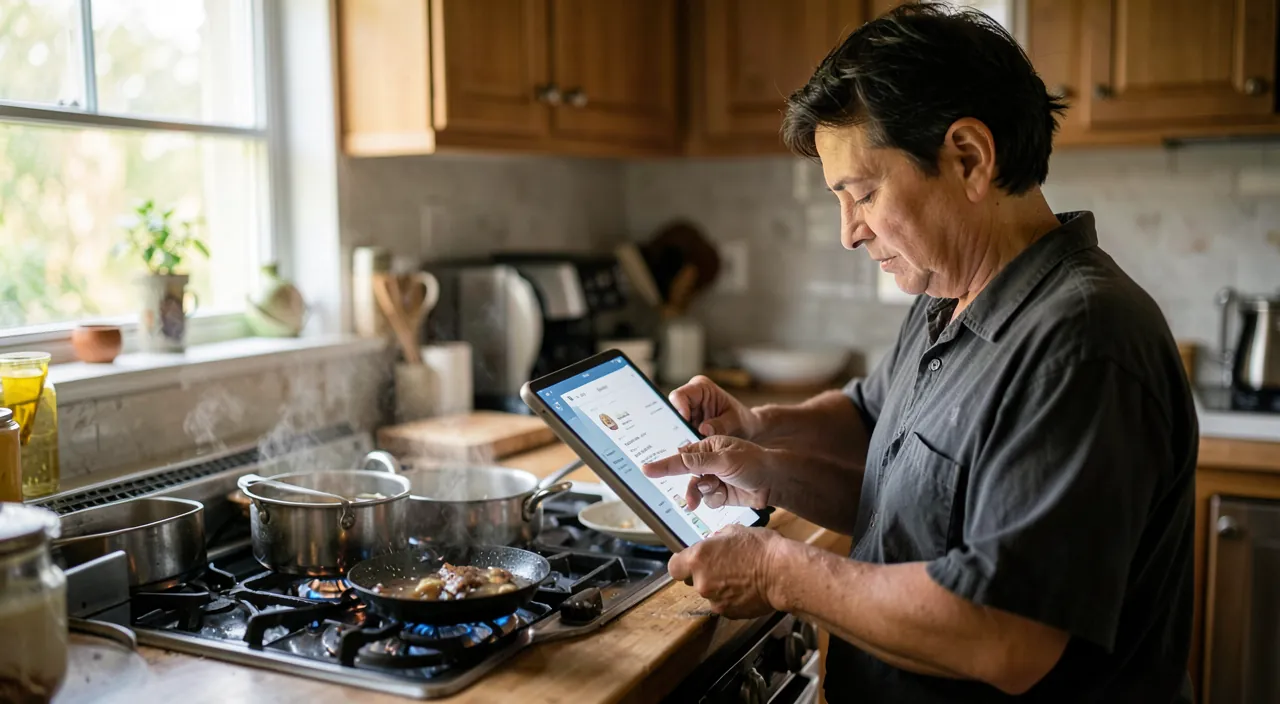
Weekly menus: the outsourced mental load
The next level: planning. Give the framework once — household (number, ages, appetites), tastes and restrictions, approximate budget, schedule constraints (Tuesday is 15 minutes, Sunday is cooking day), equipment — and ask for the weekly menu: varied dinners, overall balance, smart reuse (Sunday’s roast becomes Monday’s wrap — explicitly ask for this « cascade cooking » logic, it’s what saves time and money), and the consolidated shopping list by sections, generated right after (to send to your shared list — see our family shopping guide). Good practices for AI menus: make it react rather than dictate — ask for a proposal, cross out two dishes, demand replacements (« not two poultry dishes, replace the gratin with a cold dish »): three back-and-forths give YOU your week, not theirs; keep a family document — the saved and reused prompt-framework (tastes, restrictions, format) each week (consistency in instructions ensures quality); and integrate batch cooking if that’s your style — « organize these five dinners in a two-hour Sunday prep session »: battle plan, cooking order, storage — the AI excels in that logistics.
The right reflex. Build your family repertoire: every liked AI recipe is saved (notes app, « Approved » folder) with your real adjustments (« double the spices, 10 more minutes »). In three months, you have your household’s recipe binder — tested, approved, adapted — and planning becomes a mix of tried-and-true and AI novelties. It’s the opposite of dependency: the AI feeds a culinary heritage that belongs to you — like the old recipe notebook, but more alive.

Diets, health, and special cases: the help that must stay cautious
The AI adapts remarkably: vegetarian one night a week (with the real balance questions — proteins, iron — explained), gluten-free or lactose-free (detailed substitutions), tight budget (« the week for X euros » — legumes, economical cuts, and seasonal vegetables make a strong comeback, rightly so), baby food diversification or picky kids’ plates (classic strategies — shapes, involvement, repetition — well explained). BUT the medical boundary is strictly respected: for real allergies, the AI helps cook without the allergen — label and cross-contamination checks remain human and systematic (never delegate an allergic person’s safety to a generated list); for medical diets (diabetes, kidney failure, treatment interactions…), the framework comes from the doctor or dietitian — the AI executes this framework (« menus compatible with these instructions »), it doesn’t define it; and for weight loss, beware of restrictive plans it may produce on persistent request — official benchmarks (variety, satiety, pleasure, no absolute bans) are the right ones, and a professional is better than a chatbot for that journey. The general rule is the same everywhere: the AI explains and organizes very well — it doesn’t prescribe.
Cook better, not just organize
Beyond logistics, the AI is an amazing cooking teacher: the move explained at the moment it blocks (« my mayonnaise split, can it be saved ? » — yes, and here’s how; « what is searing ? ») — on-the-spot troubleshooting, hands in the flour, voice-activated — the voice assistant in the kitchen is the natural usage mode (timers included); progressive technique — « teach me egg cooking this week », « help me progress in pastry in stages » — a custom curriculum, recipe after recipe; exploration — world cuisines approached through accessible dishes (with real names, findable ingredients, and honest substitutes), pairings and seasons explained; and transmission — the family recipe dictated in bulk by grandma, cleaned up into a clear card (quantities specified, steps ordered) without losing its tricks: digitizing family culinary heritage is one of the best uses of the kind. AI-assisted cooking isn’t automated cooking: it’s you at the stove, with a sous-chef who knows everything and never judges.


Beware of plausible but false recipes. Generative AI composes — and sometimes it composes BADLY: absurd proportions (salt in tablespoons), whimsical cooking times, risky pairings, and especially errors on what doesn’t forgive — safe cooking (poultry, ground meat, eggs for vulnerable people), home canning and fermentation (sterilization is NEVER improvised on a generated recipe — botulism at stake: follow official guides), wild mushrooms and foraged plants (no AI identification beats a pharmacist or expert). The reflexes: common sense on proportions (the absurdity is visible), established sources for anything related to food safety, and a meat thermometer for sensitive meats. For everyday cooking, the risk is minor — for summer canning, it’s real: know where the line is.
Frequently asked questions
Generalist AI assistant or dedicated cooking app?
Both complement each other: the generalist assistant wins on customization (leftovers, crossed constraints, dialogue, learning) — dedicated apps on tested and photographed recipes, timed step-by-steps, and integrated shopping. Many households converge toward: AI for improvising and planning, an app or family repertoire for trusted recipes.
Are AI menus really balanced?
Generally correct on major benchmarks (variety, vegetables, starches/proteins) — it’s well-digested nutritional common sense. Explicitly ask for weekly balance (not per dish, it’s unnecessary) and keep a critical eye on extremes: a menu that removes entire food families without medical reason isn’t « optimized », it’s impoverished.
Does it work for a single person?
Excellent — it’s even one of the winning audiences: single portions (the weak point of classic recipes), anti-boredom strategy, managing leftovers from one dish into three differently served meals, and waste-free shopping. The magic command: « I cook for one, I hate eating the same thing three times — adapt this dish into three versions ».

What to remember
AI in the kitchen eases exactly what weighs: the evening idea (fridge photo + three constraints = three recipes), the planned week in dialogue (leftover cascade, consolidated shopping list, orchestrated batch cooking), adaptations (comfort diets, budget, kids) and continuous learning — voice troubleshooting, progressive techniques, family recipes cleaned up. Its limits are clear: nothing medical without professional framework, total human vigilance on allergies, and food safety (sensitive cooking, canning) reserved for established sources. The best sign the tool is well used: your growing family repertoire, your increasing ease, and the 6:30 PM question that’s no longer a sigh. « What are we eating tonight ? » — now, something good, decided in thirty seconds.

Want to master AI and make it a real daily asset? Our training programs support you at your own pace.
Leave a Reply
You must be logged in to post a comment.