
The spelling mistake has never been as costly as in the era of permanent writing: rejected applications, discredited professional emails, ads that inspire mistrust — studies on the impact of mistakes in professional life are conclusive. Good news: AI-powered correctors have changed dimensions — beyond spelling, they cover grammar, style, tone, and clarity, explaining their corrections. For those who hate the past participle agreement and for the meticulous who want to go the extra mile: the complete tour of tools and best practices.
Three generations of tools — and why the last one changes everything
Understanding the offer in three layers: the integrated corrector (word processor, phone) — it highlights pure spelling and simple agreements: useful, but blind to context («the mistakes I made» often passes) ; the specialized correctors (the big names in the field, in software or extension) — deep grammatical analysis, explanations of rules, integrated dictionaries: the reference for writing professionals, with a pedagogical approach ; and the AI generation — assistants and correctors with language models, which understand MEANING: they catch context mistakes (the «a/à» depending on the sentence, the tricky homophone, the tense agreement), reformulate awkward phrases, adjust the tone (more formal, warmer, more concise) and explain each correction in clear French. The winning combination on a daily basis: the integrated corrector as a first line (it catches typos in real-time), and the AI for final proofreading of important texts — the layer of meaning that nothing else offers. Specialized correctors keep their throne for those who write a lot and want to learn the rules in depth.
AI correctors go beyond simple spelling checks. They understand the meaning of your text, fix context mistakes, and even adjust the tone. They’re like having a smart editor who explains every change.
Imagine you write: «I went to the bank to get money» (using the word «bank» as in a financial institution). An AI corrector would catch if you meant «riverbank» and suggest a rewrite if the context is unclear, like «I went to the riverbank to relax» instead.

AI proofreading in practice: the requests that work
It all comes down to the instruction — the tried-and-tested formulas: the strict correction — «only correct spelling and grammar mistakes, without changing my formulations» : essential, because by default the AI rewrites — and your voice disappears (it’s THE number one complaint: the corrected email «that no longer looks like me») ; the commented correction — «list each corrected mistake with the rule» : turns each proofreading into a mini-lesson (your recurring mistakes — yours — eventually stick) ; the balanced improvement — «correct and improve clarity, but keep my tone and structure» : the middle ground for important texts ; the tone check — «is this email too dry? too familiar for a first contact? » : the outside look you don’t have at 11 PM before sending ; and the targeted hunt — «specially check the agreement of past participles and the punctuation of dialogues» : on YOUR known weaknesses. For long texts (report, thesis, book) : in sections, with the same instruction each time — and a final pass for consistency («check uniformity: capitalization of titles, writing of numbers, narrative tense»).
The right reflex. Create your personal mistake sheet : after each commented proofreading, note the two or three rules that keep coming up (YOUR classics — everyone has their own: past participles, «quelque/quel que», commas…). After a month, the sheet has ten lines — and it’s the one you give to the AI as a preamble («especially check these points») AND that you review before important texts. Automatic correction that makes you better instead of making you dependent: that’s the difference between a tool and a crutch.
Major use cases (and their settings)
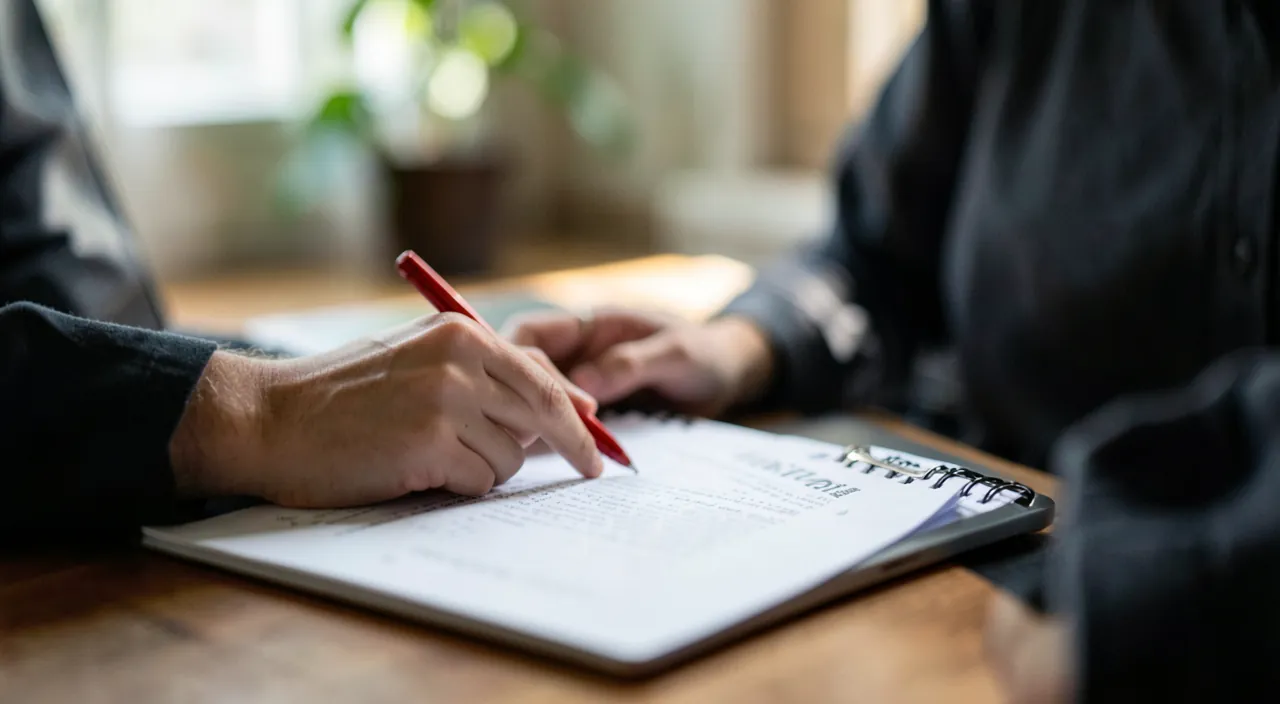
Depending on the stakes: the application — CV and cover letter proofread in strict correction then in tone control («professional without stiffness»), and the hunt for repetitions (the AI tracks them well) : zero mistakes are non-negotiable here — it’s the first filter of recruiters ; the daily professional writing — the quick proofreading of sensitive emails (30 seconds that avoid misunderstandings or typos for the client), official documents in commented correction ; the studies — theses and reports in sections, WITH the rules of the institution in mind (some frame the use of AI: orthographic correction is generally allowed, rewriting is not — the boundary is yours to respect, and honesty is the best policy) ; the personal and creative writing — correct without smoothing: strict instruction + «don’t touch the style», because the quirks of a text live in its rough edges ; and the dyslexia and lasting difficulties — the case where these tools change lives: systematic proofreading, voice dictation beforehand, voice synthesis for auditory proofreading (you hear the mistakes you don’t see) : writing stops being a wall — accessibility tools and AI converge here magnificently.
What the corrector will never correct
The limits to keep in mind: the false smooth meaning — the AI corrects towards the plausible: if your ambiguous sentence had a precise meaning, the «corrected» version may say something else — the final proofreading of YOUR important texts remains yours (the tool suggests, the author decides) ; the proper nouns and technical terms — the corrector that «corrects» a person’s name, product name, or professional term into a common word is a classic: check them separately ; the living language — regionalisms, intentional oral language, creative neologisms get «normalized» : defend them with instructions ; and the spelling that remains a skill — for children and teenagers learning, the permanent corrector deprives them of the red light that makes them learn: school is right to moderate its use — commented correction (with rules) is the pedagogical use, silent correction is the productive use: parents must place the cursor according to age. A final word on confidentiality, always it: sensitive mail (medical, legal, HR) entrusted to an online corrector goes to servers — specialized correctors in local software and offline functions keep the advantage for these texts.
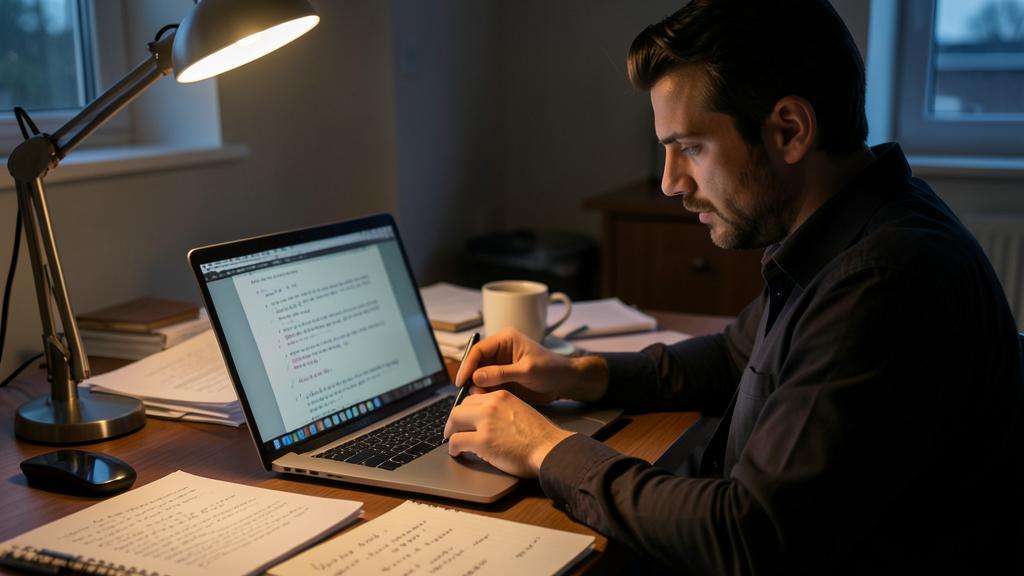

Beware of the standardization of your writing. The fundamental risk of AI correctors is not the mistake — it’s the lost voice : by constantly accepting each «clearer» reformulation, texts converge towards the same standard, fluid, and interchangeable French — that of everyone. The defenses: the strict instruction by default (correct, don’t rewrite), the assumed refusal of suggestions that smooth a formulation you care about, and the test of reading aloud — if the corrected text no longer «sounds» like you, take back your version and only correct the mistake. Spelling is a courtesy; style is an identity: the right tool serves the first without confiscating the second.
Frequent questions
Paid specialized corrector or generalist AI assistant?
For the intensive writer (writing professional, student in long writing, dyslexia) : the specialized one is worth its price — deep integration, rule pedagogy, possible local processing. For everyday use: the AI assistant you already have does the job remarkably, for free, with the flexibility of instructions. Many end up with both: the specialized one continuously, the AI for tone and reformulations.

Can I have a text corrected in a foreign language?
Yes — and it’s one of the best uses: the AI corrects your English (or other) AND explains in French what was wrong: idioms, false friends, register. The useful instruction: «correct as for a professional native, and list my typical mistakes as a French speaker» — a free private lesson with every international email.
Do AI correctors ever make mistakes?
Yes — rarely in pure spelling, more in «over-correction» (normalizing a correct but rare word, altering a nuance). Hence the two safeguards: the corrected version is read (differences in mind), and in case of doubt about a rule, the direct question («why this correction? cite the rule») settles it — a shaky explanation betrays the false correction.
What to remember
Correctors in the AI era do much more than spelling: contextual grammar, style, tone, clarity — explained. The user manual that gets the most out of them: strict correction by default (your voice first), commented to learn (your personal mistake sheet), balanced improvement for major stakes, and final human proofreading — because the false smooth meaning and the «corrected» proper noun remain their blind spots. Zero mistakes in applications, verified tone in sensitive emails, transformed accessibility for dyslexics, balanced pedagogy for children, weighed confidentiality for sensitive content. The spelling mistake was a social fatality — it has become a choice: thirty seconds of assisted proofreading. Your next application, your next important email are worth it.

Want to master AI and make it a real asset on a daily basis? Our training courses accompany you at your own pace.
Leave a Reply
You must be logged in to post a comment.