
Everyone has experienced this doubt: the paint pot bought based on a 2 cm color chart, the sofa ordered “hoping it will work,” the wall torn down in imagination but never dared. Decoration is an art of projection—and projecting is exactly what AI can do: photograph your room, describe your desire, and see YOUR living room repainted, rearranged, transformed—before touching a brush. Tools, methods, real limits, and good reflexes to redecorate without unpleasant surprises.
Visualizing your own room: the breakthrough
The game-changing principle: AI redecorating tools work from your photo—not from a generic interior. Upload the living room picture, and depending on the tool: the color change (the wall in sage green, terracotta, midnight blue—the application on the right surfaces has become very clean, shadows and light preserved: exactly what the color chart will never show); the global style change (“this room in Scandinavian/Mediterranean/industrial style”)—the AI refurnishes and redecorates while keeping the volumes: ideal for exploring directions you wouldn’t have imagined; the targeted replacement (this sofa in beige corduroy, this floor in light oak parquet); and the virtual decluttering—the room emptied of furniture to start from scratch (the real estate agents’ tool, also precious for getting used to YOUR layout). The channels to access them: AI decoration apps (many, often with free trial then subscription), integrated functions of furniture and paint stores (free—their goal is to sell you the result), and general image generators that accept a starting photo (the most flexible, with a bit of practice in the prompt).

The method that avoids disappointments
For the projection to serve the decision: photograph well—daylight, camera at eye level, the room tidy (clutter disrupts surface detection), multiple angles: the quality of the photo makes the quality of the simulation; iterate in small steps—change ONE thing at a time (the wall first, then the sofa, then the curtains): total transformations dazzle but don’t guide—the decision is made element by element; compare side by side—generate the three candidate colors on the SAME photo and display them together (relative choice is reliable, absolute judgment is not); check in real life what the screen doesn’t show—the color validated on screen is confirmed by a real sample on the wall (paint tester, wallpaper swatch): the screen lies about texture, the light in YOUR exposure at different times, and the finish (matte/satin)—the AI reduces the choice of twenty shades to two, the sample decides between the two; and keep dimensions separate—visual simulation measures nothing: the sofa that “looks good” in the image is checked with a measuring tape (and through the doorway!)—the augmented reality apps of stores (the furniture placed in 3D to scale in the room, via the camera) are the perfect complement to aesthetic projection: one tests the style, the other the clutter.
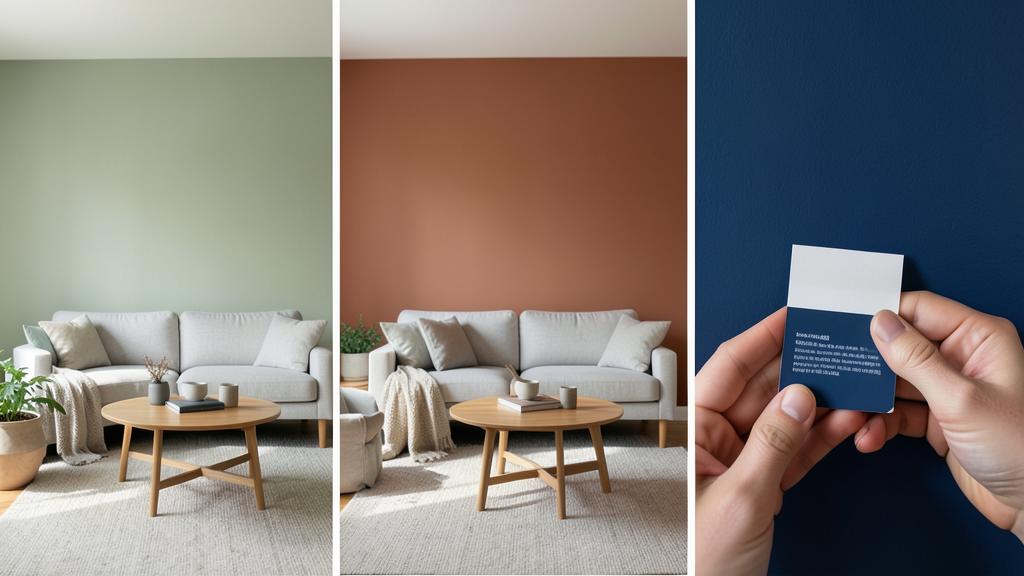
AI decoration tools help you see your room’s changes before you make them. They’re great for picking colors or styles, but they can’t replace real measurements or physical samples. Always check the final choices in your actual space.
You want to repaint your 20 m² living room in a warm terracotta. Using an AI tool, you upload a photo, apply the color, and compare it with three other shades. The AI shows you the best match, but you still order a small paint sample to test on your wall. The sample confirms the choice, and you buy the full pot—no surprises.
The right reflex. Use AI also as a verbal advisor, not just as a visualizer: describe the room (exposure, dimensions, kept furniture, budget) and ask for three argued directions (“what palette to enlarge this 18 m² north-facing living room while keeping the blue sofa?”): the principles it mobilizes (colors and light, scales, circulation) are those of decorators—then visualize the selected directions on your photo. The duo advice + image structures the project where the image alone makes you jump from desire to desire.

Beyond painting: uses that save big
High-stakes projections: major renovations—open partition, moved kitchen, glass wall: visualizing BEFORE consulting the craftsman helps to know what you want (and the generated image is an excellent brief support—“that’s the spirit” is worth a thousand descriptions): beware, AI designs without knowledge of load-bearing walls or networks—the feasibility remains the professional’s job (see the box); real estate—the “virtual home staging” of listings (empty rooms refurnished, dated interiors modernized): effective for selling, double-edged for buying—know how to recognize it (legal mentions increasingly required, “too perfect” furniture, blurry details) and visit knowing that only the volumes are real; rental and reversible layout—testing what transforms without work (paint, textiles, lighting, layout): the ideal playground for the tool, everything is really feasible; and the garden and exterior—terrace, flower beds, fences are projected the same way (photo + desire), with the same benefit: spending with confidence. Each time, the real gain is the same: replacing the gamble purchase with the decision purchase—on amounts where the mistake is costly.
What the generated image doesn’t say
Blind spots to know: the color accuracy—your screen is not calibrated and the generated light is not yours: the AI compares shades better than it predicts THE shade (hence the final real sample); the invented products—the sofa in the simulation doesn’t exist in stores: some store tools link the image to their catalog (buyable as is), the generalists don’t—plan the “find the real equivalent” step (reverse image search helps); the approximate proportions—the AI beautifies: ceilings subtly raised, flattering perspectives—the real measurements govern; and the manufactured crush—these images are beautiful by design (perfect light, polished rendering): the real room will have your objects, your life, your light—aim for the right direction, not the copy of the image. In a word: the tool is an INTENTION simulator, remarkable for choosing—not a results contract.

Beware of walls you only push in photos. AI knocks down partitions with an enthusiasm that no structure slows down: it ignores load-bearing walls, ducts, electricity, plumbing, and urban planning rules—and its “after renovation” images seem deceptively simple. Any structural project goes through a professional diagnosis (and often an authorization): the AI image serves to express the desire, never to validate feasibility or estimate the budget—construction setbacks often start with a beautiful image. Same vigilance on “projected” real estate ads: the shown potential only engages your renovation budget, not the seller.
Frequent questions
Are these applications free?
The store tools (paint, furniture), yes—that’s their marketing. Specialized apps work with a limited free trial then subscription (beware of weekly subscriptions—unsubscribe after the project); general generators offer enough quota for a one-time project. To redecorate ONE room: free is more than enough.

Can I visualize with my real kept furniture?
Yes—that’s even the best practice: ask for the change “keeping the sofa and the bookshelf” (the tools with zone selection protect the chosen elements). The most useful simulation is not the magazine room: it’s YOUR room, your furniture, and just what changes.
Can AI help me choose without knowing how to name the styles?
Perfectly: show it photos of liked interiors (yours, from magazines) and ask “what characterizes what I like? apply this spirit to my room.” It names your taste (materials, palette, eras)—and this found vocabulary is then useful everywhere: searches, stores, craftsmen.

What to remember
AI has given decoration what it has always lacked: seeing before doing—your photographed room, repainted, refurnished, restyled in a few tries; the color choice narrowed down, the direction found, the purchase transformed from a gamble into a decision. The method: careful photo, one modification at a time, side-by-side comparisons, real sample to decide, measuring tape and augmented reality for dimensions—and the AI advisor upstream to structure. Limits in mind: indicative colors, invented products, flattering proportions, and above all no feasibility value—the load-bearing walls, ducts, and budget remain the professionals’ job. The paint pot bought on 2 cm of color chart is over: the next color of your living room, you’ll have seen it on your own walls—before even opening the pot.

Want to master AI and make it a real daily asset? Our training courses support you at your own pace.
Leave a Reply
You must be logged in to post a comment.