
Eight out of ten visitors read the title; only two will read the rest. This figure, known to all editors, says it all: the title is not the packaging of the content — it’s its ambassador, and often its only chance. A good title attracts the click, yes; but above all, it keeps its promise — because the clickbait title that disappoints costs more than the dull title. This guide teaches you how to write titles that entice without ever betraying: the mechanisms, proven formulas, and the red line of clickbait.
What a good title does (in one second)
An effective title accomplishes three simultaneous missions: it says what it’s about (clarity first — the reader must instantly situate the subject), it says for whom and why (the benefit or the stakes: what do I gain from reading?), and it gives a reason to click now (curiosity, concrete promise, legitimate urgency). The title that only accomplishes the first mission is accurate but invisible (« Data backup »); the one that only accomplishes the third is clickbait (« You won’t believe your eyes »). The good title holds all three: « Backup: the simple method that protects your photos in 10 minutes. » Clear subject, clear benefit, precise promise — and deliverable.

A good title does three things in one second: tells you what it’s about, explains why you should care, and gives you a reason to click right now. It’s like a promise that must be kept in the content.
A bad title: “Incredible trick!” (vague, no benefit). A good title: “How to back up your photos in 10 minutes without a cloud service” (clear subject, benefit, and promise).
Mechanisms that work (and why)
- The explicit benefit: « Gain an hour a day with… » — the reader projects themselves into the result.
- The question they already ask: « Do you still need an antivirus in 2026? » — the title-mirror of their own question is irresistible.
- The number: « 5 mistakes that ruin your site » — it promises a structure, scannable content, an end.
- The « how »: « How to sell your furniture online (without getting scammed) » — the educational promise, a sure value of the useful web.
- The intriguing negation: « Stop cleaning your PC with these software programs » — the counterpoint that piques curiosity by promising a correction.
- The precision that lends credibility: « in 10 minutes, » « no equipment, » « even beginners » — the concrete detail makes the promise real.
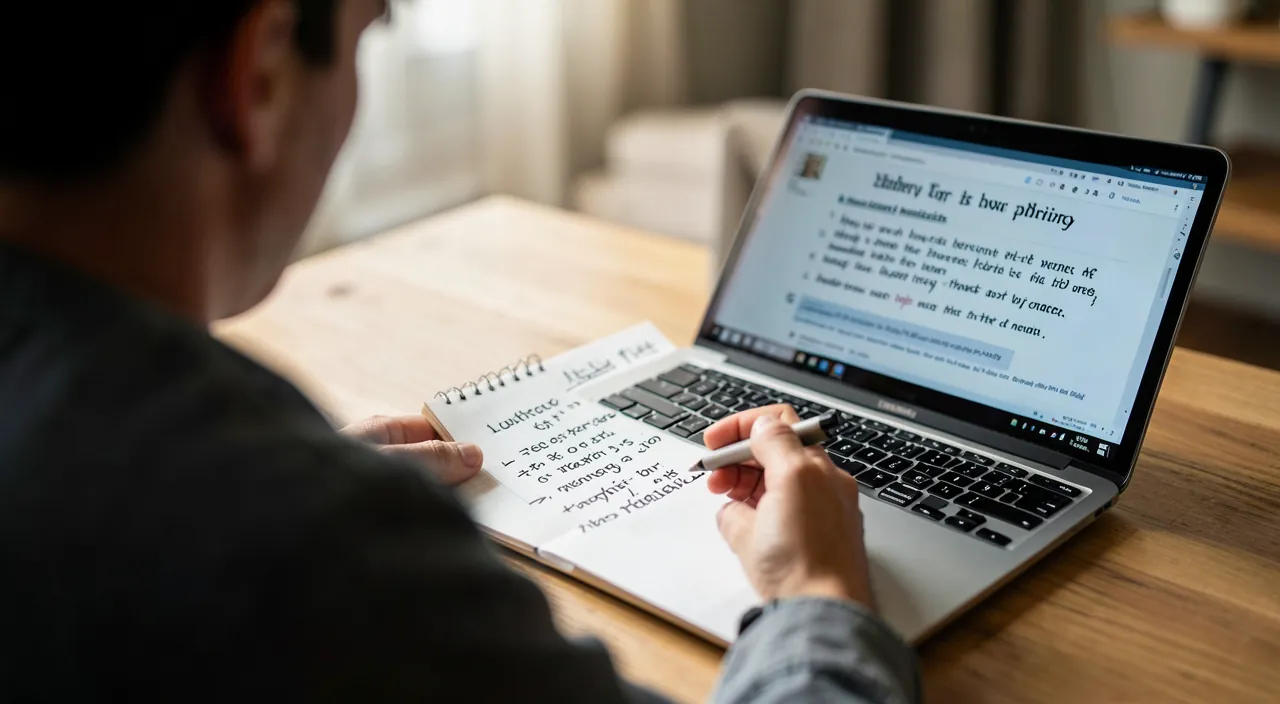
The right reflex. Write ten titles to keep one: the first draft is always bland, the really good titles appear at attempts 5 to 10 — vary the mechanisms (question, number, how, benefit) on the same subject and compare. AI excels as a training partner: ask for ten variants, keep the best one, improve it further. Ten minutes on the title are better than an hour on a paragraph that no one will read without it.

The red line: hook without trapping
Clickbait (« putaclic ») works — once. The title that oversells (« revolutionary, » « incredible »), that hides the essential to force the click (« this trick that banks hate »), or that promises what the content doesn’t deliver, generates immediate clicks and lasting distrust: the disappointed reader doesn’t come back, doesn’t share, doesn’t trust anymore — and search engines measure these hasty returns. The simple rule: the title is a contract — everything it promises, the page must deliver, quickly and clearly. The honest hook is not less powerful than the trap: it’s less spectacular on the first click, and infinitely more profitable on the hundredth.

Titles and SEO: serving two audiences
Your title has a second audience: search engines — and their requirements align with those of humans. Best practices: place the words your reader types (think « query »: « repair stuck roller shutter » rather than « when the mechanism jams »), keep the essential in the first 60 characters (beyond that, the title is truncated in results), and differentiate the page title (displayed in Google, query-oriented) from the editorial title (displayed on the page, where creativity has more room) when your tool allows it. A title that answers the question posed in the search engine starts with an advantage — it’s as mechanical as that.
To avoid. Mystery titles that announce nothing (« What if we talked honestly? »), internal jargon that your clients never type, loud ALL CAPS and hysterical punctuation (« INCREDIBLE!!! »), and uniformity — ten articles titled with the same formula get boring: alternate the mechanisms. Finally, never sacrifice clarity for originality: between a clever title that isn’t understood and a bland title that is, the bland one always wins the click.
Frequently asked questions
What is the ideal length for a title?
Long enough to carry a real promise, short enough to remain intact in search results: aim for 50-60 characters for the indexed title. On the page itself, a bit more flexibility — as long as it’s readable in one breath.
Are numbered titles overused?
They remain among the most effective — because they keep a real structural promise. The condition: that the list actually exists and is worth it. It’s the empty promise that has worn out the mechanism, not the number.

Should you include the year in titles (« in 2026 »)?
For topics where freshness matters (comparisons, trends, prices), yes — the reader looks for up-to-date information, and the dated title reassures them. Then think about updating both content AND title every year: the outdated date has the opposite effect.
What to remember
An honest attention-grabbing title keeps three promises in one second: the clear subject, the visible benefit, the reason to click — served by proven mechanisms (reader’s question, number, « how, » precise benefit, counterpoint) and by the precision that lends credibility. Write ten variants to keep one, think about the words your reader types and the 60 characters of search results — and remember the red line: the title is a contract that the page must honor. The hook that keeps its word builds, click after click, the only thing that matters in the long run: a reader who comes back because with you, the promises in the titles are kept.


Your business deserves a real online presence: showcase site, store, SEO — we create the site that looks like you.
Leave a Reply
You must be logged in to post a comment.