
“ Ask Siri… ”, ask a question to a conversational AI, get a text summarized, draft an email, obtain an instant answer : AI ASSISTANTS are entering our daily lives. Voice assistants, smart chatbots, AI integrated into our tools : they respond, write, explain, organize, increasingly skillfully. Practical and impressive, they also raise questions : reliability, dependence, privacy, critical thinking. How to get the best out of them without being trapped? Let’s take stock of the AI assistants that are settling into our everyday lives.
AI assistants in everyday life : what are we talking about?
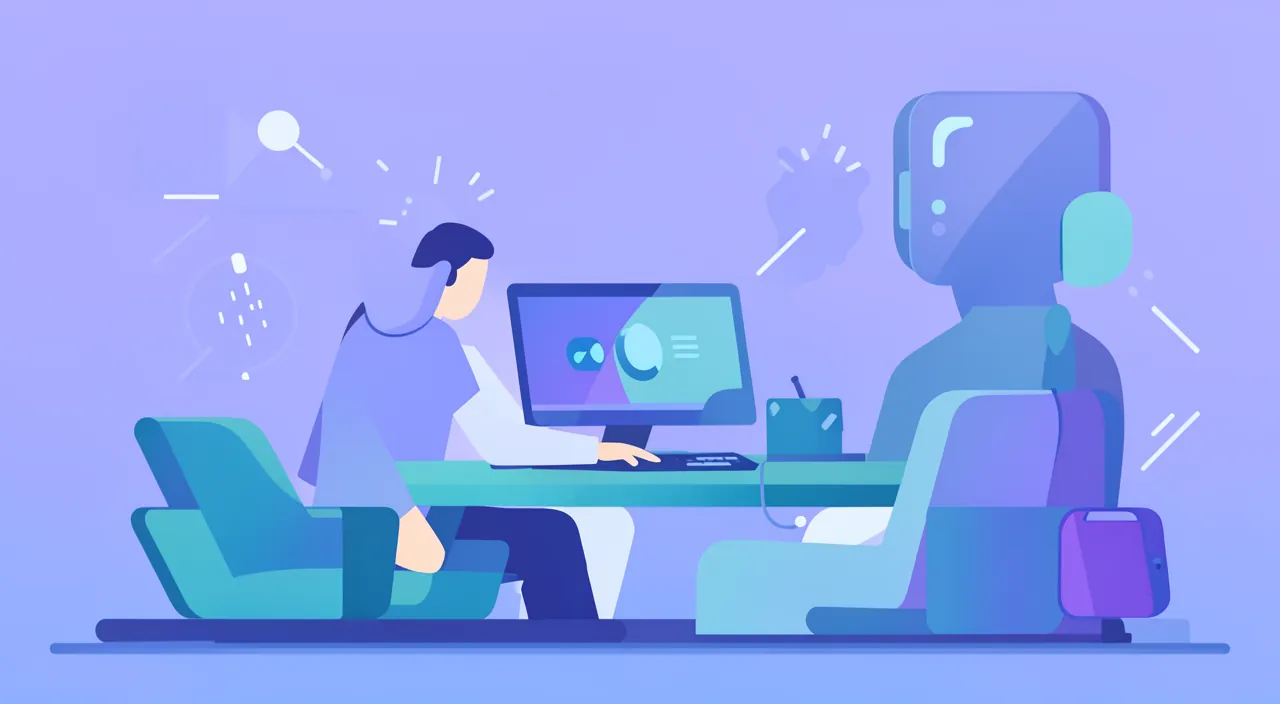
Let’s clarify what these “ AI assistants ” that are multiplying cover. The DEFINITION : an AI assistant is a program, powered by artificial intelligence, that HELPS you with various tasks by understanding your requests (expressed in natural language : in writing or voice) and responding to them ; it can answer questions, write texts, summarize, explain, translate, give ideas, help organize, and more. The DIFFERENT forms : VOICE ASSISTANTS (like Siri, Google Assistant, Alexa : you talk to them, they respond, execute actions — our guides use a voice assistant) ; CONVERSATIONAL AI / smart chatbots (which you write to, that dialogue, write, explain in a sophisticated way — like assistants based on generative AI) ; AI INTEGRATED into our tools (in search engines, office software, messaging apps, phones : they assist, suggest, write, summarize directly in the applications we use). What they CAN do : answer questions, WRITE (emails, texts, drafts), SUMMARIZE (a long document, an article), EXPLAIN (a concept, a word), TRANSLATE, give IDEAS (brainstorming), help ORGANIZE (reminders, schedule, lists), CORRECT a text, and many other tasks ; they are becoming increasingly capable and versatile. Why this GROWTH : advances in AI (notably generative AI) have made these assistants much more PERFORMANT and NATURAL ; they understand better, respond in a more elaborate and useful way ; they integrate everywhere (phones, computers, applications, connected objects) ; they become a daily digital companion for many. The POTENTIAL benefits : time SAVINGS (getting an answer, a text, a summary quickly), help with WRITING and reflection, ACCESSIBILITY (voice helps those who have difficulty reading/typing), assistance in a multitude of tasks ; well used, they can really facilitate daily life. The QUESTIONS they raise : RELIABILITY (AI makes mistakes, “ hallucinates ”), DEPENDENCE (no longer doing things yourself), PRIVACY (what happens to our requests and data?), CRITICAL THINKING (not believing everything) ; these issues call for enlightened use. What to remember to start : AI assistants (voice, conversational, integrated into our tools) are entering everyday life ; they help with many tasks (answering, writing, summarizing, explaining, organizing…), increasingly skillfully, thanks to AI advances ; they offer real benefits (time, help, accessibility) but raise questions (reliability, dependence, privacy, critical thinking) ; the challenge is to get the best out of them without being trapped. Let’s dive deeper.
AI assistants are tools that help you with tasks like writing, summarizing, and organizing. They are becoming more common because they are getting better at understanding and responding to you. However, they can make mistakes, so you should always check their answers. They also raise concerns about privacy and over-reliance, so it’s important to use them wisely.
Imagine you’re writing an email and need help. You ask an AI assistant to draft it for you. It quickly generates a professional-sounding email, saving you time. However, you should always read and edit the email to make sure it’s accurate and fits your style. This way, you get the benefits of the AI without relying on it completely.

Using AI assistants effectively
To benefit from AI assistants while avoiding pitfalls, a few principles of enlightened use. USE them for what they do WELL : AI assistants excel at : WRITING drafts (emails, texts : a starting point to work on), SUMMARIZING (roughing out a long text), EXPLAINING (a concept, a word), REPHRASE, TRANSLATING, giving IDEAS (brainstorming), CORRECTING, answering general questions, helping organize ; for these tasks, they save time and are helpful ; focus their use on these. PHRASE your requests clearly : the more precise and clear your request, the better the answer ; provide context, specify what you want ; you can refine through dialogue (clarify, correct). VERIFY what matters : it’s ESSENTIAL ; AI can be WRONG, “ hallucinate ” (invent facts, figures, sources confidently) ; don’t take its answers at face value, especially for IMPORTANT facts ; cross-check with reliable sources what has an impact (our guides AI limits, AI hallucinations) ; AI is a HELP, not an absolute truth. KEEP your CRITICAL THINKING and JUDGMENT : AI suggests, YOU decide ; don’t delegate your reflection or important decisions to it ; reread, judge, adapt its responses ; judgment remains human (our guides keeping your critical thinking). DON’T share SENSITIVE information with it : be careful what you share with an AI assistant (personal data, confidential information, passwords) ; your requests may be processed/stored ; protect your privacy (see below). For SERIOUS topics, consult a professional : health, law, finance, important decisions ; AI can inform or rough out, but doesn’t replace a qualified expert ; don’t follow its “ advice ” blindly on these topics. Consider AI as an ASSISTANT, not an oracle : a powerful tool that helps you, but fallible ; keep control. REWORK its productions : a text written by AI is a draft to reread, correct, personalize (so that it is accurate, adapted, and yours) ; don’t publish/send it as is without checking. EXPERIMENT to understand : the best way to grasp the strengths and limits of AI assistants is to USE them (see what they do well, where they make mistakes) ; experience teaches better than speeches. KEEP your own CAPABILITIES : use AI as a help, without unlearning to do things yourself (write, think, search) ; don’t become dependent to the point of losing your skills (see below). ADAPT to your needs : everyone finds useful uses (writing, summarizing, ideas, organization…) ; explore, keep what really helps you. In summary : use AI assistants for what they do well (writing, summarizing, explaining, translating, ideas, organizing), phrase clearly, but VERIFY what matters (AI makes mistakes), keep your CRITICAL THINKING and judgment (AI suggests, you decide), don’t share sensitive information, consult a professional for serious topics, rework its productions, and keep your own capabilities ; thus, AI becomes a precious assistant without trapping you.
The golden rule : AI is an assistant that PROPOSES, you keep the judgment and verify. To get the best out of AI assistants without being trapped, remember this principle : AI is a POWERFUL ASSISTANT that HELPS and PROPOSES, but it’s YOU who keep the judgment, decide, and verify ; never treat it as an infallible oracle. Concretely, this translates into two essential reflexes. ONE, VERIFY what matters : AI can be WRONG and even “ hallucinate ” — produce FALSE information (invented facts, figures, sources) with great confidence, which is misleading as it seems credible ; don’t therefore take its answers at face value, especially for IMPORTANT or verifiable facts ; cross-check with reliable sources what has an impact (information you will use, transmit, or act on) ; AI is excellent at roughing out, writing, explaining, but it’s not a guaranteed source of truth (our guides AI hallucinations). TWO, keep your JUDGMENT and critical thinking : AI suggests, YOU dispose ; don’t delegate your reflection, important decisions, or discernment to it ; reread, evaluate, adapt its responses ; what it produces (an email, a text, an answer) is a starting point to REWORK and validate, not a final result to accept blindly ; judgment, responsibility, and decision remain HUMAN. This framework — AI assists, you keep control — allows you to fully benefit from its power (time savings, help with writing and reflection) while avoiding its pitfalls (errors, misinformation, bad decisions). Two important corollaries : for SERIOUS topics (health, law, finance, binding decisions), AI can inform or rough out, but NEVER replaces a qualified professional ; don’t follow its advice blindly in these areas (a mistake can have real consequences) ; consult an expert. And keep your OWN capabilities : use AI as a help, without unlearning to write, think, or search for yourself ; don’t become dependent to the point of losing your skills or autonomy of thought. By treating AI as a precious but fallible assistant — that proposes and helps, while you verify, judge, and decide —, you get the best out of it (it’s a formidable tool) without suffering its risks (errors taken for truth, dependence, delegated decisions) ; it’s the balance of enlightened use : benefiting from AI’s power while keeping your critical thinking and human judgment in control. Neither blind fascination nor rejection : a lucid use.

The issues : reliability, dependence, privacy
RELIABILITY and ERRORS : AI is NOT infallible ; it can be wrong, “ hallucinate ” (invent false information confidently), give incomplete or biased answers ; the problem is that it does so in a CREDIBLE way (it seems true) ; hence the need to VERIFY what matters and keep your critical thinking ; don’t confuse “ fluid and confident answer ” with “ correct answer ” (our guides AI limits). DEPENDENCE : as we rely more on AI assistants, a risk is to delegate TOO MUCH : no longer thinking, no longer writing, no longer searching for yourself, losing certain skills or autonomy of thought ; AI should remain a HELP that enhances you, not a crutch that diminishes you ; keep your own capabilities ; use AI to save time and assist you, without unlearning to do ; also be careful not to delegate your JUDGMENT (keeping your critical thinking). PRIVACY : major issue ; what you share with an AI assistant (your questions, requests, texts) can be PROCESSED, stored, used (to improve AI, or other purposes depending on the services) ; don’t share SENSITIVE or confidential information (personal data, professional data, passwords, secrets) ; be aware of what happens to what you share ; check the privacy policies and settings ; for voice assistants, know that they listen (microphone) and that your requests may be saved (our guides voice assistants and privacy). BIASES : AI, trained on data produced by humans, can reflect biases, prejudices, errors ; its answers are not “ neutral ” nor perfect ; keep your distance. DISINFORMATION : AI can produce or relay false information ; and it can be used to generate disinformation on a large scale (fake texts, fake images) ; hence the importance of critical thinking and verification, for your own uses as well as facing AI-generated content you encounter (our guides recognizing false information). RESPONSIBILITY : it’s YOU who remain responsible for what you do with AI’s responses (what you publish, send, decide based on them) ; AI has no responsibility ; don’t hide behind it. SERIOUS topics : for health, law, finance, important decisions, AI doesn’t replace a professional ; its “ advice ” can be wrong and have consequences ; consult an expert. MANIPULATION and malicious uses : AI can also be used for malicious purposes (more credible scams, fake content, manipulation) ; stay vigilant about the content you receive (our guides recognizing scams). The right BALANCE : neither blind fascination (AI has real limits), nor rejection (it’s a useful tool) ; a LUCID use : benefiting from its strengths (writing, summarizing, ideas…) while knowing its limits (errors, biases, privacy) and keeping your judgment. In summary : the issues with AI assistants are RELIABILITY (they make mistakes : verify), DEPENDENCE (don’t delegate too much : keep your capabilities and judgment), PRIVACY (be careful what you share : no sensitive information), BIASES and DISINFORMATION (critical thinking), RESPONSIBILITY (it’s you), and serious topics (consult a professional) ; enlightened use consists of benefiting from their strengths while knowing these limits and keeping the human in control.
Warning : AI makes mistakes (verify), be careful with privacy and dependence, and keep your judgment. AI assistants are useful, but several pitfalls call for vigilance. AI is WRONG and “ HALLUCINATES ” : this is the number one pitfall ; AI can produce FALSE information (invented facts, figures, sources) with great confidence, which is misleading as it seems credible ; NEVER take its answers for truth, especially for important facts ; VERIFY what matters with reliable sources ; don’t confuse “ fluid and confident answer ” with “ correct answer ” (our guides AI hallucinations) ; an AI that makes mistakes confidently can lead you astray if you don’t verify. DON’T DELEGATE SERIOUS topics : for HEALTH, LAW, FINANCE, an important decision, don’t FOLLOW AI blindly ; it can inform or rough out, but doesn’t replace a QUALIFIED PROFESSIONAL ; a mistake in these areas can have real consequences ; consult an expert. Protect your PRIVACY : what you share with an AI assistant (questions, requests, texts) can be processed, stored, exploited ; DON’T share SENSITIVE or confidential information (personal data, professional data, passwords, secrets) ; be aware of what happens to what you share ; for voice assistants, know that they listen via the microphone (our guides voice assistants and privacy) ; check the privacy settings. Be careful with DEPENDENCE : don’t delegate EVERYTHING to AI to the point of no longer thinking, writing, or searching for yourself ; AI should ENHANCE you, not DIMINISH you ; keep your own capabilities and autonomy of thought ; don’t lose your skills or judgment by relying too much on it ; special attention for YOUNG people and learning (AI shouldn’t replace the effort of learning ; our guides helping your children). Keep your CRITICAL THINKING : AI reflects BIASES (its answers are neither neutral nor perfect), can relay DISINFORMATION ; don’t take its answers as neutral truths ; cross-check, question (our guides keeping your critical thinking). Assume your RESPONSIBILITY : it’s YOU who are responsible for what you do with AI’s responses (publish, send, decide) ; don’t hide behind the tool ; ALWAYS reread and validate what AI produces (a generated text is a draft, not a final result to send as is). Beware of MALICIOUS uses of AI : it’s also used to create more credible scams, fake content, manipulation ; stay vigilant about the content you receive (a message, an image, a voice can be generated by AI — our guides recognizing scams). Beware of COSTS : some advanced AI assistants are paid (subscriptions) ; check what’s free. Finally, don’t fall into either BLIND fascination (AI has real limits) or TOTAL rejection (it’s a useful tool) : the goal is a LUCID use. By verifying what matters, not delegating serious topics or your judgment, protecting your privacy, keeping your capabilities and critical thinking, and assuming your responsibility, you’ll benefit from AI assistants (formidable tools) without suffering their pitfalls ; AI is a powerful but fallible assistant : keep the human in control.

Frequent questions
Can we trust the answers from an AI assistant?
Yes for what it does well, no blindly for everything : the nuance is essential. You can trust an AI assistant for what it does WELL : REPHRASE, SUMMARIZE, EXPLAIN, WRITE drafts, TRANSLATE, give IDEAS, correct, rough out a subject ; for these tasks, it’s performant and saves time. BUT you must NOT give it BLIND trust, especially for : FACTS (AI can be WRONG and “ hallucinate ” : invent facts, figures, sources confidently ; verify what matters with reliable sources) ; SERIOUS topics (health, law, finance : AI isn’t a professional ; don’t follow its advice blindly, consult an expert) ; NEUTRALITY (AI reflects biases ; its answers are neither neutral nor perfect) ; CURRENT events or accuracy (its knowledge can be outdated or incomplete). The main problem : AI responds in a FLUID and CONFIDENT way, which gives an impression of reliability ; but “ confident answer ” doesn’t mean “ correct answer ” ; it can be wrong with the same confidence it’s right ; it’s misleading. The right attitude : ENLIGHTENED trust — knowing where AI is reliable (rephrasing, help with writing, general explanations) and where you need to VERIFY (important facts, serious topics) ; consider AI as an assistant that PROPOSES and helps, not as an absolute source of truth ; keep your critical thinking and judgment ; cross-check what has an impact ; reread and validate what it produces. In summary : yes, you can trust an AI assistant for what it does well (writing, summarizing, explanations, ideas), but NOT blindly for everything ; it makes mistakes (sometimes confidently), reflects biases, and doesn’t replace a professional for serious topics ; adopt ENLIGHTENED trust : benefit from its strengths, but verify what matters and keep your judgment ; neither blind trust (risky), nor total mistrust (which would deprive you of a useful tool), but trust as appropriate, proportional to the impact.

Will AI assistants make us dependent or “ dumb us down ”?
This is a REAL risk if we abuse them without discernment, but avoidable ; it all depends on how we use them. The RISK of dependence exists : by delegating too much to AI (thinking, writing, searching, deciding), we can lose certain SKILLS, weaken our autonomy of thought, no longer make the effort to learn or understand for ourselves ; this is a legitimate concern, like for any technology that “ does things for us ” ; the danger isn’t AI itself, but a use that would replace our own reflection instead of assisting it. How to AVOID this risk : use AI as a HELP that ENHANCES you, not as a crutch that diminishes you ; keep your OWN capabilities : continue to think, write, search, decide for yourself ; use AI to save time, rough out, inspire, but don’t delegate your judgment or effort of understanding to it ; REREAD and REWORK what it produces (instead of accepting passively) ; VERIFY and keep your critical thinking (instead of believing everything) ; consider its productions as starting points, not final results ; thus, AI makes you more effective without making you passive. Special attention for LEARNING and YOUNG people : AI shouldn’t replace the effort of learning, understanding, developing skills ; for students, relying on AI to “ do things for them ” without learning is counterproductive ; AI can help learn (explain, practice) but not replace learning ; guide young people on enlightened use (our guides helping your children with screens). The BALANCE : AI well used is a formidable TOOL that enhances our capabilities (like a calculator, a search engine : powerful aids) ; poorly used (delegating everything blindly, no longer thinking), it can indeed weaken ; it’s up to US to choose the use : help or substitute. In summary : yes, there’s a risk of dependence and loss of skills if we abuse AI without discernment (delegating our reflection, effort, judgment) ; but this risk is AVOIDABLE : by using AI as a help that enhances you (not a crutch that diminishes you), keeping your own capabilities and critical thinking, verifying and reworking its productions, and not delegating your judgment ; AI won’t “ dumb you down ” if you stay active and lucid ; on the contrary, well used, it enhances you ; it all depends on YOUR use : keep the human in control.

What happens to my data when I use an AI assistant?
This is an important PRIVACY issue : what you share with an AI assistant can be processed and exploited, to be aware of. When you use an AI assistant (voice or conversational), your REQUESTS (questions, texts, voice queries) are generally sent and processed on servers ; depending on the services, this data can be STORED, analyzed, used (to provide the answer, but sometimes also to improve the AI, or for other purposes depending on the policies) ; in short, what you share with AI isn’t necessarily “ private ” and ephemeral. The IMPLICATIONS : DON’T share SENSITIVE or confidential information with an AI assistant : precise personal data, confidential professional information, passwords, secrets, health data, etc. ; consider that what you type or say to AI could be seen or stored ; in doubt, refrain from sharing sensitive information. For VOICE ASSISTANTS in particular : they listen via the MICROPHONE (to capture your commands) ; your voice requests may be recorded ; some have settings to limit this storage or listening ; check and adjust the privacy settings (our guides voice assistants and privacy). What you can DO : check the PRIVACY policies and SETTINGS of the assistant you use (what does it collect? how? can you limit it? delete your history?) ; many services allow you to manage, limit, or delete the collected data ; explore these options. Prefer SERIOUS and transparent services about data usage. Be particularly careful in a PROFESSIONAL context (not sharing the company’s confidential data with a public AI assistant without authorization). Adapt according to SENSITIVITY : for trivial uses (a general question, a non-sensitive text), the risk is low ; for personal or confidential information, be careful. In summary : when you use an AI assistant, your requests can be processed, stored, and exploited (depending on the services) ; it’s not necessarily private ; DON’T therefore share sensitive or confidential information (personal data, passwords, secrets) ; for voice assistants, know that they listen and record your requests ; check and adjust the privacy settings, prefer serious services, and adapt your caution to the sensitivity of what you share ; it’s a privacy issue not to be neglected with these tools that are settling into our daily lives.
What to remember
AI ASSISTANTS (voice like Siri/Google/Alexa, conversational AI/smart chatbots, and AI integrated into our tools) are entering everyday life : they respond, WRITE, SUMMARIZE, EXPLAIN, translate, give ideas, help organize, increasingly skillfully thanks to AI advances. They offer real BENEFITS (time savings, help with writing and reflection, accessibility), but raise ISSUES (reliability, dependence, privacy, critical thinking). The GOLDEN RULE : AI is a POWERFUL ASSISTANT that PROPOSES and helps, but it’s YOU who keep the judgment, decide, and verify ; never treat it as an infallible oracle. Two essential reflexes : 1) VERIFY what matters (AI is WRONG and “ hallucinates ” : it produces plausible, not necessarily true, information, sometimes with misleading confidence ; cross-check important facts with reliable sources ; “ confident answer ” ≠ “ correct answer ”) ; 2) keep your JUDGMENT and critical thinking (AI suggests, you decide ; reread, rework, and validate its productions — a generated text is a draft, not a final result ; don’t delegate your reflection). Use AI for what it does WELL (writing, summarizing, explaining, translating, ideas) and focus its use on these. Points of VIGILANCE : DON’T delegate SERIOUS topics (health, law, finance : consult a professional ; don’t follow AI blindly) ; protect your PRIVACY (what you share with AI can be processed/stored : no sensitive information ; voice assistants listen ; check the settings) ; be careful with DEPENDENCE (AI should ENHANCE you, not diminish you : keep your capabilities, your autonomy of thought ; special attention for learning and young people) ; keep your CRITICAL THINKING against biases and disinformation ; assume your RESPONSIBILITY (it’s you, not AI) ; beware of malicious uses (scams and fake content generated by AI). Neither BLIND fascination (AI has real limits), nor REJECTION (it’s a useful tool) : adopt a LUCID use. AI assistants are formidable tools that are settling permanently into our lives ; well used — for what they do well, by verifying what matters, keeping your judgment, privacy, and capabilities, with the human in control —, they really facilitate daily life without trapping us ; AI is a powerful but fallible assistant : benefit from its power, keep control.

Want to understand and master the technologies that change your daily life? Our training courses enlighten you.
Leave a Reply
You must be logged in to post a comment.