
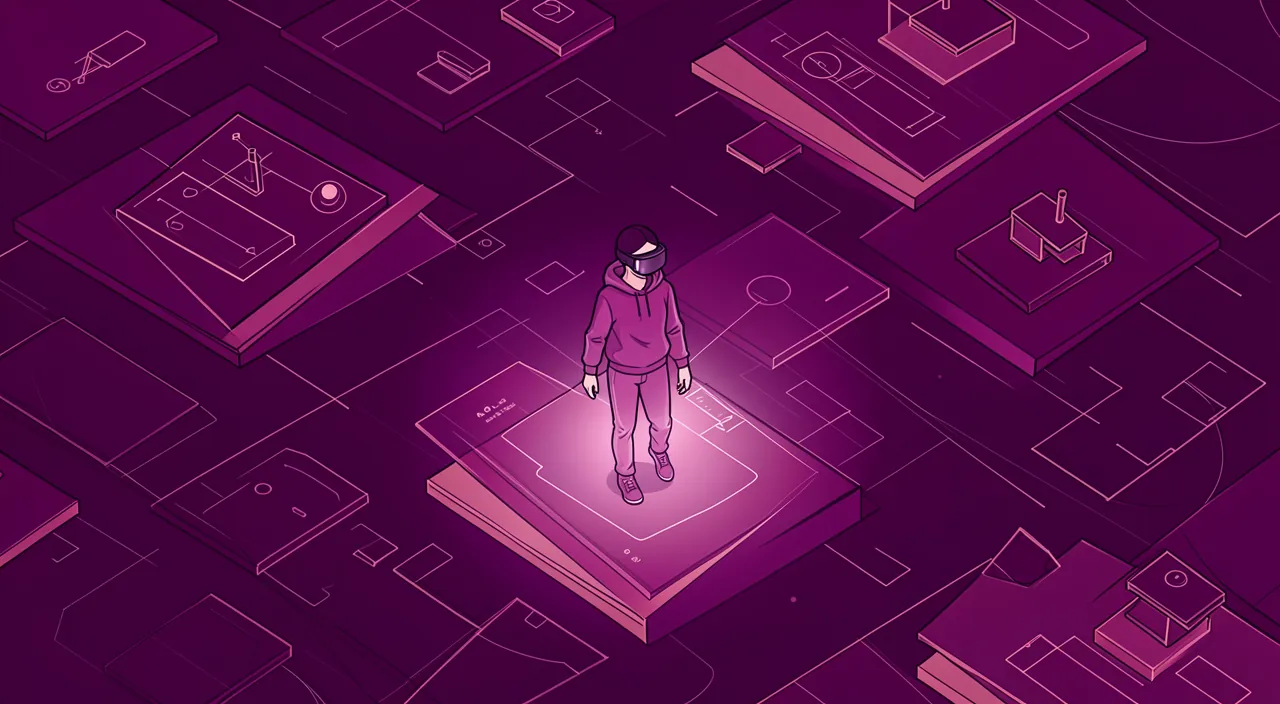
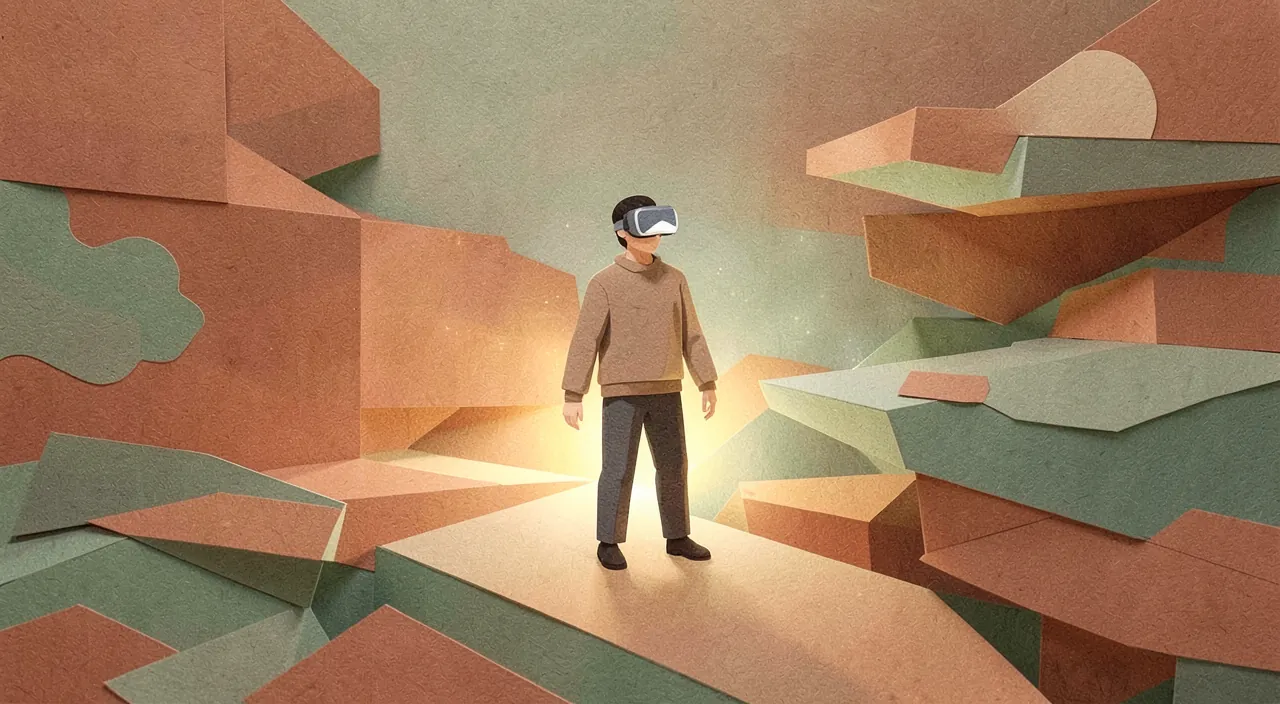
A few years ago, the « metaverse » was presented as the next big revolution: a virtual world where people would live, work, and meet through avatars, wearing a virtual reality headset. The promises were immense, the investments colossal, and the media hype at its peak. Then the enthusiasm faded, leaving many wondering: is the metaverse a passing fad or a real future, just further away than announced? Between the oversold dream and the concrete uses that already exist, let’s take a clear look at this fascinating concept: what it is, where it stands, and what to think about it.
The metaverse: what are we talking about?
The term « metaverse » has been used in all kinds of ways; let’s start by clarifying what it covers. The DEFINITION (fuzzy): the metaverse generally refers to the idea of VIRTUAL and immersive worlds, persistent, in which one would interact through AVATARS — to meet, play, work, exchange —, often using virtual or augmented reality (headset); it’s a vision of a more « immersive » internet, where one would « be inside » the digital space rather than in front of a screen. A concept rather than a UNIQUE reality: beware, the metaverse is not ONE product or ONE specific place; it’s a CONCEPT, a vision of the future, that different players interpret differently; there is not « a » metaverse, but projects, platforms, and varied visions grouped under this vague term. The BUILDING BLOCKS that already exist: some elements of the « metaverse » do indeed exist; massive virtual worlds and online games (where millions of people meet, play, socialize via avatars) prefigure the idea; virtual and augmented reality are progressing; virtual meeting and work spaces exist; these building blocks are real, even if the « big metaverse » unified remains a vision. The HYPE and its promises: the metaverse has seen intense media hype, with spectacular promises (we would live a large part of our lives there) and massive investments; this hype created enormous expectations… and disappointment when the promised revolution did not happen as quickly. The DECLINE: after the excitement, the enthusiasm has largely subsided; the « metaverse » as it had been oversold did not materialize at the announced pace; some have declared it « dead », others believe it is simply further away; the subject has moved from hype to caution. A concept that EVOLVES: moreover, attention has shifted (toward AI, in particular); the vocabulary is evolving; immersive technologies continue to progress under other names or uses. The main idea: the « metaverse » refers to the vision of immersive and persistent virtual worlds where one would interact via avatars (to meet, play, work), often with virtual reality; it’s a FUZZY concept and a vision of the future, more than a unique and existing reality. Some building blocks already exist (virtual worlds, massive online games, progressing virtual reality), but the « big metaverse » unified and revolutionary, intensely oversold not long ago, did not materialize at the announced pace, and the excitement has largely subsided. Hence the question: fad or future? The nuanced answer probably lies somewhere in between.
The metaverse is like a big idea that people thought would change everything overnight. It’s about virtual worlds where you can work, play, and meet others through avatars. Some parts of this idea already exist, like online games and virtual reality. But the big, all-in-one metaverse that was promised didn’t happen as fast as people expected. So it’s not completely dead, but it’s not the instant revolution some thought it would be.
Think of a company like Meta (formerly Facebook) that invested billions in creating a “metaverse” where people could work in virtual offices. They imagined millions of people wearing VR headsets for meetings. But today, most people still use Zoom or Teams on regular screens. Some virtual worlds like Fortnite or Roblox already have millions of users, but they’re not the all-encompassing metaverse that was promised. This shows how the reality is more limited than the initial vision.

Fad or future: a nuanced answer
The real question is whether the metaverse was just a fad or a premature vision of the future; here’s a nuanced reflection. What was a FAD (the hype): a large part of the excitement around the « metaverse » was HYPE — excessive promises, speculative investments, marketing fad, unrealistic expectations; this « metaverse », oversold as an imminent revolution that was going to change everything, was largely a bubble of enthusiasm that burst; from this point of view, yes, there was a fad. What is a FUNDAMENTAL TREND: but reducing the metaverse to a simple fad would also be a mistake; the idea of a more IMMERSIVE internet, virtual and augmented reality technologies, social virtual worlds, are progressing in reality and could play an increasingly important role in the future; these fundamental trends do not disappear just because the term « metaverse » has gone out of fashion; they continue, under other forms or other names. The lesson of OVERSOLD technologies: the metaverse illustrates a recurring phenomenon; a promising technology is OVERSOLD, generates excessive enthusiasm, disappoints when the revolution does not come at the announced pace, and then… often develops anyway, more slowly and more discreetly, until it sometimes integrates durably; the gap between the hype and reality does not mean the technology has no future, but that the timeline was unrealistic. An UNCERTAIN and different future: the future of immersive technologies is likely, but it may not look like the « metaverse » as it was sold; it will take forms we do not necessarily predict, at an uncertain pace, and for uses that will emerge; humility is required about what this future will concretely be. The REAL uses that are emerging: rather than the « big metaverse » where we would live, it is TARGETED uses that are developing — immersive gaming and entertainment, certain professional applications (training, simulation, design), social; the future may be there, in specific uses, rather than in a total revolution. Caution against PROPHECIES: the metaverse reminds us to be wary of spectacular technological prophecies (in one way or another); neither believe in « everything will change tomorrow », nor declare that « it’s dead »; reality is slower, more nuanced, more unpredictable. In summary, fad or future? Both at the same time, in a way: the « metaverse » as it was intensely oversold — an imminent revolution that was going to change everything — largely belonged to a fad and a bubble of enthusiasm that burst; but the fundamental trends it covers (more immersive internet, virtual and augmented reality, social virtual worlds) are real and continue to progress, and could play an increasing role in the future, in different forms and at a different pace than announced. The lesson: be wary of the hype without burying the fundamental trend. The future of immersive technologies is likely, but it will probably be more progressive, more targeted, and more unpredictable than the oversold dream of the « big metaverse ».
The lesson of the metaverse: be wary of the hype, without burying the fundamental trends. Beyond the metaverse itself, this story offers a precious and reusable lesson to approach ANY new technology presented as « revolutionary »; perhaps this is what we should mainly remember. The metaverse illustrates a recurring and fascinating cycle, which we often observe in the world of technology. Step 1: a promising technology or concept emerges and generates intense MEDIA HYPE — spectacular promises (« it will change everything », « soon we will live in it »), massive investments, unanimous enthusiasm, the feeling that one must « be part of it » or risk being left behind. Step 2: reality does not follow the announced pace; the promised revolution is delayed, encounters technical difficulties, uses that do not take off, unrealistic expectations; enthusiasm wanes. Step 3: disappointment sets in, and sometimes the opposite excess occurs — « it was an illusion », « it’s dead » — while attention shifts to the new trend. Step 4, often forgotten: meanwhile, discreetly, the technology sometimes continues to mature, gradually finds its true uses, and eventually, in some cases, integrates durably into our lives — but in more modest, more targeted forms, and at a much slower pace than the initial hype suggested. The lesson of wisdom, facing this cycle, lies in a double caution. First, beware of the HYPE and spectacular prophecies: when a technology is presented as an imminent revolution that will change everything, keep your critical spirit; history shows that these announcements almost always overestimate the pace and scale of short-term changes; do not let yourself be carried away by collective euphoria, nor pushed to invest (time, money, attention) under the pressure of « you have to be part of it ». But, symmetrically, do not fall into the opposite excess by BURYING too quickly a fundamental trend: the fact that an oversold concept disappoints and goes out of fashion does not mean it has no future; often, the underlying trend is real and will develop, differently and later; declaring « it’s dead » is as hasty as crying out for revolution. The right attitude is therefore NUANCE and patience: distinguish the hype (the marketing and media frenzy, often excessive) from the fundamental trend (the real technological evolution, often slower); follow developments with curious interest but critical distance; believe neither the prophets of the imminent revolution, nor those of the announced death; and remember that real technological transformations are generally more progressive, more unpredictable, and more discreet than spectacular announcements. This reading grid will serve you well beyond the metaverse: apply it to each « next big revolution » that is announced to you. You will thus avoid both naive enthusiasm and excessive cynicism, to keep what matters: a lucid curiosity, capable of being interested in real innovations without being trapped by the hype. Neither technophobe nor blindly technophile: a nuanced and patient observer, who knows that time sorts out the passing fads from the lasting trends.
What to think and do, concretely
Beyond the debate, how to position oneself concretely in relation to the metaverse and immersive technologies? Here are some guidelines. Keep your CRITICAL SPIRIT against the hype: do not take spectacular promises (past or future) at face value; the metaverse has shown the gap between the hype and reality; apply this distance to any announced « revolution ». Do not feel OBLIGED to follow: you have no obligation to « be in the metaverse » or to adopt every novelty out of fear of being left behind; adopt technologies according to their REAL UTILITY for you, not according to fashion or pressure. Be interested in CONCRETE uses: rather than the vague concept of « metaverse », be interested in the concrete uses of immersive technologies that may concern you — gaming and entertainment in virtual reality, certain applications (training, virtual tours, creation); this is where the tangible reality lies. Try if it TICKLES your fancy: if virtual reality or virtual worlds intrigue you, nothing prevents you from trying (a VR game, a virtual social world) out of curiosity and pleasure; it’s an experience in itself; but do not necessarily see it as « the future ». Stay attentive to the ISSUES: if these immersive technologies develop, they will raise questions (already present in virtual worlds): privacy and data (very intrusive environments), time spent and addiction, effects on real relationships, security, especially for the youngest; keep these issues in mind (our guides for balanced digital use). Do not NEGLECT the real world: whatever the immersion offered by the virtual, the real world and real relationships remain essential; the virtual can complement, entertain, but should not replace real life; keep the balance. Follow the EVOLUTION without anxiety: immersive technologies will evolve; follow this with curious interest, without anxiety or feeling of being left behind; you will adopt what is useful to you, when it is mature and relevant for you; no need to rush after each announcement. Keep a WISE position: neither get carried away (believe in the imminent revolution and rush), nor reject it outright (declare that « it’s dead »); a lucid curiosity, which is interested in real uses, keeps its critical spirit against the hype, adopts according to utility, and preserves the balance with the real world. In summary, concretely: keep your critical spirit against the hype, do not feel obliged to follow every fad, be interested in concrete uses (gaming, applications) rather than the vague concept, try if it tempts you (out of curiosity, without necessarily seeing it as the future), stay attentive to the issues (privacy, time, relationships, especially for the young), never neglect the real world, and follow the evolution with a serene interest, without anxiety or haste. The metaverse, or rather immersive technologies, are neither to be blindly embraced nor rejected: to be observed with a lucid curiosity, adopting what is really useful to you, when it is, while keeping your feet on the ground.
Attention: do not let yourself be pressured by the feeling of « missing the future » — you have no obligation to adopt every technology announced as revolutionary. This is an important point, because the hype around technologies like the metaverse not only creates false expectations: it also generates, in many people, a form of anxiety and pressure — the fear of « being left behind », of « missing the train », of not « being part of it ». This pressure is fueled by enthusiastic speeches that present each novelty as THE revolution that must absolutely be adopted or risk being left behind. You need to know how to resist this, for several reasons. First, history — the metaverse is a recent example — shows that these « imminent revolutions » are often oversold: many of those who rushed (out of fear of missing the future) to the oversold metaverse, investing time, money, or attention, mostly followed a passing fad; those who waited calmly did not, in the end, « miss » anything essential. The rush out of fear of missing out is rarely good advice. Then, you have no OBLIGATION to adopt every announced technology: the good reason to adopt a tool or technology is its REAL UTILITY for YOU, your pleasure or your need — never the simple pressure of fashion or the fear of being behind. A really useful and mature technology will impose itself by itself, when it is ready, and you will be able to adopt it at that moment, without having rushed; an oversold technology, on the other hand, does not deserve to be chased after. Adopt according to utility, not according to fear: such is the wisdom. Moreover, if you choose to explore these immersive technologies (which can be a beautiful experience: a virtual reality game, a virtual social world), do so out of curiosity and pleasure, but remain attentive to several REAL ISSUES that these environments raise. PRIVACY and data: immersive technologies can be extraordinarily intrusive (they can capture your movements, your reactions, your environment, a quantity of data about you far greater than a simple screen); be vigilant about what these platforms collect. TIME and immersion: environments designed to be immersive and captivating can become very engaging, even addictive; keep control of your time, especially for the young. REAL relationships: however immersive the virtual, it does not replace real relationships and experiences, which remain essential; the virtual can complement and entertain, but should not replace real life, nor real human bonds; keep this balance. SECURITY, especially for children: like any online social space, virtual worlds involve risks (bad encounters, content, behaviors) of which one must be aware, especially for minors. In short, facing the metaverse and any technology announced as « the future », keep your freedom and serenity: do not let yourself be pressured by the fear of missing something; adopt according to your utility and pleasure, not under pressure; explore if it tempts you, but with an eye on the issues (privacy, time, relationships, security); and always keep your feet on the ground, without neglecting the real world, which remains, whatever happens, the essential. You will not miss the future by refusing to chase after every fad: on the contrary, you will approach it with the lucidity and discernment that will allow you to adopt, when the time comes, what is really worth it.
Frequent questions
Is the metaverse dead or does it have a future?
Neither completely dead, nor promised the glorious future that was announced: the « metaverse » as it was oversold has largely disappointed, but the immersive technologies it covers continue to progress and could play a role in the future, differently. Let’s nuance this question. What is « dead » (or at least declined): the « metaverse » as a fad and as a promise of an imminent revolution that was going to change everything — this intense bubble of enthusiasm, fueled by media hype and massive investments — has largely burst; the announced revolution did not materialize at the promised pace, the excitement has subsided, attention has shifted (toward AI, in particular), and the term itself has gone out of fashion; from this point of view, yes, the oversold « metaverse » has disappointed and is no longer the topic of the moment. What is NOT dead: but the FUNDAMENTAL trends that the metaverse covered do not disappear for all that; virtual and augmented reality continue to progress; massive virtual worlds and online games, where millions of people meet, are very much alive; immersive uses (gaming, training, professional applications) are developing; these technologies continue their way, often under other names or more discreetly; the idea of a more immersive internet remains a possible direction. The right WAY to see it: one must distinguish the HYPE (the fad, largely declined) from the FUNDAMENTAL trend (the real technological evolution, which continues); the metaverse illustrates a classic cycle: an oversold technology, which disappoints in the short term, then often develops anyway, more slowly and differently, to find its true uses; the gap between the promise and reality does not mean the absence of a future, but an unrealistic timeline. The LIKELY future: immersive technologies probably have a future, but it may not look like the « big metaverse » announced; it will probably be more progressive, more targeted (specific uses rather than a total revolution), and will take forms we do not fully predict; humility is required about what this future will concretely be and its timeline. Caution against VERDICTS: be wary of those who declare the metaverse « dead » as much as those who announced it « revolutionary »; both verdicts are too clear-cut; reality is a slower and more nuanced evolution. In summary, the metaverse is neither dead nor promised the glorious future that was oversold: the fad phenomenon and the promise of imminent revolution have largely disappointed and declined, but the underlying immersive technologies (virtual reality, virtual worlds, immersive uses) continue to progress and could play a role in the future, in more progressive, more targeted, and different forms than announced. Distinguish the declined hype from the persistent fundamental trend: neither « it’s dead », nor « it will change everything », but a slow and uncertain evolution, to be followed with a lucid distance.
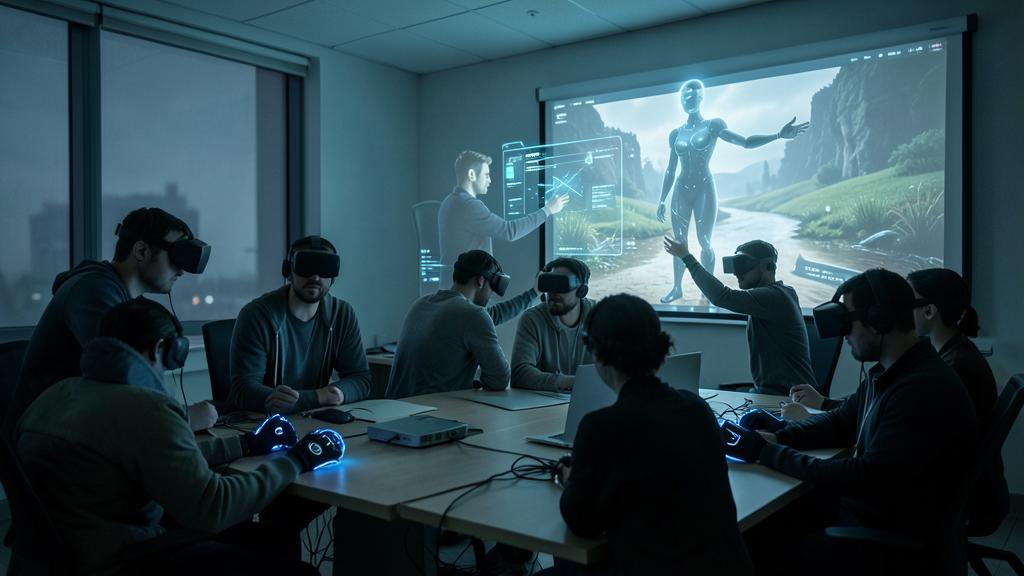
Do you need a virtual reality headset?
Only if the uses it allows really interest you: a virtual reality headset is not indispensable, but can offer interesting experiences (especially for entertainment) to those who are curious; adopt according to your desire, not out of fear of missing the future. Let’s take stock. What a VR headset ALLOWS: a virtual reality headset offers immersive experiences — you are « immersed » in a 360-degree virtual environment; the most advanced and appreciated uses today are mainly gaming and immersive entertainment (VR games, experiences, immersive videos), which can be stunning; there are also discovery applications (virtual tours), creation, well-being, and certain professional uses (training, simulation); for those who enjoy these experiences, it’s a technology with a real appeal. What you should KNOW before buying: a VR headset represents a COST (the purchase of the device); the uses, although real and developing, remain today relatively TARGETED (mainly gaming and entertainment) rather than indispensable in everyday life; the experience can cause discomfort (some people feel « cybersickness », a feeling of unease, in VR); and there are issues (time spent, privacy of the data captured, isolation from the real world during use). It is therefore NOT indispensable: you have no obligation to have a VR headset; it is not a necessary everyday tool, but a leisure and experience device, for those who are interested; do not buy it out of fear of « missing the future » or out of fashion pressure. When it’s WORTH it: a VR headset is a good purchase if the experiences it offers really ATTRACT you — if you are curious about immersive gaming, virtual experiences, or a specific use that speaks to you; in this case, it can be a source of pleasure and discovery; otherwise, it’s an expense for a device that risks gathering dust. How to DECIDE: ask yourself what YOU would concretely do with it, and if these uses justify the cost for you; if possible, try it first (at someone’s place, in a place that offers it) to see if the experience pleases you and if you tolerate it well; adopt according to your real desire, not according to the hype. In summary, no, a virtual reality headset is not indispensable: it’s a leisure and experience device (mainly for entertainment) that can be very interesting for those who are attracted to immersive experiences, but it remains a purchase of curiosity and pleasure, not a daily necessity. Adopt it if its uses really tempt you (and ideally after trying), not out of fear of missing the future or fashion pressure; otherwise, you are not missing anything essential. As with any technology: real utility and desire take precedence over hype.
Do virtual worlds present risks?
Yes, like any online social space, virtual worlds involve risks of which one must be aware — privacy, time, relationships, security — especially for the youngest; without dramatizing, vigilance is necessary. Let’s review them. PRIVACY and data: this is a particularly strong issue in immersive environments; these technologies can capture a lot of data about you — your movements, your reactions, your physical environment, your behavior — much more than a simple screen; be attentive to what the platforms collect and what they do with it; prefer serious services and adjust privacy settings. TIME and immersion: virtual worlds are designed to be immersive and captivating, which can make them very ENGAGING, even potentially addictive; keep control of your time; this is particularly important for young people, more vulnerable to immersion (our guides for managing screen time). RELATIONSHIPS and isolation: spending a lot of time in virtual worlds can, in excess, be at the expense of relationships and experiences in the REAL world; the virtual can complement social life, but should not replace real human bonds, essential for balance; be careful not to isolate yourself in the virtual. SECURITY and behaviors: like any online social space, virtual worlds can expose you to problematic behaviors — bad encounters, harassment, inappropriate content, inappropriate behaviors (immersion can make negative experiences more intense); you must be aware of this and know how to protect yourself (report, block, leave). Issues for CHILDREN and adolescents: young people are particularly present in certain virtual worlds and games, and particularly vulnerable; for them, parental vigilance is essential: supervise time, watch over safety and encounters, dialogue, use the available protections, ensure that the universes are suitable for their age (our guides for protecting children online). Without DRAMATIZING: these risks do not mean that you should flee virtual worlds, which can be spaces for play, creativity, and appreciated socialization; it’s a matter of being aware and adopting the right reflexes, as for any digital use; vigilance, not fear. The right REFLEXES: protect your privacy and your data; keep control of your time; preserve the balance with the real world; know how to protect yourself from problematic behaviors; and supervise children in particular. In summary, yes, virtual worlds present risks of which one must be aware: privacy (very intrusive environments that capture a lot of data), time (immersive and engaging universes, potentially addictive), balance with real relationships (risk of isolation), and security (problematic behaviors, bad encounters) — issues particularly important for the youngest, which require parental vigilance. Without dramatizing (these spaces also have their attractions), adopt the right reflexes: protect your data, control your time, preserve the link with the real world, know how to protect yourself, and supervise children. As with any digital use: enjoy, yes, but with awareness and balance.
What to remember
The « metaverse » refers to the vision of immersive and persistent virtual worlds where one would interact via avatars — to meet, play, work — often with virtual reality; it’s a FUZZY concept and a vision of the future, more than a unique and existing reality. Intensely oversold not long ago as the next big revolution, with media hype and massive investments, it did not keep its promises at the announced pace, and the excitement has largely subsided. Hence the question: fad or future? The answer is nuanced, somewhere in between. The « metaverse » as a fad phenomenon and promise of imminent revolution largely belonged to a bubble of enthusiasm that burst: from this point of view, there was indeed a fad. But the FUNDAMENTAL trends it covers — more immersive internet, virtual and augmented reality, social virtual worlds — are real, continue to progress, and could play a role in the future, in more progressive, more targeted, and different forms than announced; reducing the metaverse to a simple fad would therefore also be a mistake. The lesson, precious and reusable for ANY technology announced as « revolutionary »: be wary of the HYPE (the excessive frenzy, which always overestimates the pace of changes) without for all that BURYING the fundamental trend (the real evolution, often slower and more discreet). The metaverse illustrates a classic cycle: an oversold technology, which disappoints in the short term, then sometimes develops anyway, differently and more slowly, to find its true uses. Neither believe the prophets of the imminent revolution, nor those of the announced death: reality is a nuanced and uncertain evolution. Concretely, adopt a lucid curiosity: keep your critical spirit against the hype; do not feel obliged to follow every fad or pressured by the fear of « missing the future » (you have no obligation to adopt every announced technology: adopt according to REAL UTILITY and desire, not under pressure); be interested in concrete uses (gaming, applications) rather than the vague concept; try if it tempts you, out of curiosity and pleasure, without necessarily seeing it as the future. If you explore these immersive technologies, remain attentive to the very real issues they raise: PRIVACY (very intrusive environments that capture a lot of data), TIME (engaging universes, potentially addictive), balance with REAL relationships (risk of isolation), and SECURITY — issues particularly important for the youngest, which require parental vigilance. And above all, never neglect the REAL WORLD: however immersive the virtual, real life and human bonds remain essential; the virtual can complement and entertain, never replace. The metaverse, or rather immersive technologies, are neither to be blindly embraced nor rejected outright: to be observed with a lucid and patient curiosity, adopting what is really useful to you, when it is, while keeping your feet on the ground. You will not miss the future by refusing to chase after every fad: on the contrary, you will approach it with the discernment to know how to distinguish passing frenzies from lasting trends — which is, in the era of announced revolutions, the most useful of skills.

Want to understand and master the technologies that change your daily life? Our training courses will enlighten you.
Leave a Reply
You must be logged in to post a comment.