
Remember: social networks were originally meant to share news with loved ones. Twenty years later, we mostly follow strangers chosen by algorithms, in endless streams of short videos designed never to stop. Between reinvented legacy platforms, a general shift to video, the rise of private messaging, and growing user fatigue, social networks are undergoing a profound transformation. Understanding where they’re headed helps you make better choices—as an informed user rather than a captive spectator.
The great shift: from social to media
The central change can be summed up in one sentence: social networks have become entertainment media. Yesterday, the feed showed what your friends posted; today, it shows what the algorithm predicts you’ll watch the longest—no matter where it comes from. Content from your loved ones is now in the minority; professional creators and recommended videos dominate. This shift explains everything else: the race for short videos, the standardization of platforms (all offering the same infinite vertical feed format), and the shift of « real » social interaction to another space—private messaging and groups, where people now share what they no longer dare to post publicly.
Social networks used to be about sharing with friends. Now they’re more like TV channels, showing you videos they think you’ll watch the longest. Real conversations have moved to private messages.
On Instagram, a 2023 study found that only 15% of time spent was on posts from friends, while 65% was on algorithm-recommended videos from strangers. The remaining 20% was spent in private DMs.

The trends reshaping the landscape
- Short video reigns: the king of attention, adopted everywhere—with its downside: an endless scroll designed to be infinite, whose effects on concentration and stolen time are debated even by its creators.
- The shift to private spaces: messaging, restricted groups, private channels—the authentic digital social life is migrating away from the spotlight, toward chosen spaces.
- The creator economy professionalizes: monetization, brands, careers—the « spontaneous » content has largely become an industry, changing the nature of what we watch.
- AI enters from both sides: increasingly refined recommendations, but also mass-generated content—and a new question: what’s the value of a feed where you can no longer tell what’s human?
- Distrust is growing: misinformation, polarization, impact on teens—the pressure from regulators and families is increasing, and platforms are multiplying safeguards, often under constraint.
- Fragmentation: alongside the giants, smaller spaces—revived forums, interest communities, decentralized alternatives—attract those looking for something other than the infinite feed.
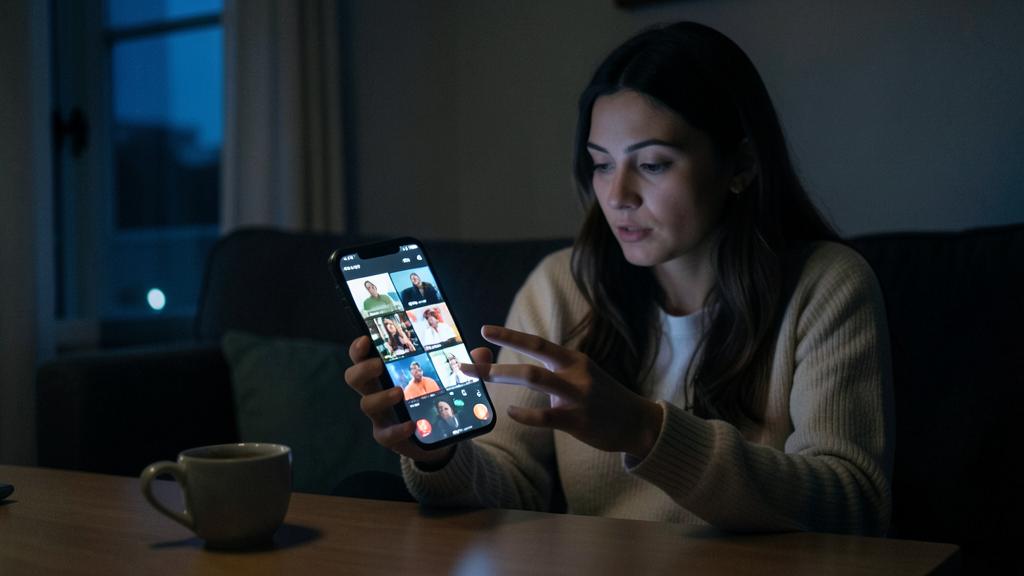
The right reflex. Take back control of your feed: most platforms still have a « subscriptions » or « follows » tab showing only the accounts YOU chose—use it by default instead of the algorithmic « for you » feed. Add a semi-annual cleanup of your subscriptions (keep only what truly nourishes or delights) and screen-free periods: the network becomes a tool you consult, not an attention vacuum you endure.
What this means for users
Three practical consequences. First, attention hygiene becomes a skill: facing feeds designed by entire teams to retain your attention, moderation no longer relies solely on willpower—it requires settings (time limits, notifications off, subscriptions tab) and habits. Then, information filtering: in feeds mixing truth, lies, ads, and AI-generated content, source verification is no longer optional—who’s speaking, with what intent, cross-checked where? Finally, intentional presence: it’s now perfectly reasonable to be active on only one or two platforms aligned with what you’re looking for (real connections, research, inspiration), and absent from the rest. The question is no longer « should I be there? » but « what for, and at what cost to my attention? »
Parents, professionals: two key concerns
For parents: infinite feeds and social comparison weigh heavily on teens—family settings help (time limits, content filters), but nothing replaces talking about what they experience and the presence of credible adults on these topics. Banning outright pushes usage underground; guidance builds critical thinking. For professionals and creators: algorithm volatility reminds us of a golden rule—never build your entire audience on a platform you don’t control. « Owned » channels (website, newsletter, contact list) remain the foundation; social networks are rented amplifiers, never owned.
Keep in mind. The algorithmic feed is not a reflection of the world: it’s a selection optimized for your engagement—over-exposing outrage, spectacle, and division because that’s what holds attention. Relying primarily on these feeds distorts reality; complementing them with directly chosen sources (media, newsletters, websites) isn’t a purist luxury, it’s a civic duty.
Frequently asked questions
Are social networks declining?
No—the time spent remains massive. What’s declining is public personal sharing and enthusiasm; what’s rising is video consumption and the shift to private spaces. Transformation, not collapse.
Will decentralized alternatives take off?
They’re progressing in waves and meet a real demand (control, no algorithmic ads), but network effects protect the giants. Their likely role: solid niche spaces rather than mass replacement.

How do I know if my usage is problematic?
Two simple tests: does the time displayed by your phone surprise you negatively? And do you feel like your usage is chosen or endured (default scrolling, difficulty stopping)? If the answers bother you, time limits and screen-free periods are a good start—and talking about it is never excessive.
Key takeaways
Social networks have changed nature: from connection hubs, they’ve become algorithmic entertainment media, while digital social life migrated to private messaging. Short video reigns, creators professionalize, AI is on both sides of the feed, distrust and regulation grow: the landscape is reshaping. For users, the answer lies in three words—choose, adjust, verify: choose your platforms and subscriptions, adjust your attention (follows tab, limits, screen-free periods), verify what you read before believing or sharing it. Networks remain powerful connection and discovery tools—as long as you use them, not the other way around.


Need a social media strategy for your business?
Leave a Reply
You must be logged in to post a comment.