
House cleaning is an endless task that weighs on daily life: you never know where to start, you forget certain rooms or chores, and the mental load of « keeping everything in mind » is exhausting. Artificial intelligence can help you see more clearly: it helps you establish a cleaning schedule tailored to your home and your pace, distribute tasks, forget nothing, and even distribute chores fairly within the household. It’s not magic—it’s you who does the cleaning!—but it’s a real helping hand to organize and lighten the mental load. Let’s see how AI can help you organize cleaning, methodically and without overcomplicating things.
How AI Helps Organize Cleaning
AI is a good organizational assistant; here’s what it brings to cleaning. ESTABLISH a schedule: based on the description of your home (number of rooms, type) and your pace, AI helps you build a cleaning schedule—what tasks, at what frequency, on what day; facing the chore, having a clear plan helps you get started. DISTRIBUTE tasks over time: rather than doing everything at once, AI helps distribute chores over the week or month (daily, weekly, monthly, seasonal); you smooth out the effort and avoid accumulation. NOTHING FORGOTTEN: AI can list tasks that are easily neglected (cleaning certain corners, maintaining appliances, seasonal tasks); a complete list avoids forgetting. DISTRIBUTE among household members: it can help distribute chores fairly among household members, according to availability; useful for sharing the load and avoiding imbalances. ADAPT to your situation: specify your constraints (available time, presence of children or pets, preferences); AI adapts the schedule to YOUR reality. Provide PRACTICAL ADVICE: AI can suggest cleaning methods, a logical order, organizational tips; ways to be more efficient. LIGHTEN the mental load: the big benefit; by entrusting the organization to a clear schedule rather than keeping everything in mind, you free your mind and reduce the stress of « I need to remember to… ». What AI DOESN’T DO: it doesn’t do the cleaning (obviously!); it provides a framework to adapt and follow; it’s you who acts; and its schedule is a suggestion, not an obligation. What it SERVES: to ORGANIZE without thinking about it for hours; to DISTRIBUTE the effort and avoid accumulation; to forget NOTHING; to SHARE chores fairly; to LIGHTEN the mental load; in short, to make cleaning more organized and less burdensome. The key idea: AI helps organize cleaning by establishing a schedule tailored to your home and your pace: it distributes tasks over time (daily, weekly, monthly, seasonal), helps you forget nothing, distribute chores fairly within the household, and provides practical advice. Its biggest benefit: lightening the mental load, by replacing « keeping everything in mind » with a clear plan. It obviously doesn’t do the cleaning for you—it’s you who act—and its schedule is a suggestion to adapt; but as an organizational assistant, it makes cleaning more structured and less burdensome. A helping hand to organize, not a magic wand.
AI doesn’t clean for you, but it helps you create a smart schedule. This way, you don’t have to remember everything in your head – the schedule does that for you. It also helps divide tasks fairly among family members.
A family of four with two children and a dog describes their home (3 bedrooms, 1 bathroom, kitchen, living room) and their constraints (30 minutes daily, weekends for deeper cleaning). The AI creates a schedule: vacuuming 3x/week, bathroom cleaning 2x/week, laundry 1x/week, and seasonal tasks like window cleaning every 3 months. The parents and kids each get assigned specific tasks based on availability, with reminders on a shared app.

How to Properly Organize Your Cleaning with AI
To make AI really help you, here’s how to proceed. DESCRIBE your home and your pace: give AI the useful information—number and type of rooms, presence of children or pets, time you have, your lifestyle, your priorities; the more you specify, the more the schedule fits your reality. REQUEST a REALISTIC schedule: specify the time you can devote to cleaning; ask for a manageable schedule, not an ideal program impossible to follow; a realistic schedule is better than a perfect one abandoned. DISTRIBUTE over time: ask AI to distribute tasks (daily, weekly, monthly, seasonal); smoothing out the effort avoids accumulation and the exhausting big clean; a little regularly rather than all at once. ADAPT to YOU: the AI schedule is a base; adjust it to your preferences, your real constraints, what suits you; you know your life better than AI. DISTRIBUTE chores in the household: if you live with others, use AI to help distribute tasks fairly according to availability and everyone’s abilities; but discuss it together (we’ll come back to that); AI suggests, the household decides. NOTHING FORGOTTEN: ask it for tasks often neglected (corners, appliance maintenance, seasonal tasks); complete your schedule. REQUEST practical ADVICE: a logical cleaning order, effective methods, tips; AI can make you more efficient. STAY flexible: a schedule is a guide, not a prison; adapt according to unforeseen events, busy weeks; don’t feel guilty if everything isn’t done; flexibility is essential. USE a support to FOLLOW: report the schedule somewhere practical (a list, a table, a task application) to follow and check; AI helps create it, a support helps keep it (our guides on managing tasks). Don’t put PRESSURE on yourself: the goal is to lighten the load and better organize, not to aim for a perfect interior; the best is the enemy of the good; aim for sufficient and manageable cleaning, not perfection. In summary: describe your home and your pace, request a realistic schedule distributed over time, adapt it to you, distribute chores in the household (by discussing), have forgotten tasks reminded, request practical advice, stay flexible, follow the schedule on a practical support, and don’t put pressure on yourself. AI structures and lightens; you adapt, you act, and you keep flexibility.
The real benefit: lightening the mental load of cleaning. Beyond practical organization, the most precious help that AI can bring for cleaning is elsewhere, and often underestimated: lightening the MENTAL LOAD. Cleaning is not just a matter of time and physical effort; it’s also, and perhaps above all, an exhausting mental load—the constant need to THINK about everything: remembering to vacuum, that the bathroom is due, that you’ve forgotten a corner for weeks, that you should clean the windows, change the sheets, clean the fridge… This invisible list that constantly spins in your head, this vague feeling that « there’s always something to do, » this weight of constant planning and tracking, are particularly burdensome and anxiety-inducing—and, in many households, this mental load weighs unevenly on the shoulders of one person. It’s precisely here that AI, by helping you establish a clear schedule, provides a small liberation. The principle is the same as for any organization: by entrusting to an EXTERNAL and reliable PLAN everything you kept in mind, your mind can finally « let go » of this constant monitoring. You no longer have to constantly remind yourself what’s due and when: the schedule takes care of it; it tells you what to do, which day, and even reminds you of tasks you forget. This simple transfer of memory to a clear plan significantly reduces stress and the feeling of being overwhelmed. You go from « I need to think about everything » to « I consult my plan and I do, » which is infinitely lighter. To maximize this benefit: report the schedule established with AI on a practical and visible support (a list, a table, an application), which you consult and check; thus, everything is « out of your head » and you can trust the system. And above all, in a multi-person household, use AI to help DISTRIBUTE CHORES EQUITABLY, and make this distribution visible: it’s one of the best ways to share not only the work, but also the mental load, often carried by one person. When everyone knows their tasks thanks to a shared plan, the person who « thought about everything » for everyone can finally delegate this mental responsibility. A final tip to preserve this relief: keep flexibility and don’t aim for perfection. A schedule is there to help and relieve you, not to become a new source of pressure or guilt; if it’s not followed to the letter some weeks, it’s not a problem. The goal is not a spotless interior, but sufficient, organized, and above all manageable cleaning, which frees your mind instead of cluttering it. Used this way—to transform the anxious list in your head into a clear and shared plan—AI doesn’t do the cleaning, but it lightens what is perhaps the heaviest: the mental weight of having to manage everything.
Proper Use and Precautions
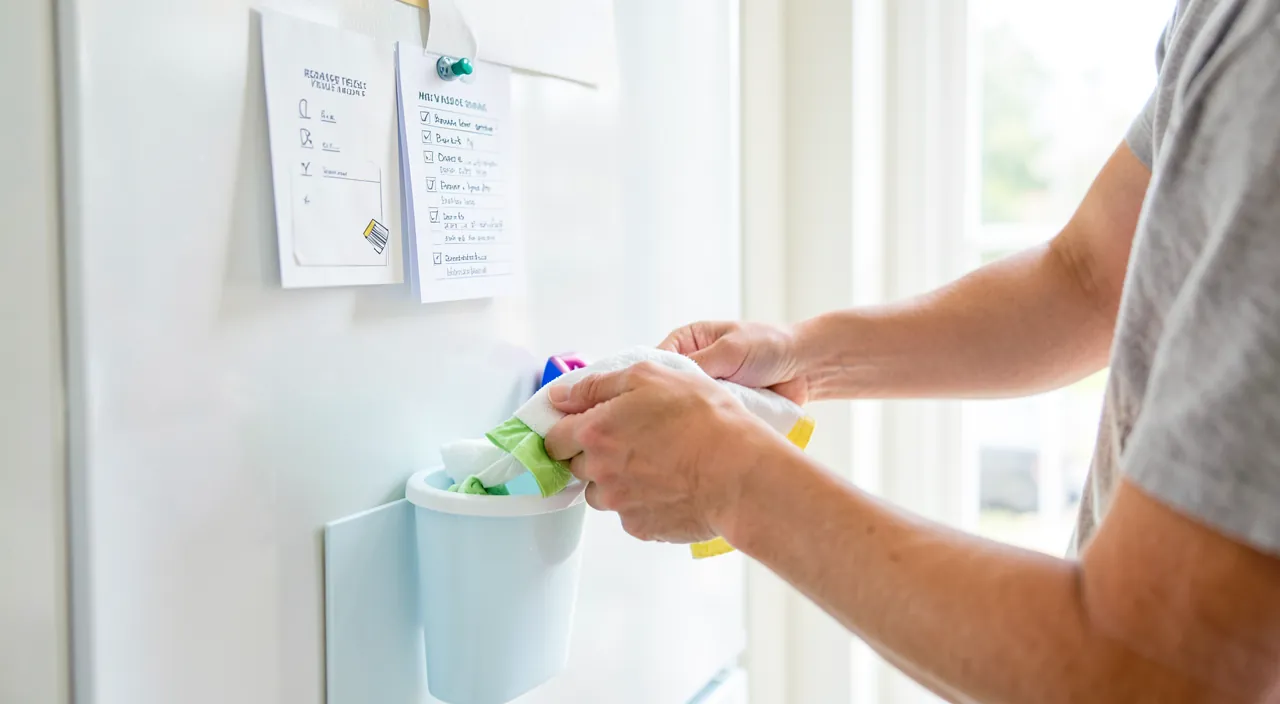
Organizing your cleaning with AI is a simple and useful application, but a few points deserve attention to keep it beneficial. REALISM above all: the trap would be an ideal, overloaded schedule, impossible to maintain, which discourages and makes you feel guilty; ask for a REALISTIC schedule, adapted to your actual time; a manageable and followed plan is infinitely better than a perfect one abandoned. FLEXIBILITY: life is full of surprises, busy weeks; a schedule is a guide, not a prison; adapt, postpone, skip a task without feeling guilty; rigidity leads to abandonment. Don’t aim for PERFECTION: the goal is a sufficiently clean interior and an organization that lightens, not perfection; the best is the enemy of the good; don’t exhaust yourself chasing an ideal. ADAPTATION to YOUR reality: AI proposes a general framework; you know your home, your life, your priorities; adapt the schedule to your reality rather than following a generic model. DISTRIBUTION in the household, to be discussed: if AI helps distribute chores, the distribution must be DISCUSSED and decided TOGETHER in the household, not imposed via AI; it’s a sometimes sensitive subject (equity, mental load) that deserves dialogue; AI is a reflection aid, not an arbitrator. Don’t delegate everything mentally… except the load: paradoxically, the interest is precisely to unload the mind; but keep control of your organization, adapt it, and don’t become a slave to a rigid schedule; the tool should serve you. Cleaning ADVICE, to validate: if AI suggests methods or products, keep your common sense; some product combinations are dangerous, some methods unsuitable for your surfaces; don’t blindly follow a cleaning tip (be especially careful not to mix certain products—check). LIGHT usage: it’s a simple application, without very sensitive data; no need to make it a complex project; a simple schedule often suffices. CONSTANCY: a schedule only helps if you follow it with some regularity; AI creates it, you make it live; constancy (flexible) is the key. The PLEASURE of an orderly interior: the final goal is to live in a pleasant interior without stress or overload; organization is a means, not an end; keep that in mind. In summary, the precautions: prioritize a REALISTIC and manageable schedule, keep FLEXIBILITY (a guide, not a prison), don’t aim for perfection, adapt to YOUR reality, discuss the distribution of chores in the household (rather than imposing it via AI), keep your common sense on cleaning advice (be careful with product mixes), and make the schedule live with flexible regularity. AI is a good assistant to organize and lighten the mental load of cleaning; provided you stay realistic, flexible, and in control of your organization. The goal: a pleasant interior and a light mind, not a tyrannical schedule.
Warning: a schedule must remain realistic and flexible to relieve you, not become a source of pressure—and keep your common sense on cleaning advice (never mix certain products). Two points deserve your attention so that AI’s help remains beneficial. The first concerns the very spirit of the schedule. The goal of organizing with AI is to RELIEVE you—to lighten the mental load, reduce stress, make cleaning less burdensome. The trap would be for this organization to produce the opposite effect and become a new source of pressure and guilt. This happens when the schedule is unrealistic (too loaded, based on an impossible ideal to maintain with your actual time) or lived in a rigid way (as a strict obligation that you feel guilty about not respecting). To avoid this: always ask AI for a REALISTIC schedule, adapted to the time you can actually devote to cleaning, not a perfect program; a manageable and followed plan is infinitely better than an ideal one abandoned after two weeks. And above all, keep FLEXIBILITY: a schedule is a guide that helps you, not a prison that constrains you; life is full of surprises and busy weeks, and it’s perfectly normal to postpone a task, skip one, adapt; never feel guilty if everything isn’t done. Don’t aim for perfection either: the goal is a sufficiently clean and pleasant interior, not spotless; the best is the enemy of the good, and chasing a cleanliness ideal only adds stress. A schedule that frees your mind, yes; a schedule that tyrannizes you, no. If the organization becomes burdensome, lighten it; the tool should serve you, never the opposite. The second point of vigilance, more concrete: keep your COMMON SENSE regarding the cleaning advice that AI might give. If you ask for methods or products, don’t follow them blindly, as two risks exist. First, AI may be wrong or give advice unsuitable for YOUR surfaces and materials (a product or method that would suit one surface may damage another); always verify that a tip is suitable for what you’re cleaning. Then, and this is the most important for your safety: NEVER mix certain cleaning products. Some combinations of common cleaning products can produce dangerous chemical reactions and toxic fumes; this is a real and serious risk. Therefore, never follow a tip that would suggest mixing products without having verified yourself that it’s safe; in doubt, use only one product at a time, ventilate, and follow the label instructions. More generally, for cleaning products, trust the manufacturers’ instructions and reliable sources, not just AI. None of this should discourage you from using AI to organize your cleaning, which is a simple, useful, and low-risk application: to create a schedule, distribute tasks, forget nothing, and lighten the mental load, it provides a real service. The message is simply to keep two reflexes: ensure the schedule remains realistic, flexible, and liberating (never a source of pressure), and keep your common sense on practical cleaning advice (adapted to your surfaces, and never risky product mixes). Thus, AI helps you organize and relieve you, while letting you master your pace and safety.

Frequently Asked Questions
Can AI create a cleaning schedule tailored to my home?
Yes, if you describe your home and your pace, AI can establish an adapted schedule; but it’s a base to adjust to your reality, and the result depends on the information you provide. Here’s how. What AI CAN do: based on your description—number and type of rooms, presence of children or pets, available time, lifestyle, priorities—AI can build a structured cleaning schedule: what tasks, at what frequency, distributed over time (daily, weekly, monthly, seasonal), even distributed among household members; the more precise your description, the more the schedule fits your situation; it’s a good starting point for organization. What you need to GIVE it: for an adapted schedule, describe your home well (rooms, particularities), your lifestyle (time, constraints, children, pets), your priorities (what matters to you), and the realistic time you can devote to cleaning; this information allows a custom schedule rather than a generic one. The LIMITS: AI proposes a general framework based on what you describe; it doesn’t know all the details of your home or your life; its schedule is therefore a BASE to adjust; adapt it to your concrete reality (what suits you, your real constraints, your experience); you are the best judge. REALISM: make sure to ask for a manageable schedule, adapted to your actual time; an overly ambitious schedule won’t be followed; specify your time constraints for a realistic result. FOLLOW-UP: once the schedule is created, report it on a practical support (list, table, application) to follow; AI creates it, a support helps keep it. FLEXIBILITY: remember that a schedule is a guide to adapt, not a rigid constraint; adjust according to unforeseen events. In summary, yes, AI can create a cleaning schedule tailored to your home if you describe your situation well (rooms, pace, constraints, available time); it’s a good structured starting point, but a base to adjust to your concrete reality, of which you remain the best judge. Ask for a realistic and manageable schedule, report it on a practical support to follow, and keep the flexibility to adapt it. AI provides the framework; you adapt it to your life and make it live.
How to Equitably Distribute Chores at Home?
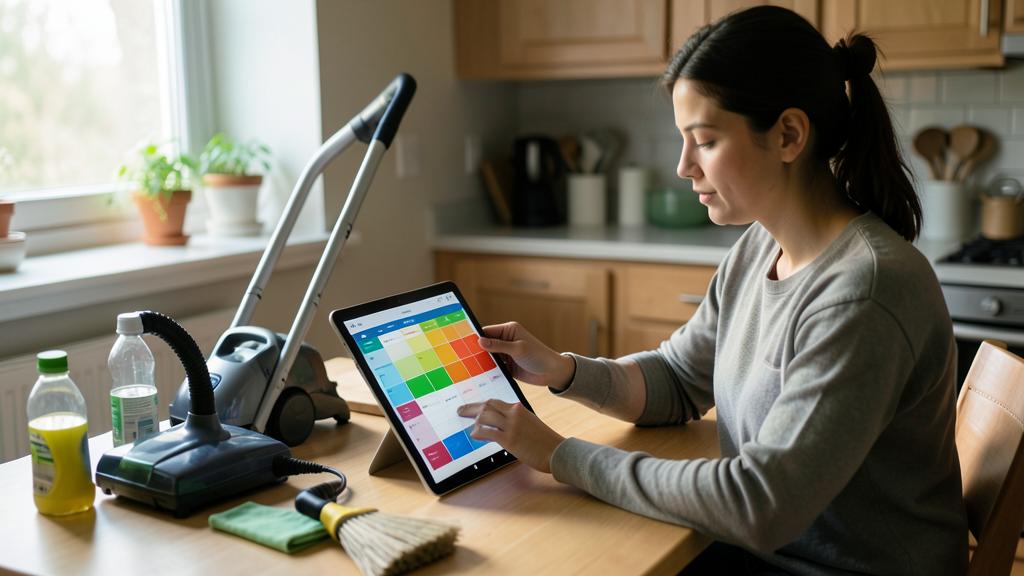
AI can help propose an equitable distribution of chores, but the distribution must above all be DISCUSSED and decided together in the household; it’s a sensitive subject that deserves dialogue more than automatic arbitration. Let’s approach it carefully. What AI CAN bring: it can help LIST all household chores (including those forgotten), propose a distribution among household members according to their availability and abilities, and provide an objective framework for discussion; it’s a useful aid for reflection and organization, especially to make all the work to be distributed visible. Why DIALOGUE takes precedence: the distribution of chores is often a sensitive subject in a household, touching on equity, habits, and the famous « mental load » (often carried unequally); a distribution cannot be IMPOSED by AI; it must be DISCUSSED, negotiated, and decided TOGETHER, taking into account everyone’s constraints, preferences, and feelings; AI suggests, the household decides. The good USE of AI here: use it as a discussion support—to establish the complete list of tasks (so everyone is aware of the extent of the work, including invisible tasks), to propose an initial distribution, or to objectify the debate; then discuss it as a family or couple, adjust together, and decide by common agreement; AI is a neutral starting point, not an arbitrator. The question of MENTAL LOAD: beyond who does what, think about also distributing the load of PLANNING and THINKING about tasks (often carried by one person); a shared and visible schedule helps everyone know and assume their tasks without one person having to « think for everyone »; it’s real progress toward equity. INVOLVE everyone: a distribution works better if everyone agrees and feels respected; involve everyone in the discussion (including children, with tasks suited to their age, which is also educational); agreement is better than imposition. FLEXIBILITY and review: a distribution can evolve according to periods and needs; review it together if it doesn’t work; equity is a balance to adjust, not a fixed rule. In summary, AI can help distribute chores by listing tasks and proposing a distribution, which is useful as a starting point and discussion support; but the distribution must above all be DISCUSSED and decided TOGETHER in the household, as it’s a sensitive subject touching on equity and mental load, which deserves dialogue and everyone’s agreement rather than automatic arbitration. Use AI to objectify and propose, but decide as a family, involve everyone (including children), think about also sharing the mental load via a visible schedule, and keep the flexibility to adjust. AI helps reflect; equity is built through dialogue.
Is a Cleaning Schedule Really Worth It?
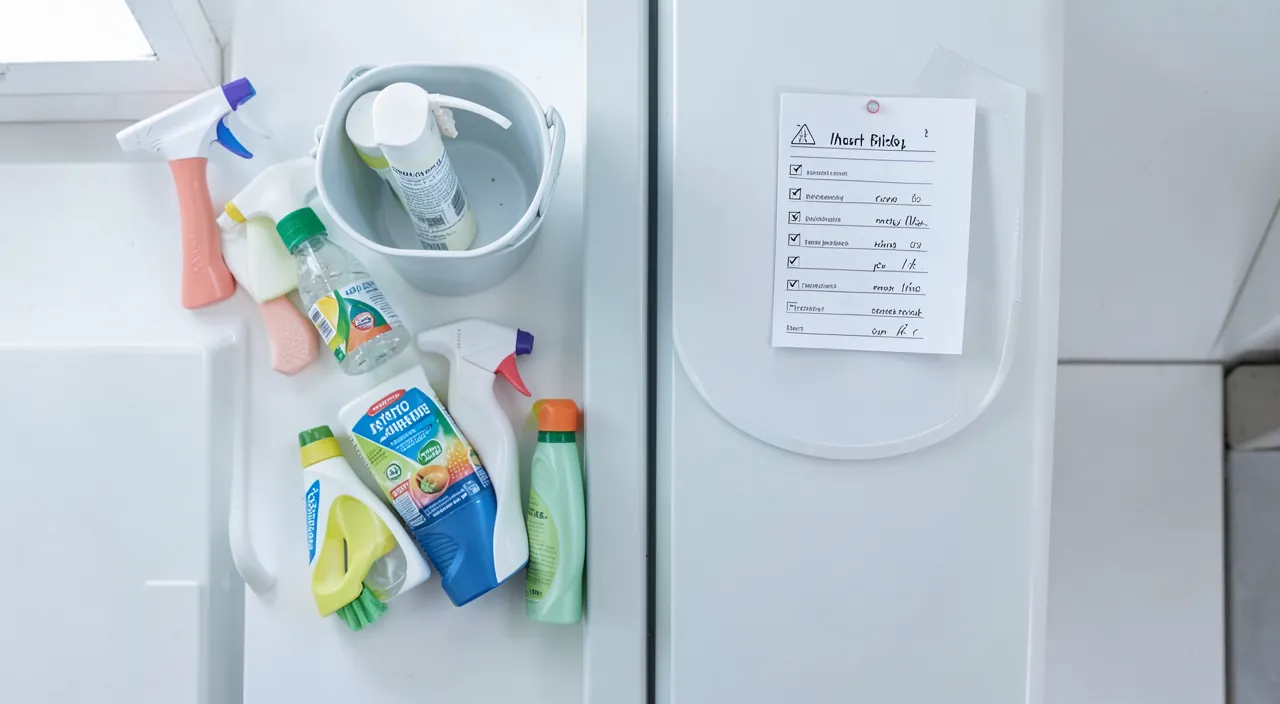
Yes, for many people, a schedule brings real benefits—organization, lightening of mental load, distribution—provided it remains realistic and flexible; but it’s not mandatory, and it depends on your situation. Let’s weigh the pros and cons. The BENEFITS of a schedule: it brings ORGANIZATION (you know what to do and when, instead of suffering); it lightens the MENTAL LOAD (the plan replaces « keeping everything in mind, » which frees the mind); it distributes the EFFORT over time (you avoid accumulation and the exhausting big clean); it helps you forget NOTHING; and it facilitates the DISTRIBUTION of chores in a household; for those who feel overwhelmed or stressed by cleaning, these benefits are real and appreciated. For WHO it’s particularly useful: for people who struggle to organize, who feel overwhelmed by the mental load, who live with others (distribution), or who want to spread out the effort; in these cases, a schedule can really change the experience of cleaning. The CONDITIONS for it to work: the schedule must be REALISTIC (adapted to your actual time) and FLEXIBLE (a guide, not a rigid constraint); an unrealistic or rigidly lived schedule becomes a source of pressure and is quickly abandoned; it’s the quality of the schedule and its flexible use that bring the benefit. It’s NOT mandatory: a schedule is not a universal necessity; some people organize very well without it, by feel, and that’s perfect; if cleaning doesn’t weigh on you and your organization suits you, you don’t need to formalize a schedule; the tool should respond to a need, not impose itself by principle. AI’s contribution: if you decide that a schedule would be useful to you, AI greatly facilitates its creation (structure, distribution, forgotten tasks), which removes the obstacle of « where to start »; it makes the schedule accessible without organizational effort. The ADVICE: if cleaning weighs on you, stresses you, or if the mental load is heavy (especially with others), try a schedule (created with AI); keep it realistic and flexible; you’ll see in use if it relieves you; otherwise, don’t force yourself. In summary, yes, a cleaning schedule is worth it for many people: it brings organization, lightening of mental load, distribution of effort and chores, all real benefits, especially for those who feel overwhelmed or live with others. But with two conditions: that it remains realistic and flexible (otherwise it becomes a pressure), and it’s not mandatory (if your organization suits you without it, that’s fine). AI facilitates its creation, which removes the starting obstacle. Try it if cleaning weighs on you; adapt it to you; and remember that the goal is to relieve you, not add a constraint.
What to Remember
AI helps organize cleaning by establishing a schedule tailored to your home and your pace: it distributes tasks over time (daily, weekly, monthly, seasonal), helps you forget nothing, distribute chores fairly within the household, and provides practical advice. It obviously doesn’t do the cleaning for you—that’s you who acts—and its schedule is a suggestion to adapt; but as an organizational assistant, it makes cleaning more structured and less burdensome. Its most precious benefit, often underestimated: lightening the MENTAL LOAD. Cleaning isn’t just about physical effort; it’s also the exhausting weight of constantly having to THINK about everything—that invisible list that spins in your head, that feeling that « there’s always something to do, » often carried unequally in a household. By entrusting to a clear and reliable plan everything you kept in mind, your mind can finally « let go » of this constant monitoring: you go from « I need to think about everything » to « I consult my plan and I do, » which is infinitely lighter. To proceed well: describe your home and your pace, ask for a REALISTIC and manageable schedule distributed over time, adapt it to your reality, have forgotten tasks reminded, and report it on a practical support (list, table, application) to follow. In a multi-person household, use AI to help distribute chores fairly and make this distribution visible: it’s one of the best ways to share not only the work, but also the mental load. But keep two points of vigilance. First, the schedule must remain realistic and FLEXIBLE to relieve you, never become a source of pressure: a manageable and followed plan is better than a perfect one abandoned, don’t aim for perfection, adapt according to unforeseen events, and don’t feel guilty if everything isn’t done—the goal is a sufficiently pleasant interior and a light mind, not a tyrannical schedule. Then, the distribution of chores in the household must be DISCUSSED and decided together (it’s a sensitive subject touching on equity), AI serving as a reflection support, not an arbitrator. Finally, keep your common sense on cleaning advice: verify that they suit your surfaces, and NEVER mix certain cleaning products (risk of toxic fumes)—trust the manufacturers’ instructions, not just AI. A schedule is not mandatory: if your organization suits you without it, that’s fine; but if cleaning weighs on you or the mental load is heavy, AI removes the obstacle of « where to start » and can really relieve you. Used this way—to transform the anxious list in your head into a clear, realistic, flexible, and shared plan—AI doesn’t do the cleaning, but it lightens what is perhaps the heaviest: the mental weight of having to manage everything. The goal: a pleasant interior, a better-shared load, and a light mind.

Want to master AI and make it a real asset in your daily life? Our training courses accompany you at your own pace.
Leave a Reply
You must be logged in to post a comment.