
Digital identity card, driver’s license on the phone, identity app to authenticate online: our identity documents are gradually entering the digital age. The idea: being able to prove who you are, both online and in real life, from your smartphone, in a secure way. The promise is appealing: more simplified procedures, fewer photocopies of identity documents lying around, more secure authentication to access your services. But this evolution also raises legitimate questions: is it really secure? What happens to our identity data, among the most sensitive there is? Do we risk increased surveillance? Can we still live without it? As often, the reality is NUANCED: digital identity has real advantages and serious challenges that need to be understood to approach it serenely. Let’s see what it is, its promises, its challenges, and how to approach it with discernment.
Digital identity: what are we talking about?
First, let’s understand what digital identity covers, which is still unclear for many. A definition: digital identity is the ability to PROVE who you are digitally (online, or via your phone in real life); a digital version of our documents and identity; the principle. The DIGITAL identity card: a digital/dematerialized version of the identity card (on the phone, or a chip); proving your identity without the physical card; an emerging form; in development. The DRIVER’S LICENSE and other documents: driver’s license, other certificates on the phone; dematerializing various official documents; digital identity is expanding; a trend. ONLINE authentication: identity apps/services to authenticate online (prove who you are to access public or private services); identifying yourself on the Internet securely; a key use. Proving ONLINE: on the Internet, proving your identity is a challenge (access to procedures, services); digital identity meets this need; authenticating remotely; useful. Proving in REAL LIFE: presenting a digital identity (phone) instead of a physical card in certain situations; the document in your digital pocket; a convenience; emerging. A SECURE framework aimed at: digital identity aims to be secure (protection technologies, official framework); it’s not just a photo of a card; security is sought; in principle. A GRADUAL evolution: digital identity is being deployed gradually (depending on countries, services); an ongoing transition, not yet generalized; it’s coming little by little; in motion. Often VOLUNTARY (for now): in many cases, digital identity is an OPTION (in addition to paper), not mandatory; a choice, often; you can often still do without; reassuring (we’ll come back to this). Do not CONFUSE: official digital identity (secure, regulated) ≠ sending a photo of your card by message (risky); two different things; distinguish; important. The main idea: digital identity is the ability to PROVE who you are digitally — online (to authenticate and access services) as well as in real life (by presenting a document from your phone rather than a physical card). It takes several emerging forms: the DIGITAL identity card (dematerialized version of the card), the DRIVER’S LICENSE or other certificates on the phone, and above all the online AUTHENTICATION apps (proving your identity to access procedures or services, both public and private). It aims to be SECURE, framed by an official framework and protection technologies: not to be confused with sending a simple photo of your card by message (which, itself, is risky). This evolution is being deployed GRADUALLY (depending on countries and services), and remains in many cases VOLUNTARY for now — an option in addition to paper, more than a requirement. It’s an ongoing transition that’s best understood to approach it serenely.
Digital identity means proving who you are using your phone instead of physical documents. It can be used online (like for bank logins) or in real life (like showing your driver’s license at a police check). The key is that it’s more secure than just taking a photo of your ID card and sending it, because it uses special protection technologies. Right now, it’s usually optional – you can still use paper documents if you prefer.
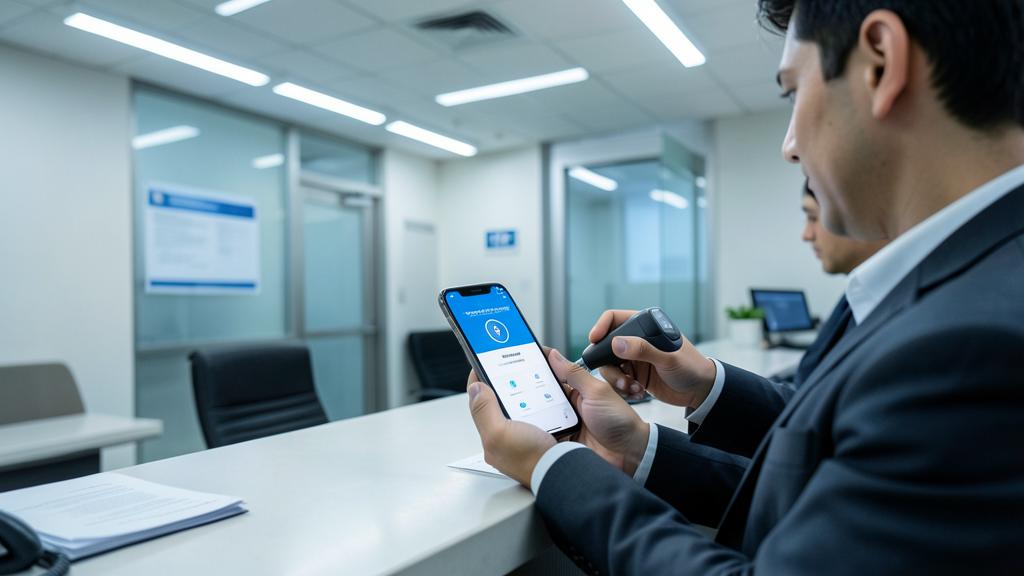
Imagine you need to prove your identity to open a bank account. With digital identity, you could use an official app on your smartphone to scan your ID card and verify your face. The bank would get a secure digital confirmation that you are who you say you are, without needing to see your physical ID card. This is more secure than emailing a photo of your ID, which could be copied or stolen.
Promises and challenges of digital identity
Digital identity has real advantages AND serious challenges; let’s examine both honestly. On the PROMISES side — SIMPLIFIED procedures: easily proving your identity online (access to administrative procedures, services); less paperwork, fewer trips; a gain in simplicity; an advantage. Fewer PHOTOCOPIES lying around: avoiding sending/leaving photocopies of identity documents lying around (risky); a secure digital identity can be safer than a photocopy; a security benefit; paradoxical but real. More secure AUTHENTICATION: to access your services, a well-designed digital identity can be more secure than a simple password; strengthening access security; a potential advantage; useful. Fighting against IMPERSONATION: a secure digital identity can help prove that « it’s really me » and complicate identity theft; a benefit against fraud; consult our guides on identity theft. COMFORT: having your documents in your phone, identifying yourself quickly; everyday comfort; practical; an attraction. On the CHALLENGES side — ULTRA-sensitive data: identity data is among the most sensitive (name, identity, official documents); their protection is crucial; the major challenge; to be secured absolutely. SECURITY to ensure: everything depends on the security of the system (if hacked, serious consequences); security must be flawless; a central technical challenge; demanding. The risk of SURVEILLANCE: a legitimate concern; a generalized digital identity could facilitate tracking/people monitoring; the challenge of freedoms; to be strictly regulated (we’ll come back to this). DEPENDENCE on the phone: depending on the phone to prove your identity (battery, breakdown, loss); technical dependence; what to do without; a practical point; to plan. Possible EXCLUSION: those uncomfortable with digital (elderly, disadvantaged) could be excluded if everything becomes digital; an equality challenge; don’t leave anyone behind; important. CONFIDENCE in the system: everything depends on confidence in the organization that manages it (security, data protection, no misuse); confidence is essential; a governance challenge; crucial. A NUANCED balance: digital identity has real advantages (simplicity, potential security) and real challenges (sensitive data, surveillance, exclusion); neither rejection nor blind adherence; discernment. In summary, digital identity offers real PROMISES: SIMPLIFIED procedures (easily proving your identity online, less paperwork), FEWER photocopies of documents lying around (a secure digital identity can be safer than a photocopy that circulates), potentially more secure AUTHENTICATION than a simple password, help against IDENTITY THEFT, and the COMFORT of having your documents in your phone. But also serious CHALLENGES: ULTRA-SENSITIVE identity data to protect absolutely, SECURITY that must be flawless (a hack would have serious consequences), a risk of INCREASED SURVEILLANCE (a legitimate concern for freedoms, to be strictly regulated), DEPENDENCE on the phone (battery, breakdown, loss), a risk of EXCLUSION of those uncomfortable with digital, and the question of CONFIDENCE in the organization that manages the system. The balance is therefore NUANCED: real advantages, real challenges — which calls for neither blanket rejection nor blind adherence, but discernment.
Digital identity makes proving who you are easier and more secure in many cases, but it also creates risks. The main benefits are convenience (like showing your driver’s license from your phone) and security (harder for criminals to steal your identity). The main risks are that your sensitive personal data could be hacked, that governments could use it for too much surveillance, and that people who aren’t comfortable with technology might be left out.
In France, the “FranceConnect” system lets you log into government websites using a digital identity. Instead of creating separate accounts for each service, you can use one secure login. This is more convenient than paper forms, but also means one hack could affect access to many services. The French government has strict security rules to prevent this, but no system is 100% safe.
Approaching digital identity with discernment: benefiting from the advantages, while remaining vigilant about data and rights. Faced with digital identity, the most appropriate attitude is neither technophobic rejection (« it’s surveillance! ») nor naive adherence (« it’s great and risk-free »), but DISCERNMENT: benefiting from its real advantages while remaining vigilant about the challenges. Here are some guidelines to approach it serenely. First, DISTINGUISH official digital identity from risky DIY solutions. An official digital identity (offered by the State or recognized organizations, in a secure and regulated framework) has nothing to do with sending a photo of your identity card by message or storing it anywhere: the first aims for high security, the second is dangerous. Do not confuse the two, and be wary of any dubious service that would ask for your identity documents. Then, INFORM YOURSELF before adopting: who offers this service (official organization? recognized?); how are your data protected; what exactly is digital identity for; and above all — is it MANDATORY or an option? In many cases, digital identity is currently VOLUNTARY, in addition to paper: you can often choose to adopt it or not, at your own pace. Then, TAKE ADVANTAGE of the advantages where they are clear: for simplified online procedures or more secure authentication with official services, digital identity can save you time and security — it’s a legitimate and practical use. Then, SECURE your digital identity like a precious asset: protect access (strong password, phone lock, two-factor authentication), because your digital identity gives access to what you have most sensitive. Also plan for the case where your phone is lost, stolen, or broken (how to prove your identity otherwise? keep a backup solution: keep your physical documents). Finally, REMAIN ATTENTIVE to collective challenges: the question of surveillance, data protection, and inclusion (not excluding those who cannot follow) are legitimate societal issues; it is healthy to be interested in them, to support a protective framework, and to ensure that digital remains a CHOICE and a progress, not an imposed constraint. In summary, approach digital identity with DISCERNMENT: distinguish official secure identity from risky DIY solutions (never send a photo of your card to a dubious service), INFORM YOURSELF before adopting (who? data protection? mandatory or optional?), TAKE ADVANTAGE of the advantages where they are clear (simplified procedures, more secure authentication), SECURE your digital identity like a precious asset (protected access, backup solution if the phone fails: keep your physical documents), and REMAIN ATTENTIVE to collective challenges (surveillance, data, inclusion). Neither rejection nor naivety: it’s by informing yourself and remaining vigilant that you benefit from the advantages of digital identity while preserving your data and rights.
Living with digital identity: guidelines and vigilance
Here are practical guidelines to approach digital identity in everyday life, between use and vigilance. INFORM YOURSELF: inform yourself about digital identity in your country (what exists, what is offered, mandatory or not); understand to decide; inform yourself; the basics. Check the OFFICIAL: only use OFFICIAL and recognized digital identity services; be wary of imitations, scams (fake services asking for your papers); official only; caution. Distinguish OPTION from obligation: know if digital identity is an option (often, for now) or mandatory; adopt according to your choice when possible; at your own pace; choose. SECURE access: protect access to your digital identity (strong password, phone lock, two-factor authentication); it’s an ultra-sensitive asset; secure it like your bank; lock it. KEEP a backup solution: keep your physical documents (in case of loss, breakdown, phone battery); don’t depend 100% on digital; plan for backup; anticipate. PROTECT your identity data: never share your identity data/documents lightly (never send a photo of your card to a stranger, a dubious service); identity is protected; be wary. Beware of SCAMS: beware of scams exploiting digital identity (fake messages « validate your identity », phishing); always verify; consult our guides on phishing; caution. Think about VULNERABLE relatives: help those uncomfortable (elderly) to understand, or ensure they keep alternatives; don’t leave anyone out; solidarity. Remain ATTENTIVE to rights: be interested in the challenges (surveillance, data, paper alternatives maintained); an informed citizen watches; support a protective framework; citizen vigilance. Without REJECTION or naivety: benefit from the advantages, remain vigilant about the challenges; discernment rather than extremes; balance; serenely. The ADVICE: inform yourself, only use the official, know if it’s optional, secure access, keep your physical documents as a backup, protect your identity data, beware of scams, think about vulnerable relatives, and remain attentive to the challenges — benefit from the advantages without naivety or rejection. In summary, to live serenely with digital identity: INFORM YOURSELF (about what exists in your country, and if it’s optional or mandatory), only use OFFICIAL and recognized services (beware of imitations and scams that ask for your papers), and know that digital identity is often still an OPTION that you can adopt at your own pace. SECURE its access like an ultra-sensitive asset (strong password, phone lock, two-factor authentication), and ALWAYS keep your physical documents as a backup (don’t depend 100% on the phone: loss, breakdown, battery). PROTECT your identity data (never send a photo of your card to a stranger or a dubious service), and BEWARE of scams exploiting the subject (fake messages « validate your identity », phishing: always verify). Think about VULNERABLE relatives (help them understand, ensure they keep alternatives), and remain ATTENTIVE, as a citizen, to collective challenges (surveillance, data protection, maintaining alternatives to all-digital). The winning attitude: neither rejection, nor naivety, but discernment — benefiting from the real advantages of digital identity while remaining vigilant about its data, rights, and maintaining the choice.
Warning: your identity data is ultra-sensitive, don’t depend 100% on the phone, and beware of scams exploiting digital identity. Three essential points of vigilance around digital identity. First point: your IDENTITY data is among the most sensitive there is — protect it accordingly. Your identity (name, official documents, elements proving who you are) is what allows, in the wrong hands, IDENTITY THEFT: someone impersonating you can cause immense damage (fraudulent procedures, debts incurred in your name, etc.), and rectifying identity theft is long and painful. Practical consequences: NEVER share your identity documents lightly — in particular, do not send a photo of your identity card by message to a stranger, do not deposit it on a dubious service, do not leave it lying around. For an official digital identity, secure its access in an exemplary manner (strong and unique password, solid phone lock, two-factor authentication if offered): this access protects your identity itself. And only use OFFICIAL and recognized digital identity services, never an imitation. Second point: don’t depend 100% on your phone to prove your identity. A phone, it RUNS OUT OF BATTERY, it BREAKS DOWN, it gets LOST, it gets STOLEN. If your only way to prove who you are is in a faulty device at the wrong time, you may find yourself blocked (impossible to prove your identity when you need to). Hence two precautions: KEEP your PHYSICAL identity documents as a backup (digital identity is often a complement, not a total replacement — take advantage of it), and inform yourself about the procedure in case of loss or theft of the phone (how to block, recover, or prove your identity otherwise). Don’t put all your eggs in the digital basket. Third point: beware of SCAMS that exploit the theme of digital identity. Like any new and official subject, digital identity is a dream pretext for scammers. Beware of fake messages (SMS, emails) asking you to « validate your digital identity », « update your documents », « confirm your identity card » via a link: these are very often PHISHING attempts aimed at stealing your identity data or your credentials. The usual rules apply: do not click on the links in unsolicited messages, never communicate your identity data in response to a request, always verify by going through official channels (official website typed by yourself, not the link in the message), and remember that an official organization will not ask you for your sensitive documents via a message with a dubious link. In case of doubt, do nothing and verify with the official source. In summary, three vigilances: your IDENTITY data is ultra-sensitive (risk of identity theft: never share them lightly, only use official services, secure access in an exemplary manner), don’t depend 100% on the PHONE (which can run out of battery, break down, be lost or stolen: keep your physical documents as a backup, know what to do in case of loss), and beware of SCAMS exploiting digital identity (fake messages « validate your identity »: phishing; don’t click, verify via official channels). These precautions allow you to benefit from digital identity without exposing what you have most precious: your identity itself.
Frequent questions
Is digital identity really secure?
An official digital identity aims for high security (protection technologies, regulated framework), often superior to a photocopy that circulates; but no system is perfect, and the essential is to only use official services and to well protect your access. Let’s see. A VISITED high security: an official digital identity is designed to be secure (protection technologies, encryption, regulated framework); it’s not just a photo of a card; sought-after security; in principle solid. Often MORE secure than a photocopy: paradoxically, a secure digital identity can be more secure than a photocopy of a card that circulates and lies around everywhere; well-done digital protects better; a security advantage. No PERFECT system: but no system is infallible; you have to be lucid (risks of flaws, hacking to consider); neither naivety nor paranoia; realism. The importance of the OFFICIAL: security depends on using an OFFICIAL and recognized service; imitations and DIY solutions are not secure; official only; that’s the key. Your ACCESS counts: a large part of the security depends on YOU: well protect the access (strong password, locked phone, two-factor authentication); your vigilance counts; secure. The HUMAN link: many risks come from scams (phishing) more than the system itself; beware of solicitations; the human link is often the weak point; vigilance. CONFIDENCE in the manager: security also depends on confidence in the organization that manages it (seriousness, protection); a serious official framework reassures; governance counts; to consider. Security that PROGRESSES: systems improve, secure themselves with experience; security evolves; an advancing field; encouraging. The ADVICE: an official digital identity aims for high security (often superior to a photocopy that circulates), but no system is perfect; the essential is to only use official services, to well protect your access, and to beware of scams — security depends a lot on you. In summary, an OFFICIAL digital identity is designed to aim for HIGH SECURITY: it relies on protection technologies and a regulated framework, and has nothing to do with a simple photo of a card. Paradoxically, it can even be MORE SECURE than a photocopy of an identity document that circulates and lies around everywhere (whereas digital identity remains protected). That said, you have to be lucid: no digital system is perfect or totally infallible, and it would be naive to believe it (just as it would be excessive to reject everything out of fear). The essential lies in three points. First, only use OFFICIAL and recognized services: imitations and DIY solutions are not secure. Then, a large part of the security depends on YOU: protect access to your digital identity in an exemplary manner (strong and unique password, well-locked phone, two-factor authentication). Finally, beware of SCAMS: in practice, many risks come less from a hack of the system itself than from phishing (fake messages seeking to extract your data) — the « human link » is often the weak point. Security also depends on CONFIDENCE in the organization that manages the system, and it PROGRESSES with experience. In short: yes, an official digital identity is generally secure and often more secure than a photocopy, provided you only use the official, well protect your access, and remain vigilant against scams: security is largely in your hands.
Are we obliged to adopt digital identity?
In many cases, no: digital identity is often an option in addition to paper, not mandatory; physical documents generally remain valid, but this evolves depending on countries and services — inform yourself about your situation. Let’s see. Often an OPTION: in many cases currently, digital identity is offered as an OPTION (complement), not imposed; you can often choose to adopt it or not; a choice, for now; reassuring. Physical PAPERS remain: physical identity documents generally remain valid and usable; digital identity is added without removing paper (for now); paper remains; an alternative. It EVOLVES: but the situation evolves depending on countries and services (some push digital); what is optional today may change; follow the evolutions; in motion. Depending on COUNTRIES: the deployment and the mandatory or not character vary greatly from one country to another; inform yourself about YOUR country; it’s variable; inform yourself locally. Depending on SERVICES: some online services may favor/impose digital identity for certain procedures; the obligation may be punctual (such service) more than general; it depends on the use. Adopt at your PACE: when it’s optional, you can adopt at your own pace (when you’re ready, in confidence); no rush; at your convenience; serenely. The challenge of the ALTERNATIVE: a societal challenge: maintaining alternatives (paper, counter) to not exclude those who cannot/want digital; the choice must remain; a legitimate debate. Stay INFORMED: keep yourself informed about what is mandatory or not in your situation (to avoid bad surprises); information avoids unpleasant surprises; follow. The ADVICE: in many cases, no, digital identity is not mandatory (often an option, paper remaining valid), but this evolves depending on countries and services; inform yourself about your situation, adopt at your own pace when it’s a choice, and remain attentive to the maintenance of alternatives. In summary, in many cases today, no, you are NOT obliged to adopt digital identity: it is often offered as an OPTION, in addition to paper, rather than imposed — and physical identity documents generally remain valid and usable. You can therefore often choose to adopt it or not, and at your own PACE (when you are ready and in confidence), without rushing. That said, two important nuances. On the one hand, the situation EVOLVES and varies greatly depending on COUNTRIES (the deployment and the mandatory or not character are not the same everywhere: inform yourself about YOUR country) and depending on SERVICES (some online services may favor, even impose, digital identity for certain specific procedures; the obligation, when it exists, is often punctual rather than general). On the other hand, the maintenance of ALTERNATIVES (paper, physical counter) is a legitimate societal challenge: it is important, to not exclude people who cannot or do not want to switch to all-digital, that the choice remains possible — it’s a point of citizen vigilance. The right reflex: KEEP yourself informed about what is mandatory or not in your particular situation (to not be caught off guard by an evolution), adopt digital identity at your own pace when it remains a choice, and remain attentive to the fact that alternatives continue to exist. For now, in most cases, you keep the hand.
What happens if I lose my phone with my digital identity?
If your digital identity is well protected (locked phone, secure access), a thief cannot in principle use it easily; the important thing is to have secured access in advance, to know how to block/recover, and to keep your physical documents as a backup. Let’s see. Protection in ADVANCE: if you have well protected the access (locked phone, digital identity secured by password/authentication), a thief cannot in principle use it easily; security in advance pays; hence the importance of securing. The role of the LOCK: a well-locked phone (code, biometrics) is a first barrier; digital identity is not accessible without unlocking; always lock; essential. Know how to BLOCK: inform yourself in advance about how to block/suspend your digital identity in case of loss (organization’s procedure); acting quickly limits risks; know the procedure; anticipate. Know how to RECOVER: inform yourself about how to recover/reactivate your digital identity on a new phone; a procedure generally exists; no definitive loss; reassuring. Physical PAPERS as a backup: keep your physical identity documents; in case of phone loss, they allow you to prove your identity in the meantime; the indispensable backup; don’t depend only on the phone. Act QUICKLY: in case of loss/theft, act quickly (block the phone, digital identity, notify if necessary); speed limits risks; react promptly; don’t delay. ANTI-THEFT functions: use the phone’s remote location/erasure functions (if activated) to block/erase it; a useful protection; consult our guides on phone theft; activate them. No PANIC if secured: if everything was well secured, the loss of the phone is not a disaster for the identity (protected, recoverable); hence the importance of having secured; preparation reassures. The LESSON: this shows the importance of securing access AND keeping physical documents as a backup; don’t depend 100% on the phone; prepare yourself; anticipate. The ADVICE: if your digital identity is well protected (locked phone, secure access), a thief cannot in principle exploit it easily; secure in advance, know how to block and recover, act quickly in case of loss, use anti-theft functions, and keep your physical documents as a backup. In summary, what happens if you lose your phone containing your digital identity? The reassuring answer mainly depends on your PREPARATION in advance. If your digital identity is well protected — phone LOCKED (code, biometrics), access to digital identity secured by password and possibly two-factor authentication — then a thief cannot in principle USE it easily: that’s the whole importance of having secured access before any incident. Then, a few reflexes. First, ACT QUICKLY: inform yourself in advance about the procedure to BLOCK or suspend your digital identity in case of loss (with the managing organization), and use your phone’s ANTI-THEFT functions (location, blocking, or remote erasure) if you have activated them — speed limits risks. Then, know that you will generally be able to RECOVER and reactivate your digital identity on a new phone (a procedure usually exists): the loss is therefore not definitive. Finally, and this is essential: KEEP your physical identity documents as a backup solution; they will allow you to prove your identity while waiting to restore the digital version. This incident perfectly illustrates two golden rules of digital identity: rigorously secure access in advance (so that a loss is not a disaster), and never depend 100% on the phone (keep a physical alternative). Well prepared, losing your phone remains a manageable inconvenience, not a drama for your identity.
What to remember
Our identity documents are gradually entering the digital age: dematerialized identity card, driver’s license on the phone, online authentication apps. DIGITAL IDENTITY allows you to prove who you are digitally — online (accessing services, procedures) as well as in real life (presenting a document from your phone). Not to be confused with sending a photo of your card by message: official digital identity aims for high security, in a regulated framework. Its PROMISES are real: simplified procedures, fewer photocopies lying around, potentially more secure authentication than a password, help against identity theft, comfort. But its CHALLENGES are serious: ULTRA-SENSITIVE identity data, security that must be flawless, a risk of SURVEILLANCE (legitimate concern to be regulated), dependence on the phone, a risk of EXCLUSION of those less comfortable with digital, and the question of confidence in the manager. The balance is NUANCED: neither technophobic rejection, nor naive adherence, but DISCERNMENT. Concretely: distinguish official digital identity from risky DIY solutions (never send a photo of your card to a dubious service), INFORM YOURSELF before adopting (who offers it? data protection? mandatory or optional? — it’s often still a choice, paper remaining valid), TAKE ADVANTAGE of the advantages where they are clear (procedures, authentication), and SECURE your digital identity like a precious asset. Three major vigilances: your IDENTITY data is ultra-sensitive (risk of identity theft: never share them lightly, only use official services, protect access in an exemplary manner), don’t depend 100% on the PHONE (which can run out of battery, break down, be lost or stolen: keep your physical documents as a backup, know how to block and recover), and beware of SCAMS exploiting the subject (fake messages « validate your identity »: phishing; always verify via official channels). Finally, remain attentive, as a citizen, to collective challenges (surveillance, data protection, maintaining alternatives to not exclude). In short, digital identity is an evolution with real advantages and serious challenges: by informing yourself, only using the official, securing your access, keeping a physical alternative, and remaining vigilant about your rights, you can benefit from it serenely — without naivety or rejection, while keeping control of what you have most precious: your identity.

Want to understand and master the technologies that change your daily life? Our training courses will enlighten you.
Leave a Reply
You must be logged in to post a comment.