
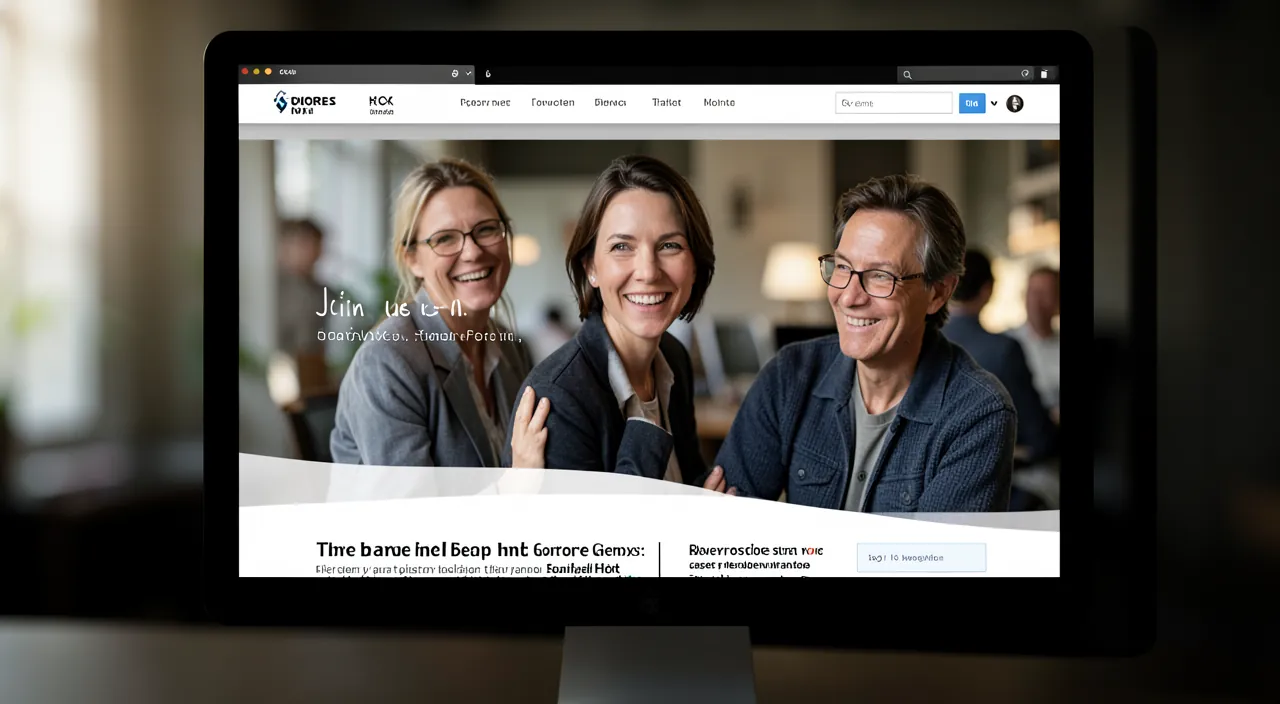
Are you hiring, or do you plan to do so? A RECRUITMENT PAGE on your website (often titled “Join Us”, “Careers”, or “Recruitment”) is a valuable asset: it presents your company as an employer, makes people want to join you, displays your job openings, and facilitates applications. Well done, it attracts good candidates, enhances your employer brand, and saves you time by pre-qualifying applicants. A recruitment page is not just a list of job openings: it’s your “employer” showcase, which should make people want to work with you. Let’s see why creating a recruitment page is important, what it should contain, and how to make it attractive.
Why create a recruitment page
A recruitment page serves several purposes; let’s see why. ATTRACT candidates: a dedicated page attracts those who want to join you; capture talent; useful; important. Enhance the EMPLOYER BRAND: show that you are a company where it’s great to work; make people want to join; valuable; key. DISPLAY job openings: clearly present your open positions; inform candidates; practical; useful. FACILITATE applications: a simple way to apply (form, contact); don’t lose candidates; effective; important. PRE-QUALIFY: by presenting the company and the positions, you attract more suitable candidates; save time; smart; useful. MAKE PEOPLE WANT TO JOIN: present your atmosphere, values, and benefits; attract candidates; appealing; useful. A CENTRALIZED contact: all applications via a single point; stay organized; practical; useful. PROFESSIONALISM: a well-maintained recruitment page reinforces your seriousness; employer image; valuable; important. SPONTANEOUS APPLICATIONS: even without a job opening, allow spontaneous applications; capture talent in advance; smart; useful. STAND OUT: a well-designed recruitment page sets you apart from employers who don’t have one; appealing; an advantage; useful. In summary, creating a recruitment page provides several valuable services: it ATTRACTS candidates (those who want to join you: capture talent), enhances your EMPLOYER BRAND (show that you are a company where it’s great to work: make people want to join), DISPLAYS your job openings clearly, and FACILITATES applications (a simple way to apply: don’t lose candidates). It helps you PRE-QUALIFY (by presenting the company and the positions, you attract more suitable candidates: save time), MAKE PEOPLE WANT TO JOIN (present your atmosphere, values, and benefits), and CENTRALIZE applications (a single contact point to stay organized). A well-maintained recruitment page reinforces your PROFESSIONALISM and employer image, allows SPONTANEOUS APPLICATIONS (capture talent even without current openings), and helps you STAND OUT from employers who don’t have one. A recruitment page is therefore not a luxury: as soon as you hire (or plan to), it’s an asset that attracts good candidates and enhances your company’s image as an employer. Let’s see what it should contain.
A recruitment page is like your company’s dating profile for job seekers. It should show who you are, why someone would want to work for you, and make it easy for them to apply. The best pages don’t just list jobs – they make candidates excited about joining your team.
Airbnb’s recruitment page features real employee photos, testimonials about their unique company culture, and clear descriptions of open positions. They highlight benefits like flexible work policies and professional development opportunities, making it clear why someone would want to work there.

What a good recruitment page should include
An effective recruitment page contains several elements; here’s what. A PRESENTATION of the company: who you are, your activity, your atmosphere; the candidate wants to know where they’re applying; important; useful. Your VALUES and culture: what drives you, your way of working; attract those who share them; appealing; key. JOB OFFERINGS: the open positions, clearly described; inform candidates precisely; essential; important. Clear POSITION DESCRIPTIONS: missions, profile, conditions; the candidate knows what to expect; clear; useful. BENEFITS: what you offer (atmosphere, perks, career growth); make people want to join; appealing; useful. A way to APPLY: form, email, clear procedure; facilitate applications; effective; important. EMPLOYEE TESTIMONIALS (optional): your team’s voice; build credibility, humanize; powerful; useful. VISUALS: photos of the team, office, atmosphere; show reality; concrete; useful. SPONTANEOUS APPLICATIONS: allow applications even without a job opening; capture talent; smart; useful. A WELCOMING TONE: a warm tone that makes people want to join; humanize; appealing; advice. In summary, a good recruitment page contains several key elements: a PRESENTATION of the company (who you are, your activity, your atmosphere: the candidate wants to know where they’re applying), your VALUES and CULTURE (what drives you, your way of working: to attract those who share them), and of course the JOB OFFERINGS (the open positions, with CLEAR DESCRIPTIONS: missions, desired profile, conditions—so the candidate knows what to expect). Present the BENEFITS (what you offer: atmosphere, perks, career growth: to make people want to join), and especially a simple way to APPLY (form, email, clear procedure). You can enrich it with EMPLOYEE TESTIMONIALS (your team’s voice builds credibility and humanizes: powerful), VISUALS (photos of the team, office, atmosphere: to show reality), and the possibility of SPONTANEOUS APPLICATIONS (apply even without a current job opening: capture talent in advance). All in a WELCOMING and warm tone that makes people want to join you. In summary, your page should answer the candidate’s questions: who are you, why join you, what positions, and how to apply—all in an attractive and human way.
The secret of an attractive recruitment page: don’t just list job openings, but make people want to join you by showing who you are. The difference between a bland recruitment page and one that attracts good candidates lies in a principle: don’t just post job openings, but SEDUCE by presenting your company as an attractive employer. Here’s how. Mistake to avoid: the “job listings” page. Many recruitment pages limit themselves to a list of positions with technical descriptions: it’s necessary, but insufficient. A quality candidate has choices; they don’t just apply for a position, but for a COMPANY, an atmosphere, a project. A page that only lists job openings gives them no reason to prefer you. The right approach: tell WHO YOU ARE and WHY JOIN YOU. Before even the job openings, present your company in a lively way: your activity, your history, your mission, what makes you unique. Share your VALUES and CULTURE: how you work, the atmosphere, the mindset—it’s often what makes the difference for a candidate. Show what you OFFER: not just the salary, but the atmosphere, career growth, perks, the meaning of the work. In short, answer the question every candidate asks: “Why should I want to work HERE rather than elsewhere?”. Make it HUMAN and concrete. Elements that humanize and build credibility: AUTHENTIC VISUALS (photos of your team, office, moments of company life—not generic stock images: the candidate wants to see the real atmosphere), EMPLOYEE TESTIMONIALS (their words are worth a thousand arguments: hearing an employee say why they love working for you is far more convincing than your own promises), and a WELCOMING AND SINCERE TONE (warm rather than corporate and cold). Then, refine the JOB OFFERINGS themselves: CLEAR POSITION DESCRIPTIONS (concrete missions, desired profile, conditions) that allow the candidate to visualize themselves and know if they fit—this pre-qualifies and saves you time. And FACILITATE APPLICATIONS: a simple and clear way to apply (form, email), without a complicated process that would discourage good candidates. Don’t forget SPONTANEOUS APPLICATIONS (to capture talent even without an open position). In summary, the secret of an attractive recruitment page: don’t just LIST JOB OPENINGS, but MAKE PEOPLE WANT TO JOIN YOU. Tell WHO YOU ARE and WHY JOIN YOU (your activity, values, culture, what you offer beyond salary), make the page HUMAN AND CREDIBLE (real visuals of your team, employee testimonials, warm tone), refine CLEAR POSITION DESCRIPTIONS (that allow the candidate to visualize themselves and pre-qualify), and FACILITATE APPLICATIONS (simple way to apply, spontaneous applications possible). A recruitment page is your “employer” showcase: it should attract talent just as your homepage attracts customers. That’s what makes good people come—and stay.

Managing your recruitment page over time
A recruitment page needs to be managed and maintained; here are the best practices. KEEP JOB OPENINGS UP TO DATE: remove filled positions, add new ones; outdated openings frustrate; update; important. RESPOND TO APPLICATIONS: process applications (even with a receipt); don’t leave them unanswered; respectful; advice (we’ll come back to this). A RESPONSE TIMEFRAME: indicate or stick to a processing timeframe; candidates don’t like silence; professional; useful. ORGANIZE RECEIPT: centralize applications to manage them well; don’t lose any; practical; useful. ENHANCE CONTINUOUSLY: update photos, testimonials, HR news; a lively page attracts; maintain; advice. MANAGE SPONTANEOUS APPLICATIONS: if you offer this, process them too; don’t ignore them; consistent; important. ACCESSIBLE PAGE: an easy-to-find link to “recruitment” (menu, footer); so candidates can find it; useful; important. MOBILE-FRIENDLY: many apply from their phone; check mobile display; essential; important. DATA PROTECTION: applications contain personal data; to protect, comply; serious; important (we’ll come back to this). COHERENT IMAGE: the recruitment page reflects your brand (visuals, tone); consistent with the rest; polished; useful. In summary, a recruitment page needs to be managed and maintained over time: KEEP JOB OPENINGS UP TO DATE (remove filled positions, add new ones: outdated openings frustrate candidates and discredit you), RESPOND TO APPLICATIONS (process them, even with a simple receipt: never leave a candidate without a response), while respecting a REASONABLE TIMEFRAME (silence is poorly received). ORGANIZE APPLICATION RECEIPT (centralize them to manage them well and not lose any), including SPONTANEOUS APPLICATIONS if you offer them. ENHANCE THE PAGE CONTINUOUSLY (update photos, testimonials, news: a lively page attracts more than a static one), make it ACCESSIBLE (an easy-to-find link to “recruitment” in the menu or footer) and well ADAPTED TO MOBILE (many candidates apply from their phone). Ensure PROTECTION OF PERSONAL DATA (applications contain them: to protect, with compliance), and a COHERENT IMAGE with the rest of your brand (visuals, tone). A well-maintained recruitment page—up-to-date job openings, processed applications, living content—remains attractive and effective; a neglected page (outdated job openings, ignored applications) harms your employer image.
Warning: respond to applications (don’t ignore them), keep job openings up to date, and protect candidates’ personal data. A recruitment page engages your employer image; a few points of vigilance are essential. First point: RESPOND TO APPLICATIONS—never leave them unanswered. This is a common and very poorly received mistake: a candidate who applies (and often spent time preparing their application) and gets NO RESPONSE keeps a terrible impression of your company. Radio silence harms your employer brand, and it’s known (candidates talk, leave reviews). Therefore, commit to PROCESSING EVERY APPLICATION: at minimum a receipt (“Thank you for your application, we’re reviewing it”), and a response (even negative and brief) after review. This elementary respect, alas rare, sets you apart positively and preserves your image. Therefore, only offer a way to apply if you can FOLLOW UP on applications. Second point: KEEP JOB OPENINGS UP TO DATE. A recruitment page with OUTDATED OPENINGS (positions already filled, announcements from a year ago) is counterproductive: it frustrates candidates who apply for a position that no longer exists, and gives the image of a neglectful company or an abandoned page. Remove filled positions, update descriptions, and if you don’t have current openings, state it clearly (while possibly offering spontaneous applications). An up-to-date page is credible; a static page with old openings harms. Third point, important: PROTECT CANDIDATES’ PERSONAL DATA. Applications contain sensitive personal data (CV, contact details, background, sometimes more): you have OBLIGATIONS regarding their processing. Concretely: collect them securely (a form or reliable channel), use them ONLY FOR RECRUITMENT (not for other purposes), don’t KEEP THEM INDEFINITELY (respect applicable retention periods), inform candidates of the use of their data, and secure their storage. Inform yourself about your obligations regarding recruitment data protection, and if you use an application tool, choose one that respects privacy. Don’t take these data lightly. Fourth point: be HONEST and faithful to reality. Your recruitment page must reflect the reality of your company: don’t oversell an atmosphere or benefits that don’t exist (the gap would lead to disappointments and departures). An attractive but SINCERE PRESENTATION attracts the right people, those who truly match you. Fifth point: respect RECRUITMENT RULES. Be careful with employment and non-discrimination rules: job openings and the process must respect the legal framework (no discriminatory criteria, etc.). If in doubt, inform yourself. Sixth point: make the page EASY TO ACCESS AND APPLY TO: an unfindable link or a complicated application process discourages good candidates—check that the page is accessible (menu, footer) and that applying is simple, including on mobile. In summary: RESPOND TO APPLICATIONS (never ignore them: silence seriously harms your employer image; at minimum a receipt, then a response even if negative), KEEP JOB OPENINGS UP TO DATE (outdated openings frustrate and discredit), PROTECT CANDIDATES’ PERSONAL DATA (secure collection, use limited to recruitment, regulated retention, information: you have obligations), be HONEST (an attractive but sincere presentation), respect RECRUITMENT RULES, and make the page accessible and the application simple. With these precautions, your recruitment page enhances your employer brand and attracts good candidates; neglected (ignored applications, outdated job openings, poorly managed data), it harms your image and may expose you. Respecting candidates is the key.

Frequently asked questions
Do I need a recruitment page if I rarely hire?
Even if you rarely hire, a recruitment page (even simple) can be useful: it enhances your employer brand, allows spontaneous applications, and prepares in advance; but adapt its scope to your real needs—no need to overdo it if you hire exceptionally. Let’s see. USEFUL EVEN IF RARE: a recruitment page (even simple) serves even if you hire little; to adapt to your needs; nuanced; pragmatic. SPONTANEOUS APPLICATIONS: allowing spontaneous applications captures talent even without a job opening; a talent pool in advance; smart; useful. EMPLOYER BRAND: showing that you are a good employer always helps; valuable; a plus; useful. PREPARED IN ADVANCE: having a page ready for when you hire; don’t wait until the last minute; anticipate; wise. ADAPT THE SCOPE: if you hire exceptionally, a simple page suffices; no need to overdo it; proportionate; sensible. A SIMPLE PAGE POSSIBLE: a presentation + a contact sometimes suffice; not necessarily a big page; to your measure; flexible. Or a SECTION: if not a page, a small “join us” section can suffice; light; adapted; option. According to your NEED: if you hire often, a real page; if rarely, a light version; adapt; logical. The ADVICE: even if you rarely hire, a recruitment page (even simple) is useful (employer brand, spontaneous applications, ready in advance); but adapt its scope—a light version or a section suffices if you hire exceptionally. In summary, even if you rarely hire, a recruitment page can be USEFUL—provided you ADAPT ITS SCOPE to your real needs. The benefits apply even for occasional hiring. First, SPONTANEOUS APPLICATIONS: allowing talents to contact you even when you don’t have open positions builds a TALENT POOL—the day you hire, you may already have good candidates at hand. Then, EMPLOYER BRAND: showing that you are a serious and attractive company as an employer is always valuable, even occasionally. Finally, PREPARATION: having a page ready in advance avoids having to create everything in a rush when a hiring need arises. That said, PROPORTION YOUR EFFORT to your situation. If you hire EXCEPTIONALLY (once every two years, for example), no need to create an elaborate, huge recruitment page: a SIMPLE PAGE suffices—brief presentation of your company as an employer, possibly your values, and a way to contact you or apply. You can even settle for a simple “Join Us” or “Recruitment” section somewhere on your site (for example on your “About” or “Contact” page), rather than a complete dedicated page. Conversely, if you hire FREQUENTLY or plan to grow your team, then a well-developed recruitment page (presentation, values, job openings, testimonials, form) becomes a worthwhile investment. The rule: ADAPT TO YOUR REAL NEED. Frequent hiring → complete and lively recruitment page; rare hiring → light version or simple section suffices. In all cases, the important thing is: being able to present your company as an employer and allowing an interested candidate to reach you—even modestly. Don’t create an overcomplicated system for an occasional need, but don’t neglect this aspect either: a small door for candidates is always good to have.

What should you absolutely avoid on a recruitment page?
Avoid especially: leaving outdated job openings, not responding to applications, a complicated application process, and a too corporate and impersonal presentation; these mistakes discourage good candidates and harm your employer image. Let’s see. OUTDATED JOB OPENINGS: positions already filled/old announcements; frustrate and discredit; keep up to date; to avoid. SILENCE TOWARD APPLICATIONS: not responding to candidates; the most poorly received mistake; harms the image; always respond; crucial. A COMPLICATED PROCESS: applying must be simple; a obstacle course discourages; facilitate; important. TOO CORPORATE TONE: cold, impersonal, jargon-filled speech; doesn’t give the desire; humanize; advice. GENERIC WITHOUT SOUL: stock photos, empty promises (“join a dynamic team”); sounds fake; be authentic; to avoid. UNKEPT PROMISES: overselling a fake atmosphere/benefits; disappointment and departures; be honest; important. The UNFINDABLE PAGE: a hidden recruitment link; candidates don’t find it; make it accessible; useful. Not MOBILE-ADAPTED: applying poorly on mobile; lose candidates; check mobile; important. DISREGARD FOR DATA: poorly managing candidates’ data; risk and lack of seriousness; protect; important. The ADVICE: avoid outdated job openings, silence toward applications (the worst), a complicated process, a too corporate/generic tone, unkept promises, an unfindable or poorly mobile-adapted page, and poor data management; these mistakes discourage candidates and harm your image. In summary, several mistakes are ABSOLUTELY TO AVOID on a recruitment page, as they discourage good candidates and harm your employer image. The WORST, the most poorly received: NOT RESPONDING TO APPLICATIONS. A candidate who applies and faces SILENCE keeps a terrible impression, which they will share (reviews, word of mouth). Only offer a way to apply if you respond—at minimum a receipt, then a response even if brief. Second mistake: leaving OUTDATED JOB OPENINGS (positions already filled, dated announcements): this frustrates candidates and gives the image of an abandoned page. Keep your job openings up to date. Third mistake: a COMPLICATED APPLICATION PROCESS: an obstacle course (endless form, multiple steps, obstacles) discourages even good candidates. Make the application SIMPLE. Fourth mistake: a TOO CORPORATE TONE, cold and impersonal, full of jargon: it doesn’t give the desire. A recruitment page must be HUMAN AND WARM. Fifth mistake, related: the GENERIC WITHOUT SOUL—impersonal stock photos, empty promises and clichés (“join a young and dynamic team”, “stimulating challenges”) that you read everywhere and sound fake. Be AUTHENTIC AND CONCRETE (real visuals, real testimonials, real presentation). Sixth mistake: UNKEPT PROMISES—overselling an atmosphere or benefits that don’t exist leads to disappointments and quick departures. Stay HONEST. Seventh mistake: an UNFINDABLE PAGE (hidden recruitment link) or POORLY MOBILE-ADAPTED (where many apply): you lose candidates without knowing. Eighth mistake: DISREGARDING CANDIDATES’ PERSONAL DATA (poor management, abusive retention): it’s a risk and a lack of seriousness. In summary, on a recruitment page, avoid absolutely: silence toward applications (the worst), outdated job openings, a complicated process, a corporate and generic tone, unkept promises, an unfindable or poorly mobile-adapted page, and poor data management. By avoiding these pitfalls—and doing the opposite (responding, keeping up to date, facilitating, humanizing, being authentic and honest)—your recruitment page will become a real asset to attract and respect candidates.

How to make your recruitment page more attractive than your competitors’?
Focus on authenticity and humanity: show the real atmosphere of your company (real photos, employee testimonials), explain concretely why people love working for you, and refine the candidate experience (simple application, quick responses); that’s what sets you apart. Let’s see. AUTHENTICITY: show the real atmosphere (not clichés); the authentic stands out from the generic; be true; key. REAL PHOTOS: your team, your office, real moments; the candidate sees reality; concrete; useful. EMPLOYEE TESTIMONIALS: your team’s words convince more than your promises; humanize; powerful; advice. The CONCRETE WHY: explain concretely why people love working for you; specific, not generic; differentiating; important. Your SPECIFIC VALUES: what makes you unique as an employer; stand out; appealing; useful. The CANDIDATE EXPERIENCE: simple application, quick responses, respect; many employers neglect this; stand out by care; smart. RESPOND QUICKLY: processing applications quickly sets you apart (so many employers don’t respond); respect marks; effective; advice. A TONE THAT’S YOU: warm, sincere, in your image; stand out from cold corporate; appealing; useful. Show PROSPECTS: career growth, meaning, concrete benefits; what the candidate gains; attract; useful. The ADVICE: focus on authenticity and humanity (real photos, employee testimonials), explain concretely why people love working for you, and refine the candidate experience (simple application, quick responses, respect); that’s what sets you apart from competitors who are often generic and neglectful. In summary, to make your recruitment page more attractive than your competitors’, the key is to focus on AUTHENTICITY, HUMANITY, AND CARE—precisely where many employers are generic and neglectful. First lever: AUTHENTICITY. Most recruitment pages look alike: same stock photos, same empty promises (“dynamic team”, “stimulating challenges”). STAND OUT by showing the REAL ATMOSPHERE of your company: real PHOTOS of your team, office, real moments of life (not generic images), and EMPLOYEE TESTIMONIALS (nothing convinces more than an employee explaining, in their own words, why they love working for you—it’s far more credible than your own promises). Second lever: the CONCRETE AND SPECIFIC WHY. Instead of generic phrases, explain CONCRETELY AND SPECIFICALLY why people love working for you: what makes your company unique as an employer? Your real values, your way of working, what you offer specifically (atmosphere, autonomy, meaning, career growth, concrete benefits). The specific attracts; the generic slips. Third lever, often decisive and neglected by the competition: the CANDIDATE EXPERIENCE. Many employers mistreat their candidates: complicated processes, radio silence, no response. By refining the experience—a SIMPLE AND QUICK APPLICATION, QUICK AND RESPECTFUL RESPONSES (at least a receipt, then a real response)—you STAND OUT clearly: a well-treated candidate keeps an excellent impression, talks about it, and will be more inclined to join you (and stay). Respecting the candidate is a huge competitive advantage, precisely because so many employers neglect it. Finally, adopt a TONE THAT’S YOU: warm, sincere, human—opposite of the cold and impersonal corporate speech. In summary, to surpass your competitors: be AUTHENTIC (real atmosphere, real photos, employee testimonials), explain CONCRETELY AND SPECIFICALLY why joining you (no clichés), and REFINE THE CANDIDATE EXPERIENCE (simple application, quick responses, respect). It’s authenticity, humanity, and the care given to candidates that will make good talents choose you, rather than a competitor with a generic and neglectful recruitment page.
What to remember
A RECRUITMENT PAGE on your site (“Join Us”, “Careers”) is a valuable asset as soon as you hire: it ATTRACTS candidates, enhances your EMPLOYER BRAND, displays your job openings, facilitates applications, and saves you time by pre-qualifying applicants. It’s your “employer” showcase, which should make people want to work with you. A good page contains: a PRESENTATION of the company, your VALUES and culture, JOB OFFERINGS (with CLEAR DESCRIPTIONS: missions, profile, conditions), BENEFITS, a simple way to APPLY, and ideally EMPLOYEE TESTIMONIALS, AUTHENTIC VISUALS, and the possibility of SPONTANEOUS APPLICATIONS—all in a welcoming tone. The SECRET of an attractive page: don’t just LIST JOB OPENINGS, but MAKE PEOPLE WANT TO JOIN YOU. Tell WHO YOU ARE and WHY JOIN YOU (activity, values, culture, what you offer beyond salary), make the page HUMAN AND CREDIBLE (real visuals of your team, employee testimonials, warm tone: a quality candidate chooses a company, not just a position), refine CLEAR POSITION DESCRIPTIONS (so they can visualize themselves and pre-qualify), and FACILITATE APPLICATIONS. To stand out from competitors, focus on AUTHENTICITY, HUMANITY, AND CARE—where many are generic and neglectful. But respect the essential points of vigilance, as the page engages your employer image. ALWAYS RESPOND TO APPLICATIONS—never ignore them (silence is the most poorly received mistake and seriously harms your image: at minimum a receipt, then a response even if negative; only offer a way to apply if you can follow up). KEEP JOB OPENINGS UP TO DATE (outdated job openings frustrate and discredit). PROTECT CANDIDATES’ PERSONAL DATA (secure collection, use limited to recruitment, regulated retention, information: you have obligations). Be HONEST (an attractive but SINCERE PRESENTATION attracts the right people; don’t oversell), respect RECRUITMENT RULES (non-discrimination), and make the page ACCESSIBLE (menu, footer) with a simple application, including on MOBILE. Finally, adapt the scope to your needs: frequent hiring → complete and lively page; rare hiring → light version or simple section (with spontaneous applications). In short, a well-made and well-managed recruitment page attracts good candidates and enhances your company’s image as an employer: it should attract talent just as your homepage attracts customers. Authenticity, humanity, clear job openings, simple application, and respect for candidates—that’s what makes good people come—and stay.


Your activity deserves a real online presence: showcase site, store, SEO—we create the website that suits you.
Leave a Reply
You must be logged in to post a comment.