
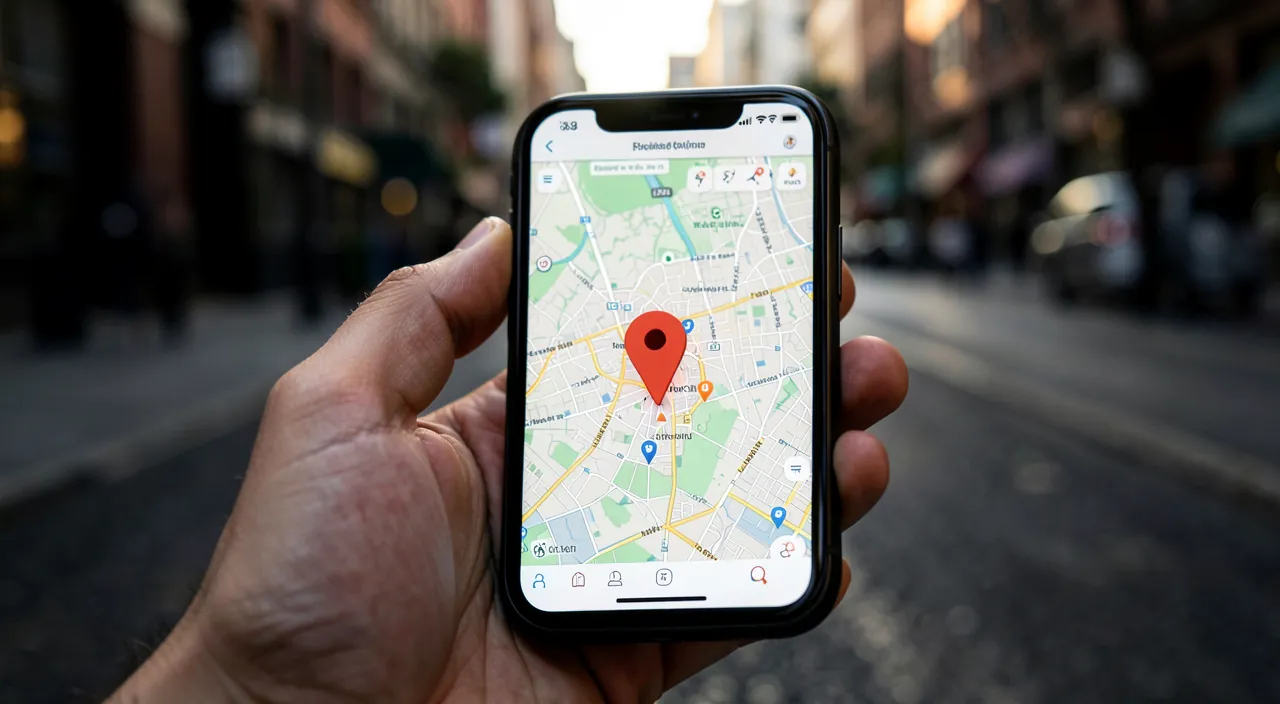
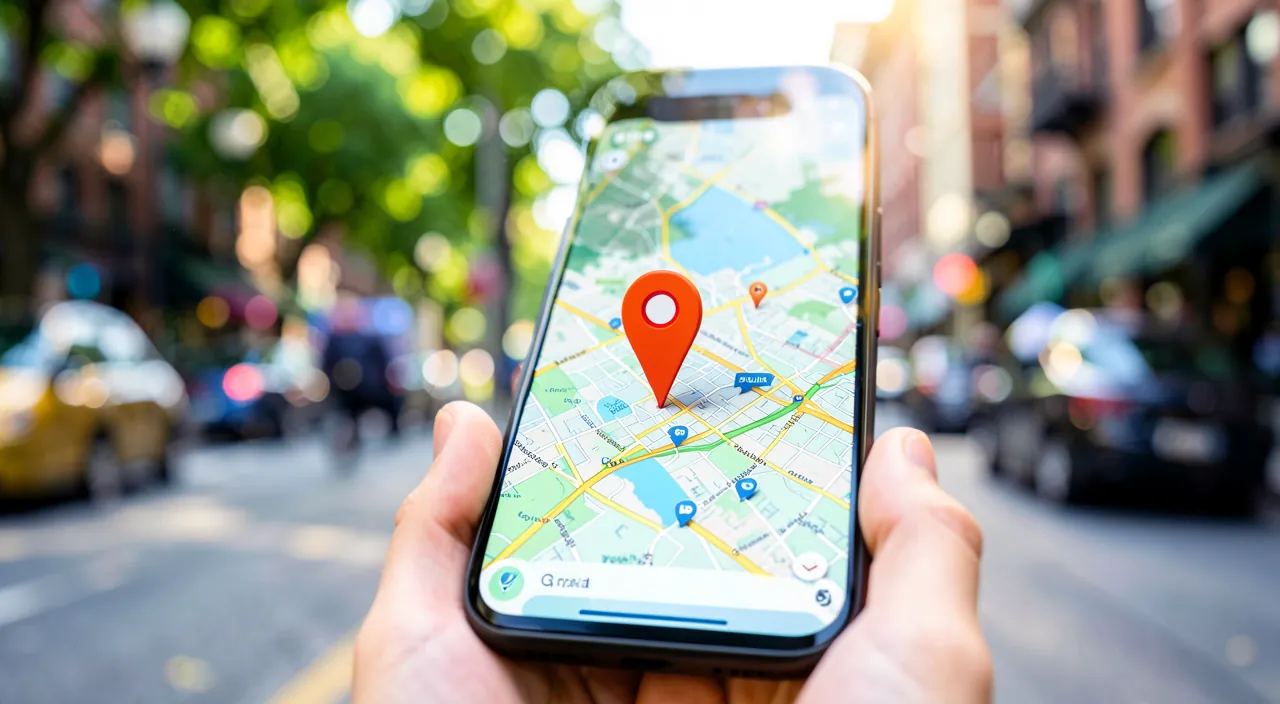
When someone is looking for a business, service, or professional **NEAR THEM**, they often consult the results map — that map that displays nearby establishments with their names, hours, and reviews. **APPEARING** there is a considerable advantage for any business with a local clientele: that’s where many potential customers are looking for you. And the good news is that listing your business on the map is free and accessible to everyone, thanks to a business listing to create and maintain. Let’s see how to appear on the map, how to create and optimize your listing, and the best practices to attract local customers — a lever often overlooked.
Why appearing on the map is an advantage
Being on the search results map is essential for a local business; here’s why. **THE** reflex of customers: when people look for a business, service, or professional **NEAR THEM**, they often consult the **MAP** of search results; it’s become a reflex to find an address, hours, or a review; appearing there means being where your potential customers are looking. What the customer sees: on the map, they see nearby establishments with their **NAME**, **LOCATION**, **HOURS**, **REVIEWS**, contact details, sometimes photos; a well-filled listing provides all the useful information to choose and contact you; it’s a local showcase. **THE BENEFITS** of being listed: being **FOUND** by customers looking nearby; giving them **USEFUL** information (address, hours, contact); reassuring them with **REVIEWS**; attracting a **LOCAL CLIENTELE**; and gaining **LOCAL VISIBILITY** for free; for a local business, it’s a major lever. It’s **FREE**: being on the map via a business listing is **FREE**; you just need to create and manage this listing; an advantage accessible to all, at no cost; it would be a shame to miss out. A **NEGLECTED** lever: many local businesses don’t have a listing, or an empty and neglected one; it’s missing out on free, valuable visibility; maintaining your listing is an easy, often underestimated gain. **FOR WHOM** it’s useful: for any business with a **LOCAL** clientele — shops, craftsmen, professionals, restaurants, proximity services; if your customers come from your area, the map is essential; that’s where they find you. **THE BUSINESS LISTING**: to appear on the map, you create a **BUSINESS LISTING** (a profile of your business) with the mapping service; this listing contains your information and makes you appear; it’s the key (we’ll come back to it). **COMPLEMENTARY TO THE WEBSITE**: the listing on the map and your website are complementary; the listing makes you visible on the map and provides essential info; the website presents your business in detail; together, they maximize your local presence. **WHAT IT’S FOR**: to be **FOUND** by local customers; to give them **USEFUL** information; to **REASSURE** them (reviews); to attract a **PROXIMITY** clientele; to gain **LOCAL VISIBILITY** for free; in short, a major lever for a local business. The main idea: appearing on the search map is a considerable advantage for any business with a **LOCAL** clientele: that’s where many potential customers are looking for you (the reflex of looking for a business or service “near home”). Being listed allows you to be found, to provide useful information (address, hours, contact), to reassure with reviews, and to attract a proximity clientele. It’s **FREE**: you just need to create and maintain a **BUSINESS LISTING** with the mapping service. It’s a major lever but often neglected (many businesses don’t have a listing, or an empty one); maintaining it is an easy and valuable gain, complementary to your website.
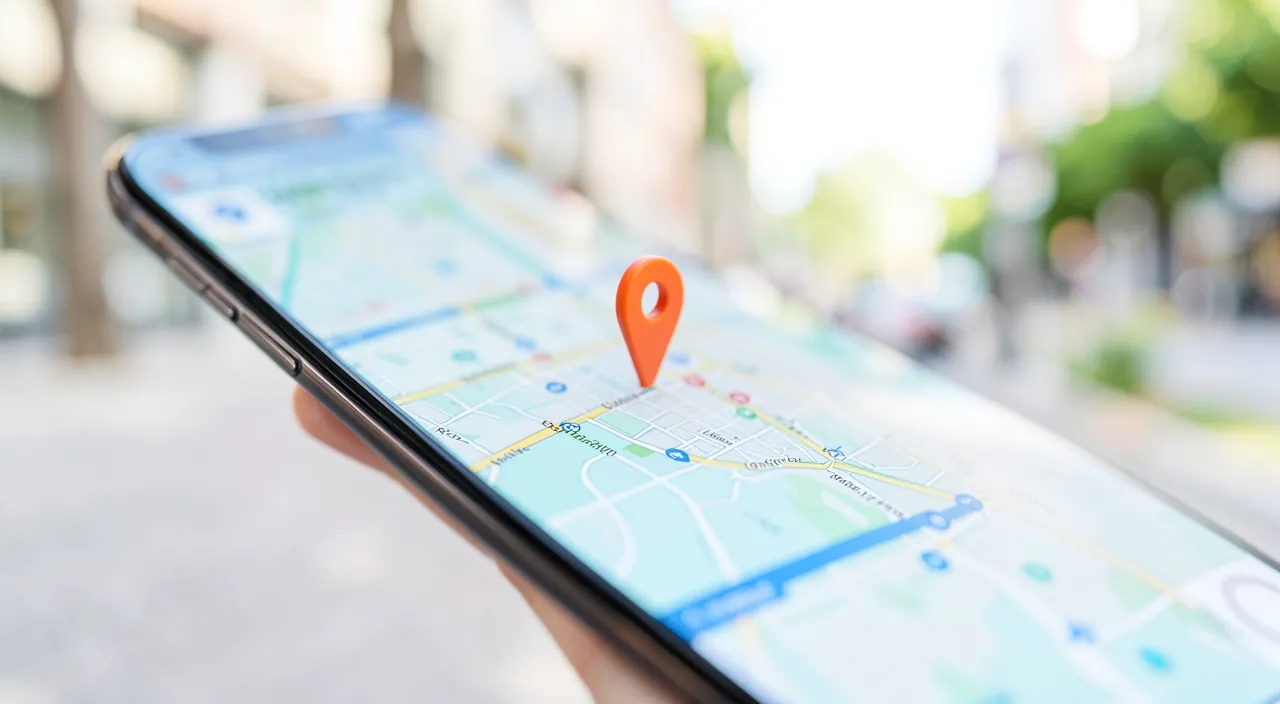
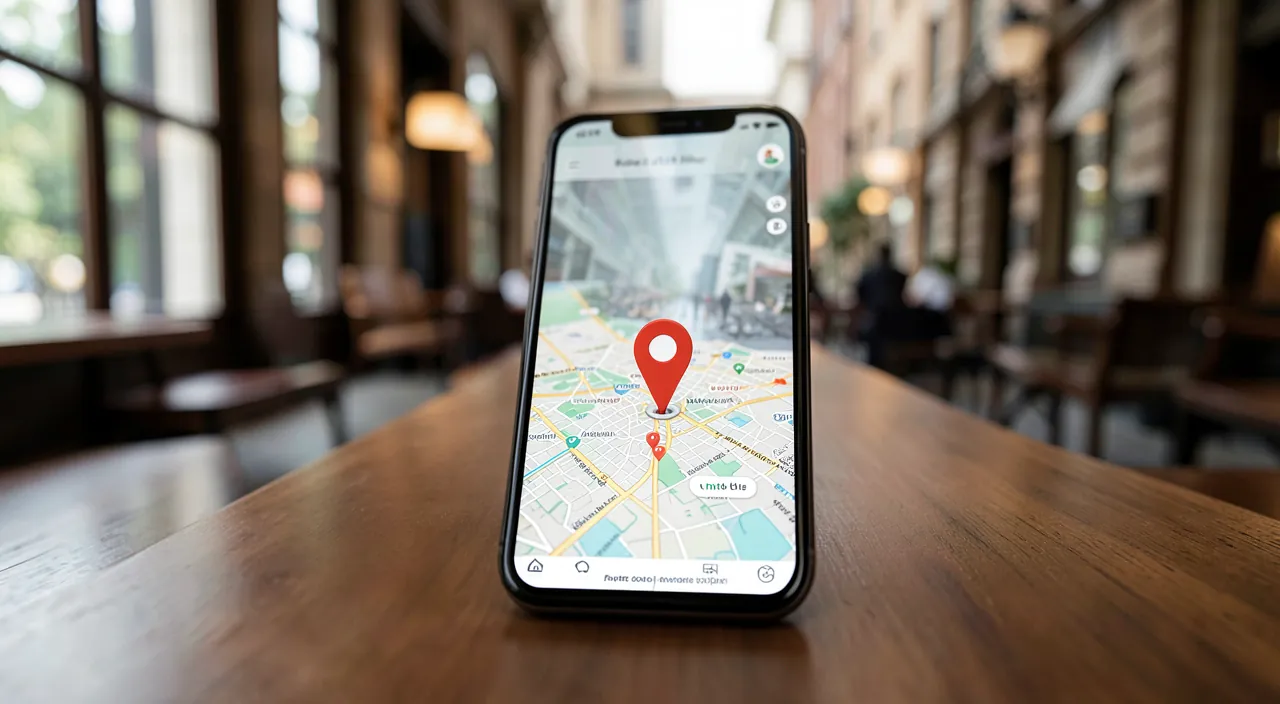
When people search for local businesses, they often use maps to find addresses, hours, and reviews. Having your business listed there is free and helps customers find you. It’s especially important for shops, restaurants, and services that rely on local customers.
A bakery in Paris creates a complete business listing with accurate opening hours (7am-7pm), a photo of their famous croissants, and positive customer reviews. When a tourist searches “best bakery near me” on their phone, the bakery appears on the map with all this information, making them more likely to visit.
How to create and optimize your business listing
Appearing on the map involves creating and maintaining a listing; here’s how to proceed. **CREATE** your business listing: to appear on the map, create a **BUSINESS LISTING** (a profile of your business) with the main search engine’s mapping service; it’s free; you provide your business’s information; this listing makes you appear on the map. **VERIFY** (validate) your listing: usually, you need to **VERIFY** that you are indeed the business’s manager (a validation procedure, often by mail, phone, or other); this verification confirms your legitimacy and gives you control of the listing; follow the procedure. Provide **ESSENTIAL** information: carefully fill in the useful information; the **EXACT NAME** of your business; the **PRECISE ADDRESS** (for the location on the map); the **HOURS** of operation; the **PHONE** and **CONTACT** methods; the link to your **WEBSITE**; the **CATEGORY** of activity; this information is what customers are looking for. A **COMPLETE** and up-to-date listing: fill in the listing as **COMPLETELY** as possible and keep it **UPDATED**; a complete listing (with all the info, photos, a description) is more attractive and better highlighted than an empty listing; completeness and timeliness matter (we’ll come back to it). Add **PHOTOS**: add good photos of your business (your premises, your products, your team); photos attract, reassure, and give the desire; a listing with nice photos is more engaging. A **CLEAR** description: write a clear description of your business (what you do, what sets you apart); help the customer understand and choose. Manage **REVIEWS**: customer reviews are important (they reassure and influence the choice); encourage your satisfied customers to leave a review, and **RESPOND** to reviews (positive and negative) with care and professionalism; reviews and your responses count a lot (we’ll come back to it). **KEEP** it up-to-date: update your listing when something changes (hours, contact details, information); an up-to-date listing is reliable; a listing with false info (wrong hours) frustrates customers; timeliness is essential. Use the **FEATURES** of the listing: listings often offer features (posting news, offers, answering questions, adding services); use them to animate your listing and attract; an active listing is better highlighted. **COHERENCE** with the website: ensure coherence between your listing and your website (same information, contact details); coherence reassures and helps local SEO; the two complement each other. **MONITOR** your listing: keep an eye on your listing (new reviews, customer questions, possible modifications by others); react if needed; a monitored listing remains under control. In summary: create and **VERIFY** your business listing (free), carefully provide the essential information (name, address, hours, contact, website, category), fill it in as **COMPLETELY** as possible and keep it **UPDATED**, add good photos and a clear description, manage **REVIEWS** (encourage them, respond to them), use the listing’s features, and ensure coherence with your website. A complete, up-to-date listing with good reviews and monitored will effectively make you appear on the map and attract local customers; completeness, timeliness, and reviews are the keys.
Keys to an attractive listing: complete, up-to-date, and good reviews. Creating a business listing to appear on the map is a first essential step, but what makes the difference between a listing that attracts customers and an invisible one are three qualities: **COMPLETENESS**, **TIMELINESS**, and **REVIEWS**. First key: a **COMPLETE** listing. Many businesses create a minimal listing (just the name and address) and stop there; it’s a missed opportunity. A listing filled in as **COMPLETELY** as possible — with all the useful information (precise hours, phone, link to the website, activity category), a clear description of what you do, and especially good **PHOTOS** (your premises, your products, your team) — is much more attractive and generally better highlighted than an empty listing. Customers who consult it find everything they’re looking for, are reassured, and feel like contacting you or coming in. So take the time to fill it in carefully; every piece of added information makes your listing more useful and engaging. Photos, in particular, make a big difference: a listing with nice images gives the desire and inspires confidence, while a listing without photos seems impersonal. Second key: an **UP-TO-DATE** listing. Nothing frustrates a customer more than false information: showing up at a place relying on hours displayed on your listing, and finding it closed because the hours weren’t up-to-date, is a disappointment that can cost you that customer (and a bad review). So keep your listing meticulously up-to-date: as soon as an hour, a contact detail, or a piece of information changes, update it immediately; indicate exceptional hours (holidays, vacations). A reliable listing, with accurate information, is the basis of trust; a listing with false info harms your image. Third key, often decisive: **REVIEWS**. Customer reviews have enormous weight on the map: they reassure potential customers (who trust other customers’ feedback), strongly influence their choice, and contribute to your listing’s visibility. Two actions to take. On the one hand, **ENCOURAGE** your satisfied customers to leave a review: most happy customers don’t think to do it spontaneously, but will gladly do so if you politely invite them; numerous and recent positive reviews are a considerable advantage. On the other hand, **RESPOND** to reviews, positive and negative, with care and professionalism: thanking for a positive review shows your attention; responding calmly and constructively to a negative review (without aggression, by seeking to resolve or explain) shows your seriousness and customer focus, and reassures those who read it — a well-managed negative review often makes a better impression than no response. The way you manage reviews says a lot about your professionalism. By cultivating these three qualities — a complete listing (all the info, a description, nice photos), up-to-date (accurate and reliable information), and good reviews (encouraged and managed with care) — you transform your simple presence on the map into a real magnet for local customers. It’s a free and powerful lever, accessible to all, that would be a shame to neglect; maintain your listing like a showcase, because for many potential customers, it’s the first thing they see of you.
Best practices and points of vigilance
Properly managing your presence on the map requires some best practices and vigilance; here’s the essential. **VERIFY** (validate) your listing: verifying your listing (confirming that you are the manager) is important; it gives you **CONTROL** of the listing and prevents others from modifying it without your knowledge; without validation, you don’t fully control your presence; do this step. **ACCURATE** information: ensure that all information is **ACCURATE** (name, address, hours, contact); false or outdated info frustrates customers and harms your image; accuracy is essential; correct any errors. Manage **REVIEWS** professionally: reviews are public and important; respond to them with **CARE** and **PROFESSIONALISM**, including negative reviews (calmly, without aggression, by seeking to resolve); never react with anger to a negative review (it would make a bad impression); your review management reflects your seriousness (we’ll come back to it). Don’t **CHEAT** on reviews: don’t buy fake reviews, don’t encourage dishonest reviews; fake reviews violate the rules, are risky, and backfire on you; encourage **REAL** reviews from satisfied customers, honestly. **MONITOR** your listing: keep an eye on your listing; new reviews, customer questions, possible modifications by third parties; react (respond, correct); a monitored listing remains under control. **MODIFICATIONS** by third parties: know that, on some platforms, information can be suggested or modified by third parties; monitor your listing to spot and correct any erroneous modifications; keep control. **COHERENCE** of information: ensure coherence of your information (name, address, phone) between your listing, your website, and other places where your business is listed; coherence reassures and helps local SEO; avoid contradictory information. **STAY** active: an active listing (updated, with news, responses to reviews, new photos) is better highlighted than an abandoned one; animate your listing; activity pays off. **CONFIDENTIALITY** and data: managing a listing involves providing information about your business (public by nature); it’s normal for a business that wants to be found; just make sure to only publish what you want to be public. Don’t **NEGLECT** this lever: a created then forgotten listing loses its interest; care and regularity make the difference; regularly devote some time to your listing; the gain in local visibility is worth it. **COMPLEMENT** with the website: the listing and the website are complementary; the listing for local visibility and essential info, the website to present in detail; maintain both for a complete presence. In summary, best practices: **VERIFY** (validate) your listing to keep control, ensure **ACCURATE** and up-to-date information, manage **REVIEWS** professionally (respond calmly, including to negatives; never cheat with fake reviews), **MONITOR** your listing (new reviews, questions, modifications by third parties), ensure coherence of information, stay active, and don’t neglect this lever. Complement with your website. A verified, accurate listing with well-managed reviews, monitored and animated ensures an effective and controlled local presence; accuracy, review management, and vigilance are the keys.
Warning: ensure accurate information, manage reviews professionally (never with anger or fake reviews), and verify your listing to keep control. Three points of vigilance are essential so that your presence on the map serves your business rather than harming it. The first: the **ACCURACY** of information. Your listing is, for many potential customers, the first source of information about you — and often the one they rely on to act (come, call). False or outdated information can therefore cause real disappointments and cost you customers: imagine someone who shows up relying on hours displayed on your listing, and finds the door closed because those hours weren’t up-to-date; not only do you lose that customer, but they leave frustrated, with a bad image of you, and may leave a negative review. So meticulously ensure that all the information in your listing is **ACCURATE** and **UP-TO-DATE**: name, address (precise, for the correct location on the map), hours (including exceptional ones: holidays, vacations), phone, contact details. As soon as a piece of information changes, update it immediately; a reliable listing is the basis of trust. The second point, crucial and often poorly managed: **REVIEW** management. Customer reviews are **PUBLIC** and have considerable weight on the map; the way you manage them reflects your professionalism to everyone who reads them. Two imperative rules. First, never react with **ANGER**, aggression, or defensiveness to a negative review: it’s humanly understandable to be hurt by criticism, but an angry, aggressive, or dismissive response makes a **VERY** bad impression on all potential customers who read it, much worse than the negative review itself. Always respond to negative reviews with **CALM**, professionalism, and courtesy: thank them for the feedback, apologize if justified, explain your point of view calmly if necessary, and seek to resolve the problem or offer contact; a well-managed negative review (calm and constructive response) often makes a better impression than no response, and reassures future customers about your seriousness and customer focus. Then, never **CHEAT** with fake reviews: don’t buy reviews, don’t post fake ones, don’t encourage dishonest reviews; it violates the platforms’ rules, is risky (sanctions, loss of credibility), and it will eventually backfire on you. Instead, encourage **REAL** reviews from genuinely satisfied customers, honestly (by simply inviting them to share their experience); authentic reviews, even imperfect ones, are infinitely better than fake glowing reviews. The third point: **VERIFY** (validate) your listing. The verification procedure, which confirms that you are indeed the business’s manager, is important because it gives you **CONTROL** of your listing: without this validation, you don’t fully control your presence, and you risk that information be modified without your knowledge, or that you can’t manage your listing. So do this verification step; it ensures you control your listing and your image. Stay vigilant about possible **MODIFICATIONS** by third parties: on some platforms, information can be suggested or modified by others; regularly monitor your listing to spot and correct any erroneous modifications, and keep control of what’s displayed. In short, your presence on the map is a precious advantage, provided you manage it carefully: accurate and up-to-date information (to avoid disappointing), professional review management (calm responses even to criticism, never anger or fake reviews), and a verified and monitored listing (to keep control). These precautions transform your listing into a reliable and professional local showcase that attracts and reassures customers; neglected, they can instead harm your image. Maintain and control your presence on the map as you would your physical showcase: it’s what many potential customers see of you first.
Frequently asked questions
Do you need to pay to appear on the map?
No, appearing on the map via a business listing is **FREE**: you just need to create and manage this listing; there are separate paid advertising options, but the basic presence is free. Let’s clarify. The **BASE** presence, free: creating a business listing to appear on the search map is **FREE**; you create the listing, verify it, fill it in, and your business appears on the map — with no fees; it’s an advantage accessible to any local business, at no cost; it would be a shame to miss out. What the free listing **ALLOWS**: with the free listing, you appear on the map, display your information (name, address, hours, contact, website), your photos, your description, manage reviews, post news; it’s already very complete and sufficient for good local presence; the free option covers the essentials. **PAID** options (separate): there are, however, paid **ADVERTISING** options (to highlight your business more visibly, appear in priority, etc.); these are services **DISTINCT** from the free listing; they are optional; you don’t **NEED** to pay for the basic presence. The **CONFUSION** to avoid: don’t confuse the free listing (your basic presence on the map, with no fees) with paid advertising (optional for more visibility); the first is enough to appear and be found; the second is an additional marketing choice, not an obligation. Beware of **SOLICITATIONS**: beware, some solicitations (calls, emails) sometimes claim that you need to pay to “reference” your business on the map, or offer dubious services; the basic presence being free and manageable by yourself, beware of these approaches; don’t pay for what is free and that you can do yourself; if in doubt, inform yourself. The **ADVICE**: create and manage your free listing yourself (it’s simple and free); it’s enough for good local presence; only consider paid advertising as an additional marketing choice, knowingly; and beware of solicitations claiming that you need to pay to appear. In summary, no, you don’t need to pay to appear on the map: the basic presence via a business listing is **FREE**, and you just need to create and manage this listing yourself. The free listing covers the essentials (information, photos, reviews, news) for good local presence. There are separate paid advertising options (for more visibility), but they are optional and not to be confused with the free basic presence. Beware of solicitations claiming that you need to pay to “reference” your business: don’t pay for what is free and that you can do yourself. Create your free listing, maintain it, and you’ll appear on the map with no fees: a free and valuable local visibility lever.

How to manage a negative review?
Respond to it with calm and professionalism: thank for the feedback, apologize if justified, explain calmly, and seek to resolve; never react with anger; a well-managed negative review can even reassure future customers. Here’s how. The **IMPORTANCE** of responding well: reviews are **PUBLIC**; your response to a negative review is read not only by the author, but by **ALL** potential customers who consult your listing; the way you handle criticism reflects your professionalism and influences the image people have of you; a good response is crucial. Rule number one: **NO ANGER**: never react with anger, aggression, contempt, or defensiveness to a negative review; it’s humanly understandable to be hurt, but an angry response makes a **VERY** bad impression on all readers, much worse than the review itself; keep your absolute calm; don’t respond in the heat of the moment. How to **RESPOND** well: respond with **CALM** and **PROFESSIONALISM**; **THANK** for the feedback (even negative, it’s addressed to you); apologize if the criticism is justified; **EXPLAIN** your point of view calmly if necessary (without aggression); show that you take the problem **SERIOUSLY**; and offer to **RESOLVE** or continue the exchange (direct contact); this calm and constructive attitude makes a good impression. The **BENEFIT** of a good response: a well-managed negative review can even work in your favor; it shows future customers that you are attentive, professional, customer-focused, and that you handle problems seriously; a calm response to criticism often reassures more than the absence of negative reviews; it’s an opportunity to show your professionalism. Don’t **DELETE** or ignore: you generally can’t delete a legitimate negative review (and wanting to do so isn’t the right approach); ignoring a negative review isn’t ideal either (it can give an impression of disinterest); better to respond calmly; the response is your best tool. **UNFAIR** or fake reviews: if a review is clearly false, abusive, or against the rules (insulting, off-topic), you can generally **REPORT** it to the platform; but for a legitimate negative review (a real dissatisfaction), respond to it rather than trying to make it disappear. **LEARN** from it: a negative review can also contain **USEFUL** criticism; take it as feedback to consider; if it points to a real problem, fix it; reviews, even negative ones, help you improve. **STAY** serene: an occasional negative review is normal (no one is unanimous); don’t dramatize it; it’s your reaction, more than the review itself, that counts; handle it with serenity and professionalism. The **ADVICE**: faced with a negative review, don’t respond in the heat of the moment; take a step back, then respond with calm and professionalism (thank, apologize if justified, explain calmly, offer to resolve); never react with anger or aggression; only report clearly abusive reviews; and draw useful lessons. In summary, to manage a negative review: respond to it with **CALM** and **PROFESSIONALISM** — thank for the feedback, apologize if justified, explain your point of view calmly, show that you take the problem seriously, and seek to resolve or offer contact. Never react with anger or aggression (it makes a much worse impression than the review itself, on all readers). A well-managed negative review can even serve you, by showing future customers your attentiveness and professionalism. Don’t try to delete a legitimate review (only report abusive reviews), draw useful lessons, and stay serene: an occasional negative review is normal, and it’s your calm reaction that makes the difference. Handle criticism professionally: it’s an opportunity to show your seriousness.
Does the business listing replace a website?
No: the listing and the website are **COMPLEMENTARY**; the listing makes you visible on the map and provides essential information, the website presents your business in detail; together, they maximize your presence. Let’s distinguish their roles. What the **LISTING** brings: the business listing makes you **VISIBLE** on the map (where local customers are looking), provides **ESSENTIAL** information (name, address, hours, contact), displays photos, reviews, and allows you to be found and contacted quickly; it’s your presence on the map, ideal for local visibility and basic info; but it’s a **LIMITED** format (a standardized listing). What the **WEBSITE** brings: your website presents your business **IN DETAIL** and in your own way; it allows you to develop what you do, your offer, your story, your values, with the presentation, identity, and content that **YOU** choose; it’s your complete and personalized showcase, richer and freer than a standardized listing; it deepens what the listing summarizes. Why they are **COMPLEMENTARY**: the listing and the website don’t replace each other, they **COMPLEMENT** each other; the listing makes you visible and provides the essential (the customer finds you on the map); the website deepens and convinces (the customer learns more, decides); often, the customer finds you via the map (listing), then visits your website to learn more (deepening); together, they form a complete and effective presence. The **TYPICAL** customer journey: a customer looks for a local service, finds you on the map via your listing (visibility), consults the info and reviews (reassured), then clicks to your website to learn more (deepening), and contacts you; the listing and the website each play their role in this journey; hence the interest in having both. Can you do without one? The listing alone (without a website) makes you locally visible and provides the essential — it’s already useful, especially for a small business; but it’s limited (no detailed presentation); the website alone (without a listing) presents you in detail but deprives you of visibility on the map; the ideal is to have **BOTH**, which reinforce each other. The **LINK** between the two: put the link to your website in your listing (so the customer can deepen), and ensure coherence of information between listing and website; the two are linked and complement each other. The **ADVICE**: don’t choose between listing and website; have **BOTH**; the listing for local visibility and essential info, the website to present your business in detail; link them and maintain both for a complete presence; they reinforce each other. In summary, no, the business listing doesn’t replace a website: they are **COMPLEMENTARY** and reinforce each other. The listing makes you visible on the map (where local customers are looking) and provides essential information (address, hours, contact, reviews); the website presents your business in detail, in your own way, with your identity and your content. The customer often finds you via the map (listing), then visits your website to learn more and decide; each plays its role. The ideal is to have **BOTH**, linked (website link in the listing) and coherent; the listing for visibility and essentials, the website for deepening; together, they maximize your presence and effectiveness. Maintain both: they complement, they don’t substitute.
What to remember
Appearing on the search map is a considerable advantage for any business with a **LOCAL** clientele: that’s where many potential customers are looking for you, with the now common reflex of looking for a business, service, or professional “near home.” Being listed allows you to be found, to provide useful information (address, hours, contact), to reassure with reviews, and to attract a proximity clientele. And it’s **FREE**: you just need to create and maintain a **BUSINESS LISTING** with the mapping service. It’s a major lever but often neglected — many businesses don’t have a listing, or an empty and abandoned one — while maintaining it is an easy and valuable gain. To do it well: create your listing and especially **VERIFY** it (validate that you are the manager), which gives you control; then carefully provide all the essential information (exact name, precise address, hours, contact, link to your website, category). The keys to an attractive listing lie in three qualities. **COMPLETENESS**: fill it in as completely as possible, with a clear description and especially good **PHOTOS** (premises, products, team) — a complete listing is much more attractive and better highlighted than a minimal one. **TIMELINESS**: keep it meticulously up-to-date, because false information (outdated hours) frustrates customers and can cost you; a reliable listing is the basis of trust. And **REVIEWS**, often decisive: encourage your satisfied customers to leave them (they’ll gladly do so if you invite them), and respond to all reviews with care — it’s a considerable trust lever. On review management, two imperative points of vigilance: never react with anger or aggression to a negative review (an angry response makes a much worse impression than the criticism itself, on all readers); always respond with calm and professionalism (thank, apologize if justified, explain calmly, offer to resolve), because a well-managed negative review often reassures future customers and shows your seriousness. And never **CHEAT** with fake reviews (against the rules, risky, and backfires on you): encourage real reviews, honestly. Also ensure the accuracy of all your information, regularly monitor your listing (new reviews, questions, possible modifications by third parties), ensure coherence of information between your listing and your website, and stay active (an animated listing is better highlighted than a forgotten one). Warning: the basic presence is **FREE** — beware of solicitations claiming that you need to pay to “reference” your business, or don’t confuse the free listing with paid advertising options (separate and optional). Finally, the listing doesn’t **REPLACE** a website: they are complementary and reinforce each other. The listing makes you visible on the map and provides the essentials; the website presents your business in detail, in your own way. The customer often finds you via the map, then visits your website to learn more and decide; have both, linked (website link in the listing) and coherent, for a complete presence. In short, maintain your business listing like a showcase — complete, up-to-date, with nice photos and well-managed reviews, verified and monitored — because for many potential customers, it’s the first thing they see of you. This free and powerful lever, complementary to your website, is accessible to all and makes a real difference to attract a local clientele: don’t neglect it.
Your business deserves a real online presence: showcase site, store, SEO — we create the website that suits you.
Leave a Reply
You must be logged in to post a comment.