
Telling the story of your family, preserving the memory of the elders, and passing down memories to future generations: it’s a beautiful project, often postponed due to lack of time, method, or confidence in your writing skills. Artificial intelligence (AI assistants you chat with) can be a fantastic companion for this project: it helps structure the narrative, beautifully phrase your memories, prepare questions for interviewing your elders, overcome writer’s block, and correct and format. Warning: AI helps you WRITE and organize, but the story, memories, and authenticity come from YOU and your family; never let it invent facts, and the result must remain your voice, your truth. Well used, it removes the obstacles that make you give up and makes this beautiful project accessible. Let’s see how AI can help you tell your family’s story, and the precautions to keep in mind.
How AI can help you tell your family story
AI removes writing obstacles; let’s see its concrete uses. STRUCTURE the narrative: AI helps organize (by generation, by theme, chronologically); a clear plan to avoid getting lost; useful for structuring the project. Overcoming the BLANK PAGE: stuck? AI helps you start, suggests angles, keeps you going; overcoming the intimidation of the blank page; unlocking; precious. PHRASE beautifully: give your raw memories, AI helps phrase them fluidly; your words enhanced, not replaced; highlighting; useful. Prepare INTERVIEW questions: to question your elders, AI prepares questions that bring back memories; collecting memories; methodical; essential. CORRECT and format: AI corrects spelling, grammar, improves style; a polished text; refining; useful. GIVE confidence: no need to be a writer; AI helps everyone write their story with dignity; democratizing the project; reassuring. Find an ANGLE: where to start? AI helps you find a thread, a narrative angle; giving shape to the project; inspiring; useful. SUMMARIZE and synthesize: too much material? AI helps summarize, organize the collected information; untangling abundance; ordering; practical. Adapt the TONE: intimate story, chronicle, letter to grandchildren; AI helps adapt the tone to the project; finding the right voice; customizable. Format for TRANSMITTING: AI helps present beautifully (booklet, document) to pass on to the family; a beautiful object to share; enhancing; concrete. In summary, AI can be a fantastic companion for telling your family story, removing the obstacles that often make you give up: it helps STRUCTURE the narrative (by generation, theme, or chronologically), overcome the BLANK PAGE (start, find angles, keep going), PHRASE your raw memories beautifully (enhance without replacing them), and prepare QUESTIONS for interviewing your elders (bringing back memories). It CORRECTS and formats (spelling, style), GIVES confidence (no need to be a writer), helps find a NARRATIVE ANGLE, SUMMARIZES an abundance of material, adapts the TONE (intimate story, chronicle, letter to grandchildren), and presents everything beautifully for TRANSMITTING (booklet, document to share). This beautiful project—preserving the memory of the elders, passing it on to future generations—is often postponed due to lack of time, method, or self-confidence: AI precisely removes these obstacles and makes it accessible to everyone. Provided, as we’ll see, that you stay true to the truth and your own voice.
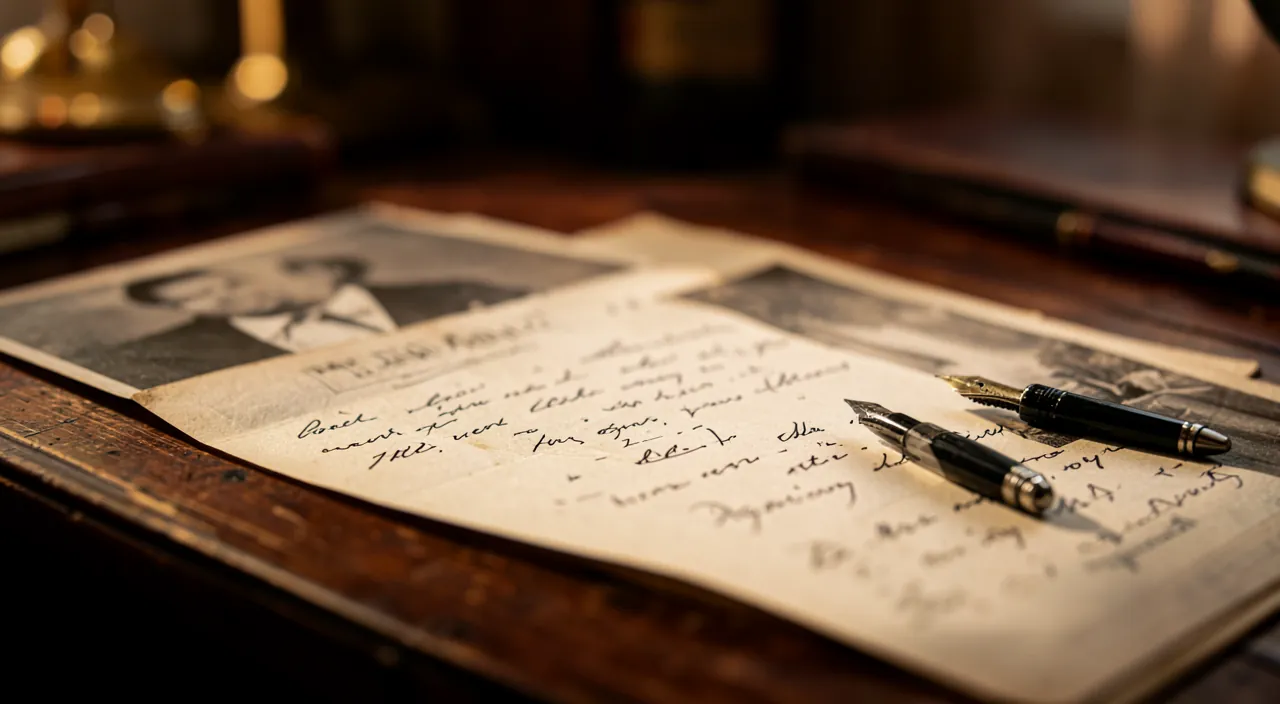
Using AI to write without losing your authenticity
To keep the story yours, a few good habits; here’s how to proceed. START with real memories: give AI your real memories, the facts you’ve gathered; it formats, it doesn’t invent the content; the story comes from you; authentic. COLLECT first: interview your elders, gather photos, documents, anecdotes; the raw material first, then AI; collect; essential. AI for the FORM: use AI to structure, phrase, correct; the substance (memories, facts) remains yours; form by AI, substance by you; balance. NEVER let it INVENT: never let AI invent facts, dates, details; a family story must be TRUE; verify, don’t fabricate (we’ll come back to this); crucial. KEEP your voice: make sure the text sounds like you (your way of saying things, your expressions); don’t erase your voice; stay yourself; personal. REVIEW and correct AI: review what AI produces, correct, rewrite to your liking; you are the author, it’s the assistant; keep control; master. Prepare the INTERVIEWS: ask AI for questions for your elders, but listen to their real answers; AI prepares, they tell; collect the truth; methodical. VERIFY the facts: cross-check dates and facts with family sources (documents, testimonies); accuracy honors memory; verify; rigor. TAKE it in PIECES: write in small chunks (an anecdote, a person) rather than all at once; the project progresses without being overwhelming; break it down; realistic. Preserve the EMOTION: keep the emotion, the personal details that bring the story to life; AI shouldn’t smooth out the soul; human before smooth; essential. In summary, to write with AI without losing your authenticity: START with real memories and gathered facts (AI formats, it doesn’t invent the content), by COLLECTING first (interviews with elders, photos, documents, anecdotes: the raw material before AI). Use AI for the FORM (structure, phrase, correct), the SUBSTANCE (memories, facts) remaining yours. Two golden rules: never let AI INVENT facts, dates, or details (a family story must be TRUE), and KEEP your voice (your way of saying things, your expressions: the text must sound like you). REVIEW and correct what AI produces (you are the author, it’s the assistant), VERIFY the facts with family sources, progress in PIECES (one anecdote, one person at a time), and PRESERVE the emotion and personal details that bring the story to life (AI shouldn’t smooth out the soul). Thus, AI removes technical obstacles while letting the story, the truth, and the voice remain deeply yours.
AI is a tool to help you write, but the story must stay true to your family’s memories and your own voice. You provide the facts and emotions, and AI helps organize and polish them. Never let it make up details—always check what it suggests against real sources. Keep your personal way of speaking and the emotions that make the story special. The goal is to preserve real memories, not create a perfect but fake story.
Imagine you’re writing about your grandmother’s childhood. You interview her and learn she grew up in a small village in 1950s France. You give AI these details and ask it to help structure the story. It suggests a timeline and helps phrase her memories clearly. But you must verify dates (like the year she started school) with old documents or family photos. You also add personal touches, like how she described the smell of fresh bread from the village bakery. The result is a true, heartfelt story—your grandmother’s, not AI’s.
The right method: first collect the real memories (interviews, documents), then use AI to structure and format. The secret to a successful family story lies in the order of the steps: first COLLECT the human and true material, then only use AI to format it. Reversing this order—asking AI to « tell » before collecting—would lead to an empty, even invented, story. Here’s the method. Step 1: COLLECT the memory, the most precious part. It’s the heart of the project, and it can only come from humans. INTERVIEW your elders while there’s still time (this is often the urgency of this type of project): record them (with their consent), listen to their stories, anecdotes, emotions. GATHER the documents: photos, letters, family papers, deeds, objects that carry a story. NOTE your own memories. AI can help you here by PREPARING good interview questions (those that bring back memories: « tell me about your childhood home, » « how did you meet? », « what is your earliest memory? »), but it’s your elders who TELL: listen to them truly, it’s irreplaceable. Step 2: ORGANIZE the material. Once the memories and documents are gathered (often, an abundant but somewhat chaotic collection), AI helps you STRUCTURE: choose a thread (chronological? by person? by theme such as professions, places, major events?), organize the information, summarize, outline a plan. It helps you give shape to what would otherwise remain a pile of notes. Step 3: WRITE, with AI as an assistant. Here, AI removes writing obstacles: it helps you start (against the blank page), PHRASE your raw memories beautifully (give it your notes, it proposes a fluid draft that you adjust), find the right tone. But keep two principles: the SUBSTANCE (the facts, the memories) comes from YOU and must remain TRUE (never let it invent); and the VOICE must remain yours (review, rewrite to your liking, keep your expressions and the emotion). Progress in small PIECES (one anecdote, one person at a time): it’s less overwhelming and the project progresses. Step 4: REFINE and FORMAT. AI corrects spelling, improves style, and can help you present the result beautifully (a booklet, a document illustrated with photos) to TRANSMIT to the family—the final goal. In summary, the right method respects the order: COLLECT the true memory first (interviews with your elders—the urgency and treasure of the project—, documents, your memories; AI only helps prepare the questions), then ORGANIZE the material with AI (thread, plan, structure), WRITE with it as an assistant (phrase, unblock; but the substance comes from you, remains true, and the voice remains yours), and finally REFINE and format to transmit. AI removes all technical obstacles (structure, blank page, style, presentation), but the soul of the story—the true memories, the truth, the emotion, your voice—remains deeply human. That’s what makes a family story touching: it’s true, and it’s yours.

Concrete ways to use AI for this project
Here are concrete uses at each stage of the family story project. « Prepare QUESTIONS to interview my grandfather »: AI suggests questions that bring back memories; collecting memories; essential. « Help me STRUCTURE this story »: from your material, AI suggests a plan (chronological, by person); organizing; useful. « Phrase this MEMORY beautifully »: give your raw notes, AI suggests a fluid draft (to adjust); enhancing your words; useful. « I’m STUCK, help me start »: AI suggests angles, a first sentence; overcoming the blank page; unlocking. « CORRECT this passage »: spelling, grammar, style; a polished text; refining; useful. « SUMMARIZE this information »: too much material collected? AI helps synthesize; untangling; practical. « What ANGLE to tell the story? »: AI suggests threads (the places, the professions, the migrations); giving shape; inspiring. « Adapt this text as a LETTER to grandchildren »: AI adjusts the tone for a recipient; customizing; touching. « Help me PRESENT this booklet »: formatting to transmit (with photos); a beautiful object; enhancing. REVIEW and VERIFY: review everything, verify the facts, keep your voice; AI suggests, you validate the truth; rigor. In summary, use AI in concrete ways at each stage: to COLLECT (« prepare questions to interview my grandfather »), to ORGANIZE (« help me structure this story, » « summarize this information, » « what angle to tell the story? »), to WRITE (« phrase this memory beautifully, » « I’m stuck, help me start »), to REFINE (« correct this passage, » « adapt this text as a letter to grandchildren »), and to TRANSMIT (« help me present this booklet »). But in all cases, REVIEW everything, VERIFY the facts, and KEEP your voice: AI suggests, you validate the truth and the personal. These uses, from collection to transmission, make AI an assistant at every step—without ever abandoning what makes the soul of the story: the truth of memories and your voice.
Warning: never let AI invent facts, keep your authentic voice, and preserve the real memory of your loved ones. This project touches on what is most precious—the memory and truth of a family—and the use of AI calls for particular precautions. First point, the most important: never let AI INVENT facts. A family story derives all its value from its TRUTH: it’s the real memory of your loved ones, not fiction. Yet AIs have a tendency to « fill in the gaps » in a plausible way: if you ask it to tell a story and details are missing, it may INVENT dates, places, anecdotes, details that sound true but are FALSE. This would betray the memory you want to preserve, and pass on to future generations a falsified story. The absolute rule: AI formats facts that YOU provide, it never creates them. If a memory is uncertain or incomplete, say so as is (« we think that… », « memories differ »), but don’t let AI fill in with invention. VERIFY the facts (dates, places, events) with family sources (testimonies, documents), because accuracy honors memory. Second point: keep YOUR authentic voice. The danger of AI is to produce a smooth but SANITIZED, impersonal, « standard » text—when a family story must sound like YOU, carry your way of saying things, your expressions, your emotion. Don’t let AI erase your voice or transform your memories into generic prose. Always review, rewrite to your liking, reinject your words, your turns of phrase, the intimate details and emotion that bring the story to life. You are the AUTHOR; AI is just the assistant. A touching story is an embodied story, not a perfect but cold text. Third point: human first, especially for collection. The most precious and most URGENT part of this project—collecting the memory of your elders—is deeply human: it involves listening, presence, shared emotion in a moment when you question an elderly relative. Never delegate this to a machine: AI prepares questions, but it’s YOU who must listen, record, share these moments (often, there’s urgency: the elders are not eternal). These exchanges are valuable in themselves, beyond the book. Fourth point: CONFIDENTIALITY and respect. A family story contains personal information, sometimes sensitive or intimate, about living or deceased people: think about what you share with AI (avoid very private or sensitive details), and what you disclose in the final story (respect the privacy of the people concerned, ask their consent for what concerns them). Finally, keep CONTROL: AI can make mistakes in its reformulations, misinterpret a memory; it’s up to you to validate everything. In summary: never let AI INVENT facts (a family story must be TRUE: AI formats what you provide, it doesn’t create; verify, and assume uncertainties rather than filling them with invention), keep YOUR authentic voice (don’t let it sanitize your story into impersonal prose: review, rewrite, reinject your words and emotion—you are the author), prioritize the HUMAN for collection (listening to your elders is irreplaceable and often urgent: AI prepares the questions, you live these moments), and respect CONFIDENTIALITY and privacy. Used to remove technical obstacles while leaving the soul of the story—truth, voice, emotion—deeply human, AI is a wonderful companion for this project; left to invent or sanitize, it betrays what you want to preserve. The memory of your loved ones deserves the truth and your voice.
Frequent questions
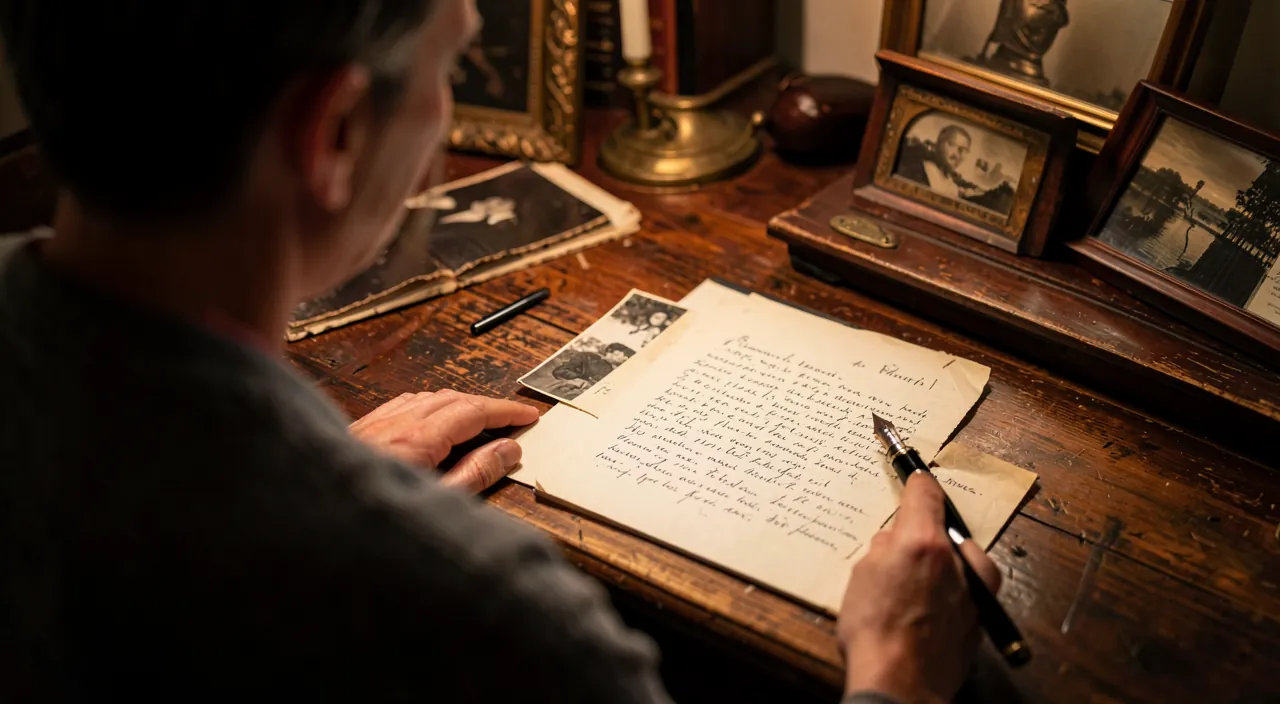
Will the story be « less authentic » if I use AI?
Not if you use it well: as long as the memories, facts, and your voice remain yours (AI only serving to structure and format), the story remains fully authentic; it becomes less so only if you let it invent or sanitize your voice. Let’s see. It DEPENDS on the use: authenticity depends on HOW you use AI; well used, the story remains authentic; poorly used, no; usage decides; nuanced. The SUBSTANCE comes from you: if the memories, facts, emotions come from you and your family, the substance is authentic; AI hasn’t created the story; the heart is true; authentic. AI for the FORM: using AI to structure, phrase, correct doesn’t betray authenticity; it’s like a spell checker or a secretary; the form helped, the substance yours; legitimate. KEEP your voice: if you review, rewrite, keep your words and emotion, the text sounds like you; your voice preserved; authentic; personal. The RISK: letting it INVENT: the story becomes inauthentic if you let AI invent facts; there, it’s fiction; to be avoided absolutely; danger. The RISK: letting it SANITIZE: it becomes impersonal if you let AI erase your voice (standard prose); reinject your personality; don’t sanitize; vigilance. A TOOL, like a pen: AI is an aid tool, like a word processor or a spell checker; what matters is what you do with it; the tool doesn’t dehumanize in itself; nuance. The important thing: TRUTH and voice: as long as the story is true and sounds like you, it’s authentic; AI has just helped write it; rest assured; legitimate. Without AI, MAYBE nothing: without AI, many would give up (obstacles); thanks to it, the story is written and transmitted; better to have an aided story than an abandoned project; positive. The ADVICE: not less authentic if you use it well; as long as memories, facts, and voice remain yours (AI only structuring and formatting), the story is fully authentic; it becomes less so only if you let it invent or sanitize your voice. In summary, no, the story will NOT be « less authentic » because of using AI—provided you use it well. It all depends on the USE. The authenticity of a family story lies in two things: the TRUTH of its content (the true memories, the true facts, the true emotions) and the VOICE of the one telling it. And these two elements can—and must—remain entirely yours. If the SUBSTANCE comes from you and your family (AI hasn’t invented the story, it has formatted what you provided), and if you KEEP your voice (by reviewing, rewriting to your liking, reinjecting your words, expressions, and emotion), then the story is fully authentic. Using AI to STRUCTURE, PHRASE, or CORRECT doesn’t betray authenticity any more than using a spell checker or getting help from a secretary: it’s a TOOL, and what matters is what you do with it. The story would only become inauthentic in two cases to absolutely avoid: if you let AI INVENT facts (the story then becomes fiction, a betrayal of memory), or if you let it SANITIZE your story into standard and impersonal prose (it then loses your voice). As long as you avoid these two pitfalls, your story remains true and yours. And don’t forget this: without AI’s help, many people would GIVE UP on this project (due to lack of time, method, or confidence in their writing). Thanks to it, the story is written, preserved, and transmitted—and a beautiful family story aided by AI is infinitely better than an unrealized project and a lost memory. The essential thing is not to write everything alone, but that the memory of your loved ones is saved, true, and embodied.
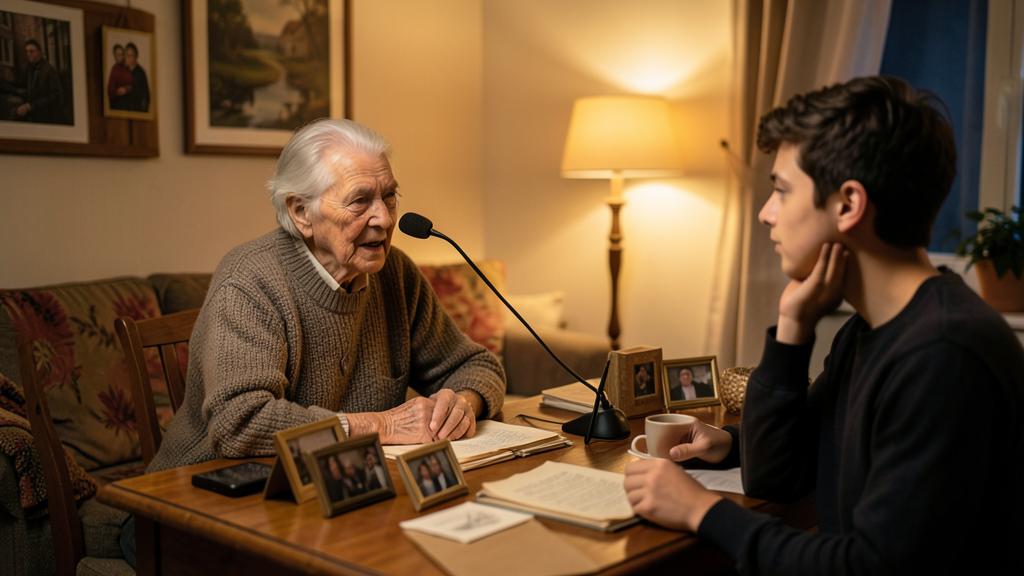
How to avoid AI inventing things about my family?
Never ask it to « tell » from nothing: always provide it with the true facts and memories, ask it only to format them, assume uncertainties rather than filling them, and verify everything it produces. Let’s see. The RISK of invention: AIs « fill in the gaps » in a plausible way; they can invent dates, places, anecdotes that sound true but are false; a real danger here; vigilance. PROVIDE the facts: always give AI the true facts and memories; let it start from YOUR material, not from nothing; AI formats, doesn’t create; key rule. DON’T ask to « invent »: never ask it to « tell » or « imagine » from nothing; this instruction opens the door to invention; ask for formatting, not creation; phrase well. ASSUME uncertainties: if a memory is uncertain, say so as is (« we think that… », « the versions differ »); don’t ask AI to fill in; uncertainty is truer than invention; honest. INSTRUCT AI CLEARLY: specify « don’t invent anything, just format what I give you »; an explicit instruction limits invention; frame; effective. VERIFY everything: review, verify dates and facts (family sources, documents); track any slipped-in invention; accuracy honors memory; rigor. Spot the PLAUSIBLE false: be wary of details that are « too good, » precise, that you didn’t give it; they may be invented; verify their source; attention. REMAIN the author: you validate each sentence; what remains must be true or assumed as uncertain; you guarantee the truth; master. Distinguish FACTS and atmosphere: AI can help describe a general atmosphere of the time (with caution), but the PRECISE FACTS of your family must be true; distinguish; nuance. The ADVICE: never ask AI to tell from nothing; provide it with the true facts, ask it only to format them (instruct it: « don’t invent anything »), assume uncertainties rather than filling them, and verify everything it produces. In summary, to avoid AI inventing things about your family—the major risk of this project—the key is to properly frame its use. First, understand the danger: AIs tend to « fill in the gaps » in a plausible way, meaning they invent dates, places, anecdotes, or details that SOUND TRUE but are FALSE. On a family story, this would falsify memory. To avoid this, several rules. First, PROVIDE AI with the true facts and memories: let it start from YOUR MATERIAL (what you’ve collected), never from nothing. Its role is to FORMAT what you give it, not to CREATE content. So never ask it to « tell » or « imagine » from nothing—this instruction opens wide the door to invention. Even instruct it explicitly: « Format only what I give you, don’t invent any fact, any date, any detail. » Then, ASSUME uncertainties rather than having them filled: if a memory is fuzzy or incomplete, say so as is in the story (« we think that… », « memories differ on this point »)—an honest uncertainty is infinitely truer and more respectful than an invented detail. Then, VERIFY systematically what AI produces: review everything, check dates and facts with family sources (documents, other testimonies), and BEWARE especially of details that are « too good » or precise that you DIDN’T give it (they may be invented: verify their origin). You remain the AUTHOR and the guarantor of truth: validate each sentence, and only leave what is true or honestly presented as uncertain. At most, AI can help describe a general atmosphere of the time (with caution), but the PRECISE FACTS about your family must always be accurate. By framing its use this way, you benefit from AI’s help in writing, without ever letting fiction contaminate the real memory of your loved ones.
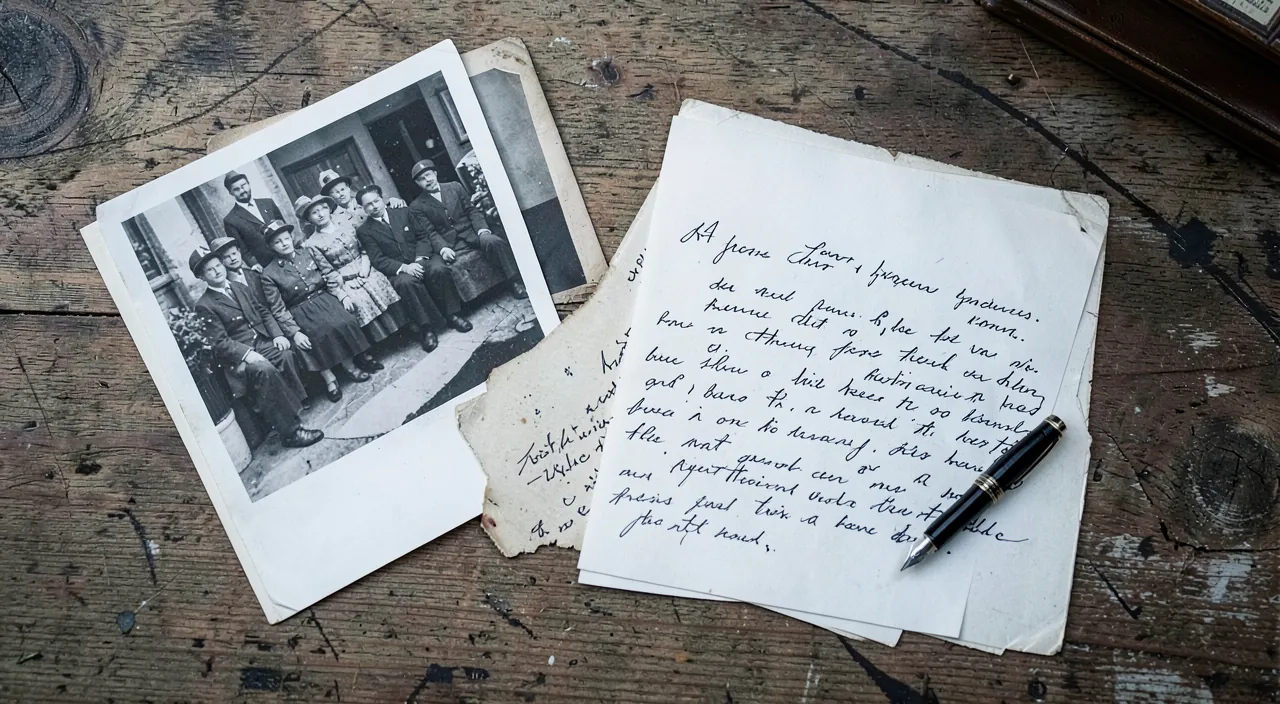
I don’t know how to write: can AI help me tell the story anyway?
Yes, absolutely: this is exactly one of its best uses; no need to know how to write to tell your family’s story, AI helps you phrase, structure, and correct your memories, while keeping your voice. Let’s see. YES, it’s made for that: helping those who don’t feel like « writers » to write is one of AI’s best uses; don’t give up due to lack of confidence; it’s accessible; reassuring. No need to be a WRITER: you don’t need to know how to write well to have a beautiful story to tell; the story matters more than the style; dare; encouraging. PHRASE your memories: give your memories even in disorder, with your simple words; AI formats them beautifully; your ideas, its formatting; useful. Overcome the BLANK PAGE: AI helps you start, find how to say; the main obstacle removed; unlocking; precious. CORRECT without complex: spelling, grammar, turns of phrase; AI corrects without judging you; a polished text without stress; liberating. Tell ORALLY then format: tell as you speak (orally, or by writing simply), AI formats; speaking is easier than writing; tip; effective. KEEP your voice: ask AI to keep a simple tone, close to you; no pompous style; your voice preserved; authentic. Take it STEP BY STEP: one anecdote at a time, one memory after another; the project becomes feasible; break it down; realistic. The RESULT belongs to you: review, adjust; it’s YOUR story, beautifully formatted; legitimate pride; enhancing. The important thing: TRANSMIT: the goal is to pass on the memory, not to make literature; AI makes this goal accessible to everyone; the essential is saved; positive. The ADVICE: yes, absolutely; no need to know how to write to tell your family’s story; AI helps you phrase, structure, and correct your memories (tell with your simple words, even orally), while keeping your voice; it’s one of its most beautiful uses. In summary, yes, absolutely: AI can help you tell your family’s story even if you don’t feel « good at writing »—it’s even one of its most beautiful uses, as it DEMOCRATIZES this project by removing the main obstacle (lack of confidence in your writing). First, remember this: you DON’T need to be a writer to have a beautiful story to pass on. The story of your family, the memories of your elders, have value in themselves, independent of style. AI takes care of what intimidates you. Tell your memories with YOUR simple words, even in disorder—you can even say them as you SPEAK (orally, or by writing them simply), because speaking is often easier than writing—and AI formats them beautifully. It helps you overcome the BLANK PAGE (the main obstacle), find how to phrase, and corrects spelling, grammar, and turns of phrase WITHOUT JUDGING you (no more complex about mistakes!). An important tip: ask it to keep a SIMPLE and close-to-you tone, not a pompous style—thus your voice remains authentic. Progress STEP BY STEP (one anecdote at a time), which makes the project feasible, and REVIEW to adjust to your liking: the result remains YOUR story, simply well formatted, and you can be proud. Because at the end of the day, the goal is not to make literature, but to TRANSMIT the memory of your loved ones: and AI makes this goal accessible to everyone, including—and especially—to those who would never have dared to start alone. Don’t let a lack of confidence in your pen deprive you of preserving this treasure: with AI, you can do it.
What to remember
Telling the story of your family, preserving the memory of the elders, and passing it on to future generations is a beautiful project, too often postponed due to lack of time, method, or confidence in your writing. Artificial intelligence precisely removes these obstacles: it helps STRUCTURE the narrative, overcome the BLANK PAGE, PHRASE your raw memories beautifully, prepare QUESTIONS for interviewing your elders, CORRECT and format, and present everything for TRANSMITTING—all without needing to be a writer (it’s even one of its most beautiful uses, as it makes this project accessible to everyone). The right method respects the order of steps: COLLECT the true memory first (interview your elders while there’s still time—the urgency and treasure of the project—, gather documents and photos; AI only helps prepare the questions, but it’s YOU who listen and live these irreplaceable moments), then ORGANIZE the material with AI (thread, plan, structure), WRITE with it as an assistant (phrase, unblock), and finally REFINE and format. But always keep in mind the essential precautions, because this project touches on the memory and truth of your loved ones. Never let AI INVENT facts: a family story must be TRUE; AI formats what you provide, it never creates content (beware of its tendency to fill gaps with plausible falsehoods; instruct it explicitly, assume uncertainties rather than filling them, and verify everything with family sources). Keep YOUR authentic voice: don’t let AI sanitize your story into impersonal prose; review, rewrite to your liking, reinject your words, expressions, and emotion that bring the story to life (you are the AUTHOR, it’s the assistant). Prioritize the HUMAN for collection (listening to your elders is irreplaceable and often urgent), and respect CONFIDENTIALITY and the privacy of the people concerned. Used this way—for removing all technical obstacles while leaving the soul of the story (truth, emotion, your voice) deeply human—AI is a wonderful companion for this project. A beautiful family story aided by AI is infinitely better than a lost memory due to not daring to start: the essential thing is not to write everything alone, but that the story of your loved ones is saved, true, and embodied—and transmitted.
Want to master AI and make it a real asset in your daily life? Our training programs support you at your own pace.
Leave a Reply
You must be logged in to post a comment.