
Open the bottom drawer — the one with the dead phones, orphaned chargers, one-sided earbuds — millions of them in France, while electronic waste sets new global records and their metals — gold, copper, rare earths — are missing from factories. Where do your old devices really end up when you « recycle » them? What happens to them, what can be recovered, and why is the best electronic waste the one that never leaves the usage cycle? Journey through the supply chain — and user guide for how to use it properly.
The state of affairs: the mountain that grows
The orders of magnitude are dizzying: the world produces more than 60 million tonnes of electrical and electronic waste per year — the fastest-growing of all waste streams — of which only a small minority is collected and recycled according to the rules (less than a quarter globally; Europe does better, but not at its own targets): the rest sleeps in drawers, ends up in household waste (where batteries cause trash bin and sorting center fires, a national scourge in France — fires every day), or fuels illegal exports to open dumps where informal recycling (cable burning, acid baths) poisons the soil and workers — the dark side of our emptied drawers. The inverse challenge is equally massive: these wastes are a city of metals — a ton of electronic cards contains more gold than a ton of gold ore, and Europe, lacking in mines, is rich in strategic metals… in its closets: electronic recycling has become a matter of industrial sovereignty as much as ecology. Hence the regulatory arsenal — extended producer responsibility (the eco-fee paid at purchase funds collection), collection targets, reparability index — and the rise of eco-organizations that structure the French circuit.
The journey of a device: what happens after deposit
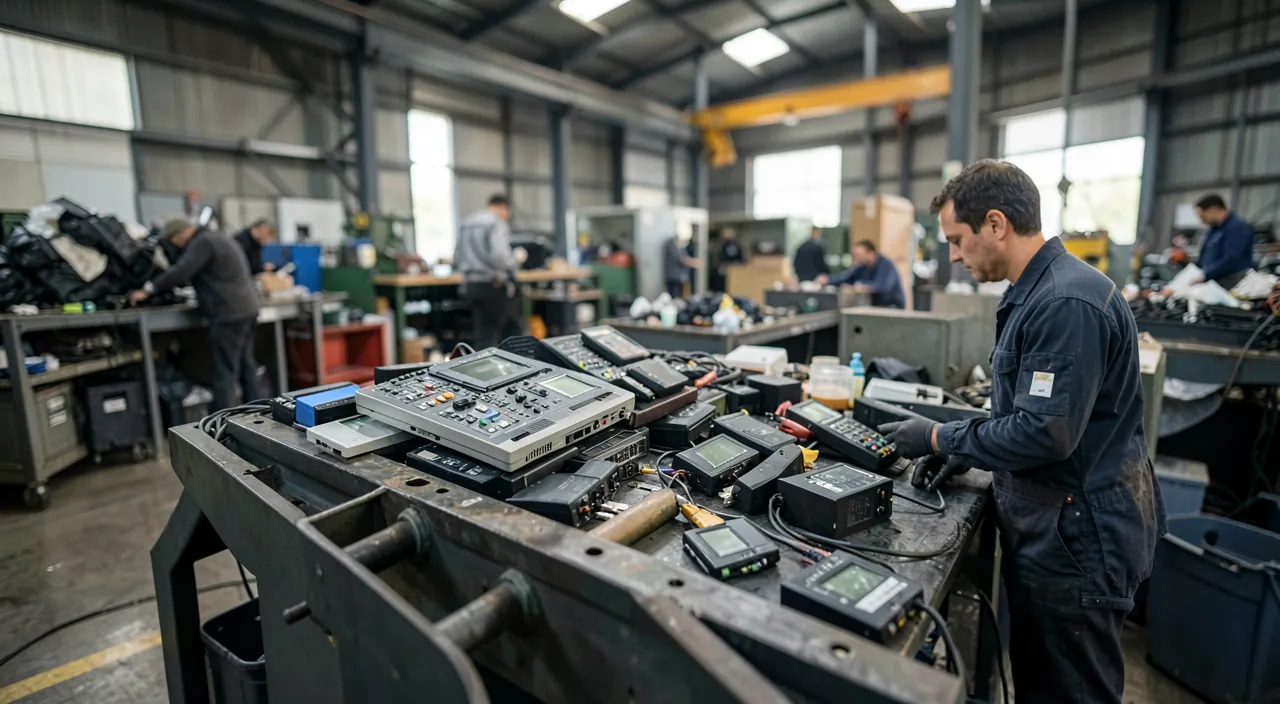
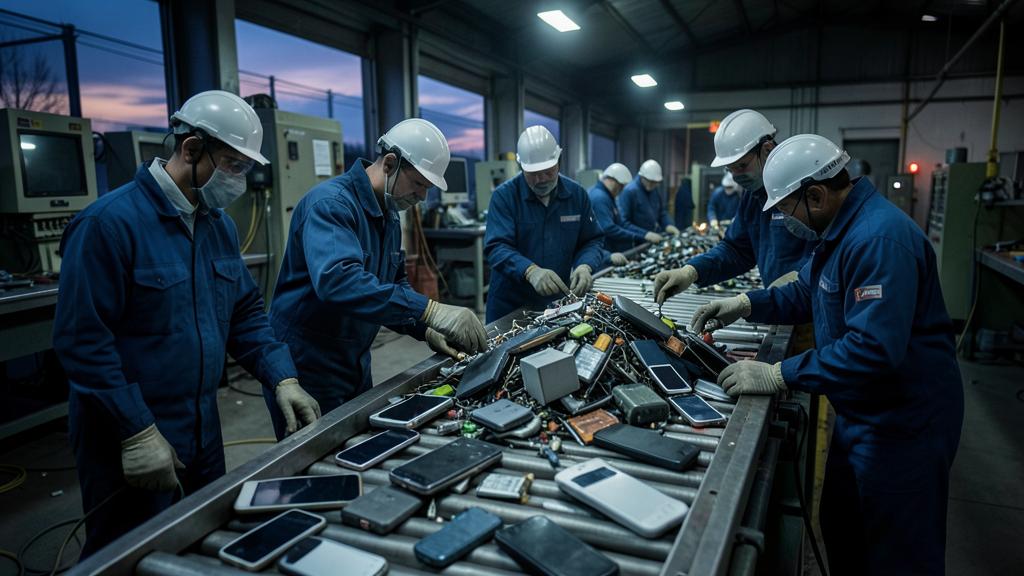
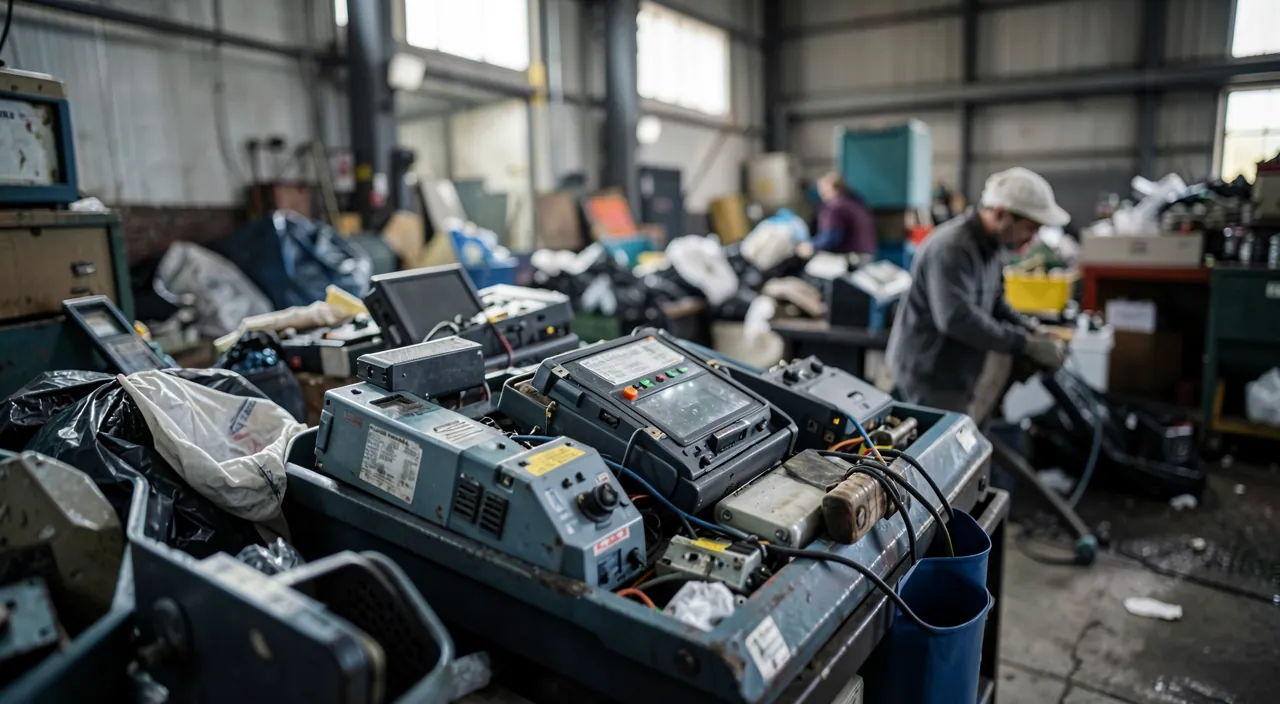
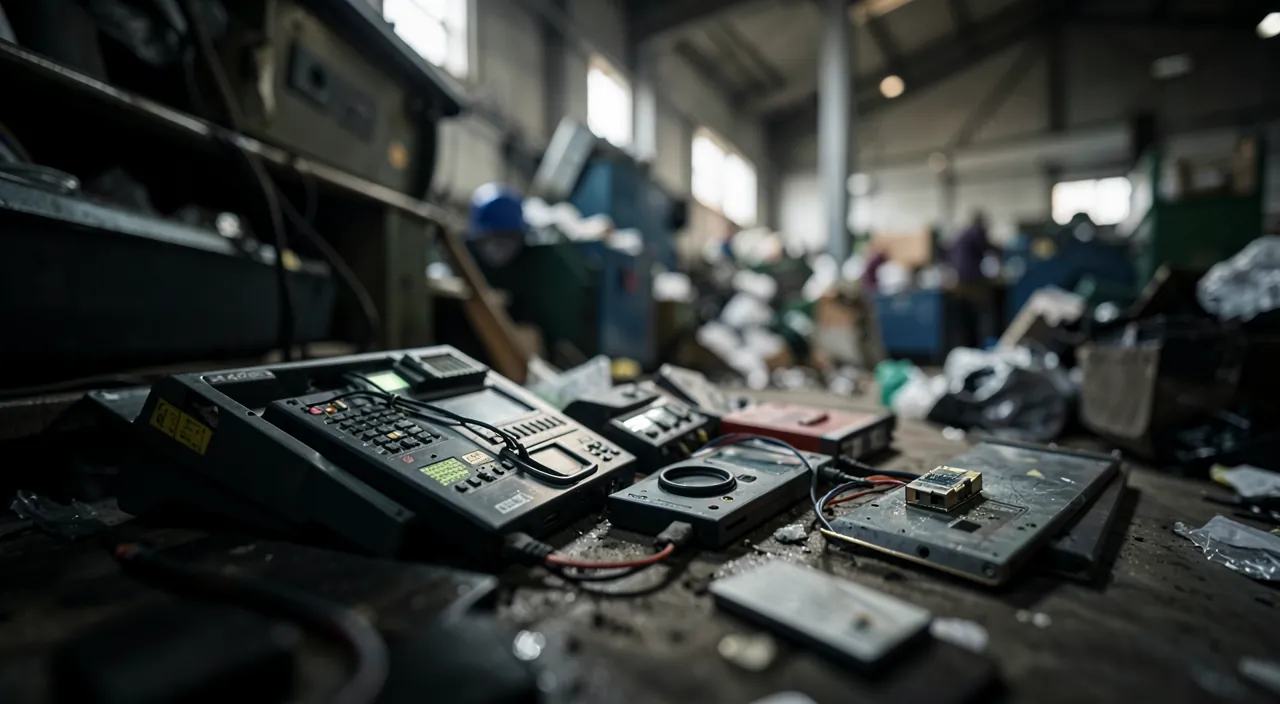
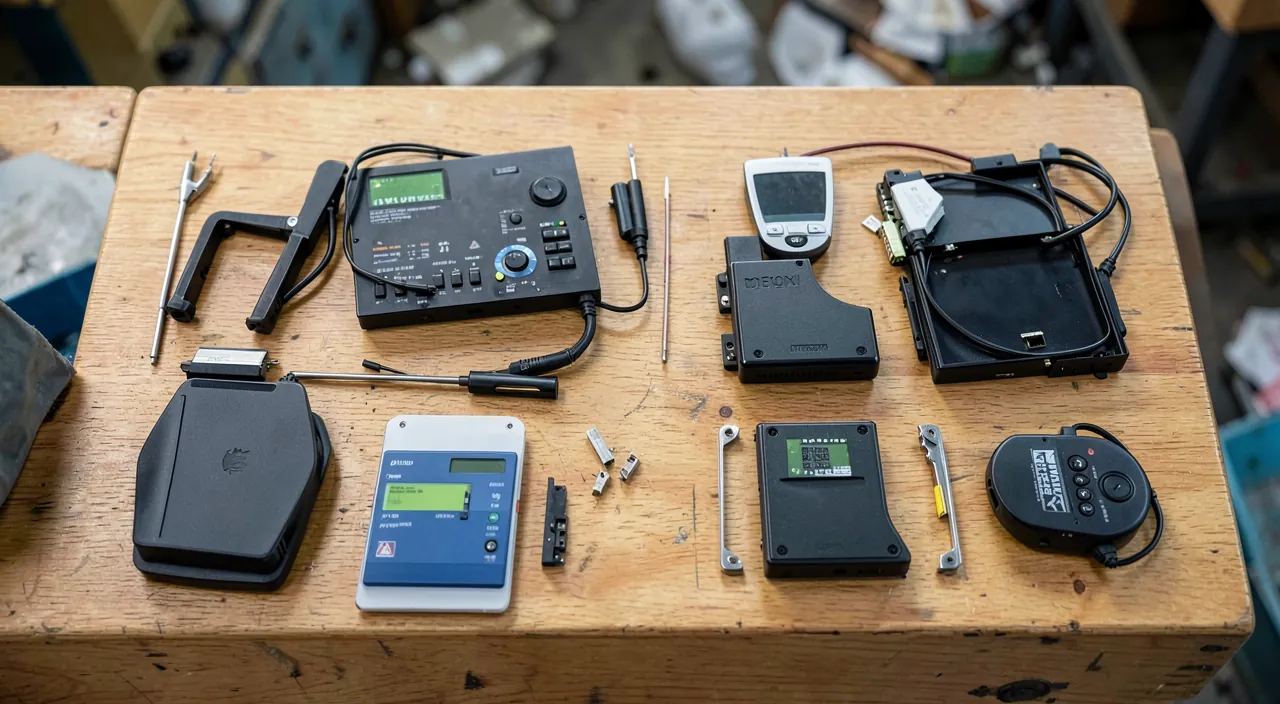
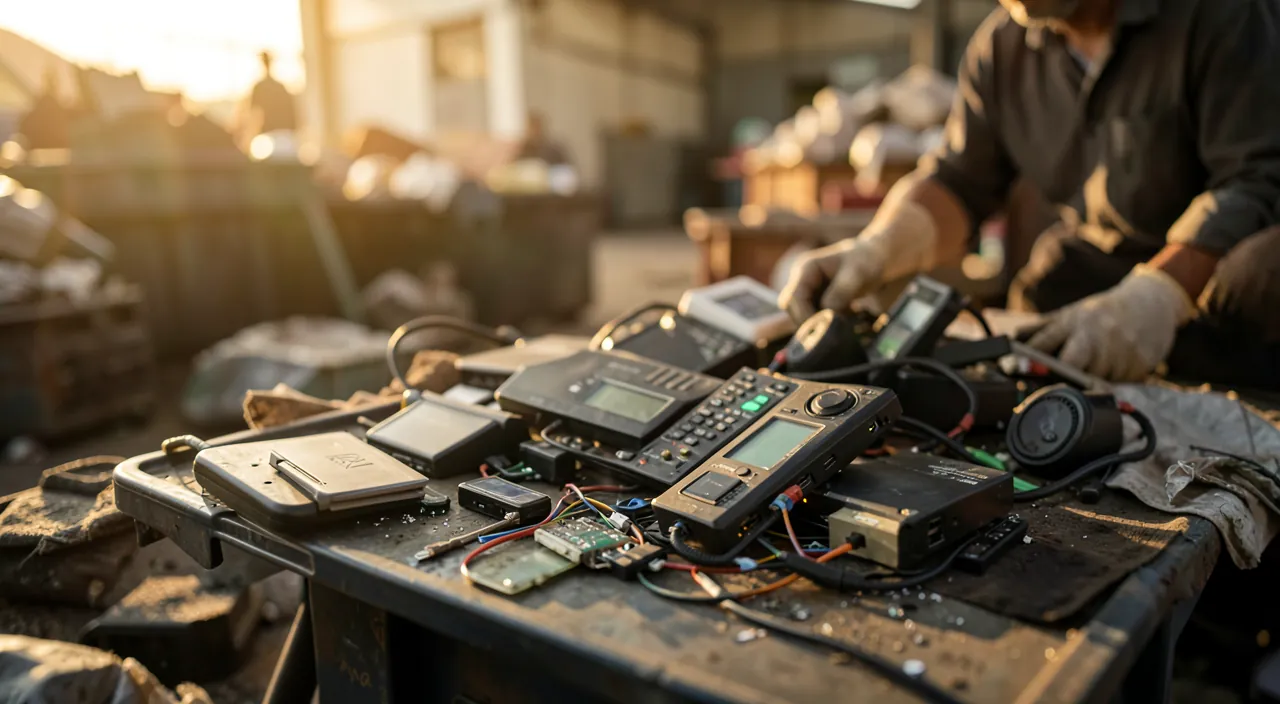
Follow your old toaster (or phone): deposited at a collection point (dumping station, store bin, kiosk), it joins a sorting and diagnostic center — the first decisive fork: what can be reused goes to reconditioning (testing, certified data wipe, refurbishment — social and solidarity economy actors employ thousands in insertion; your donation works twice) ; the rest goes to decontamination — the critical and little-known step: manual or mechanical extraction of dangerous components (batteries — hence the vital importance of never throwing them in the trash —, capacitors, mercury from old screens, fridge gases) ; then to shredding and separation — the device reduced to sorted fragments by magnets, Foucault currents, flotation, and optical sorting — ferrous metals, aluminum, copper, plastics, cards ; finally to refining — the cards and rich fractions go to specialized foundries (a few major European sites) that recover gold, silver, palladium, copper at remarkable rates. The honest balance of the supply chain: the major metals recycle very well (iron, copper, aluminum, precious metals from cards) ; the rare earths and certain dispersed metals still poorly (tiny quantities per device, nascent processes — research is advancing, notably for magnets) ; the plastics moderately (mixed, flame retardants). Real recycling is neither the myth of the perfect circle nor the scam that cynics denounce: it is a serious industry, perfectible, that only needs proper feeding.
Recycling electronics is a complex process. First, devices are sorted to see if they can be reused. If not, dangerous parts like batteries are removed. Then, the rest is shredded and sorted into metals and plastics. Some metals, like gold and copper, are recycled well, but others, like rare earths, are harder. Plastics are recycled, but not perfectly. The key is to feed the system with the right devices.
A smartphone contains about 0.034 grams of gold, 0.34 grams of silver, and 7 grams of copper. When 1,000 smartphones are recycled, this adds up to 34 grams of gold, 340 grams of silver, and 7 kilograms of copper. These metals are then refined and reused in new products, reducing the need for mining.
The right reflex. Memorize the cascade of the old device, in order: 1) it still works → second life (resale, donation to a family member or reconditioning organization — data wiped according to our guides) ; 2) it is broken → repair first (repair bonus, Repair Café — our dedicated dossier) ; 3) really dead → official collection : store kiosk (the « 1 for 1 » take-back at purchase is a right — and « 1 for 0 » without purchase for small devices in large stores), dumping station, or appliance collections with moving boxes. And never to household waste — especially nothing containing a battery: it’s a trash bin fire guaranteed, literally.
The case of phones: small objects, big stakes
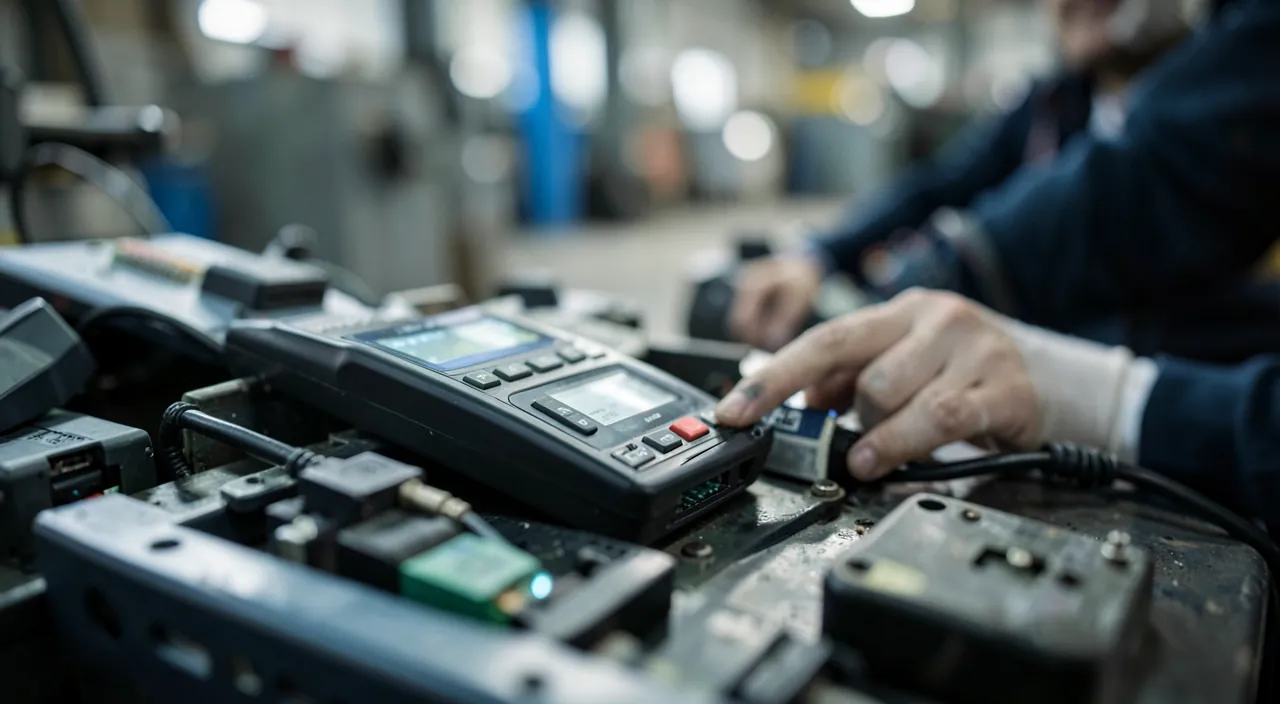
The smartphone deserves its chapter — it’s the champion of the drawer: tens of millions sleep in France (the country’s densest « sleeping mine » — each contains gold, silver, copper, cobalt), and the device where the solution hierarchy pays off the most: resale or trade-in first — a phone under five years old has a value (platforms of purchase, trade-ins by manufacturers and operators — compare), and even broken, refurbishers buy for parts ; useful donation next — solidarity organizations recondition for vulnerable publics (the digital divide is also fought by the emptied drawer) ; recycling last — dedicated kiosks in operator and large store outlets, collection envelopes by eco-organizations. The absolute prerequisite for any departure: proper data wipe (backup, account deactivation, factory data wipe — our complete guide « wipe before selling » details everything, including activation locks) : the serious supply chain also wipes, but your responsibility starts before. And the collective gesture that costs nothing: event collections (schools, companies, municipalities organize phone collections — excellent educational projects in passing) : emptying France’s drawers is an official national objective — yours probably contains its contribution.
Consume upstream: recycling starts at purchase
The truth of the supply chain — owned by its own actors: recycling is the last line of defense, not the solution : recycling a smartphone recovers a few euros of metals but neither the manufacturing energy, water, nor labor — the device that lasts two years longer « saves » infinitely more than perfect recycling (our article on sobriety details the hierarchy: production first). Purchase choices that lighten the end of life: sustainability (repairability index, years of updates, replaceable battery — each criterion postpones the day of the drawer), refurbished (the device that resurfaces is the ultimate recycling), resistance to superfluity (the connected gadget of today is the orphaned e-waste of tomorrow — objects with closed servers cannot even be recycled in use), and included eco-participation — a few euros on the bill fund the supply chain: they are proof that the end of life is a real cost, paid in advance — as much as the device deserves. The loop closes on the citizen: the French supply chain is there, funded, controlled, progressing — its weak link, statistically, is the drawer. Yours.
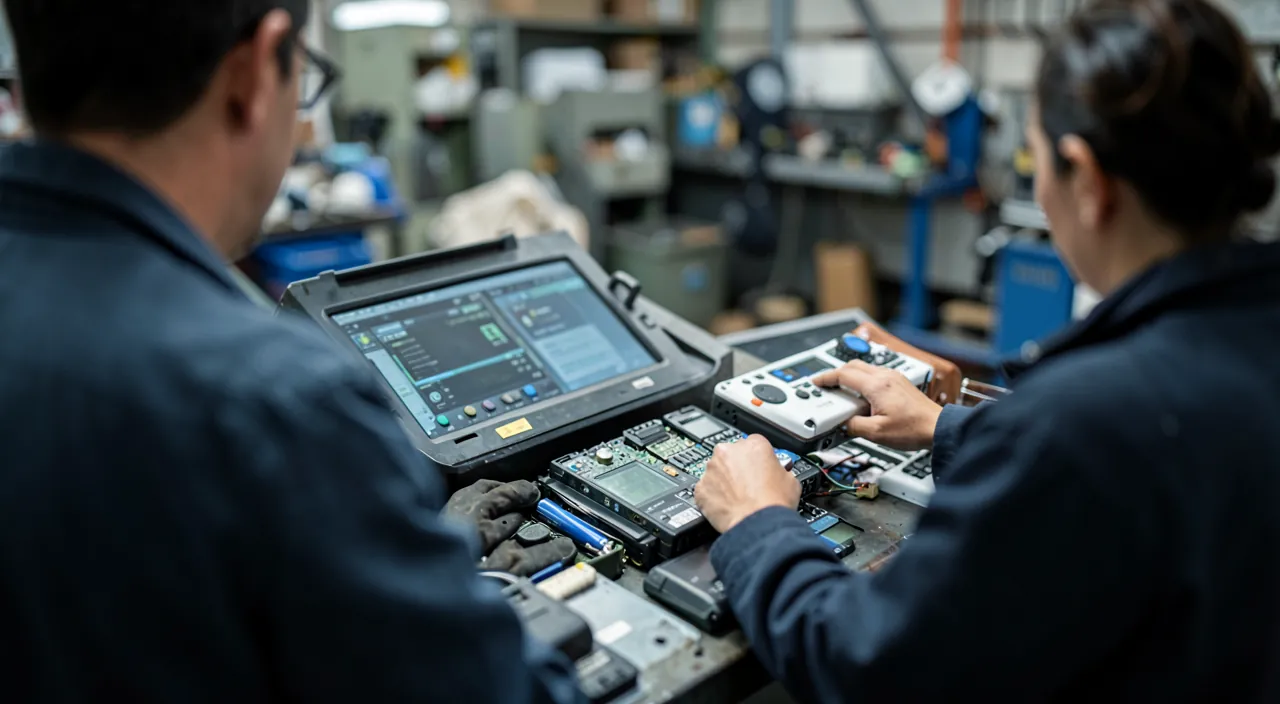
Watch out for false circuits. The resource attracts diversions: rogue recyclers who scour dumps and bulky waste (devices go to illegal export or dismantling without decontamination — an item entrusted outside the supply chain can end up in a toxic landfill with your data inside), free IT disposal ads without authorization, and charity bins without eco-organization or verifiable association names. Reliable references: the collection points of approved eco-organizations (official online cards), store bins, dumping stations, established reconditioning structures — and for data, the wipe done by YOU before any departure, regardless of the circuit. Good intentions deserve the right channel.
Frequently asked questions
Do batteries and batteries follow the same circuit?
Dedicated supply chain — battery and small battery collection bins exist everywhere, and batteries are recycled well (and better with the rise of battery recycling from vehicles, a booming European industry). Absolute rule: never in household waste or the yellow bin — a punctured battery in a trash truck is the cause of collection fires. The device with an integrated battery goes entirely to electronic collection.
What happens to my data on a recycled device?
Approved circuits (mainly reconditioning) practice certified data wipe — but your protection never rests on a third party’s promise: factory data wipe by your own means before any departure (encryption + reset = data irrecoverable — our guides detail, hard drives included). A device that cannot be turned on with sensitive data? The drive is removed and physically destroyed — ten minutes with a screwdriver for certainty.
Does recycling bring anything to the individual?
Directly, little — the value of a device’s metals is modest and funds the supply chain. Indirectly, yes: reconditioning and store/manufacturer rebates (the old phone as a down payment on the next one), rerecycling by refurbishers even for parts, and tax deductions for donations to approved organizations. The real value is upstream: selling what still works — the market always pays better than the trash.
What to remember
Your old devices end up somewhere — it’s up to you to choose where: the French supply chain (eco-organizations, store kiosks with mandatory take-back, dumping stations, solidarity reconditioning) sorts, decontaminates, dismantles, and recovers metals with real industrial seriousness — its limits (rare earths, plastics) recede, its weak link remains the French drawer and the illegal circuits that export pollution. The user guide boils down to a cascade: second life first (resale, donation — the device that resurfaces beats all), repair next (with bonus), official collection last — never household waste, never a battery in a trash bin, always data wipe by your own means. And the real lesson goes back to purchase: durable, repairable, refurbished — because the best electronic waste will always be the one that was never produced. The bottom drawer awaits your visit: it’s a mine, a potential fire, or a useful gesture — depending on what you do this weekend.
Want to understand and master the technologies that change your daily life? Our training programs enlighten you.
Leave a Reply
You must be logged in to post a comment.