
Do screens make us anxious, depressed, unable to concentrate — or is it another moral panic, like television and rock before them? The debate rages even in parliaments (here with bans on networks for minors, there with minimum age debates), books of accusation become best-sellers, rebuttals follow — and parents in the middle are left wondering what to think. Here is what the research really says — with its certainties, nuances, and gaps — and what we can do concretely, for ourselves and our children.
What studies show (and the real size of the effects)
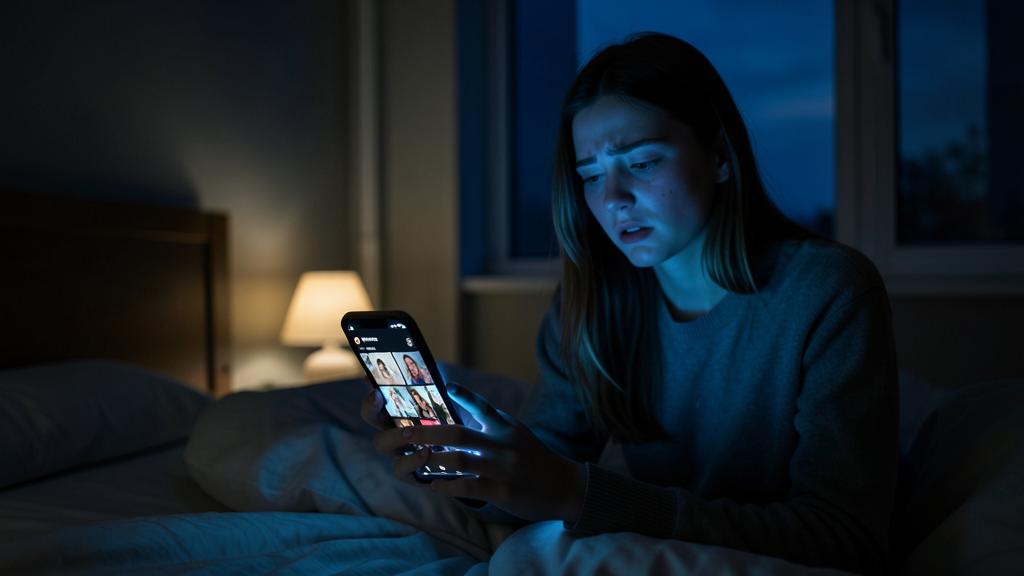
The scientific consensus, stripped of sensational titles: large-scale cross-analyses find a real but modest correlation between overall screen time and actual well-being — much weaker than that of sleep, physical activity, or social ties with mental health: « screen time » in general is a bad culprit, too heterogeneous to mean anything (a video call with grandma, a documentary, and an anxious scroll at 1 AM in the morning are not the same exposure). The picture sharpens when we look at what, who, and how: the clearest signals concern infinite-scroll social media among teenage girls (social comparison, body image, harassment — several studies converge on a specific vulnerability at this age and gender), the use at night (the screen that cuts into sleep is the best-documented mechanism of all — the effect passes largely through lost hours), and the compulsive use (it is the relationship with the tool — loss of control, avoidance of other activities — that predicts distress, much more than raw hours). Conversely, research also documents positive effects: real social ties (distant, minority, aid communities), access to health information, validated digital tools for monitoring and therapy. Finally, causality remains debatable — distress also pushes toward screens (the arrow goes in both directions), and natural experiments on bans give mixed results. Honestly summarized: neither poison nor neutral — real risks, concentrated on certain uses, certain ages, and certain temperaments.
Screens aren’t inherently bad, but some uses—like late-night scrolling or endless social media—can hurt mental health, especially for teens. Other uses, like video calls or learning, can be good. It’s not about total screen time, but how and when you use them.
A 15-year-old girl who spends 3 hours on TikTok at night, comparing herself to edited videos, will likely feel worse than someone who uses the same app for 30 minutes in the morning to follow educational content. The difference isn’t the time, but the context and emotional impact.
The mechanisms that do harm: naming to act
Behind the statistics, the identified mechanisms — useful because actionable: the sleep theft — the most massive and simple: the evening screen pushes back sleep (content is more exciting than blue light, now relativized) and every hour of lost sleep weighs on the mood of the next day — the first lever is a screen curfew, not a detox; the social comparison — edited life feeds (bodies, achievements, vacations) install a skewed standard: the effect is documented on self-esteem, particularly in adolescence — and it is combated by curating the feed (who do we follow? what does good or makes us feel bad?); the compulsive scrolling — the capture design (infinite feed, variable rewards, autoplay) exploits the circuits of habit: the added friction (app limits, grayscale, apps removed from the home screen) makes a choice — our Time Screen guides detail the arsenal; the displacement — the time taken from sports, friends in the flesh, the outdoors: the indirect effect most underestimated (the problem is not what the screen does, but what it prevents); and the online harassment — the digital continuation of schoolyard bullying, without the evening break: a major and clear factor of risk, which requires vigilance and reporting more than screen time. Five mechanisms, five levers — much more useful than « screens are bad. »
- Sleep theft: Evening screens delay sleep, hurting mood the next day. Fix: Set a screen curfew.
- Social comparison: Edited feeds lower self-esteem, especially in teens. Fix: Curate your feed.
- Compulsive scrolling: Infinite feeds exploit habits. Fix: Add friction (app limits, grayscale).
- Displacement: Screens replace real-world activities. Fix: Protect time for sports, friends, and nature.
- Online harassment: Digital bullying needs vigilance. Fix: Report and talk about it.
The right reflex. Do (or have the teen do) the two-question test, better than all counters: 1) « How do I feel AFTER — better, the same, or drained/angry? » per app (a family video call and a tutorial leave well — a 40-minute scroll often leaves bad — the body knows); 2) « What does it replace — a void, or something I loved? » Then act per app, not in bulk: keep what nourishes, constrain what drains. Mental health in the digital age plays at the scale of use, never the total « screen time. »

Children and teens: what practical consensus exists
Beyond the debates, the recommendations where cautious researchers and alarmists largely converge: before 3 years — as little as possible, never alone or as background (the strongest consensus of all: the very young learn from human faces, not screens); childhood — shared, chosen, and limited screens (content and co-presence count more than minutes), no screens in the bedroom or at meals, and the outdoors defended as a rendezvous; social media entry — the hot spot: delaying is the rising position (early adolescence is the vulnerable window — legal ages are tightening in several countries), and support at entry counts more than the date: set up together (private account, who to follow, time), talk about comparison and harassment before the first account, and keep the door open (the child who can show troubling content without fear of confiscation is protected — the panic confiscation is the best way to know nothing); sleep sanctuarized at all ages — chargers out of the bedroom, screen curfew: the measure with the best return on effort in the whole dossier; and exemplary behavior — the teen measures our sermons by our own screens (the parent who scrolls saying « put down your phone » teaches scrolling). For adults? The same mechanisms in a free version — the two-question test, the curfew, feed curation: digital mental health has no age limit.
When tech heals: the other half of the dossier
The paradox that completes the picture: digital has also become a mental health tool — validated digital therapies (online cognitive-behavioral therapy programs for insomnia, anxiety, mild depression — documented effectiveness, multiplied access where practitioners are scarce); teleconsultation that has de-enslaved mental health follow-up; apps for meditation and stress management (modest but real effects for regular use); hotlines and 3114 (suicide prevention) accessible with a single gesture; and aid communities that break real isolations (rare diseases, caregivers, bereavement). With sector precautions: a crowded market of « well-being » apps without proof (seek evaluated programs, scientific society recommendations), particularly sensitive mental health data (a mood app’s privacy policy is not a detail — data scandals have occurred), and the red line: the app accompanies, it never replaces care in established suffering — signals that require the human (dark thoughts, persistent disengagement, isolation) cannot be « managed » in an application. Tech and mental health are not enemies: they are entangled — and the sorting is done, usage by usage.
Be wary of panics and denials. Two discourses dispense of thinking — and harm children: the catastrophism (« a generation destroyed ») that over-sells correlations, pushes to brutal confiscations (counter-productive: underground use, disruption of dialogue) and makes the screen bear what sometimes relates to something else (pre-existing distress — the screen-refuge is a symptom before a cause: confiscating without treating the root worsens); and the denial (« they said the same about rock ») that ignores the specific signals documented (social media/adolescent girls, sleep, capture design — rock did not keep children awake at 1 AM by notification). The tenable position is moderate and active: real, targeted, actionable risks — and a dialogue that survives crises. In doubt about a child who is going badly: the doctor and school first, screen regulation afterwards.
Frequently asked questions
Is there a « healthy screen time » measured in hours?
No — research has never validated a universal threshold (two hours of creation or video calls do not « count » as two hours of overnight scrolling); hourly references serve as practical safeguards for children, not medical truths. The real markers: preserved sleep, non-displaced activities, mood after use, felt control. Four questions worth all the chronometers.

My teen is « always on his phone »: when should I really worry?
Adolescent intensity is normal (sociability lives there — the phone is their village place): warning signals are the shift — destroyed sleep, durable school drop-off, abandonment of beloved activities, isolation from the physical world, deteriorating mood, anxious secret. It is the bundle that counts, not the hours — and the response is conversation (and professional help if the bundle is there), not a dry confiscation.
Are bans on social media for minors effective?
Too early for a verdict — the first national experiences are met with circumvention and usage displacement; researchers are divided between protection of the vulnerable window and regulatory illusion. What does not depend on the legislator remains true everywhere: accompanied entry, sanctuarized sleep, and preserved dialogue beat all decrees — and are available right now.
What to retain
What the research really says: « screens » in bulk do not explain mental health — effects are real but targeted: infinite-scroll social media among young teenage girls, sleep cut (the best-proven mechanism), compulsive use, displaced activities, harassment — and causality flows in both directions. The levers follow the mechanisms: screen curfew and chargers out of the bedroom (best return on effort), feed curation, friction on the compulsive, delayed and accompanied entry into social media, preserved dialogue, exemplary behavior — and the two-question test (how do I feel after? what does it replace? ) as an individual compass. Without forgetting the other half: tech that heals (validated digital therapies, teleconsultation, hotlines). Neither panic nor denial: sorting uses, defending sleep, keeping conversations — digital mental health is a family craft, not a trench war.
Want to understand and master the technologies that change your daily life? Our training programs enlighten you.
Leave a Reply
You must be logged in to post a comment.