
The dusty guitar in the living room, the piano « we wished we had learned, » the child demanding the drums: between the musical dream and the conservatory, there was a chasm — the apps have filled it in their own way: the gamified lessons that listen to your play and correct in real time, the song tutorials that motivate from the first night, the prices that democratize. Does it work? Yes — for certain profiles, up to a certain level, with a method. What the apps do really well, where the teacher remains king, and how (re)starting music at any age: the honest guide.
What the apps can do (and it’s a lot)
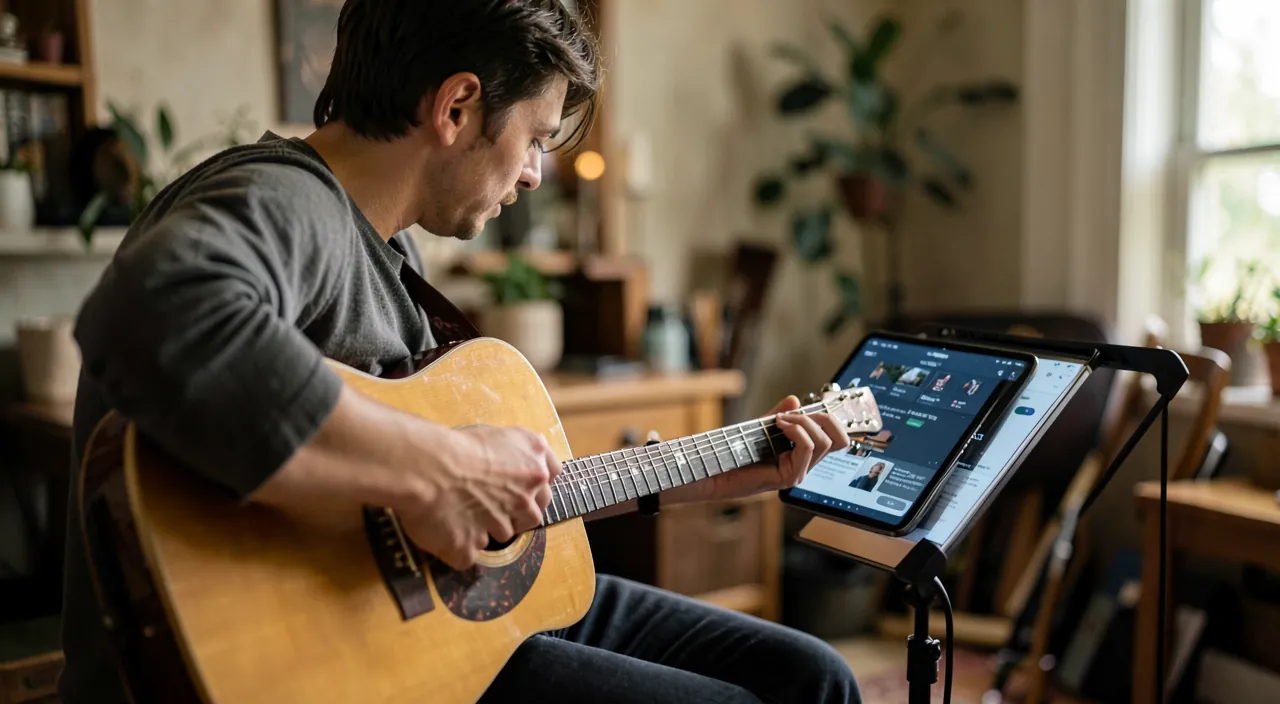
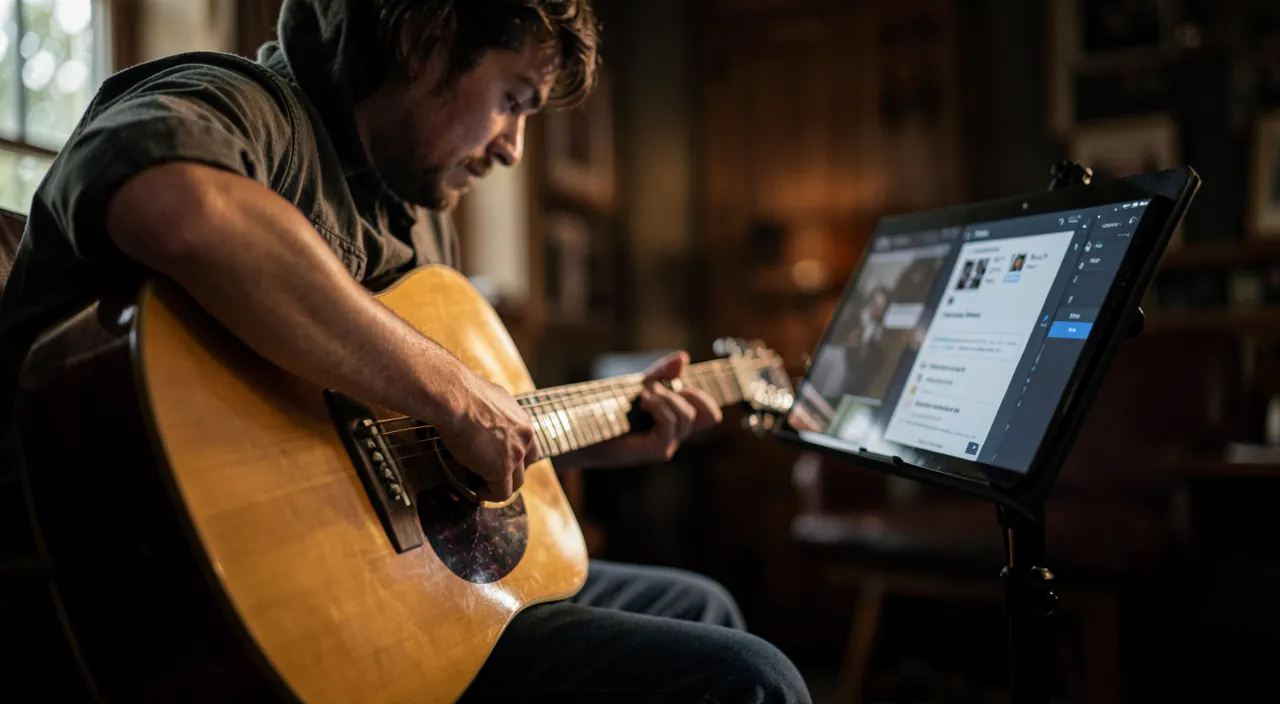
The current generation has three true talents: the corrective listening — the microphone that hears your play (the right note validated, the wrong chord signaled — in real time: the immediate feedback that the method book never had, and which changes learning: we know EXACTLY if it’s good right away) ; the gamified progression — levelled journeys, streaks, unlocked songs (externalized motivation — our language guides: the same triggers, the same effectiveness on REGULARITY, the nerve of the musical war: ten minutes a day beats the Sunday hour, and the app excels at getting the ten minutes) ; and the motivating repertoire — playing SONGS quickly (the real song simplified in the first weeks — modern pedagogy embraces the pleasure first: the awaited extra chord kills more vocations than the wrong notes), the libraries of interactive tablatures and sheet music (synchronized scrolling, slowed tempo — the tool of the self-taught), and the video tutorials of ALL (the precise song learned from its tutorial — the YouTube university of music is real) ; the instruments covered — piano and guitar foremost (best served — the piano with the app placed on the music stand which listens, the guitar with integrated tuner), ukulele, bass, singing (the vocal pitch apps), drums (with headphones and electronic drum kit — peace for the neighbors) : music entry has never been more accessible — a few euros a month and the instrument, against the price and logistics of lessons : this is THE good news.
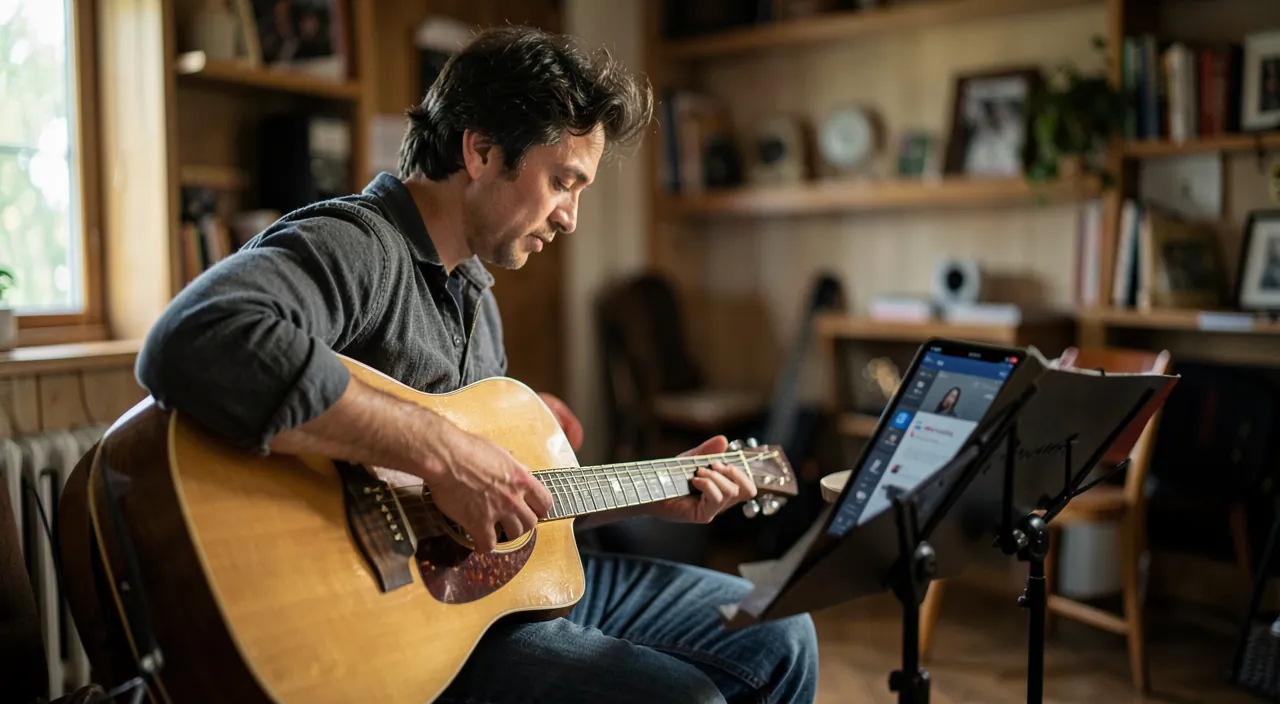
Apps make learning music easier by giving instant feedback, making practice fun with games, and letting you play real songs quickly. They’re great for beginners and people who want to practice regularly, but they can’t replace a teacher for everything.
A beginner guitarist using an app like Yousician can start playing simple versions of songs like “Knockin’ on Heaven’s Door” in their first week. The app listens to their playing, corrects mistakes, and tracks progress, making it easier to stay motivated.
Where the teacher remains irreplaceable (the honest truth)
The structural limits to know BEFORE committing: the posture and gesture — the app hears the notes, it does not see the body (the broken pianist’s wrist, the guitarist’s tension, the singer’s breathing — foundational flaws install themselves without correction and are costly to undo : the Achilles heel of the all-app approach) : the minimal defense — a few human lessons at the start (the starter pack: three to five lessons that set the posture, then the app that trains — the mix of our sports guides: the gesture is learned in person, maintained through the app), or at worst self-video compared to references (filming yourself playing reveals what the app does not say) ; the musicality — phrasing, nuance, interpretation (the app validates the right notes — music begins after the right notes: the typical app-only plateau is there, at the « I play songs but it sounds mechanical » level) ; the ear and theory alive (solfège apps exist and help — the musician who improvises and understands forms better with a guide) ; and the collective — playing WITH others (the music school, the group, the choir: half the pleasure and progress — the app is a private teacher, never an orchestra) : the clear trajectory — the app to START and practice, the human to found and overcome plateaus, the collective to live music: the three levels of a practice that lasts.
The right reflex. Install the ten-minute ritual — the only variable that predicts musical success: the instrument OUT and visible (the guitar on its stand in the living room, not in its case in the closet — the friction zero of our habit guides: the instrument put away is an instrument abandoned), the slot anchored to an existing habit (after the coffee, before dinner), the app counting regularity (the streak in service of music), and the rule of bad days — five minutes of scales or ONE song for pleasure count (there is no failed session: only short sessions) : six months of ten minutes a day beats ten years of « I’ll get back to it » — and that’s exactly the contract the app knows how to keep.
By instrument and by age: the paths that work
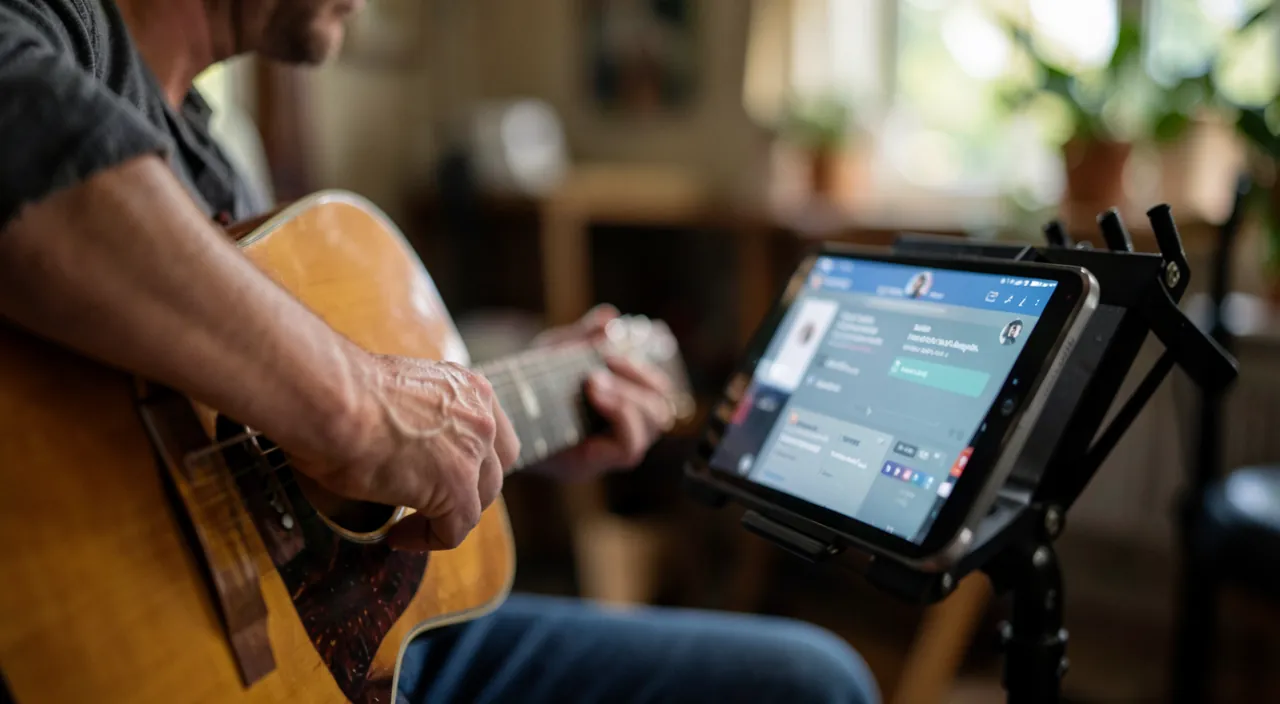
The concrete cases: the piano — best served by the apps (the MIDI keyboard connected to the tablet: perfect recognition, interactive sheet music — the touch-sensitive keyboard is the good first purchase: our guides, the market is full of good deals), the royal path for the adult beginner ; the guitar — the app + tutorials + tablatures (the richest self-taught ecosystem — and the fingers hurt for the first two weeks: the normal hurdle the app must get you through by warning you), the integrated tuner as guardian of the pleasure (the out-of-tune instrument discourages wrongly) ; the voice — apps for pitch and training, the teacher faster than elsewhere (the instrument is the body — poor vocal technique exhausts and damages) ; the children — playful apps as COMPLEMENTS (the joyful initiation, the training between lessons) but the human at the center (musical awakening and the teacher do what no screen does — the motor skills, the listening, the group: an app alone for a 7-year-old is a misunderstanding ; an app AFTER the lesson to revise by playing is a treasure), and the local music school rehabilitated (municipal prices, junior orchestra — the collective that makes memories) ; the adults who resume — the winning profile of the apps (dormant basics awakened, immediate pleasure repertoire, zero logistics — the childhood pianist who resumes in three weeks), with the occasional lesson at plateaus ; and the seniors — late music is a well-documented good idea (memory, fine motor skills, pleasure — our guides for a good old age) : the patient and repetitive app excels, the group (chorus foremost — the most accessible and social entry) adds the essential.
The equipment and ecosystem: simple and sufficient
Reasonable equipment: the instrument first — correct from the start (the toy instrument that is unplayable kills the start: the guitar tuned correctly at 80-150€, the dynamic touch keyboard — verified second-hand is queen: our guides, the market is full of good deals in January for September), rental for growing children (schools and stores offer it — reversible commitment) ; the counting accessories — the stand that exposes (the ritual, still), the tuner (in the app), the metronome (in the app — and its regular use: tempo is musical courtesy), the headphones for keyboards and drums (the family and neighbors — silent practice is a condition of practice in an apartment), the stand for the tablet ; the reasonably stocked apps — one main learning app (the monthly trial subscription judged — our guides: real regularity before the annual commitment), the tuner-metronome, the library of sheet music/tablatures when the time comes: three apps, not ten ; and the recording of oneself — the monthly vocal memo of your play (our guides voice memos: the invisible progress daily becomes spectacular at three months’ distance — the most effective anti-disappointment for the beginner musician, and the moving archive in ten years) : music equips light — the heavy investment, it’s the ten minutes.
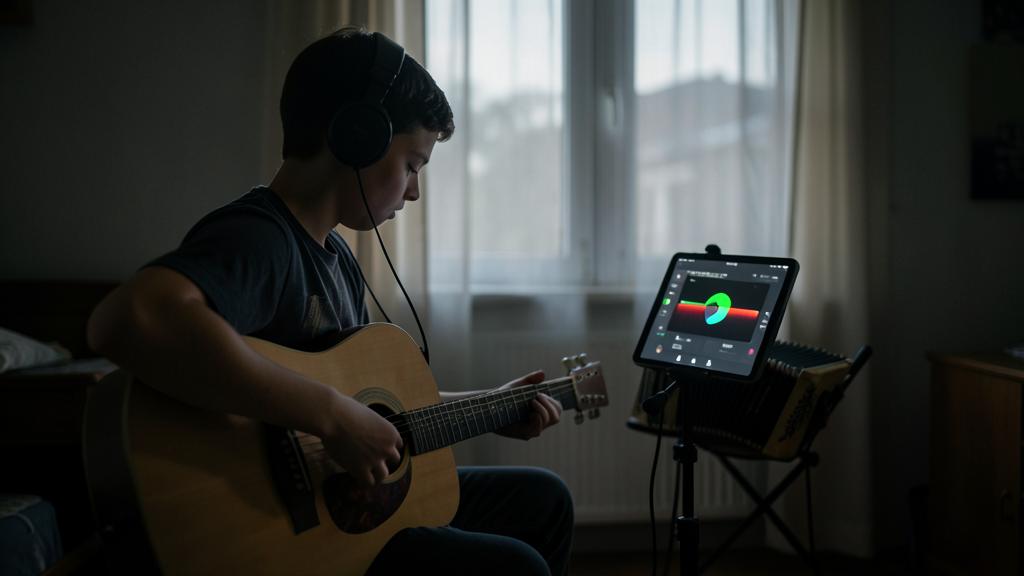
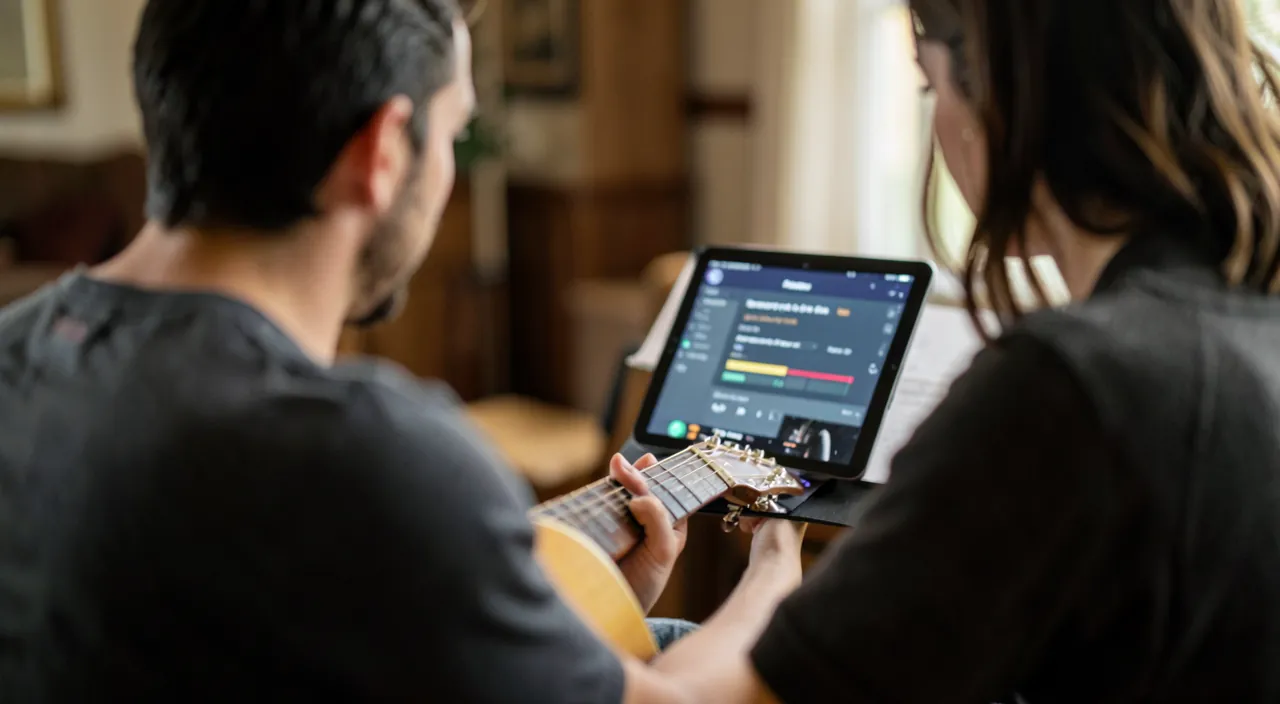
Be wary of promises of ease — music remains a craft. The sector’s marketing overpromises (play your favorite songs in 21 days, without solfège, without effort) : the real contract is different — music is learned through patient repetition (apps make it softer and more playful: they do not eliminate it), plateaus are part of the journey (the three-month wall where « it’s not progressing anymore » — the moment for human lessons or a new repertoire — not abandonment), and shortcuts have their dues (the « without solfège » pays off later for those who want to go far — the ear and reading are learned BETTER earlier, in small integrated doses: good apps do it gently). Caution also with the stacking of music subscriptions (the app + premium tutorials + library — the stack is judged by use: our guides) : the only investment without disappointment remains time — ten minutes, every day, instrument out. The rest is support.
Frequently asked questions
Too old to start at 40, 60, 75 years old?
No — categorically: the adult learns DIFFERENTLY (fewer quick automatics, more comprehension and discipline — the balance is struck), goals are chosen (playing your favorite songs at home is a complete musical goal — the concert is not the only horizon), and cognitive and pleasure benefits are documented at any age. The only real question: are ten minutes a day available? — if yes, age is a detail.
Which instrument to choose to start (me or my child)?
The one that makes DESIRE first (motivation beats ergonomics — the child who dreams of drums will learn the drums better than the piano forced upon them), with practical references: piano/keyboard for visible progress and versatility, guitar/ukulele for portability and accompanied singing, the ukulele as a gentle entry for the young and impatient (four strings, easy chords, success in a week). And try before anything: rental, borrowed instrument, school open day.
Do musical games (rhythm video games, fun apps) really progress?
They develop rhythm and the ear (really) and especially DESIRE — but tapping tiles is not playing an instrument: the bridge is made consciously (the game that gives the desire → the learning app → the instrument). For children, it’s even an excellent sequence — the game as bait, the instrument as follow-up: the important thing is not to stop at the bait.
What to remember
Apps have democratized music learning — real-time corrective listening, gamification that gets regularity, immediate pleasure repertoire: the honest contract is clear — they START and PRACTICE admirably (ten minutes daily, instrument out and visible, monthly recording anti-disappointment), the human teacher remains king for posture (the few foundational lessons at the start — the best investment for the beginner), musicality and plateaus, and the collective (school, group, choir) makes music live. The equipment remains simple (correct second-hand instrument, apartment headphones, three apps), easy promises are laughed at — music remains a craft of repetition, made joyful. The living room guitar does not wait for talent or youth: it waits for ten minutes, tonight — and the app will ask for the next ten.
Want to go further with your phone and apps? Our practical training is for you.
Leave a Reply
You must be logged in to post a comment.