
Stress, anxiety, difficulty falling asleep, mind that loops endlessly : in a daily life often overloaded, meditation and mindfulness are attracting more and more people. And a multitude of apps promise to initiate you, guided, at any time. But do these meditation apps really work? Can they really help you feel better, or is it just a trend? Without any miracle promises or principled skepticism, here’s what you need to know about meditation apps: what they offer, their limitations, and how to use them properly.
What meditation can offer (and what the apps facilitate)
Mindfulness meditation — bringing your attention to the present moment, observing your thoughts without getting attached to them — is an ancient practice whose benefits for well-being are increasingly recognized: reduction of stress and anxiety, better emotion management, improved concentration and sometimes better sleep. It’s not a magic wand, but a practice that, with REGULARITY, can really help you feel better. The problem, for beginners: meditating « alone » is daunting (you don’t know how to do it, you doubt your ability). That’s precisely where the apps help: they offer GUIDED meditations (a voice guides you step by step, which is much easier for a beginner), VARYING lengths of sessions (from a few minutes to longer, adaptable to your schedule), THEMATIC programs (stress, sleep, anxiety, concentration), and a framework to establish a HABIT (reminders, tracking of regularity). The app makes meditation ACCESSIBLE: no need for classes or prior knowledge, you can start in just a few minutes, at your own pace, at home. For many, it’s the ideal gateway to a practice they wouldn’t have dared to approach otherwise. Apps don’t replace the depth of a practice guided by a teacher, but they democratize access to meditation and allow you to start easily — and starting is often the hardest.
Meditation apps help by making it easier to start and keep practicing. They guide you, offer short sessions, and help build a habit. The key is doing it regularly, not just once in a while.
Someone struggling with anxiety might start with a 5-minute guided meditation each morning. After two weeks of daily practice, they notice they feel less overwhelmed by small stressors at work.
Choosing and using a meditation app properly
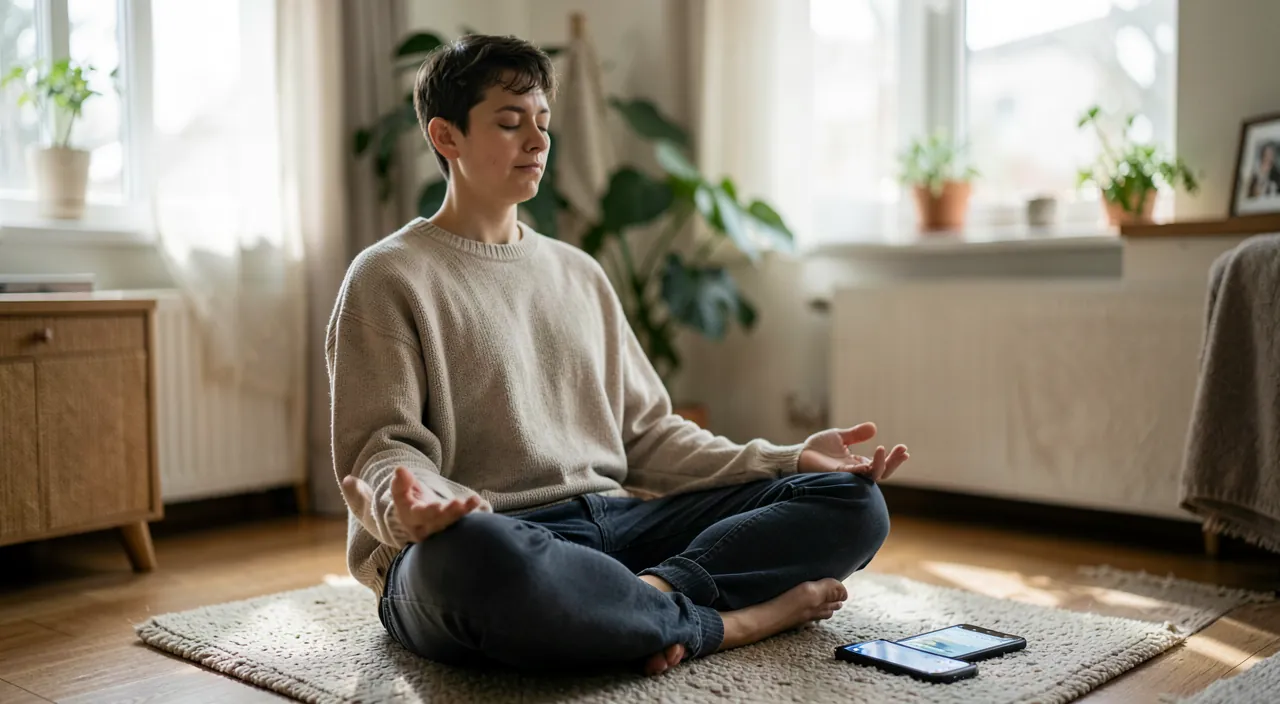
To benefit from a meditation app: START SIMPLE — there’s no need to aim for long sessions right away: a few minutes a day are sufficient to start, and are much better than a long session that you abandon; PREFER REGULARITY — it’s THE key: meditating a little every day is much more beneficial than an occasional long session; the apps help to anchor this habit (reminders, tracking); EXPLORE THE THEMES — depending on your needs (managing stress, better sleep, calming down, focusing), the apps offer adapted programs; TRY SEVERAL APPROACHES — styles vary (guided meditations, breathing exercises, soothing sounds, body scans), find what suits you; DON’T JUDGE YOURSELF — meditating is not « emptying your mind » (impossible); it’s about observing your thoughts without getting attached, and getting lost in your thoughts and coming back is PART of the exercise; BE PATIENT — the benefits come with time and practice, not from the first session. On the APP CHOICE: many offer free sessions to discover before a possible subscription for full access; test before paying (see below on the business model); check if the content (voice, style, programs) suits you; and prefer an app in French if you are more comfortable. The important thing is not the « perfect » app but the one you WILL ACTUALLY USE regularly. The best meditation app is the one that makes you meditate: simple, pleasant for you, and that accompanies you over time.
- Start simple with short sessions (even 5 minutes)
- Prefer regularity over long occasional sessions
- Explore themes that match your needs
- Try different approaches to find what works
- Don’t judge yourself – getting lost is part of the process
- Be patient – benefits come with practice
- Choose an app you’ll actually use regularly
THE RIGHT REACTION. Aim for REGULARITY rather than performance: start with short sessions (even 5 minutes) every day, at a fixed time that integrates easily into your routine (in the morning when you wake up, or before bed at night). It’s the regularity, more than the duration, that makes the benefits of meditation: a few minutes daily are infinitely better than an occasional long session that you eventually abandon. Use the app reminders to anchor this habit, and don’t get discouraged: getting lost in your thoughts and coming back is PART of the exercise (meditating is not « emptying your mind, » but observing without getting attached). Test several free sessions before committing to a subscription to find the style and voice that suit you. The best meditation app is the one you will actually use: start small, be regular and kind to yourself; the effects on your calm and well-being will come with time.

Limitations, realistic expectations, and vigilance
To use these apps with serenity, keep REALISTIC expectations and a few points of vigilance. Meditation apps are an excellent WELL-BEING tool, but: they are NOT medical devices, and they do not replace professional support in case of real distress: if you are experiencing significant psychological suffering (severe anxiety, depression, distress), meditation can help as a complement, but a healthcare professional remains essential (our health guides: the app is not a therapist, and you should never hesitate to consult). The BENEFITS are real but progressive and vary from person to person: do not expect instant miracles, and do not feel guilty if it does not work as you hoped the first time. On the PRACTICAL and vigilance side: be careful about the BUSINESS MODEL — many apps function on a subscription basis, sometimes expensive; take advantage of free content, and evaluate if the subscription is worth it FOR YOU before committing (be wary of subscriptions that automatically renew — our online shopping guides, clean up your subscriptions). Also be careful about PRIVACY — a well-being app may collect data on your mood, sleep, habits (sensitive personal information); check what it collects and prefer apps that respect your privacy (our privacy guides). Finally, keep in mind that meditation does NOT REQUIRE an app: you can meditate without, with free resources or simply sitting in silence; the app is a practical HELP to start and accompany yourself, not an obligation. In summary, meditation apps are a good tool to discover and practice mindfulness, with real benefits for well-being when used regularly: provided you keep realistic expectations, do not confuse them with medical care, and remain vigilant about subscriptions and privacy. Used properly, they make a valuable practice accessible — and sometimes, they really change your relationship to daily stress.
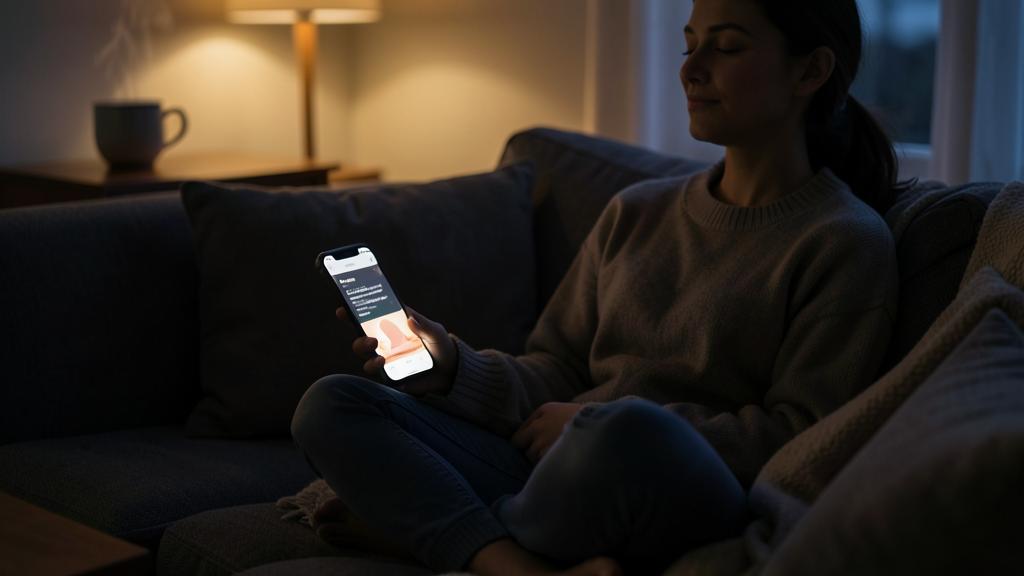
WARNING: An app is not a medical treatment, and monitor subscriptions and data. Three points of vigilance: meditation apps are a well-being tool, NOT a medical device or a substitute for professional support: in case of significant psychological distress (severe anxiety, depression, distress), they can help as a complement, but a healthcare professional remains essential — never hesitate to consult (our health guides). Keep REALISTIC expectations: the benefits are real but progressive and vary from person to person: no instant miracles, and no guilt if the effects take time. On the PRACTICAL side: be wary of SUBSCRIPTIONS (many apps are paid, sometimes expensive, with automatic renewals: test the free version, evaluate before committing, and monitor charges — our online shopping guides, clean up your subscriptions). Finally, PRIVACY: a well-being app may collect sensitive data on your mood, sleep, habits (personal information); check what it does and prefer apps that respect your privacy (our privacy guides). Remember also that you can meditate without a paid app: free resources exist, and the practice itself is free. The important thing is not to pay, but to find what makes you practice regularly.

Frequently asked questions
Do meditation apps really work?
They can really help, provided there is REGULAR practice: mindfulness meditation has recognized benefits for well-being (reduction of stress and anxiety, better emotion management, sometimes better sleep), and apps make this practice accessible to beginners (guided meditations, short sessions, thematic programs, habit-building support). It’s not a magic wand: effects are progressive and vary from person to person, and come with regularity. But for many, the app is an excellent gateway to a beneficial practice they wouldn’t have dared to approach alone. Keep realistic expectations and practice regularly: that’s how they live up to their promises.
Do you need to pay for a good meditation app?
Not necessarily to start: many apps offer free sessions sufficient to discover and begin. A subscription gives access to more content, but evaluate if it’s worth it FOR YOU before committing: test the free version, see if the style suits you and if you practice regularly. Be wary of subscriptions that automatically renew (monitor charges — our online shopping guides, clean up your subscriptions). Remember also that you can meditate without a paid app: free resources exist, and the practice itself is free. The important thing is not to pay, but to find what makes you practice regularly.
Can meditation replace psychological follow-up?
No: meditation apps are a well-being tool, not a medical device or a substitute for professional support. In case of significant psychological distress (severe anxiety, depression, distress), meditation can help AS A COMPLEMENT, but a healthcare professional remains essential: never hesitate to consult (our health guides). Keep REALISTIC expectations: the benefits are real but progressive and vary from person to person: no instant miracles, and no guilt if the effects take time. On the PRACTICAL side: be wary of SUBSCRIPTIONS (many apps are paid, sometimes expensive, with automatic renewals: test the free version, evaluate before committing, and monitor charges — our online shopping guides, clean up your subscriptions). Finally, PRIVACY: a well-being app may collect sensitive data on your mood, sleep, habits (personal information); check what it does and prefer apps that respect your privacy (our privacy guides). Remember also that you can meditate without a paid app: free resources exist, and the practice itself is free. The important thing is not to pay, but to find what makes you practice regularly.
What to keep in mind
Meditation apps make the practice of mindfulness accessible, whose benefits for well-being (reduction of stress and anxiety, better emotion management, sometimes better sleep) are recognized — provided there is REGULAR practice. They help beginners with GUIDED meditations, short and adaptable sessions, thematic programs, and a framework to establish a habit: an excellent gateway to a practice you wouldn’t have dared to approach alone. To benefit from them: start simple (a few minutes a day), aim for REGULARITY rather than duration (the key to benefits), explore the themes according to your needs, don’t judge yourself (getting lost in your thoughts and coming back is part of the exercise), and be patient (effects come with time). The best app is the one you will actually use. Keep realistic expectations and three points of vigilance: they are NOT medical devices (in case of real distress, consult a professional — they help as a complement, not a replacement), be wary of SUBSCRIPTIONS (test the free version, monitor renewals), and check PRIVACY (they may collect sensitive data on your mood and sleep). Used properly, with regularity and discernment, they are a valuable tool that can really change your relationship to daily stress.
Want to go further with your phone and apps? Our practical training is for you.
Leave a Reply
You must be logged in to post a comment.