
The mystery plant inherited from Auntie, the yellowing leaf without explanation, the “I always forget to water” — green thumb is no longer a gift, it’s an app: the photo that identifies the species in three seconds, the diagnosis of the sick leaf, watering reminders tailored to EVERY plant, and gardening knowledge made accessible on demand. Identify, care, organize maintenance, and team up with the generalist AI: the guide to apps that reconcile you with plants — from the monstera in the living room to the balcony garden.
Identify: the photo that names everything
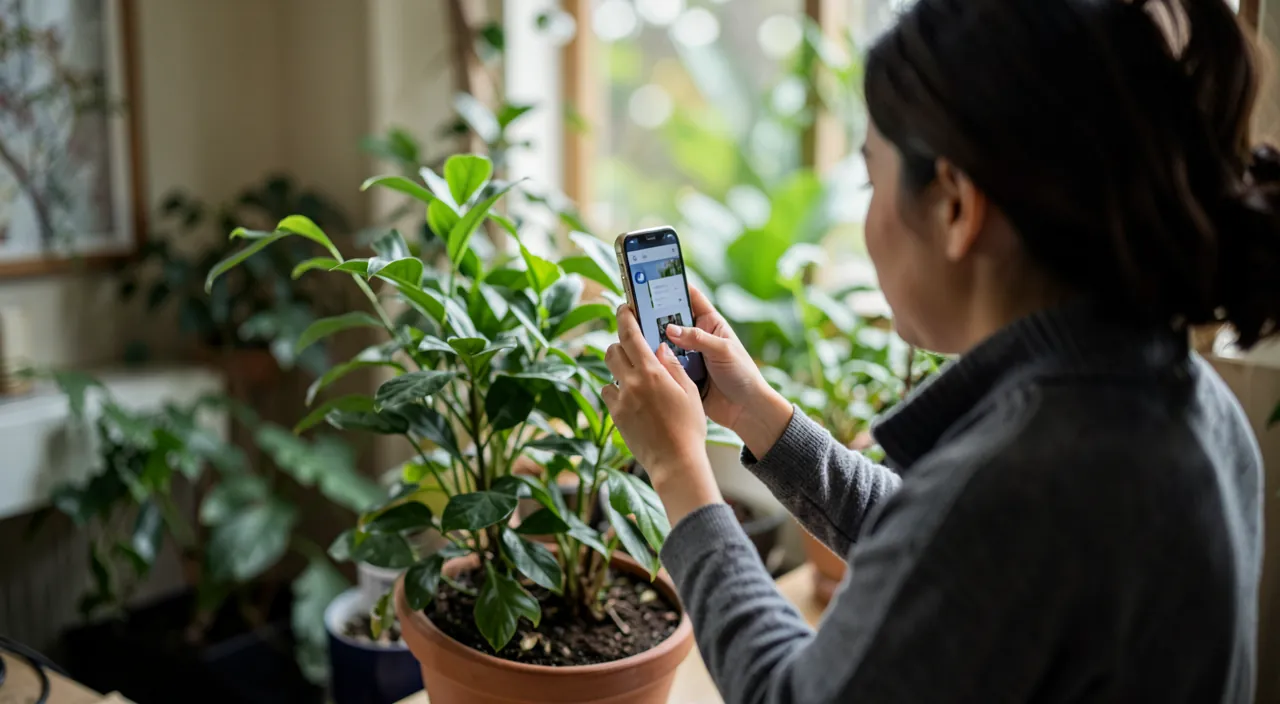
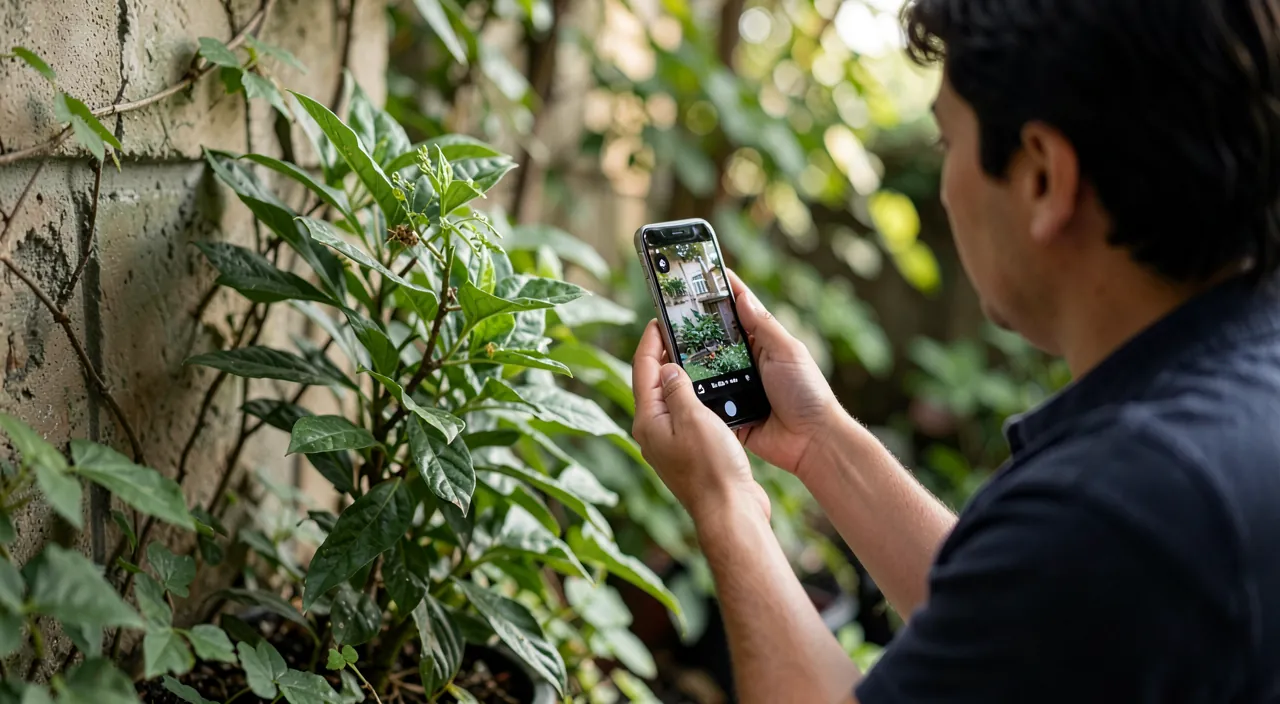
The entry-level superpower: photo recognition — the major plant recognition apps (free references, including the globally used French participatory science, to freemium specialists) identify the vast majority of common plants in three seconds: the rules for a good photo — the DISTINCTIVE organ framed (the flower first if it exists, the leaf otherwise — clear, in natural light), multiple photos to decide (the flower + the leaf + the overall shape — the apps offer this), and graded confidence (a 90% result on a common plant is believable; close species are confirmed — see the foraging box); the uses that delight — the named heritage (Auntie’s plant identified, its needs FINALLY known — half of indoor plants die from standard care applied to specific needs), the scholarly walk (the trail becomes a living herbarium — kids LOVE it: species hunting is the best family hiking app, our guides), the garden examined (the “weed” that turns out to be useful, the spontaneous seedling adopted); and participatory science as a bonus — your identifications feed real botanical research (geolocated observations map the flora — contributing adds a little extra soul to each photo): identification is the gateway — care is the home.
Apps use photos to quickly name plants. A good photo shows the flower or leaf clearly. This helps you learn what your plant needs and even helps scientists track plants around the world.
You snap a photo of a yellowing monstera leaf. The app identifies it as a monstera and explains that yellow leaves often mean overwatering. You adjust your watering schedule, and the plant recovers.
Care: from diagnosis to the right action
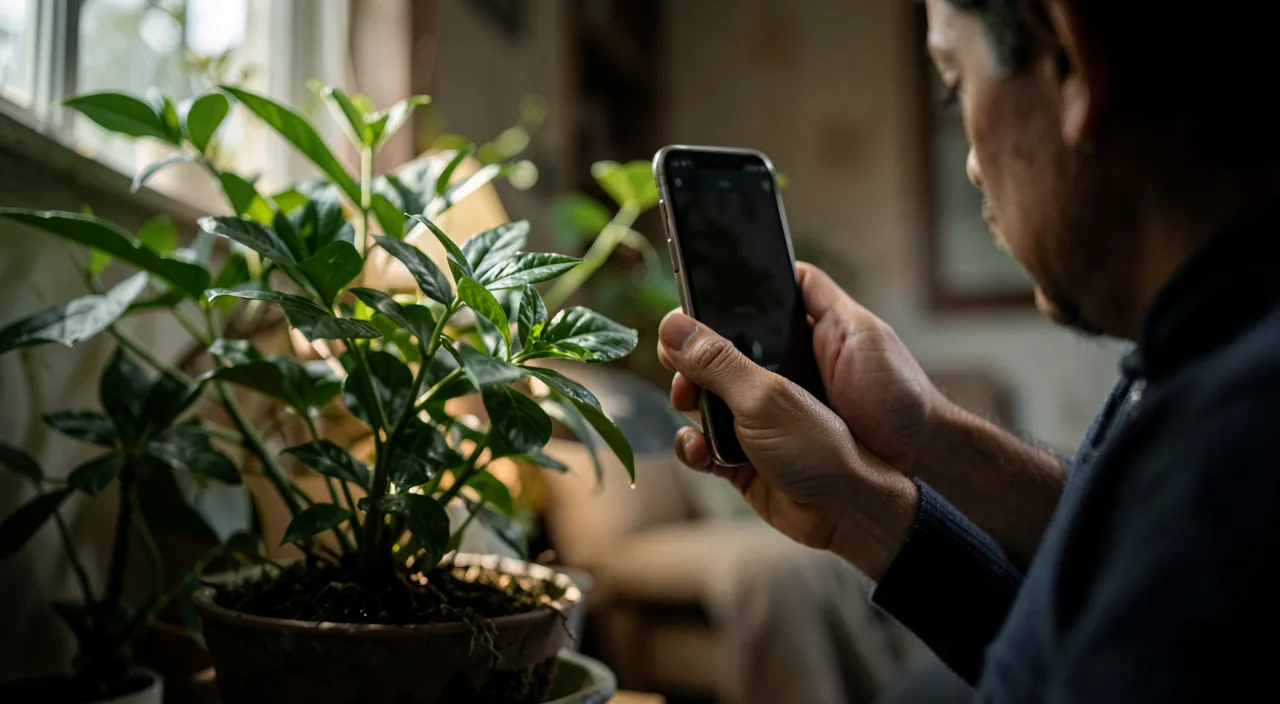
The named plant is cared for (our AI-gardening guides for the complete method — here, the arsenal of apps): the photo diagnosis — the “health” modes of plant apps (the spotted, yellowed, or perforated leaf photographed → the hypotheses ranked: overwatering — the number one killer of indoor plants, deficiencies, pests, sunburn), with the CONTEXT added (the exposure, watering frequency, recent repotting — the apps ask, answer precisely: the diagnosis is only as good as the clues); the care sheets by species — the light, water, humidity, repotting FOR YOUR plant (the sheet consulted at purchase avoids half the disasters: the plant chosen for ITS actual exposure — the ficus in a dark room was doomed at the store); the gentle escalation of our guides (observation, cultural practices, natural solutions — serious apps respect this: beware of those that sell a treatment for every spot); and the app + generalist AI duo — the app for identification and sheets, the AI assistant for DIALOGUE (the specific case explained, the step-by-step rescue plan, the educational “why” — our guides: AI excels in second opinions and teaching, the app in sensing and referencing: together, the complete green thumb).
The right reflex. Activate the maintenance reminders per plant — the feature that saves more plants than all diagnoses: each plant recorded in the app (name, room, photo) with ITS watering rhythm (adjusted by season — the apps do this), and grouped reminders (the “plant Tuesday”: the watering round in one reminder instead of seven alerts — our guide notifications): chronic forgetting and anxious overwatering (the two symmetrical plagues) are solved in one go — the plant no longer waits for your memory, and you no longer water “just in case” (the finger in the soil remains the final judge: the reminder says “check,” not “pour”).
Organize: the indoor (and outdoor) garden that runs smoothly
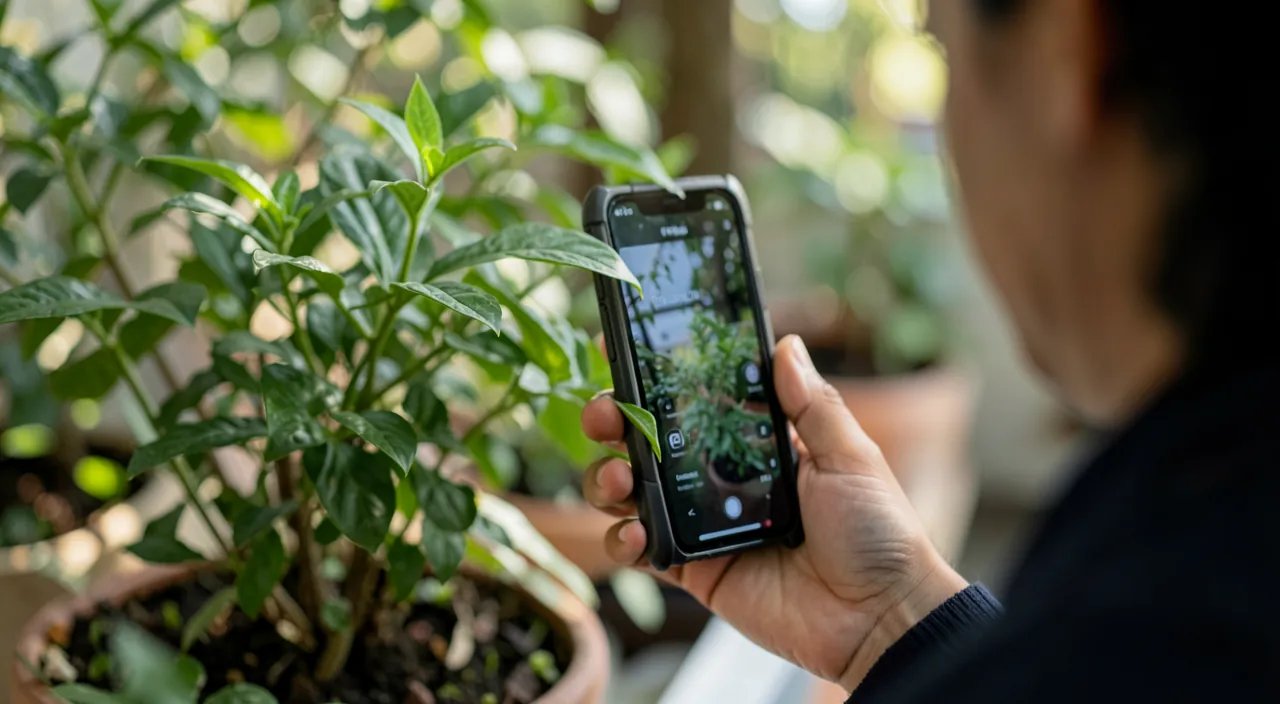
The growing collection is managed: the living inventory — the household plants in the app (the history of each: repottings, incidents, progress photos — the journal of our garden guides, living room version: the joy of seeing a cutting become a tree is a real motivator), and the sheet that follows the given plant (the cutting offered WITH its instructions — the complete gift); the seasonal management — seasonal reminders (spring fertilization, winter pause, the return of the frost-sensitive plants — the calendar of our vegetable garden guides applies to pots), and watering adaptation (winter divides needs — winter overwatering is the seasonal killer); the balcony and potted garden — the vegetable garden apps (dated sowings, planned harvests, associations — our guides: the LOCALIZED calendar is valid for three planters), and organized watering for absences (reservoir systems, the neighbor briefed WITH the app list — vacations no longer doom the balcony); and reasoned purchases — the sheet consulted BEFORE (your actual exposure vs. the species’ needs — the “love at first sight” plant that’s compatible is a purchase; the incompatible one is a reprieve), pet-safe plants (verified toxicities — cats and lilies don’t coexist: verification at purchase is a domestic safety reflex, the apps and veterinary lists allow it), and the plant exchange (local cutting swaps — exchange communities are the friendliest of their kind).
Going further: knowledge that grows with the plants
The app as a field trip school: the progression by project — the first guided cutting (integrated tutorials — the success that sparks the passion), the learned repotting (the filmed gesture, the explained substrate), the spring sowings (the most rewarding operation for beginners — the cherry tomato on the balcony is worth all the courses); the communities — plant forums and groups (human diagnosis as a second opinion, local advice, the culture of sharing — and the swaps already mentioned); the expanded nature — sister apps (bird recognition BY SONG — the garden takes on a sound dimension, mushrooms for walks — with the absolute rule of the box, insects: the entire ecosystem becomes readable — the flowered balcony for pollinators, guided by biodiversity apps, is the perfect family project); and the measurement of the measurable unnecessary — connected humidity sensors and stations for enthusiasts (our guides on sobriety: the finger does just as well for three pots — the equipment follows the collection, not the other way around): the plant remains a school of patience — the app shortens the mistakes, never the growth time: that’s precisely what makes it such a good hobby for our time.
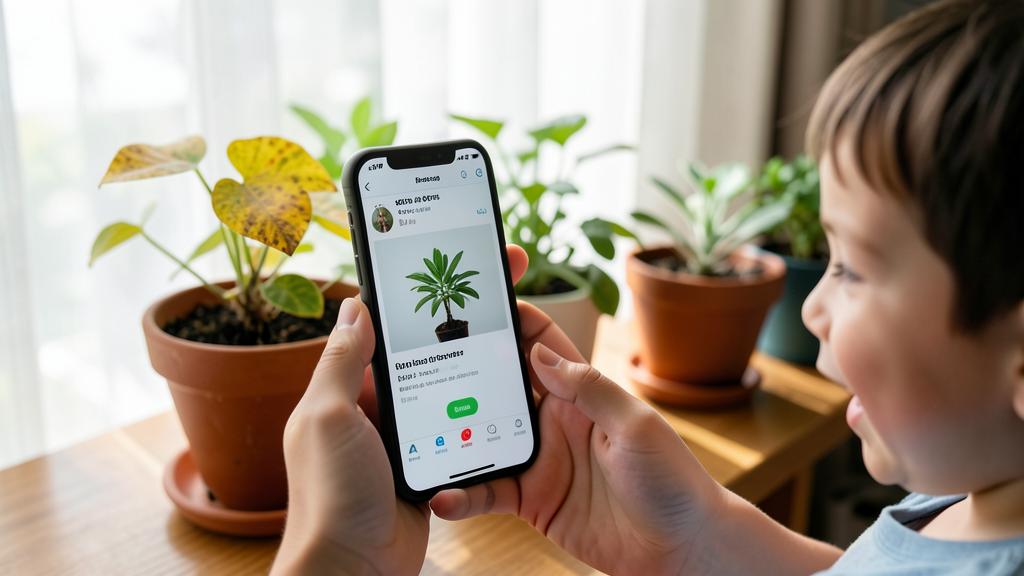
Warning: app identification NEVER makes a plate. The vital rule of our guides, repeated because it saves: photo recognition is remarkable for NAMING and LEARNING — it is formally insufficient for DECIDING to eat: mushrooms (deadly confusions between close species fool the apps AND the photos — the pharmacist or the mycologist in the flesh, the only judges), wild edible plants (toxic look-alikes — wild carrot and its dangerous doubles), berries from walks (the child who “checked on the app”: the conversation to have BEFORE — the app identifies, the expert adult authorizes, and in doubt, nothing is tasted). The same seriousness applies to improvised herbal remedies (the tea from the “identified” plant: no). Digital botany is a magnificent window — edible foraging remains a human partnership: the two complement each other, they don’t replace each other.
Frequently asked questions
Are free plant apps enough?
For identification: yes, largely (free references and participatory ones are excellent); for reminders and sheets: the free ones form the foundation, subscriptions add advanced diagnostics and unlimited collections — our guides’ test: one month of real use before any subscription (and beware of weekly subscriptions in the section — the flower of the trap also grows on the shelves: our guides).
My identified plant has ten different names according to the apps:
The plant world has its synonyms (regional common names, botanical reclassifications) — the reliable marker is the LATIN name (the universal identifier: that’s the one you look for care), and horticultural hybrids blur the varieties (the species is enough for common care). In case of hesitation between CLOSE species with different needs: the community or the florist decides on the real plant.
Can you really save a very sick plant?
Often — plants forgive more than we think: the diagnosis (app + AI), the radical action assumed (pruning the dead parts, emergency repotting in healthy substrate — the roots tell the truth: firm = hope, soft and smelly = rot to amputate), then patience WITHOUT zeal (convalescence in peace, minimal watering — overcare finishes off the sick). And failure happens: the compost is a restart, not a defeat — every gardener has their cemetery and their lessons.
What to remember
The green thumb is downloaded in three functions: identification (the photo of the distinctive organ — the named plant, its needs known, the walk turned herbarium — and participatory science as a bonus), care (the contextualized photo diagnosis, the species sheets consulted at PURCHASE, the gentle escalation, the AI as a pedagogical second opinion), organization (reminders per plant adjusted to the seasons — the plant Tuesday that saves more than all diagnoses, the living inventory, absences prepared, toxicities verified for pets). With the vital rule as a safeguard: the app names, it NEVER authorizes the plate — mushrooms and foraging remain the domain of human experts. Auntie’s mystery plant has a name, a rhythm, a sheet — and many years ahead of it: all it needed was the translator, and it’s in your pocket.
Want to go further with your phone and apps? Our practical training is made for you.
Leave a Reply
You must be logged in to post a comment.