
Point your phone at the night sky: constellations are overlaid, planets are named, the Space Station announces its passage — and that bright spot above the neighbor turns out to be Jupiter. Astronomy apps have performed a small miracle of popularization: putting the star map, once reserved for the initiated, in every pocket. For summer evenings, curious children, contemplative insomniacs — here are the best apps, how to use them properly, and the path from the first « wow » to real observations.
The basic magic: the augmented reality planetarium
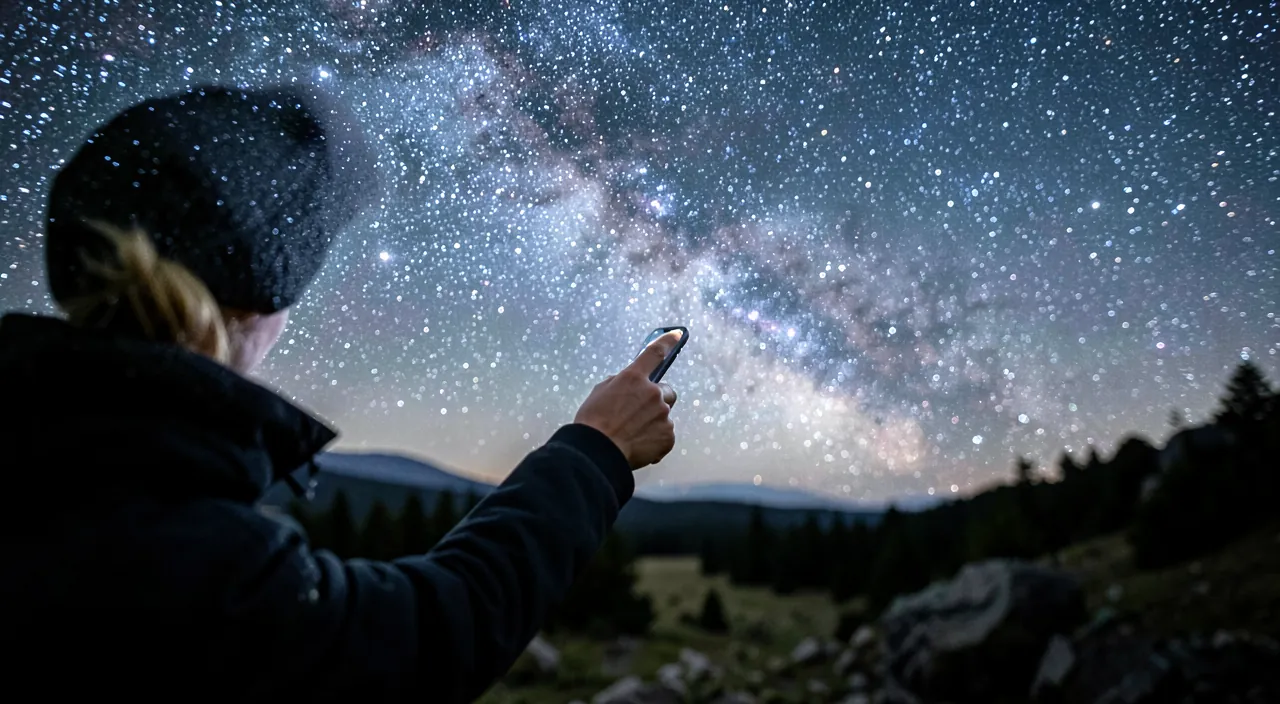
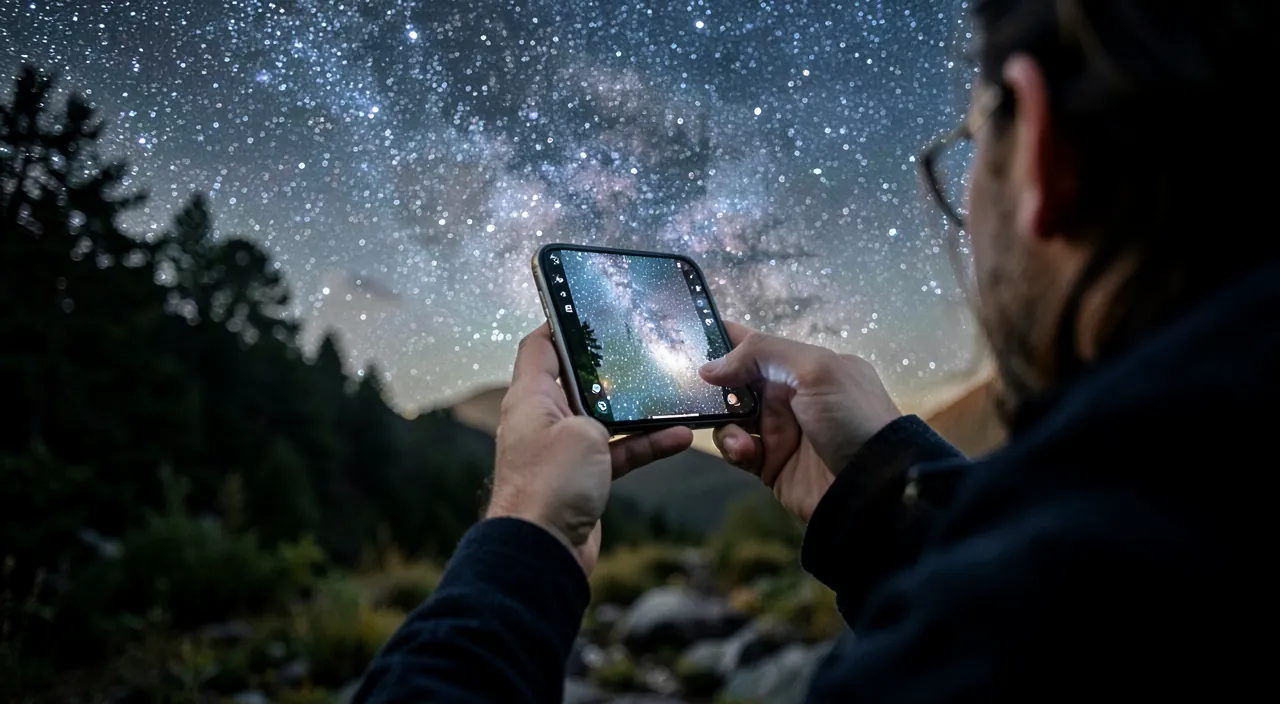
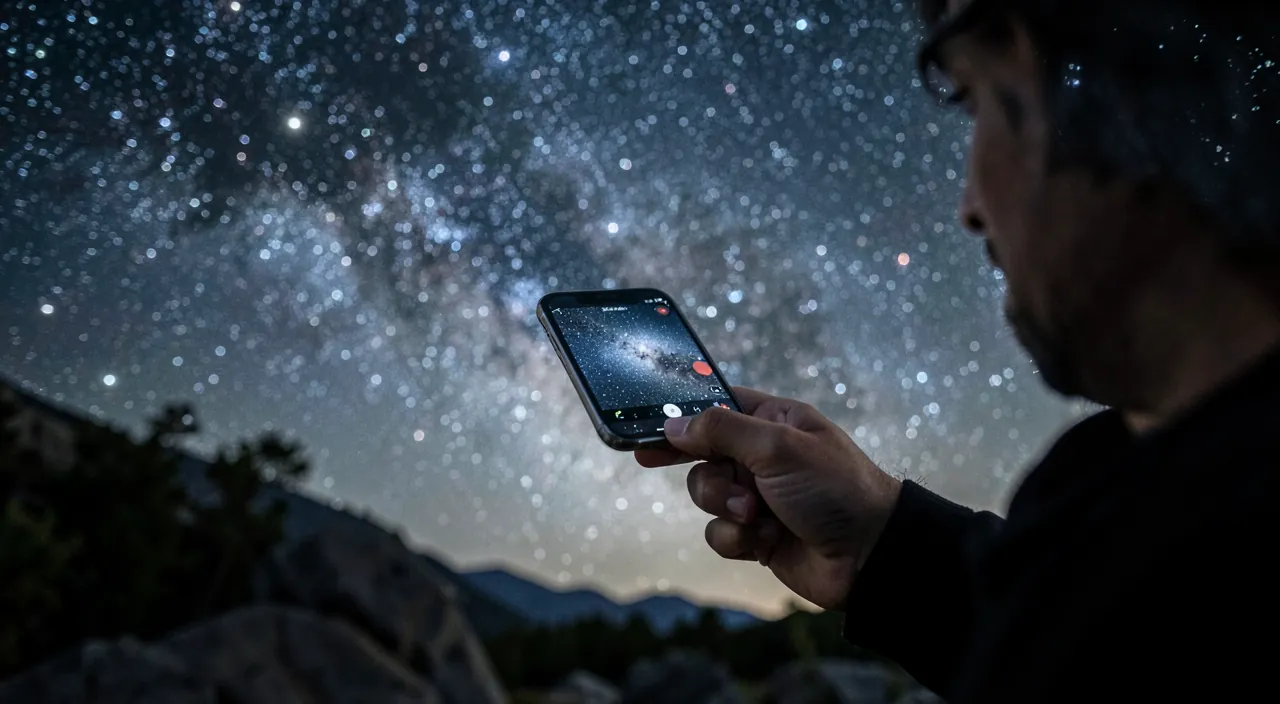
The principle that always amazes: augmented reality sky maps (the major apps in the category — very generous free versions) use the phone’s sensors (compass, gyroscope, GPS position, time) to display exactly what you’re aiming at — point at a bright star: its name, constellation, and distance appear; sweep the sky: mythological figures are drawn on real stars; even point at the ground: the southern hemisphere’s sky appears under your feet. The first uses that hook: identifying planets (the « stars » that are very bright and do not twinkle — Venus at twilight, Jupiter and Saturn in the evening: naming them changes the view forever), recognizing the major constellations (the Big Dipper, Cassiopeia, Orion in winter — and the North Star finally found for real), and tracking the Moon (phases, rise and set — the app explains why it’s enormous on the horizon tonight). The essential setting from the first evening: the night mode (the screen turns dark red) — the eye takes twenty minutes to adapt to the darkness and a white screen ruins everything: in red, the app guides without dazzling.
These apps use your phone’s sensors to show you exactly what’s in the sky when you point at it. They help you spot planets, constellations, and the Moon, and they have a special night mode to protect your eyesight.
On a clear August night, you point your phone at a bright object in the sky. The app tells you it’s Jupiter, shows its position in the constellation Sagittarius, and explains that it’s currently 395 million miles away from Earth.
Sky events: never miss anything
The sky is a show with a program — and the apps are its magazine: passages of the International Space Station — the ISS crosses the sky like a bright and fast star, several times a week at predictable times: dedicated apps notify « visible passage in 10 minutes, from southwest to northeast » — the most rewarding observation to start with (and to impress the kids: « there are people inside ») ; shooting star showers — the major annual events (the Perseids in August at the top, the Geminids in December) with their peak nights, their favorable hours and the direction to look; eclipses of the Moon and the Sun (with years in advance — and the sacred reminder: the Sun is NEVER observed without a certified special filter, eclipse included); conjunctions — those evenings when the Moon brushes Venus or when the planets align: the most beautiful phone photos are taken there; and the custom alerts of the apps (activate those of the major events, resist the spam of the slightest asteroid). The astronomical calendar transforms the practice: from random contemplation, it becomes a series of appointments — and a recurring excuse to go out and look up, which was perhaps the goal.
The right reflex. For a real observation evening, consult three forecasts: the classic weather (clouds), a light pollution map (online maps rank the areas — twenty minutes from most cities, the sky changes category: ten times more stars) and the Moon phase (the full Moon dims the stars — nights without the Moon are the great nights; the Moon itself is observed in the first quarter, when the shadows sculpt the craters). These three checks make the difference between « we saw three stars » and a memorable starry vault.
Observe better: the eyes, binoculars, and the app as a guide
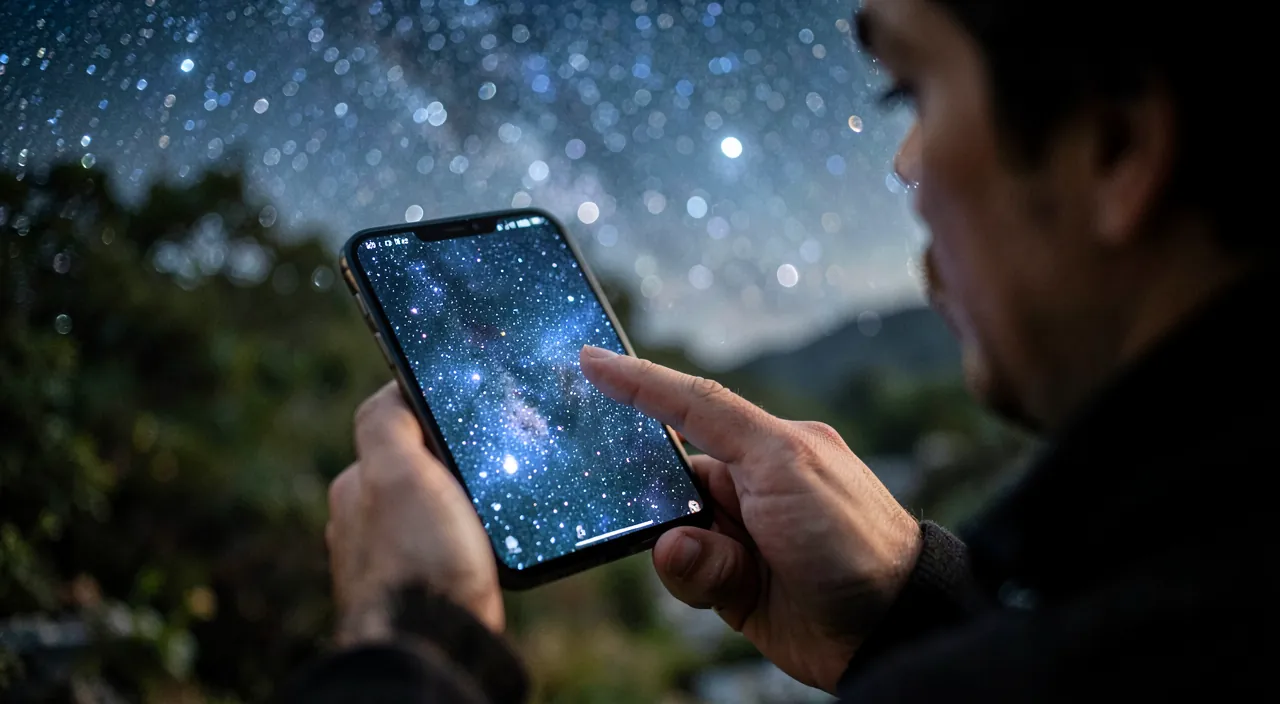
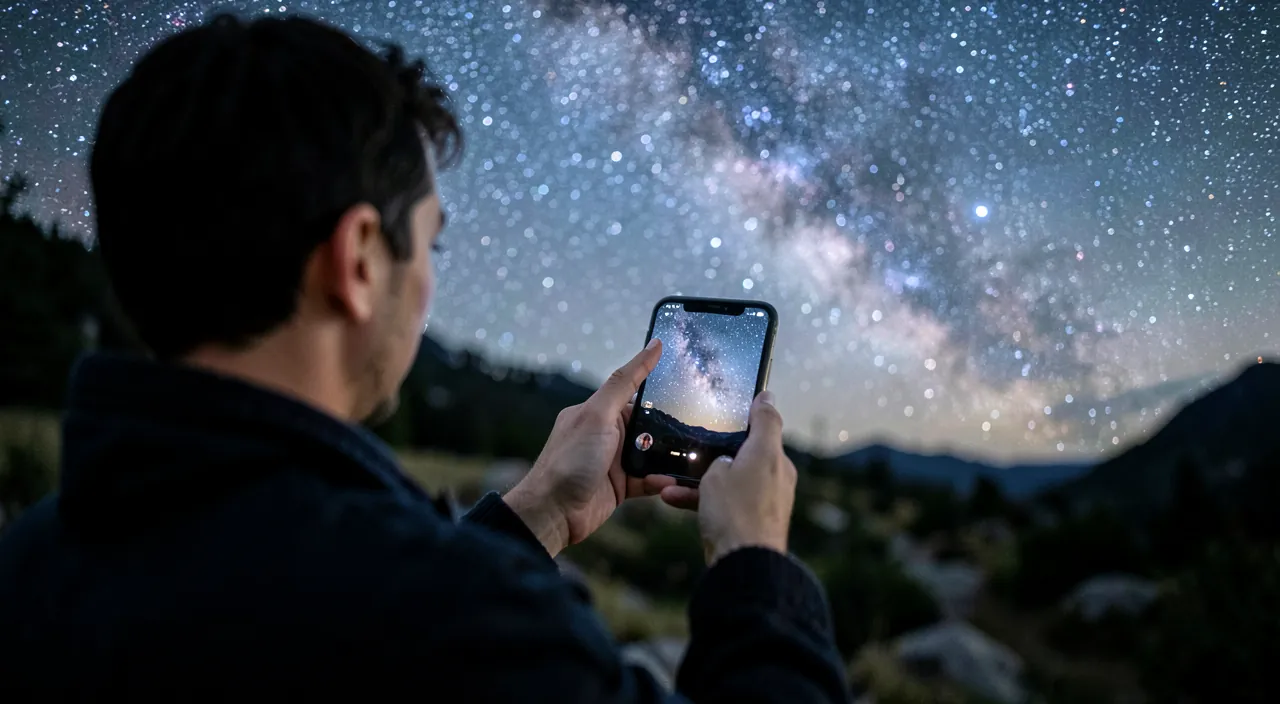
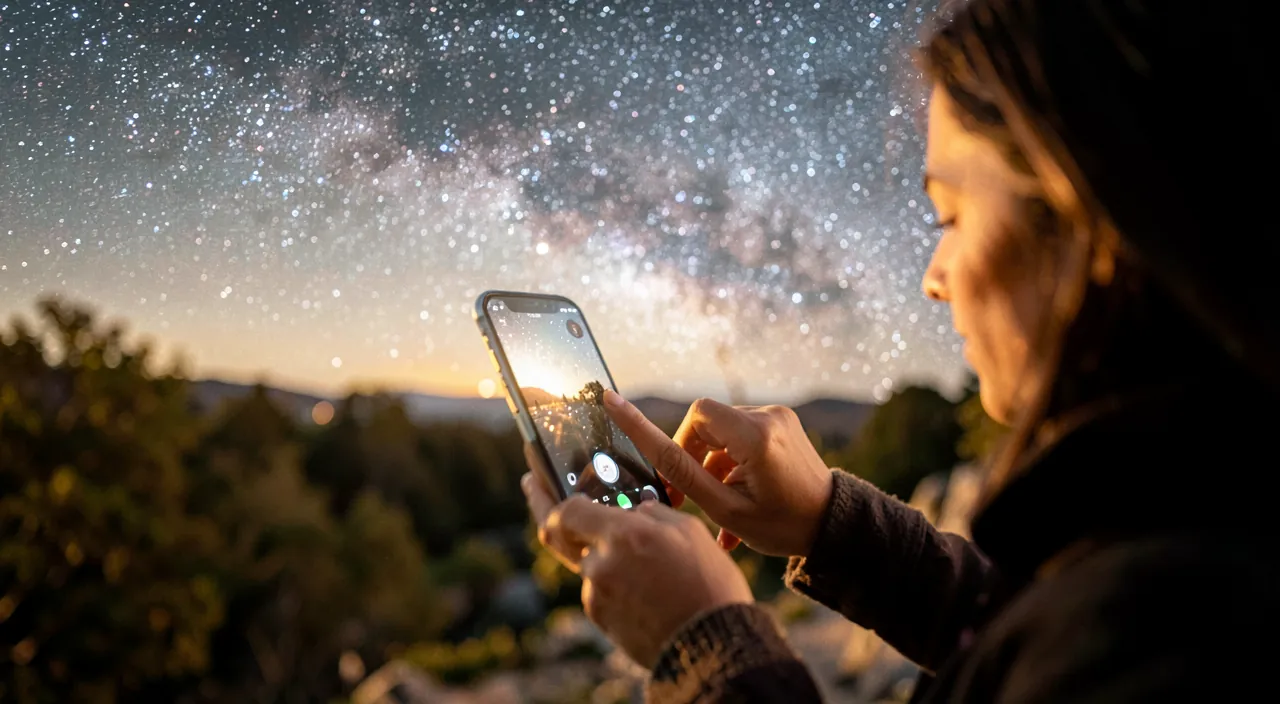
The natural progression of equipment — and its true order: naked eyes first — learning the sky (seasonal reference constellations, the path of the planets on the ecliptic, nocturnal adaptation respected) is the foundation: the app in overlay is the ideal teacher — play at identifying THEN check, the sky is learned like a country; binoculars next — the best-kept secret of astronomy: ordinary binoculars (the classic 10×50) reveal lunar craters, Jupiter’s moons, the dazzling Pleiades, the teeming Milky Way — for a fraction of the price of a telescope, no setup, out in ten seconds: this is the step that everyone wrongly skips; the telescope finally — when the passion is confirmed: the apps actually connect to it (modern mounts are controlled by phone, which points the chosen object on its own) — and the purchase is considered with knowledge (magnification is not the goal, capturing light is — ask advice from clubs). And photography: recent phones in night mode capture the Moon, conjunctions, and even the Milky Way under good skies (placed on a wall or tripod, 10-30 seconds exposure) — the sky app helps to frame what’s rising. Each step is self-sufficient: years of happiness exist with binoculars alone.
Sharing the sky: children, evenings, and communities
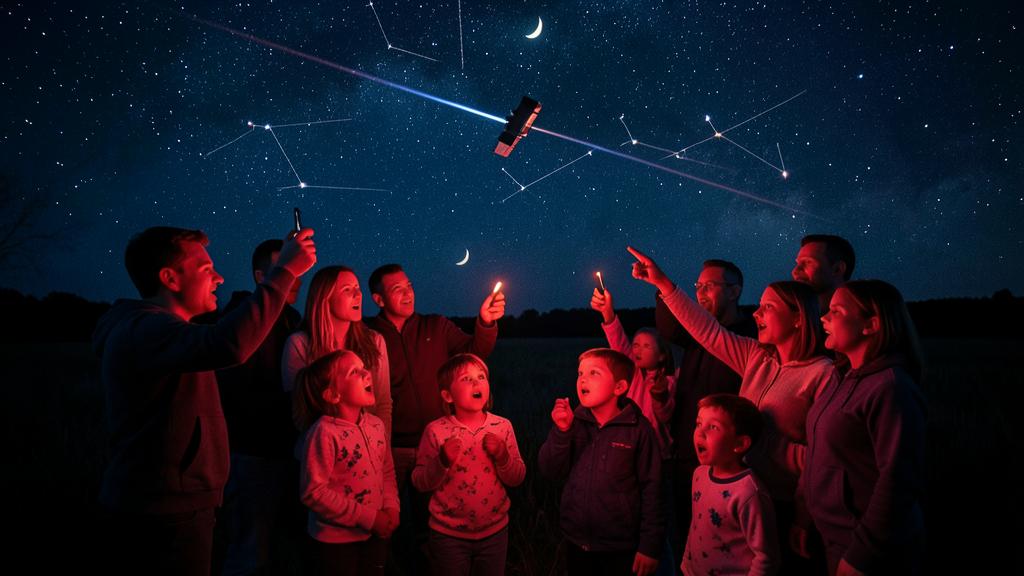
Astronomy on the phone is a social hobby by nature: with children — the absolute winning combo: the ISS announced at 9:12 p.m. (the countdown wait, the passage triggers the screams), the constellations told (each figure has its myth — the app tells them, or you: Orion the hunter, the Big Dipper), a Perseid shooting star in pajamas in August — childhood memories are made there, and the scientific seed too (counting the seconds between the flash… no, that’s the storm — but the Moon that « follows the car » finally finds its explanation); public observation evenings — astronomy clubs open their telescopes during the Starry Nights and all year round: free, passionate, and Saturn in a real telescope pulls an « oh » from all ages (the apps and club websites list the dates near you); and simple contemplation — the one that asks for nothing: ten minutes outside on a clear evening, the phone in your pocket after identification, and the very ancient feeling of being small under something big — modern apps have this success: they know how to turn off: they name the sky, then they leave it to you.
Beware of two pitfalls of the genre. The first is commercial: some apps in the category push aggressive subscriptions (a « free » trial that switches to a weekly expensive subscription) for features widely available for free elsewhere — the references in the field offer the essentials without paying: try the free ones first, and check any trial conditions (cancellation is done in the phone’s subscription settings). The second is physical: the Sun — never direct observation, neither with the naked eye nor with binoculars (immediate and permanent eye damage), eclipse included: only certified solar filters and eclipse glasses to standard protect — and children are particularly watched on these days. The night sky, on the other hand, is perfectly harmless — that’s all its gentleness.
Frequently asked questions
I’m in the middle of a city: is it still worth it?
Yes — the Moon, the bright planets, the ISS, and the major constellations pierce the light pollution: enough to learn the sky and experience the major events from a balcony. For the Milky Way and shooting star showers, a thirty-minute outing changes everything — the light pollution app finds the right spot.
Which app should I choose to start?
A reputable augmented reality sky map (the free versions of the major names in the category are more than enough) + an ISS passage app: the duo that covers 90% of the fun. Add an astronomical calendar later if the taste is confirmed. Beware of subscription clones — reviews and the number of downloads sort them out.
The augmented reality is offset from the real sky:
It’s the phone’s compass that needs calibration: the eight-shaped gesture with the phone (the app suggests it), away from metal masses (car, railing). Also check that the automatic position and time are active — the app calculates the sky for a specific place and time: well set, the overlay is remarkably accurate.
What to remember
Astronomy apps have democratized the star map: augmented reality names stars, planets, and constellations by pointing at them, alerts announce the ISS, shooting star showers, and celestial events, night mode preserves eye adaptation. The winning practice: learning the sky with the naked eye with the app as a teacher, buying binoculars before dreaming of a telescope, choosing your nights (weather + Moon + light pollution), and sharing — children under the ISS, club evenings, the Perseids in August. Avoiding trap subscriptions and never looking at the Sun without a certified filter. The starry sky is the oldest of free shows — the phone has only made the program readable: tonight’s session is already displayed.
Want to go further with your phone and apps? Our practical training is for you.
Leave a Reply
You must be logged in to post a comment.