
Remote work was supposed to be a temporary measure; it has become an obvious choice — then a battleground. Between companies calling their teams back to the office, those that have fully embraced remote work, and the vast majority seeking a hybrid balance, the world of work is undergoing its most significant reshaping in decades. Beyond the slogans (« the office is dead » / « back to the office »), where is remote work really headed? A status report, long-term trends, and practical advice for navigating the situation — from the employee’s perspective as well as the employer’s.
Where do we really stand?
After the back-and-forth waves, a landscape is stabilizing: hybrid work has become the norm for knowledge-based jobs (typically two to three days in the office), fully remote work remains the domain of specific companies (tech, digital services) and experienced professionals, and fully in-person work persists where the activity requires it… and sometimes returns elsewhere, depending on company policies. The real novelty is this: the workplace has become a negotiation topic — a key element of the social contract, on par with salary, heavily influencing recruitment, retention, and departures. Remote work is no longer a perk; it’s a core component of job offers.

What years of experience have taught us
Hindsight allows for a nuanced assessment, far from rigid stances. On the side of proven gains: time saved on commuting (the most popular advantage), increased focus on deep work, appreciated autonomy, and expanded access to employment (geographical areas, family constraints, disabilities). On the side of real costs: team bonds that fade without deliberate effort, difficult integration of new hires, blurry boundaries between work and personal life leading to burnout for some, and collective creativity that struggles with back-to-back video calls. The conclusion that emerges everywhere: the question isn’t « distance or presence » but « what to do remotely, what to do in person » — deep work thrives at home, while connection, learning, and creation benefit from being done together.
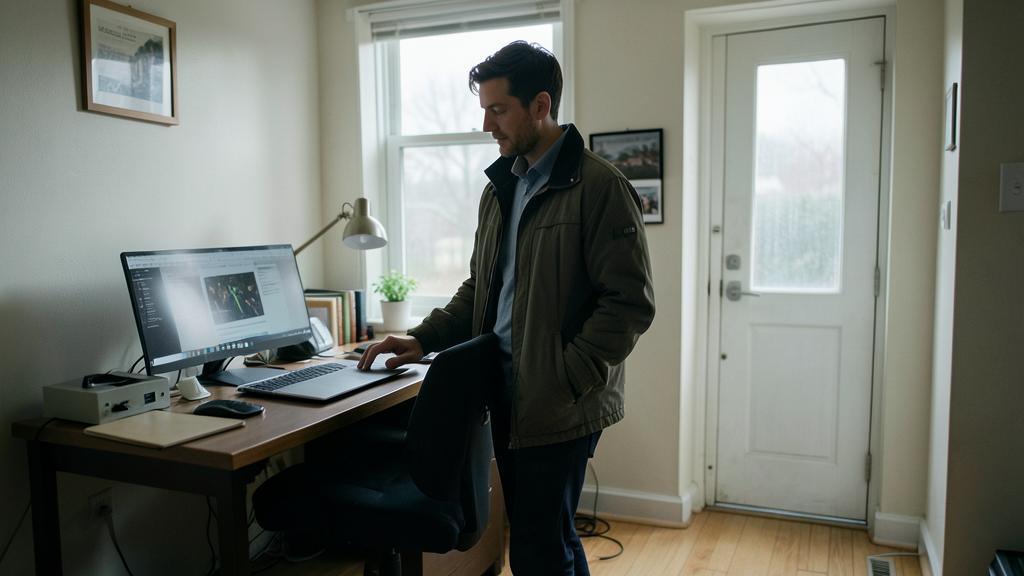
The right reflex (for remote workers). Defend three boundaries: a dedicated space, even a small one, that physically separates work from personal life; set hours with a real start and end — the closing ritual (shutting down the computer, going for a walk) replaces the commute home; and defined availability rather than constant availability. Sustainable remote work isn’t about working anywhere all the time — it’s about protecting the rest of your life.

Trends shaping the future
- The office is reinventing itself: fewer fixed workstations, more collaborative spaces — people no longer come to the office to isolate themselves behind a screen, but for what requires presence: workshops, onboarding, team cohesion.
- Work is becoming asynchronous: written documentation, shared tools, fewer meetings — the key skill for distributed teams is collaborating without being connected at the same time.
- AI is reshuffling the deck: assistants that summarize meetings, draft minutes, streamline coordination — remote work becomes more practical, and value shifts to what distance can’t replace.
- Managers are learning a new job: managing by results rather than presence, detecting remote isolation, animating a scattered team — the decisive link in successful hybrid work.
- The geography of work is expanding: remote hiring, residential mobility, and for some professions, competition — and opportunities — now without borders.
The future of work isn’t about choosing between the office and home. It’s about using each environment for what it does best: focus at home, collaboration in the office. Tools and managers will adapt to make this balance work.
A tech company with 500 employees now uses AI tools to summarize daily stand-ups, reducing meeting time by 30%. Teams meet in person only twice a month for strategy sessions, while deep work happens remotely. New hires spend their first month in the office to bond with the team.
Succeeding with hybrid work: what works
Organizations that succeed share identifiable practices: synchronized in-person days for the team (coming to the office to cross paths, not to chain video calls that could be done from home); deliberate bonding rituals — informal check-ins, collective time that no longer happens spontaneously; special attention to new hires, the first to suffer from distance (mentorship, increased presence at the start); and decent home office equipment — screen, chair, ergonomics: the classic blind spot of makeshift workstations. On an individual level, visibility is key: remotely, what isn’t shown doesn’t exist — sharing progress isn’t politics, it’s collaboration.
Watch out. Two symmetrical pitfalls undermine hybrid work: presence for show (returning to the office to be seen, while real work waits until evening) and remote work disappearance (isolation setting in, careers stalling out of sight). The antidote is the same: judging and being judged on results, deliberately maintaining connections, and speaking up early — on the employee’s side as well as the manager’s — when the balance is off.

Frequent questions
Does remote work harm your career?
The risk of reduced visibility exists (« out of sight… »), especially in fully remote roles within very in-person cultures. It can be offset: visible and shared results, strategic presence at key moments, regular contact with your manager. Well-balanced hybrid work neutralizes most of the bias.
Are you entitled to equipment and support?
Policies vary by company and agreements: check what yours covers (hardware, allowances, ergonomics). A proper home workstation is a legitimate topic to raise — your back deserves it as much as your productivity.

Will fully remote work disappear?
No — it will remain the model for companies and professions that excel at it, with an intentional asynchronous organization. But the majority norm for knowledge-based jobs is settling on hybrid work: the debate now focuses on the balance, not its existence.
Key takeaways
The future of work is neither yesterday’s office nor permanent couch work: it’s a professionalizing hybrid — chosen presence for connection, learning, and creation; protected distance for focus; asynchronous work and AI to streamline everything; managers trained to manage by results. On an individual level, the keys are boundaries (space, hours, availability), visibility of accomplished work, and deliberate maintenance of connections. Remote work has stopped being a debate to become a skill — individual and collective. Those who master it have a head start in the future of work: might as well be among them.



Need to equip and secure your remote work?
Leave a Reply
You must be logged in to post a comment.