
Consulting a doctor remotely: telemedicine has developed significantly in recent years and is now part of the healthcare landscape. Video consultations with a doctor, remote monitoring, and advice via secure messaging: these practices promise easier access to care, particularly valuable in areas where doctors are scarce or for people who have difficulty moving around. But telemedicine also raises questions: is it as reliable as an in-person consultation? What can—and cannot—be treated remotely? How can health data, which is particularly sensitive, be protected? Telemedicine is neither a miracle solution that replaces everything nor a gadget: it’s a COMPLEMENTARY tool, useful in certain situations, with its advantages and limitations. Let’s explore what telemedicine is, what it brings, its limitations, and how to use it wisely.
What is telemedicine?
First, let’s understand what telemedicine covers and what it allows. What it is: telemedicine is the practice of medicine REMOTELY, via technology (video, phone, secure messaging); consulting, monitoring, and advising without being physically together; healthcare at a distance. The TELECONSULTATION: the most well-known form; a consultation with a doctor via video (or phone); you describe your symptoms, the doctor advises, and may prescribe; a remote consultation; common usage. REMOTE MONITORING: monitoring patients remotely (chronic illnesses, data transmission, regular check-ups); maintaining the medical link without systematic travel; easier monitoring; useful. REMOTE ADVICE: exchanges with healthcare professionals via secure messaging, opinions; access to advice; a lighter form of telemedicine; practical. RAPID DEVELOPMENT: telemedicine has developed significantly (facilitated by technology and context); it is now part of the healthcare landscape; an established practice; a fact. A REGULATED FRAMEWORK: telemedicine is regulated (real healthcare professionals, rules, often reimbursed under conditions); it’s not « anyone, anyhow »; a framework exists; reassuring. REAL DOCTORS: in serious teleconsultations, you consult real healthcare professionals (remotely); it’s not a robot; the human medical aspect remains; not to be confused with a health AI. A COMPLEMENT: telemedicine complements traditional medicine (it doesn’t replace it); useful in certain cases, not all; an additional tool; complementary (we’ll come back to this). Not a MIRACLE SOLUTION: neither a gadget nor a panacea; telemedicine has advantages AND real limitations; the nuance from the start; discernment. The main idea: telemedicine is the practice of medicine REMOTELY thanks to technology. Its most well-known form is the TELECONSULTATION: a consultation with a doctor via video (or phone), where you describe your symptoms and the doctor advises and may prescribe. It also includes REMOTE MONITORING (especially for chronic illnesses) and ADVICE via secure messaging. This practice has developed significantly and is now part of the healthcare landscape. Two important points to understand it well: it is REGULATED (you consult real qualified healthcare professionals, within a regulated framework, often with reimbursement under conditions—it’s neither a robot nor « anyone »), and it is a COMPLEMENT to traditional medicine, not a replacement. Neither a gadget nor a miracle solution, telemedicine is a tool with real advantages but also real limitations: it’s with this nuance that you should approach it.
Advantages and limitations of telemedicine
Telemedicine has real advantages but also limitations; let’s look at them honestly. On the ADVANTAGES side—the EASIER ACCESS: telemedicine facilitates access to care (consulting without traveling, sometimes faster); valuable when seeing a doctor is difficult; a major advantage; accessibility. UNDERSERVED AREAS: in areas where doctors are scarce (« medical deserts »), telemedicine offers access that would otherwise be difficult; a real territorial benefit; filling a gap; useful. PEOPLE WITH LIMITED MOBILITY: for those who have difficulty traveling (elderly, disabled, isolated), consulting from home is a real plus; easier access; a human benefit; valuable. TIME SAVINGS: avoiding travel, waiting in the waiting room; time and comfort savings; practical for simple situations; effective. SOMEWHAT QUICKER: sometimes getting an opinion faster than a clinic appointment; useful for questions that can’t wait long; responsiveness; an advantage. EASIER MONITORING: for chronic illnesses, regular remote monitoring avoids repeated travel; lighter monitoring; comfort for the patient; useful. On the LIMITATIONS side—no PHYSICAL EXAMINATION: remotely, the doctor cannot physically examine (palpate, auscultate, measure); a real limitation for many situations; a major limitation; the examination is missing. Not everything can be treated REMOTELY: many situations require an in-person consultation (examination, procedures, emergencies); telemedicine is not suitable for everything; knowing its limitations (we’ll come back to this). A DIFFERENT HUMAN LINK: the doctor-patient relationship is different remotely (less presence, less contact); sometimes a less rich experience; the human aspect has its limitations remotely; to consider. TECHNICAL LIMITATIONS: a teleconsultation depends on a good connection, ease with technology; an obstacle for some (people uncomfortable, poor connection); a technical barrier; real. DATA SECURITY: health data (very sensitive) is transmitted; their protection is a major issue; confidentiality at stake; vigilance (we’ll come back to this). A NUANCED BALANCE: telemedicine is excellent for certain situations, unsuitable for others; it all depends on the need; a complementary tool, not universal; appropriate use.
Telemedicine is like having a doctor’s advice without needing to go to the clinic. It’s great for simple things like renewing prescriptions or checking on a chronic condition, but it can’t replace a physical exam. You need to be in a private place and use a trusted service to keep your health data safe. It’s not for emergencies or complex problems that require hands-on care.
Imagine a 72-year-old patient with diabetes in a rural area 50 miles from the nearest hospital. Instead of driving for hours, they can have a monthly teleconsultation with their endocrinologist via video call. The doctor checks their blood sugar logs, adjusts medication, and answers questions—all without the patient needing to travel. This saves time, reduces stress, and ensures better monitoring of their condition.
In summary, telemedicine has real ADVANTAGES: it FACILITATES access to care (consulting without traveling, sometimes faster), which is valuable in areas where doctors are SCARCE (medical deserts) and for people with limited MOBILITY (elderly, disabled, isolated); it offers TIME SAVINGS (no travel or waiting), sometimes QUICKER advice, and easier monitoring of chronic illnesses (fewer repeated trips). But it also has real LIMITATIONS: the absence of a PHYSICAL EXAMINATION (the doctor cannot palpate, auscultate, or measure remotely—a major limitation), the fact that not everything can be treated REMOTELY (many situations require an in-person consultation, procedures, or are emergencies), a different HUMAN LINK, TECHNICAL LIMITATIONS (good connection and ease with technology required), and the issue of health DATA SECURITY. The balance is therefore NUANCED: excellent for certain situations, unsuitable for others, telemedicine is a precious complementary tool, but not universal.
Telemedicine is ideal for certain situations, but not for everything: know when to use it and when to consult in person. To get the most out of telemedicine, the key is to know IN WHICH SITUATIONS it is suitable—and in which an in-person consultation is necessary. Used well at the right time, it provides great services; used poorly (for example, for a situation that would require an examination), it can waste time, or even pose a risk. Here are some guidelines. Telemedicine is GENERALLY well suited for: renewing a prescription for a stable and known treatment; an opinion on a simple and already identified situation; monitoring a chronic illness already diagnosed (regular check-ups); a health question that doesn’t require a physical examination; a first opinion to determine whether to consult in person or not; interpreting already obtained results; situations where traveling is difficult for a simple reason. In these cases, telemedicine saves time and makes life easier, without loss of quality. On the other hand, an IN-PERSON consultation (in person) is generally necessary for: everything that requires an EXAMINATION (palpation, auscultation, blood pressure measurement, examination of a lesion, localized pain…); a NEW or complex problem that needs to be explored; worrying or unclear symptoms; medical procedures (vaccines, procedures, examinations); and of course, EMERGENCIES. Just as importantly, a crucial point: telemedicine is NOT for emergencies. In the event of an emergency (chest pain, difficulty breathing, severe dizziness, heavy bleeding, signs of a STROKE, etc.), don’t wait for a teleconsultation: immediately contact emergency services or emergency departments. Another useful guideline: telemedicine often works better when it is part of a FOLLOW-UP (with a doctor who knows you, or as a complement to in-person consultations) than as isolated and anonymous consultations. Finally, listen to the doctor: a good practitioner in teleconsultation will tell you themselves if your situation requires a physical examination and will refer you to an in-person consultation or to the emergency department if necessary—this is a sign of seriousness, not a failure of the teleconsultation. In summary, know WHEN to use telemedicine: it is ideal for simple and known situations (prescription renewal, monitoring of a chronic illness already diagnosed, question without examination, first orientation opinion, people with limited mobility for a simple reason), but an IN-PERSON consultation is necessary as soon as a PHYSICAL EXAMINATION is required, for a new or complex problem, or worrying symptoms—and NEVER a teleconsultation for an EMERGENCY (call emergency services). Using telemedicine wisely means knowing its situations of excellence and knowing when to prefer the clinic or emergency services: this is how it becomes a truly useful complement.
Using telemedicine well and protecting your data
Here’s how to benefit from telemedicine safely, especially for your data. Choose SERIOUS services: use serious and recognized telemedicine services (real healthcare professionals, regulated framework, data security); avoid the dubious; quality and seriousness first; choose well. Verify the PROFESSIONALS: make sure you are consulting real qualified healthcare professionals (not just anyone); the seriousness of the service guarantees this; don’t entrust your health to improvisation; verify. Protect HEALTH DATA: health data is very sensitive; prefer secure services (secure messaging, data protection in compliance with rules); medical confidentiality is crucial; protect them; consult our guides on personal data. A PRIVATE environment: do your teleconsultations in a private place (not in public), for the confidentiality of your medical exchanges; your health is your business; isolate yourself; discretion. Prepare the CONSULTATION: prepare your symptoms, questions, and information (treatments, medical history) before the teleconsultation; as in a clinic; an effective consultation is prepared; anticipate. Be HONEST and precise: describe your symptoms precisely and honestly (the doctor cannot examine you); your description is crucial remotely; be precise; help the doctor. Accept the ORIENTATION: if the doctor refers you to an in-person consultation or to the emergency department, follow this advice; it’s in your interest; the seriousness of the practitioner; listen. Keep your TREATING DOCTOR: telemedicine complements, does not replace, your treating doctor and your follow-up; keep this fundamental link; a complement, not a break; preserve the follow-up. Don’t SELF-DIAGNOSE via apps: be wary of « diagnosis » apps (not to be confused with a real teleconsultation); a real doctor, not an algorithm; caution; distinguish. Keep COMMON SENSE: in case of doubt or serious situation, don’t limit yourself to remote; consult in person or call emergency services; common sense comes first; your health first. The ADVICE: use telemedicine well; choose serious services (real professionals, secure data), consult in a private place, prepare and describe precisely, accept the orientation to in-person if necessary, keep your treating doctor, and distinguish a real teleconsultation from a self-diagnosis app. In summary, to use telemedicine well and protect your data, a few principles apply. On the SERIOUS side: use recognized and regulated telemedicine services (with real qualified healthcare professionals—especially not to be confused with « autodiagnosis » apps, which are not real medical consultations), and avoid the dubious. On the DATA side: health data is among the most sensitive; prefer services that protect them (secure messaging, compliance with data protection rules), and do your teleconsultations in a PRIVATE place (for the confidentiality of your exchanges). On the EFFECTIVENESS side: prepare your consultation (symptoms, questions, treatments, medical history) as in a clinic, and describe your symptoms in a PRECISE and honest way (remotely, the doctor cannot examine you: your description is essential). On the COMMON SENSE side: accept the ORIENTATION if the doctor refers you to an in-person consultation or to the emergency department (this is a sign of seriousness), keep the link with your TREATING DOCTOR (telemedicine complements your follow-up, it does not replace it), and in case of doubt or serious situation, don’t stay remote—consult in person or call emergency services. Telemedicine used well is a safe and precious tool: provided you choose seriousness, protect your data, and keep common sense.
Warning: telemedicine does not replace everything, is not for emergencies, and your health data is particularly sensitive. Three essential warnings for safe use of telemedicine. First warning, crucial: telemedicine is NOT for EMERGENCIES. This is a vital point to understand. In the event of an emergency—intense chest pain, sudden difficulty breathing, severe dizziness, loss of consciousness, heavy bleeding, signs of a STROKE (drooping face, weakness on one side, speech disorders), or any situation that seems serious and immediate—do NOT wait for a teleconsultation (connection delay, impossibility of acting physically remotely). Immediately contact emergency services or emergency departments. Telemedicine is a tool for non-emergency situations; an emergency requires immediate physical care. In case of doubt about the seriousness, always prioritize the emergency: better to call for nothing than too late. Second warning: telemedicine does NOT REPLACE everything. Remotely, the doctor cannot EXAMINE you physically (palpate, auscultate, take your blood pressure, examine a lesion), which is essential for many situations. Telemedicine is excellent for certain needs (prescription renewal, monitoring of a known illness, simple question, orientation) but unsuitable for many others (new or complex problem, symptoms requiring an examination, medical procedures). Don’t try to « handle » everything remotely for convenience: if your situation requires an examination, an in-person consultation is necessary. A good doctor in teleconsultation will tell you this and will refer you—listen to this advice, it’s in your interest. Telemedicine COMPLEMENTS traditional medicine and your treating doctor; it does not replace them. Third warning: your HEALTH DATA is among the most sensitive. Medical information (symptoms, diagnoses, treatments, medical history) touches on your deepest intimacy and deserves maximum protection. In telemedicine, this data is transmitted via digital services: make sure to use only SERIOUS and secure services (real healthcare professionals, regulated framework, data protection in compliance with rules, secure messaging), and be wary of dubious applications or services that could poorly protect—or exploit—your health data. Do your teleconsultations in a PRIVATE place (not in public, where you could be overheard). And clearly distinguish a real TELECONSULTATION (with a doctor) from a simple « autodiagnosis » app: the latter is not a medical consultation, can be wrong, and also raises the question of what it does with your data. In summary, three vigilances: telemedicine is NOT for EMERGENCIES (in case of emergency, immediately call emergency services; never wait for a teleconsultation), it does NOT REPLACE everything (no physical examination remotely: an in-person consultation is necessary for many situations; it complements, does not replace, your treating doctor), and your HEALTH DATA is extremely sensitive (only use serious and secure services, consult in a private place, and do not confuse real teleconsultation and autodiagnosis app). These vigilances allow you to benefit from telemedicine without risk to your health or your privacy.
Frequently asked questions
Is telemedicine as reliable as a consultation with a doctor?
For the situations it is suited for, yes, it is reliable (with real doctors); but it cannot do everything, due to the lack of physical examination: its reliability depends on the match between your situation and what telemedicine allows. Let’s look at the nuance. RELIABLE for what it is suited for: for suitable situations (prescription renewal, known monitoring, simple question, orientation), serious telemedicine is reliable; these are real doctors applying their expertise; reliable in its field. REAL DOCTORS: in serious teleconsultations, you consult real qualified professionals; their competence is the same as in a clinic; medical reliability is there; reassuring. The LIMIT of the EXAMINATION: the major difference: the doctor cannot physically examine you remotely; for what requires an examination, telemedicine is limited; this is THE limit; to know. RELIABILITY according to the SITUATION: reliability depends on the match between situation and telemedicine; reliable for what does not require an examination, insufficient for what does; the match decides; this is the key. The importance of your DESCRIPTION: remotely, the doctor relies on your description; a precise and honest description improves reliability; your role counts; be precise. ORIENTATION as a safety measure: a good doctor in teleconsultation will refer you to in-person if necessary; this orientation is a safety measure (they don’t take risks remotely); a sign of seriousness; reassuring. Not LESS reliable, but LIMITED: telemedicine is not « less reliable » in its field, but its field is more LIMITED than the physical consultation; a difference in scope; nuance. The SERIOUSNESS of the service counts: reliability also depends on the seriousness of the service (real professionals, framework); a serious service is reliable, a dubious one is not; choose seriousness; vigilance. The ADVICE: for the situations it is suited for, serious telemedicine is reliable (real competent doctors); but it is limited by the absence of physical examination; its reliability depends on the match between your situation and what it allows—and the seriousness of the service. In summary, is telemedicine as reliable as a consultation in a clinic? The answer is nuanced: FOR THE SITUATIONS IT IS SUITED FOR, yes, it is completely reliable—because you consult REAL qualified doctors, whose expertise is the same as in a clinic; for a prescription renewal, monitoring of an already diagnosed illness, a simple question, or a first orientation opinion, serious telemedicine does the job with reliability. The big difference, and its main LIMIT, is the absence of PHYSICAL EXAMINATION: remotely, the doctor cannot palpate, auscultate, take your blood pressure, or examine a lesion. For everything that requires such an examination, telemedicine is therefore insufficient. So, it’s not accurate to say it is « less reliable » in the absolute, but that its SCOPE is more limited than that of the physical consultation: its reliability depends on the MATCH between your situation and what it allows. Two factors strengthen reliability: your DESCRIPTION (remotely, the doctor relies on what you tell them; a precise and honest description is essential) and the ORIENTATION (a good doctor in teleconsultation will refer you to in-person or to the emergency department if your situation requires it—this prudence is a sign of seriousness, not a flaw). Finally, reliability depends on the SERIOUSNESS of the service: a recognized service with real professionals is reliable; a dubious service is not. Used for what it is suited for and via a serious service, telemedicine is therefore a reliable option—provided you know, and respect, its limits.
How is my health data protected during a teleconsultation?
ULTRA-sensitive data: health data is among the most sensitive; their protection is particularly regulated and important; a major issue; to be taken seriously. A STRICT REGULATORY framework: serious telemedicine is subject to strict rules for protecting health data (regulation, medical secrecy); a framework protects in principle; reassuring if the service is serious. SECURE MESSAGING: serious services use secure tools (secure health messaging, protected connections); your exchanges are supposed to be protected; technical security; a guarantee. MEDICAL SECRECY: medical secrecy applies in telemedicine as in a clinic; the professional is bound by confidentiality; a deontological protection; reassuring. Choose a RECOGNIZED service: your first role; choose a recognized and serious telemedicine service (which applies these rules), not a dubious app; the seriousness of the service conditions the protection; choose well. Be wary of the DUBIOUS: be wary of dubious apps/services (especially « autodiagnosis ») that could poorly protect or exploit your data; not everything related to health is safe; caution; verify. A PRIVATE place: consult in a private place (not in public); confidentiality is also not being overheard; protect your privacy; isolate yourself. Your RIGHTS over the data: you have rights over your health data (access, etc.); find out from the service; consult our guides on data rights; exercise them. GENERAL VIGILANCE: as for any sensitive data, stay vigilant (to whom you entrust your data, service conditions); vigilance protects; be attentive; caution. The ADVICE: serious telemedicine services protect your health data with strict rules (secure messaging, medical secrecy, regulation); your role is to choose recognized services (avoid the dubious), consult in a private place, and stay vigilant; your health data deserves this attention. In summary, during a teleconsultation via a SERIOUS service, your health data is protected by a strict framework; these data being among the most sensitive, their protection is particularly regulated. Concretely, recognized telemedicine services rely on SECURED tools (secure health messaging, protected connections), apply the REGULATION on health data protection, and are bound by MEDICAL SECRECY (which applies in telemedicine exactly as in a clinic: the professional is bound by confidentiality). But this protection crucially depends on the SERIOUSNESS of the service: your first role is therefore to choose a recognized and regulated telemedicine service, and to be WARY of dubious applications or services—especially « autodiagnosis » apps—which could poorly protect, or even exploit, your health data. On your side, a few gestures strengthen protection: consult in a PRIVATE place (confidentiality is also not being overheard by third parties), find out about your RIGHTS regarding your data (access, etc.), and stay VIGILANT about the service conditions and to whom you entrust your information. By choosing seriousness and keeping this vigilance, you can use telemedicine with the confidence that your health data—your deepest privacy—is properly protected.
Will telemedicine replace doctors?
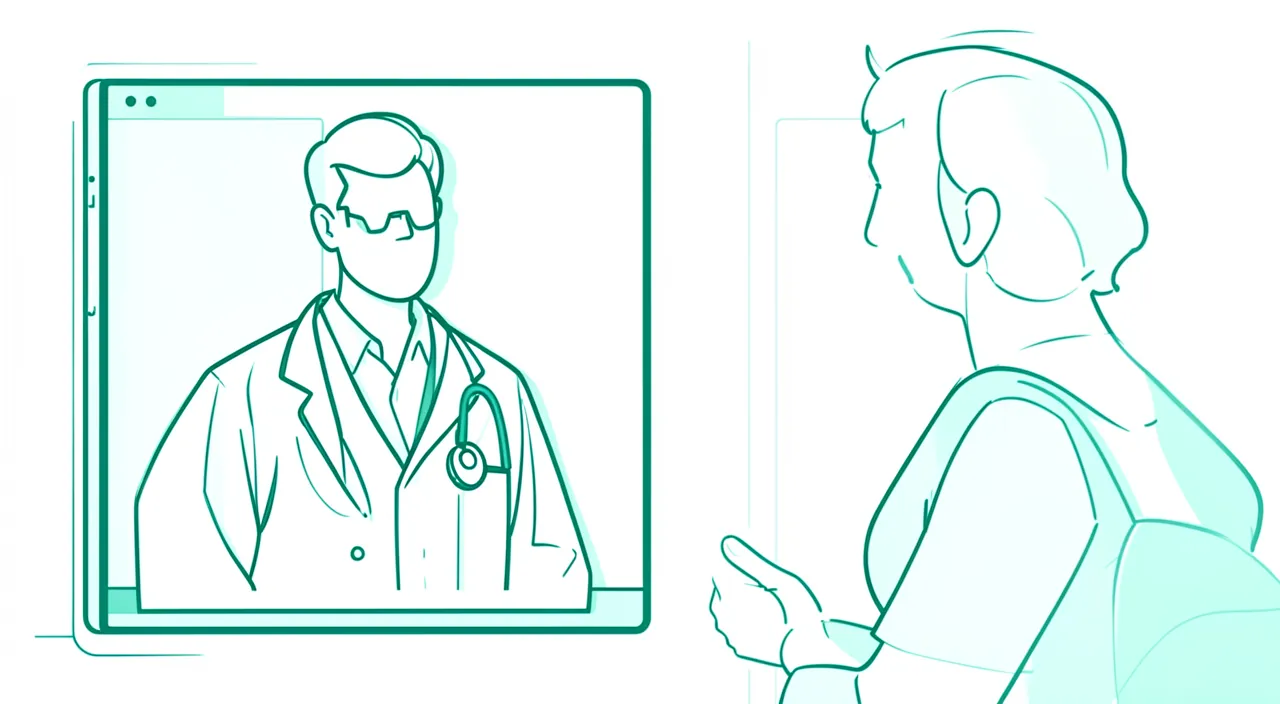
No: telemedicine is a complement, not a replacement; it cannot physically examine, treat everything remotely, and the human link with a doctor remains central; it facilitates access to care in certain situations, without making clinic medicine disappear. Let’s see. NO, a complement: telemedicine complements traditional medicine, it does not replace it; it’s an additional tool, not a global substitute; reassure yourself; complementarity. The LIMIT of the EXAMINATION: it cannot physically examine (essential for many situations); clinic medicine remains irreplaceable for this; a structural limitation; the in-person remains. Not everything can be treated REMOTELY: many situations require in-person (examination, procedures, emergencies); telemedicine only covers part; the clinic remains necessary; complementary. The HUMAN LINK: the doctor-patient relationship, presence, and human care remain central; medicine is also a human relationship; the screen does not replace everything; the human remains. REAL DOCTORS behind: even in telemedicine, these are real doctors (not robots); telemedicine is a new way to consult them, not their disappearance; doctors remain; reassuring. An ACCESS TOOL: telemedicine mainly facilitates ACCESS to care (underserved areas, people with limited mobility); a means to improve access, not to eliminate doctors; a tool at the service of access; positive. A HELP in the face of shortage: in medical deserts, telemedicine helps in the face of the SHORTAGE of doctors; it partially compensates, does not create this shortage; a rescue, not a cause; useful. AI, something else: be careful not to confuse telemedicine (real doctors remotely) and health AI; even AI does not replace human medical judgment; the human medical remains central; distinguish. The ADVICE: no, telemedicine will not replace doctors; it’s a complement that facilitates access to care in certain situations, but it cannot physically examine, treat everything, or replace the human link; these are real doctors we consult, differently—the clinic remains essential. In summary, no, telemedicine will not replace doctors: it is a COMPLEMENT to traditional medicine, not a substitute. Several fundamental reasons explain this. First, it cannot PHYSICALLY EXAMINE the patient (palpate, auscultate, measure)—yet this examination is essential for very many situations, which makes the in-person consultation irreplaceable. Then, not everything can be treated REMOTELY: many situations (new or complex problems, medical procedures, emergencies) require in-person; telemedicine only covers part of the needs. Then, the HUMAN LINK between doctor and patient—the presence, the relationship, the care—remains central: medicine is not just an exchange of information, and the screen does not replace everything. It should also be recalled that in telemedicine, you consult REAL doctors (not robots): it’s a new WAY to consult them, not their disappearance (and be careful not to confuse telemedicine and health AI: even AI does not replace human medical judgment). What telemedicine really brings is better ACCESS to care in certain situations: it is particularly valuable in areas where doctors are SCARCE (medical deserts, where it partially compensates for this shortage) and for people with limited mobility. In short, telemedicine is a TOOL at the service of access to care, a new way to consult real doctors—not a replacement for human medicine and the clinic, which remain essential.
What to remember
Telemedicine—the practice of medicine remotely, whose most well-known form is the TELECONSULTATION (consultation with a doctor via video)—has developed significantly and is now part of the healthcare landscape. Two points to understand it well: it is REGULATED (you consult real qualified healthcare professionals, within a regulated framework, often reimbursed under conditions—it’s neither a robot nor « anyone »), and it is a COMPLEMENT to traditional medicine, not a replacement. Its ADVANTAGES are real: it FACILITATES access to care (without traveling, sometimes faster), which is valuable in areas where doctors are SCARCE and for people with limited MOBILITY, with time savings and easier monitoring of chronic illnesses. But its LIMITATIONS are just as real: no PHYSICAL EXAMINATION remotely (the doctor cannot palpate, auscultate, or measure), not everything can be treated REMOTELY, a different human link, technical constraints, and the issue of data. The key to good use: knowing WHEN to use it. Telemedicine is ideal for simple and known situations (prescription renewal, monitoring of an already diagnosed illness, question without examination, first orientation opinion, people with limited mobility for a simple reason); an IN-PERSON consultation is necessary as soon as an examination is required, for a new or complex problem, or worrying symptoms. Three crucial warnings: telemedicine is NOT for EMERGENCIES (in case of emergency, immediately call emergency services—never wait for a teleconsultation), it does NOT REPLACE everything (it complements your treating doctor, it does not replace it), and your HEALTH DATA is extremely sensitive (only use serious and secure services, consult in a private place, and do not confuse a real teleconsultation with an « autodiagnosis » app). To use it well: choose recognized services, prepare and describe your symptoms precisely (your description is essential remotely), accept the orientation to in-person if the doctor advises it (this is a sign of seriousness), keep the link with your treating doctor, and in case of doubt or seriousness, don’t stay remote. No, telemedicine will not replace doctors: it’s a new WAY to consult real doctors, a precious tool at the service of access to care—to be used wisely, knowing its advantages as well as its limitations.
Want to understand and master the technologies that change your daily life? Our training courses will enlighten you.
Leave a Reply
You must be logged in to post a comment.