
Faced with rising energy prices and ecological challenges, technology promises to help us consume less and better: connected thermostats that optimize heating, apps that track consumption, smart plugs that identify energy-hungry devices, controllable low-energy bulbs… These tools can genuinely help reduce your bill and your footprint. But beware of illusions: technology is not a magic wand—it consumes energy itself, and common-sense actions often remain the most effective. Let’s see how technology can truly serve energy savings with clarity: what works, what is oversold, and how to approach it intelligently.
How technology can help save energy
When used well, technology offers real levers to reduce consumption; here are the main ones. SMART HEATING: this is the most important item (heating is often the biggest consumer in a household); a connected or programmable thermostat allows you to heat at the right time and temperature, lower it automatically at night or when you’re away, and control it remotely; properly set, it can generate real savings on this major expense. CONSUMPTION TRACKING: apps and smart meters allow you to VISUALIZE your energy consumption (electricity, sometimes per device); you can only control what you measure; seeing your consumption helps spot waste and become aware of your usage. SMART PLUGS and device-level measurement: they help identify ENERGY-HUNGRY devices or those consuming in standby, and allow you to turn them off remotely or automatically; this way, you track hidden consumption. EFFICIENT LIGHTING: low-energy bulbs (LED), optionally controllable (on/off, presence detection, scheduling), reduce lighting consumption; a simple and profitable gesture. SMART AUTOMATION: scheduling scenarios (everything turns off when leaving, devices shut down at night) prevents forgetfulness and waste. MORE EFFICIENT APPLIANCES: technology improves the energy efficiency of devices (better-rated appliances); choosing energy-efficient models when replacing them counts. OPTIMIZATION ACCORDING TO TARIFFS: some tools allow you to run appliances during cheaper or more available energy hours. WHAT IT’S FOR: to REDUCE your energy bill (real savings); to decrease your ECOLOGICAL FOOTPRINT; to BECOME AWARE of your consumption (measure to control); to track HIDDEN WASTE (standby, energy-hungry devices); and to optimize without thinking (automation). LIMITS (essential, we’ll come back to them): technology helps, but it has a cost (purchase), consumes energy itself, and doesn’t replace common sense or fundamental measures (insulation); it must be approached with clarity. The key idea: technology can genuinely help save energy: a well-adjusted smart heating system (the most important item), tracking your consumption (measure to control), tracking energy-hungry devices and standby via smart plugs, efficient lighting, and automation that prevents waste. These tools help reduce your bill, decrease your footprint, and become aware of your usage. But they are no miracle solutions: they have a cost, consume energy themselves, and above all, they don’t replace common sense or fundamental measures. Technology is a tool for energy savings—useful, but to be used with clarity, as a complement to common sense, not as a replacement.
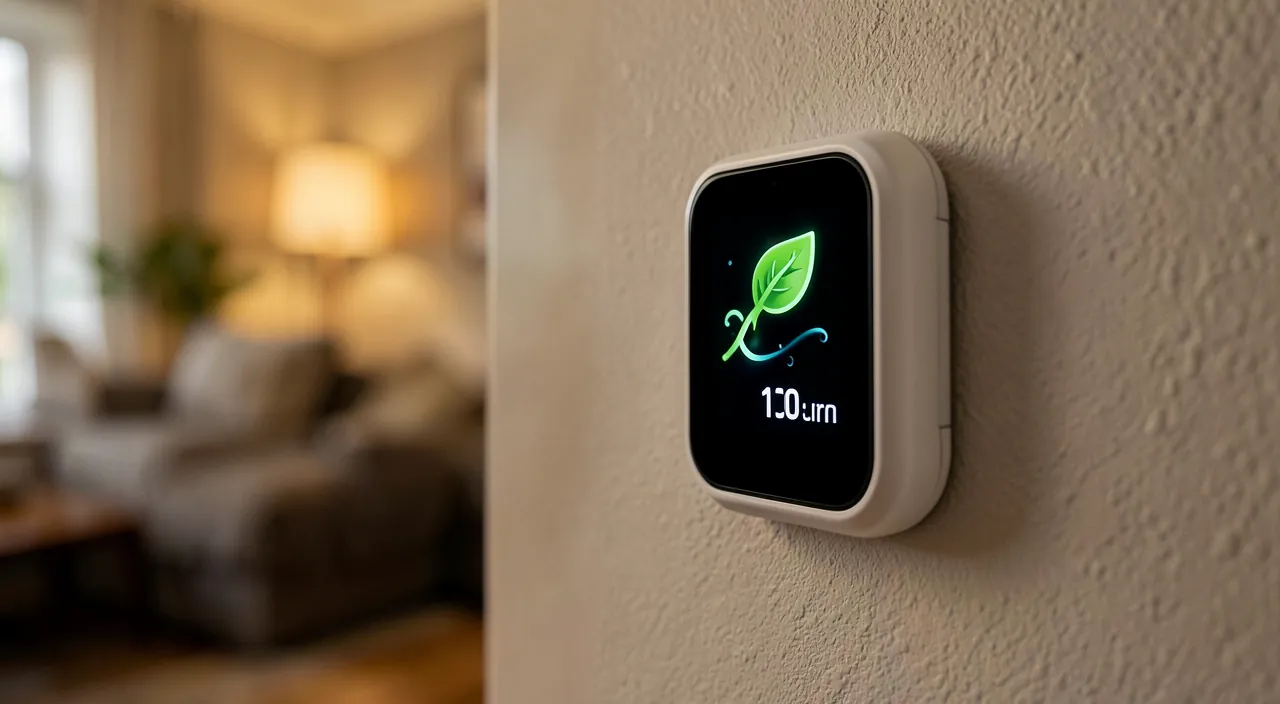
Technology can help you save energy, but it’s not magic. The best tools are smart thermostats, consumption trackers, and smart plugs. They help you heat better, spot waste, and turn off devices. But they cost money and use energy themselves. Don’t forget the basics like turning off lights and insulating your home first.
A family in Paris installed a smart thermostat and smart plugs. They programmed the thermostat to lower heating at night and when they were away. The smart plugs helped them identify their old fridge was using 300 kWh/month. After replacing the fridge and adjusting heating, they saved 25% on their energy bill in 6 months.
What really works: technology and common sense
To effectively save energy, you need to intelligently combine technology and fundamental actions; here’s what really matters. COMMON-SENSE GESTURES, free and effective: before any technology, it’s often the simple gestures that pay off the most, and they’re free; lower the heating a bit (every degree counts), dress warmly, ventilate briefly, turn off lights and unused appliances, unplug standby modes, avoid overheating or overcooling, use appliances at full load, wash at low temperature; these common-sense gestures are the foundation, and no technology can replace them. FUNDAMENTAL MEASURES, the most impactful: for the biggest savings, it’s often the FUNDAMENTAL INVESTMENTS that matter most—especially the INSULATION of the home (a poorly insulated home wastes a lot of heating, regardless of the thermostat), replacing an inefficient heating system, or very energy-hungry appliances; these measures, more expensive, have the most lasting impact; technology for control doesn’t compensate for poor insulation. THE RIGHT ROLE OF TECHNOLOGY: technology comes to OPTIMIZE and COMPLEMENT; it helps better control (heat at the right time), measure and become aware, track waste, automate; it’s useful and brings real additional savings, BUT as a complement to gestures and fundamental measures, not as a replacement. THE RIGHT HIERARCHY: first, common-sense gestures (free); then, fundamental measures according to your means (insulation, efficient appliances—the most impactful); and technology to optimize everything; it’s this combination that works, not technology alone. MEASURE TO PROGRESS: where technology is particularly valuable is for MEASURING and becoming aware; visualizing your consumption reveals waste you didn’t suspect and motivates good gestures; awareness is a powerful lever. Avoid the «GADGET» trap: beware of thinking that buying connected gadgets is enough to save; a poorly used connected object, or one that replaces fundamental thinking, brings nothing; it’s the intelligent use that counts, not the accumulation of devices. THE COST/BENEFIT CALCULATION: a technological device has a cost (purchase); the savings it generates must justify it within a reasonable timeframe; some tools (a well-used thermostat) are quickly profitable; others, less so. The REBOUND EFFECT to avoid: beware of technology pushing you to consume MORE (for comfort or false good conscience); the goal is to consume LESS, not to reassure yourself with gadgets. In summary, what really works is the COMBINATION: first, common-sense gestures (free and effective: lower the heating, turn off, unplug), then the most impactful fundamental measures according to your means (insulation above all, efficient appliances), and technology to OPTIMIZE everything (heating control, measurement, waste tracking, automation). Technology is particularly valuable for measuring and becoming aware; but it complements common sense and fundamental investments, it doesn’t replace them. Beware of gadgets that give a false sense of accomplishment without changing anything: it’s the intelligent use, in the right hierarchy, that makes real savings.
The right hierarchy: common sense first, insulation next, technology to optimize. To truly save energy, the mistake would be to start by buying connected gadgets; the effective approach follows a clear priority order, from the most profitable to the most accessory. First priority, and it’s FREE: common-sense gestures. Before spending a cent, adopt the behaviors that save the most without costing anything: lower your heating by one or two degrees (each degree represents significant savings) and dress warmer; turn off lights and unused appliances; unplug or turn off standby modes (these devices that constantly consume for nothing); avoid overheating or overcooling; run washing machines and dishwashers full and at low temperature; ventilate briefly but effectively. These simple gestures are the foundation of all energy savings, and no technology, no matter how sophisticated, can replace them: a state-of-the-art thermostat is useless if you heat to 23 degrees with windows open. Always start there. Second priority, according to your means: FUNDAMENTAL MEASURES, which have the most lasting impact. The most important of all is the INSULATION of your home: a poorly insulated home lets heat escape and wastes huge amounts of heating energy, and that’s where the biggest savings are made, far more than with any gadget. Improving insulation (attic, windows, walls), replacing an outdated and inefficient heating system, or changing a very energy-hungry appliance for an efficient model when replacing it: these investments, more expensive, are the most profitable in the long run; also check out the existing aids for this type of work. No connected thermostat will compensate for a thermal sieve: insulation takes precedence over control. Only third priority, as a complement: TECHNOLOGY to optimize. Once the gestures are adopted and the fundamental measures considered, technology brings a real «plus»: a connected or programmable thermostat to finely control heating (heat at the right time, automatically lower at night and when you’re away); tracking your consumption to measure, become aware, and spot waste (this is perhaps the most valuable use: you only control what you measure); connected plugs to track energy-hungry devices and turn off standby modes; efficient and controlled lighting. These tools optimize and generate real additional savings, but they only make sense as a COMPLEMENT to the first two priorities, never as a replacement. In summary, respect the hierarchy: first, common-sense gestures (free, the essential foundation), then fundamental measures according to your means (insulation above all, the most impactful), and finally technology to optimize everything and measure your progress. It’s this ordered approach—and not the purchase of gadgets—that produces real savings, for your bill and for the planet. Common sense and insulation do the heavy lifting; technology refines.
Illusions to avoid and lucid use
Technology for energy has pitfalls and illusions; here’s how to stay clear-eyed. The illusion of the MAGIC GADGET: believing that buying connected objects is enough to save is a mistake; a poorly used gadget, or one that replaces common sense and fundamental measures, brings nothing; it’s the INTELLIGENT USE that saves, not the object; beware of marketing that sells «turnkey» savings. Technology CONSUMES too: a paradox not to forget; connected objects, boxes, servers consume energy themselves (often continuously); multiplying connected gadgets can even INCREASE consumption; digital technology has a footprint; an object «to save» that consumes in standby isn’t necessarily a winner; weigh the real balance. The PURCHASE COST: devices have a price; the savings they generate must justify it within a reasonable timeframe; some (a well-used thermostat) are quickly profitable; others, less so; calculate the cost/benefit, don’t equip yourself on principle. The REBOUND EFFECT: the comfort brought by technology can push you to consume MORE (heat more because it’s easy, reassure yourself with gadgets and relax your efforts); the goal is to consume LESS, not to give yourself a false sense of accomplishment; keep the goal in mind. The false GOOD CONSCIENCE: buying a «green» gadget can give the impression of acting while avoiding real efforts (gestures, insulation); it’s a trap; technology doesn’t exempt you from fundamental measures. DEPENDENCE and complexity: a system that’s too complex can be a source of bugs, dependence, and ultimately not be used; simplicity is often more effective; make sure you keep control and manual operation. DATA and privacy: energy-tracking connected objects collect data on your habits (presence, usage); be mindful of privacy and the security of these connected objects (our guides on securing your smart home). Don’t NEGLECT the essentials: time and money invested in gadgets would sometimes be better spent on insulation or fundamental measures; keep your priorities. LUCID USE: use technology for what it does well (control heating, measure, track waste, automate), as a complement to common sense and fundamental measures; avoid unnecessary gadgets; weigh cost, benefit, and its own consumption; and keep in mind that the goal is to consume LESS. In summary, illusions to avoid: the «magic» gadget that would save on its own (it’s the use that counts); forgetting that technology consumes energy itself (digital technology has a footprint); neglecting the purchase cost and the cost/benefit ratio; the rebound effect and false good conscience (consuming more or relaxing efforts); and the question of data. Lucid use: technology as an optimization and measurement tool, as a complement to common sense and insulation, with a critical eye on its cost, its own consumption, and its real usefulness. Technology helps save energy; it doesn’t do the work for you, and it’s only useful when used with clarity and in the right hierarchy.
Warning: technology is not magic—it consumes energy itself, costs to purchase, and doesn’t replace common sense or insulation; beware of gadgets that give a false sense of accomplishment without changing anything. This is the essential warning to avoid getting the wrong focus when it comes to energy savings. Marketing often sells us the appealing idea that buying such a «smart» connected object would make your bill shrink; it’s an illusion we must guard against, for several reasons. First, a gadget doesn’t save on its own: it’s the INTELLIGENT USE that counts, not the object. A poorly set connected thermostat, an app you never consult, connected plugs you don’t use to change your habits bring nothing; and above all, no gadget will compensate for neglected fundamentals—overheating, leaving standby modes on, or living in a poorly insulated home. Second, a paradox often forgotten: technology CONSUMES energy itself. Connected objects, boxes, servers they connect to consume electricity, often continuously, day and night; accumulating «saving» connected gadgets can, paradoxically, increase your consumption, and digital technology has a real environmental footprint; an object meant to save you money but that continuously consumes in standby isn’t necessarily a winner. Always weigh the real balance. Third, these devices have a PURCHASE COST: for a technological investment to be relevant, the savings it generates must justify it within a reasonable timeframe; some well-used tools (a thermostat intelligently controlling heating) are quickly profitable; many gadgets, not so; don’t equip yourself on principle or by fashion, but after an honest cost/benefit calculation. Fourth, beware of the REBOUND EFFECT and FALSE GOOD CONSCIENCE: the comfort brought by technology can insidiously push you to consume MORE (heat more because it’s easy to control), and buying a «green» gadget can give the pleasant impression of having acted while exempting you from real efforts; yet the goal remains to consume LESS, not to reassure yourself. The real risk of «energy» technology is to divert attention and resources from what really matters: common-sense gestures (free) and fundamental measures (especially INSULATION, by far the most impactful). Money spent on connected gadgets would often be much better invested in insulating your home, which will durably and massively reduce your heating consumption—far more than any connected object. Finally, don’t forget that these energy-tracking objects COLLECT data on your lifestyle habits (your presence, your usage, your schedules); like any connected object, they raise privacy and security issues to which you must be attentive. None of this means technology is useless: properly used, in the right hierarchy and as a complement to common sense and insulation, it brings real savings and precious awareness (measuring your consumption truly helps control it). The message is one of CLARITY: don’t see technology as a miracle solution that saves for you, but as an optimization and measurement tool, to be used intelligently, after common-sense gestures and fundamental measures, and not as a replacement. Avoid gadgets that give a false sense of accomplishment without changing anything, calculate the real cost and the device’s own consumption, and always keep the goal in mind: to consume less, for your bill and for the planet. Technology refines; common sense and insulation do the real work.
Frequently asked questions
Does a connected thermostat really save money?
Yes, a connected or programmable thermostat, when used well, can generate real savings, as heating is the most important item; but the savings depend on your usage and starting situation. Let’s clarify. Why it can SAVE: heating often represents the biggest energy consumption item in a household; yet many people heat in a suboptimal way—too much, all the time, even when unnecessary; a connected or programmable thermostat allows you to optimize this: heat at the right temperature, automatically lower at night and when you’re away (no need to heat an empty home or during sleep at the same level), program according to your schedule, control remotely (restart heating just before arriving); by avoiding unnecessary heating, you reduce consumption on this major item, hence potentially significant savings. What the REAL SAVINGS depend on: the gain depends on your starting situation; if you already heated in a frugal way (manually lowering, not overheating), the gain will be more modest; if you heated in a suboptimal way, the thermostat can bring a lot; it also depends on your GOOD USE of the device (a poorly set thermostat saves nothing); and it doesn’t compensate for poor insulation (intelligently heating a thermal sieve remains costly). The condition of GOOD USE: for it to save, you must SET it intelligently (adapted programming, reasonable temperatures, lowering when away and at night) and actually use it; it’s the use that makes the savings, not the object alone. The COST/benefit calculation: a thermostat has a purchase cost; a well-used thermostat on such an important item as heating is generally profitable within a reasonable timeframe thanks to the savings generated; it’s often one of the most relevant technological devices for energy, precisely because it acts on the biggest consumption item. Its place in the HIERARCHY: the thermostat optimizes control, but it comes as a complement to common-sense gestures (lower the heating!) and fundamental measures (insulation, priority for heating); it doesn’t replace them; it’s the combination that’s optimal. In summary, yes, a well-used connected or programmable thermostat generally saves, as it optimizes heating, which is the biggest consumption item: by avoiding unnecessary heating (at night, when away, too much), it reduces the bill, and it’s among the most relevant technological devices for energy. But the savings depend on your starting situation and your good use of the device, and it doesn’t compensate for poor insulation or replace common-sense gestures. Well set and combined with insulation and good gestures, it’s a truly effective tool; poorly used or taken as a miracle solution, it disappoints.
Don’t connected objects themselves consume energy?
Yes, it’s a real and often forgotten paradox: connected objects consume energy, often continuously; you must therefore ensure that what they save exceeds what they consume. Let’s look at this closely. THE PARADOX: you buy «energy-saving» connected objects, but these objects are themselves electrical devices that CONSUME; moreover, many operate CONTINUOUSLY (they stay on, connected, in active standby day and night to be remotely controllable); to this is added the consumption of the infrastructures they use (internet boxes, networks, remote servers); digital technology has a real energy and environmental footprint, which is often underestimated. The question to ASK: for a «frugal» connected object to be truly profitable, the energy savings it allows must EXCEED its own consumption; this is true for some (a thermostat that optimizes heating—a huge item—consumes little compared to what it saves, hence a positive balance); but it’s not guaranteed for all; a connected gadget that continuously consumes for marginal benefit may have a neutral or even negative balance. The risk of ACCUMULATION: multiplying connected objects (each consuming a bit, continuously) can INCREASE the household’s overall consumption, against the goal; the more you add connected devices, the more the home’s «base» consumption rises; beware of the gadget race. How to REASON: prioritize technologies whose energy benefit is CLEARLY greater than their consumption (like heating control, a major item); beware of gadgets with marginal benefits that consume continuously; don’t multiply connected objects unnecessarily; and think about the GLOBAL BALANCE, not just the displayed savings. The broader LESSON: this illustrates that technology shouldn’t be seen as «automatically green»; digital technology consumes, and a frugal use of technology is also part of energy savings; sometimes, the least energy-consuming solution is the simplest (a gesture, a non-connected device). In summary, yes, connected objects consume energy themselves, often continuously, which is a real paradox not to neglect: for them to be profitable, their savings must exceed their own consumption, which is true for some (the thermostat for heating) but not guaranteed for all, and the accumulation of gadgets can even increase consumption. Therefore, reason in terms of global balance: prioritize technologies whose benefit is clearly greater than their consumption, beware of marginal gadgets that consume continuously, and don’t multiply connected objects unnecessarily. Technology isn’t «automatically green»; a frugal and thoughtful use is part of energy savings.
Where to start to reduce your energy bill?
Start with common-sense gestures (free) and identifying your biggest consumption items; then consider fundamental measures (insulation) and technology to optimize: the right approach goes from the most profitable to the most accessory. Here’s the order to follow. FIRST, FREE common-sense gestures: before any expense, adopt behaviors that save without costing anything; lower the heating (every degree counts) and dress warmer; turn off lights and unused appliances; unplug or turn off standby modes; avoid overheating or overcooling; use washing machines and dishwashers full and at low temperature; these gestures are the most profitable and free foundation. THEN, IDENTIFY your biggest items: to act effectively, you need to know where your energy goes; HEATING is generally the first item, followed by hot water, large appliances; this is where technology for MEASUREMENT is precious (tracking app, smart meter, measurement plugs) to visualize your consumption and spot waste and energy-hungry devices; you only control what you measure. THEN, FUNDAMENTAL MEASURES according to your means: for the most lasting savings, target high-impact investments—especially the INSULATION of the home (especially if heating is your big item: a poorly insulated home wastes a lot), replacing a heating system or very energy-hungry appliances; check out the existing financial aids for these works; these measures, more expensive, are the most profitable in the long run. AS A COMPLEMENT, TECHNOLOGY to optimize: once the basics are in place, technology refines—a connected thermostat to control heating (your big item), plugs to turn off standby modes and identified energy-hungry devices, efficient lighting, automation; these tools bring real additional savings, as a complement. The right LOGIC: go from the most profitable and free (gestures) to the most impactful according to your means (insulation), relying on measurement to target, and using technology to optimize; don’t start by buying gadgets, but by gestures and knowledge of your consumption. A TIP: start today with free gestures (immediate impact), measure your consumption to identify your priorities, then plan fundamental measures and technological optimization according to your means; proceed step by step. In summary, to reduce your energy bill, start with free common-sense gestures (lower the heating, turn off, unplug—the most profitable base), then identify your biggest consumption items (heating first) with the help of measurement; then consider the most impactful fundamental measures according to your means (insulation above all), and use technology to optimize as a complement (thermostat, standby tracking). The right approach goes from the free and profitable to the accessory: common sense and insulation do the heavy lifting, technology refines. Never start with gadgets: start with gestures and knowledge of your consumption.
What to remember
Technology can genuinely help save energy: a well-adjusted smart heating system (the most important item), tracking your consumption (measure to control), tracking energy-hungry devices and standby via smart plugs, efficient lighting, and automation that prevents waste allow you to reduce your bill, decrease your footprint, and become aware of your usage. But beware of illusions: technology is NOT a magic wand. It has a purchase cost, it consumes energy itself (often continuously: digital technology has a real footprint, and accumulating gadgets can even increase consumption), and above all, it doesn’t replace common sense or fundamental measures. The key is to respect the right HIERARCHY, from the most profitable to the most accessory. First, common-sense gestures, FREE and effective: lower the heating (every degree counts) and dress warmer, turn off lights and unused appliances, unplug standby modes, avoid overheating, use appliances at full load and low temperature; this is the essential foundation, which no technology can replace. Then, FUNDAMENTAL MEASURES according to your means, the most impactful: especially the INSULATION of the home (a poorly insulated home wastes a lot of heating, and no thermostat compensates for a thermal sieve), replacing a heating system or very energy-hungry appliances; check out the existing aids for these works. Finally, only as a complement, TECHNOLOGY to optimize: the connected thermostat to finely control heating, consumption tracking to measure and become aware (its most valuable use: you only control what you measure), plugs to track standby modes and energy-hungry devices. These tools bring real additional savings, but as a complement to common sense and insulation, never as a replacement. Beware of traps: the «magic» gadget that would save on its own (it’s the use that counts, not the object); forgetting that technology consumes itself (weigh the real balance: its savings must exceed its consumption); the rebound effect and false good conscience (a «green» gadget can exempt you from real efforts, while the goal is to consume LESS); and the question of personal data collected by these objects. To start: adopt free gestures today, measure your consumption to identify your biggest items, then plan fundamental measures (insulation) and technological optimization according to your means; never start by buying gadgets. Properly used, in the right hierarchy and with clarity, technology is a precious tool for energy savings; but it’s common sense and insulation that do the heavy lifting, technology that refines. Neither a miracle solution nor a useless gadget: a tool, to be used intelligently, in the service of a clear goal—to consume less, for your bill and for the planet.
Want to understand and master the technologies that change your daily life? Our training programs will enlighten you.
Leave a Reply
You must be logged in to post a comment.