
The self-driving car, in which you could read, sleep, or work while it takes you to your destination: this is one of the most spectacular promises of technology, announced as « imminent » for years. Yet, on our roads, the fully autonomous car is still not here. Where do we really stand? Between impressive demonstrations, driving aids already present in our vehicles, and the dream of the « totally autonomous vehicle, » there is a world of nuances. Let’s take stock with lucidity: what already exists, what still belongs to the promise, the considerable challenges, and what this could change.
Where do we really stand with autonomous cars
The subject is clouded by marketing and announcements; here is the real state of things. What ALREADY EXISTS (driving aids): our recent cars increasingly integrate DRIVING AIDS—adaptive cruise control, lane-keeping, automatic emergency braking, parking assistance; these systems ASSIST the driver and improve safety and comfort, but the driver remains RESPONSIBLE and must keep control; this is not « autonomous driving, » but driving assistance; this is today’s reality. LEVELS of autonomy: there are different levels, from no automation to full autonomy; today, consumer vehicles are at the ASSISTANCE levels (the driver supervises and remains responsible); higher levels (the car really drives itself in certain conditions) are still limited to experiments or very controlled services. ADVANCED EXPERIMENTS: in certain cities and specific areas, truly autonomous vehicles (for example, « robot taxis ») circulate, but under LIMITED and controlled conditions (mapped zones, favorable weather, supervision); these deployments are progressing, but they are still far from widespread. The gap with PROMISES: the fully autonomous car, capable of driving everywhere, in all conditions, without a driver, has been announced as « close » for years; yet it is still not here for the general public; reality is slower and more difficult than the promises. Why this GAP: driving in a truly autonomous way in the real, chaotic, and unpredictable world is a far more complex challenge than anticipated (we will come back to this). The REAL STATE in summary: many driving aids in our cars (useful, but where the driver remains in control); real autonomy experiments in limited frameworks; but NO fully autonomous car generalized; the dream progresses, but slowly. The key idea: where do we really stand? Our recent cars integrate numerous DRIVING AIDS (adaptive cruise control, lane-keeping, emergency braking) that assist the driver and improve safety, but where the driver remains RESPONSIBLE and must keep control: this is not autonomous driving. True autonomy (the car that drives itself) exists in limited and controlled experiments, but the fully autonomous car, capable of driving everywhere without a driver, is not here for the general public, despite years of promises. The gap between the announcement and reality is explained by the considerable difficulty of the task. In short: many driving aids today, full autonomy still to come.
The considerable challenges of full autonomy
If the autonomous car is late, it’s because the task is far more difficult than it seems; here are the main challenges. The complexity of the REAL WORLD: driving means managing an infinity of unpredictable situations—a pedestrian who suddenly appears, erratic behavior, an unusual road, roadworks, an object on the road; what a human manages through judgment and adaptation is extraordinarily difficult to automate reliably in ALL cases; 99% of « normal » driving is manageable, but it is the RARE and unexpected cases that pose problems, and there are countless of them. DIFFICULT conditions: rain, snow, fog, night, faded markings, ambiguous signage; these conditions complicate the perception of systems; hence the fact that experiments often limit themselves to favorable conditions. The REQUIRED RELIABILITY: for an autonomous car, safety must be almost PERFECT; a mistake can be fatal; the required level of reliability is immense, far beyond a successful demonstration; moving from « it works often » to « it works almost always, everywhere » is a huge leap. Questions of RESPONSIBILITY: in the event of an accident involving an autonomous car, who is responsible? The manufacturer? The software? The « driver »? These complex legal and ethical questions are not resolved; they condition the deployment. ETHICAL dilemmas: how should a machine « choose » in an unavoidable accident situation? These difficult moral dilemmas are debated. ACCEPTANCE and trust: will the public trust driverless cars? Trust is built slowly, and a significant accident can weaken it. INFRASTRUCTURES and regulation: large-scale deployment requires adaptations (infrastructures, regulations, insurance); it’s a societal project. The cost and TECHNOLOGICAL MATURITY: technology is progressing (driven in particular by AI), but achieving full, reliable, affordable, and widespread autonomy remains a major challenge, with an uncertain schedule. The trap of DEMONSTRATIONS: a successful demonstration (in a controlled setting) does not mean a technology ready for the real world; there is a huge gap between the demo and reliable large-scale deployment; beware of spectacular announcements. In summary, the challenges of full autonomy are considerable: the unpredictable complexity of the real world (especially rare cases), difficult conditions, the requirement for almost perfect reliability (a mistake can be fatal), unresolved questions of responsibility and ethics, building public trust, and adaptations of infrastructures and regulations. This is why, despite years of promises and real progress, the fully autonomous car is still late: moving from an impressive demonstration to reliable, safe, and widespread deployment in the real world is a huge leap. The challenge is not to make a car drive alone in good conditions (it’s done), but to do so reliably EVERYWHERE and ALWAYS—and this remains very difficult.
The real difficulty isn’t just making a car drive itself in perfect conditions—it’s handling all the crazy, unexpected things that happen on real roads. A human driver can react to a child running out suddenly or a weird detour, but teaching a car to do that perfectly every time is extremely hard. Plus, if the car makes a mistake, it could be deadly, so the system has to be almost flawless. That’s why we’re not there yet.
In 2023, Waymo’s autonomous taxis in Phoenix, Arizona, operated in a 100-square-mile zone with clear weather and pre-mapped roads. Even in this controlled area, the cars sometimes struggled with construction zones or sudden pedestrian movements, requiring human backup drivers. This shows how even the best systems still need human oversight in real-world conditions.
Do not confuse « driving aids » and « autonomous driving »: this is a vital distinction at the wheel. Here is the most important confusion to dispel, as it directly affects safety, not just technological curiosity. Recent cars are increasingly equipped with DRIVING AID systems with sometimes misleading names and enthusiastic marketing, which can give the impression that the car « drives itself »: adaptive cruise control that manages distance, automatic lane-keeping, emergency braking, parking assistance. These technologies are great and really improve safety and comfort; but there is one essential thing to understand: these are ASSISTANCES, not autonomous driving. With these systems, YOU remain the driver, fully RESPONSIBLE, and you must keep your ATTENTION on the road at all times and your hands ready to take control. The car helps you, it does not replace you. This distinction is vital, as the confusion can be fatal. Some drivers, overconfident in these aids or misled by marketing suggesting an autonomy that does not exist, have relaxed their attention—taken their eyes off the road, let go of the steering wheel, or even done something else—believing that the car was handling everything; and when the system encountered a situation it could not manage (and this happens, as these aids have limits), the driver was not ready to take back control, with sometimes dramatic consequences. It is precisely because these aids work WELL most of the time that they are dangerous if you place too much trust in them: they lull vigilance, until the critical moment when they reach their limits. Safety rules are therefore clear: if your car has driving aids, learn precisely what they do AND what they DO NOT do (read the manual, do not rely on the commercial name); keep YOUR ATTENTION on the road and control of your vehicle at all times, even when the aids are active; NEVER consider that the car « drives itself » as long as you are driving a consumer vehicle; and beware of marketing that suggests an autonomy that the law and technology do not yet allow for everyday use. Used correctly, while keeping in mind that they ASSIST you without replacing you, these driving aids are precious and make the road safer. Misunderstood, taken for an autonomy that does not exist, they become a danger. The real autonomous car, the one where you could do nothing, is not yet here for the general public: as long as you are at the wheel, responsibility and vigilance remain yours. Keep this distinction in mind always: it can save lives.
What this could change, and how to approach it
If autonomous cars develop, they could transform many things; here are the prospects and the attitude to adopt. THE PROMISES (if this happens): SAFETY: most accidents are due to human error; reliable autonomous cars could, in theory, reduce accidents; this is one of the great hopes. MOBILITY for all: people who cannot drive (elderly, disabled) would gain in autonomy; a potentially major social benefit. COMFORT and time: turning travel time into useful or rest time; less fatigue. TRAFFIC fluidity: communicating vehicles could, in the long term, smooth out traffic. New SERVICES: robot taxis, new forms of shared mobility. QUESTIONS and uncertainties: but all this assumes that the challenges (reliability, safety, responsibility, acceptance) are resolved, which is not guaranteed; and new questions arise: employment (drivers), privacy (vehicles that collect data), cybersecurity (hackable connected cars), technological dependence, impact on cities and transport; autonomy is not just benefits. An UNCERTAIN schedule: no one knows precisely when (or if) the fully autonomous car will become widespread; predictions have often been wrong; probably a PROGRESSIVE deployment (first limited services, increasing autonomy), rather than a sudden shift; humility is in order. The attitude to ADOPT: follow these developments with INTEREST but DISTANCE; do not believe spectacular announcements at face value; appreciate the current driving aids for what they are (useful assistances, not autonomy); and, as a citizen, be interested in the issues (safety, responsibility, society) raised by this evolution. Neither technophobia nor fascination: as with any technology, the right attitude is informed curiosity—understanding where the technology really stands, not swallowing the marketing, and remaining lucid about the promises as well as the challenges and issues. The DREAM and reality: the dream of the autonomous car is fascinating and could bring real benefits; but reality is made of slow progress, considerable challenges, and an uncertain schedule; knowing how to distinguish the dream from the current reality is to approach the subject with lucidity. In summary, the autonomous car could, if the challenges are overcome, bring real benefits (increased safety, mobility for those who cannot drive, comfort, new services), but it also raises questions (employment, privacy, cybersecurity, society), and its schedule remains uncertain, probably progressive. The right attitude: follow with interest but distance, do not believe spectacular announcements, appreciate current driving aids for what they are, and remain lucid about the promises as well as the challenges. Neither naive fascination nor rejection: an informed curiosity that distinguishes the fascinating dream of tomorrow from the reality—more modest, more cautious, and still very human—of today.
Warning: beware of announcements that present the fully autonomous car as « imminent »—it has been for years, and the remaining challenges are considerable. This is the essential reflex of lucidity in the face of this spectacular and heavily mediatized subject. For many years, we have been regularly told that the fully autonomous car—that which will drive everywhere, without a driver, in all conditions—is « coming soon, » « in a few years, » « imminent. » These announcements, made by companies, charismatic leaders, and impressive demonstrations, have made us dream and have spread widely; yet, this fully autonomous car is still not on our roads for the general public. This persistent gap between promises and reality should make you cautious about any new « revolutionary » announcement. Why is this caution justified? Because there is a huge, often underestimated gap between a SUCCESSFUL DEMONSTRATION and a RELIABLE large-scale deployment. Making a car drive autonomously in a controlled setting, on a mapped route, in good weather, with supervision, is one thing—and it is already remarkable; but making it drive TOTALLY reliably and safely EVERYWHERE (country roads, chaotic city centers, unexpected situations), ALWAYS (rain, snow, fog, night), and for EVERYONE, managing the infinity of rare and unpredictable cases of the real world with near-perfect reliability (because a mistake can be fatal), is a challenge of a completely different magnitude, still largely unresolved. It is precisely these last percentages of reliability, these rare and difficult cases, that separate the spectacular demonstration from the deployable reality—and they are the hardest to overcome. To this are added challenges that are not just technical: questions of LEGAL RESPONSIBILITY in case of an accident (who is responsible?), ETHICAL dilemmas, building PUBLIC CONFIDENCE, the necessary adaptations of infrastructures, regulations, and insurance; as many complex projects that take time. This does not mean that the autonomous car will never see the light of day, nor that the progress is illusory: technology is really advancing, driven in particular by artificial intelligence, and limited autonomous services already exist in certain areas. But this invites you to receive triumphant announcements with healthy skepticism: do not take promises of imminent availability at face value, keep in mind that this type of announcement has been repeated for years without materializing for the general public, and remember that the deployment, if it comes, will probably be PROGRESSIVE (limited services gradually expanding), rather than a sudden and widespread shift. A second point of vigilance, more immediate and concrete, stems from this confusion: never let the dream of autonomy make you overestimate the driving aids of YOUR current car. These aids are NOT autonomous driving; as long as you are driving a consumer vehicle, you remain the responsible driver, who must keep your attention and control; believing the opposite, based on suggestive marketing, is dangerous. In short, keep a lucid curiosity about the autonomous car: be interested in real progress, but beware of announcements of imminence repeated for years, measure the extent of the remaining challenges, and never confuse the dream of tomorrow with the driving aids of today. The future may come; but it is not yet here, and prudence—at the wheel as well as in the face of promises—remains in order.
Frequent questions
Do autonomous cars already exist?
It depends on what you mean by « autonomous »: truly autonomous cars exist in very limited contexts (experiments, controlled services), but the fully autonomous car, capable of driving everywhere without a driver, does not yet exist for the general public. Let’s distinguish. What REALLY EXISTS: in certain cities and specific areas, truly autonomous vehicles circulate—for example, « robot taxi » services—but under VERY CONTROLLED conditions: limited and detailed geographic areas, favorable weather conditions, often with some form of supervision; these are real but restricted deployments, which show that autonomy is possible in a controlled setting; they are progressing, but they are still far from widespread. What DOES NOT EXIST yet: the « universal » fully autonomous car—that which you could buy and that would drive you everywhere, in all conditions, without you having to intervene—is NOT available to the general public; it is the dream announced for years, but not yet reality. What you have in your CAR: recent consumer vehicles have DRIVING AIDS (adaptive cruise control, lane-keeping, emergency braking); these are NOT autonomous driving; these are assistances where YOU remain the responsible driver; do not confuse them with autonomy (vital distinction for safety). LEVELS of autonomy: technically, there are different levels, from simple assistance to full autonomy; consumer vehicles are at the ASSISTANCE levels (driver responsible); real autonomy levels are limited to experiments and controlled services. THE SUMMARY: yes, autonomous cars exist, but in limited and controlled contexts (experimental services in certain areas); no, the fully autonomous car, capable of driving everywhere without a driver, is not yet a reality for the general public, despite the announcements; and what you have are driving aids, not autonomy. In summary, autonomous cars already exist, but only in very limited and controlled conditions (experimental services in certain areas); the fully autonomous car, capable of driving everywhere without a driver, is not yet a reality for the general public, despite the announcements; and the « driving aids » in our cars are not autonomy, but assistances where the driver remains responsible. The distinction between these different realities is essential to avoid being misled—and, at the wheel, to remain safe.
Are they safer than a human driver?
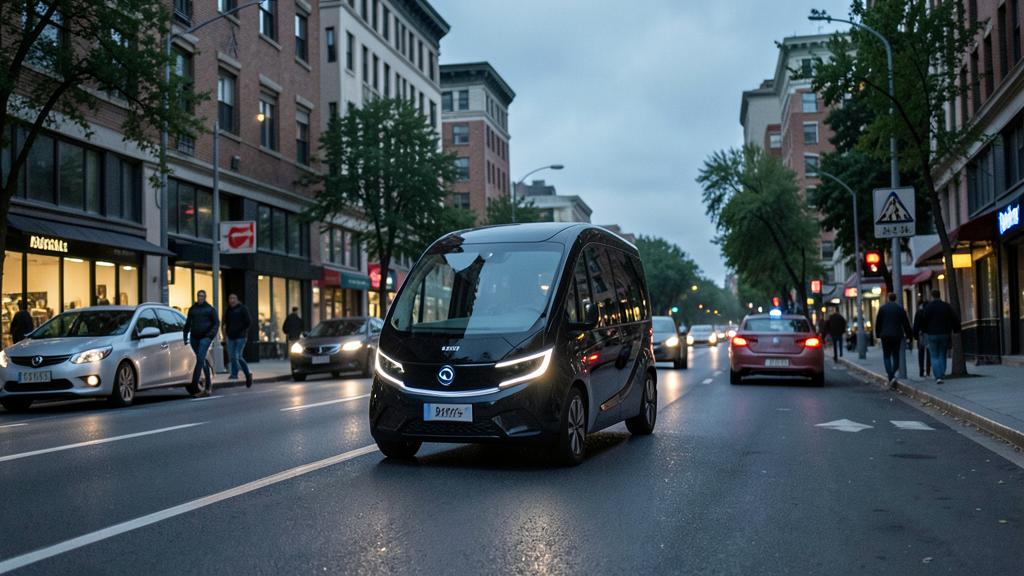
This is the hope and the main argument in their favor, but it is not yet proven on a large scale: the promise is real, but achieving superior safety to humans in ALL conditions remains an unresolved challenge. Let’s nuance this central question. THE HOPE (the strong argument): the vast majority of road accidents are due to HUMAN ERROR (inattention, fatigue, speed, alcohol, distraction); a machine, on the other hand, does not get tired, does not drink, does not get distracted, reacts quickly, respects the rules; hence the legitimate hope that reliable autonomous cars could REDUCE accidents and save lives; this is one of the main motivations and promises of this technology. Why it is not yet DEMONSTRATED: for an autonomous car to be truly safer than a human, it must reliably manage ALL situations, including the rare, difficult, and unpredictable cases where humans, despite their flaws, often show remarkable judgment and adaptation; yet it is precisely in these rare and complex cases that autonomous systems still have difficulties; moreover, safety must be proven over immense distances and in all conditions, which takes time; the existing data come mainly from limited contexts, not yet from widespread use in the real world; we cannot yet affirm that autonomous cars are globally safer everywhere. The paradox of REQUIRED RELIABILITY: we expect an autonomous car to have almost PERFECT safety, far superior to what we tolerate from humans; the slightest accident involving an autonomous car makes the news and shakes confidence, while human accidents, alas daily, are « accepted »; this level of requirement, understandable, makes the bar very high. THE NUANCES: in certain favorable conditions and for certain tasks, the systems can already be very performant; but « safer in certain conditions » is not « safer everywhere and always »; and safety also depends on the maturity of the technology, which is progressing. What we can SAY: the autonomous car has the POTENTIAL to be safer than humans (this is a serious hope, based on the human share of accidents), but this potential is not yet fully realized or demonstrated on a large scale; it is a goal, not yet an achievement. In summary, autonomous cars could, in the long term, be safer than a human driver—this is the main hope, based on the fact that most accidents are due to human error—but this is not yet proven on a large scale: reliably managing all situations, including the rare cases where humans excel through adaptation, remains an unresolved challenge, and safety must still be proven in all real-world conditions. A promising potential, therefore, but not yet a certainty: the superior safety of autonomous cars is a credible goal and a serious hope, not yet an established reality.
When will we really be able to buy a car that drives itself?
No one knows precisely, and we must be wary of announced dates: the deployment will probably be progressive and slower than the promises, without being able to set a reliable date for a fully autonomous consumer car. Let’s be lucid. Why it’s UNPREDICTABLE: the fully autonomous car has been announced as « close » for many years, and these predictions have regularly proven to be too optimistic; the remaining challenges (reliability in all cases, difficult conditions, responsibility, regulation, confidence) are considerable and their resolution takes time; no one can therefore reliably announce a date for a truly autonomous consumer car « everywhere and for everyone »; beware of precise schedules and promises of imminence. A PROBABLY progressive deployment: rather than a sudden shift where you could suddenly buy a fully autonomous car, the evolution will likely be GRADUAL: limited autonomous services that gradually expand (like robot taxis in certain areas); increasingly sophisticated driving aids in consumer vehicles (while keeping, for now, the driver responsible); autonomy that gradually extends to more conditions and places; it is by stages, not all at once, that things will probably progress. What you can BUY today: cars with driving aids (useful, but where you remain the responsible driver), NOT a car that really drives itself; do not be misled by marketing that might suggest the opposite. What will COME first: probably, increasing autonomy in increasingly broad contexts, and services (like autonomous taxis) before a fully autonomous personal car for everyone; the path will be progressive. The WISE attitude: follow the progress with interest, but without expecting a precise date or believing in announcements of imminence; enjoy the current driving aids for what they are; and know that the fully autonomous car for the general public, if it comes, will probably take more time than what is announced; the uncertainty is total on the schedule. In summary, no one can say precisely when you will be able to buy a fully autonomous consumer car: this promise has been announced as imminent for years without materializing, the remaining challenges are considerable, and the deployment will probably be progressive (limited services that expand, increasingly advanced driving aids) rather than a sudden shift. Beware of announced dates and marketing; what you can buy today are driving aids, not autonomy. Follow the progress with interest and distance, without expecting a certain deadline: the future may come, but probably later and more progressively than promised.
What to remember
Where do we really stand with autonomous cars? Far from the spectacular promises, reality is nuanced. Our recent cars integrate numerous DRIVING AIDS (adaptive cruise control, lane-keeping, emergency braking) that assist the driver and improve safety, but where the driver remains RESPONSIBLE and must keep control: this is not autonomous driving. True autonomy (the car that drives itself) exists in limited and controlled experiments—like robot taxis in certain areas—but the fully autonomous car, capable of driving everywhere without a driver, is not here for the general public, despite years of « imminent » announcements. This persistent gap is explained by the magnitude of the challenges: the unpredictable complexity of the real world (especially rare cases), difficult conditions (rain, night, fog), the requirement for almost perfect reliability (a mistake can be fatal), unresolved questions of legal and ethical responsibility, building trust, and adaptations of infrastructures and regulations. Moving from an impressive demonstration to reliable, safe, and widespread deployment is a huge leap, and it is the last percentages of reliability, in rare and difficult cases, that remain the hardest to overcome. The most important distinction, as it affects safety: NEVER confuse « driving aids » and « autonomous driving. » As long as you are driving a consumer vehicle, you remain the responsible driver, who must keep your attention and control; the aids assist you, they do not replace you; placing excessive trust in them, believing that the car « drives itself, » is dangerous and has already caused tragedies. On the whole, the autonomous car could, if the challenges are overcome, bring real benefits—a increased safety (most accidents being due to human error), mobility for those who cannot drive, comfort, new services—but it also raises questions (employment, privacy, cybersecurity of connected vehicles, society), and its superior safety remains a promising hope rather than a proven fact. Its schedule is uncertain: no one can say precisely when a fully autonomous consumer car will be available; the deployment will probably be progressive rather than a sudden shift, and likely slower than the promises. The right attitude towards this subject: follow the progress with INTEREST but DISTANCE, do not believe the spectacular announcements of imminence (repeated for years without materializing), appreciate the current driving aids for what they are (useful assistances, not autonomy: keep vigilance at the wheel!), and remain lucid about the promises as well as the challenges and issues. Neither naive fascination nor rejection: an informed curiosity that distinguishes the fascinating dream of tomorrow from the reality—more modest, more cautious, and still very human—of today.
Want to understand and master the technologies that change your daily life? Our training courses will enlighten you.
Leave a Reply
You must be logged in to post a comment.