
« What are we eating tonight ? » — this daily question exhausts, wastes time, leads to disorganized shopping, and causes waste. Planning your weekly meals changes everything: you know what to cook, you do targeted shopping, you eat more varied and balanced, and you waste less. But creating a weekly menu is tedious. AI makes it simple: in a few moments, it suggests a complete menu tailored to your tastes, constraints, and budget, along with the shopping list. Here’s how to plan your weekly meals with AI and make the most of it.
What AI brings to meal planning
AI (generative AI tools) is particularly skilled at organizing and suggesting: ideal for meal planning. What it can do. Suggest a WEEKLY MENU: a complete meal schedule (lunch/dinner as needed), varied and balanced, in a few moments. ADAPT to your TASTES and CONSTRAINTS: diet (vegetarian…), allergies, what you like or dislike, available cooking time, budget, number of people. Generate the SHOPPING LIST: from the menu, the list of ingredients to buy; a huge time and organization gain. VARY the meals: avoid routine, offer diversity, discover new ideas. BALANCE: ensure a certain nutritional variety (without being a dietitian). Cook what you HAVE: integrate leftovers or ingredients to use up (our guides to cooking leftovers with AI). Provide the RECIPES: for each dish in the menu, the recipe. ADAPT to the WEEK: quick meals on busy evenings, more elaborate ones on the weekend. What this BRINGS: no more daily hassle of « what are we eating ? », TARGETED shopping (you buy what you need, less improvisation and waste), more VARIED and BALANCED food, SAVINGS (less waste, fewer impulse buys, fewer takeout meals due to lack of ideas), and TIME saved (no need to think about it every day). FOR WHO? For busy families and professionals, those who lack ideas or always fall into routine, those who want to eat better or control their budget, and everyone who is tired of the daily meal question. What to understand: AI turns an organizational chore into a task of a few moments; it plans, suggests, lists, based on YOUR criteria; but it is not a dietitian (its « balanced » menus are indicative, not prescriptions), and for a medical diet, professional advice is required (see below). It’s a fantastic meal organization assistant, to be personalized and kept under your control. The key idea: AI plans your weekly meals in a few moments: a complete menu tailored to your tastes, constraints, and budget, with the shopping list. No more daily « what are we eating ? », targeted shopping, more varied food, savings, and time gained. Provided you personalize it to your criteria and keep in mind that it is not a dietitian (for a medical diet, consult a professional).
AI helps you plan meals by suggesting a complete weekly menu and shopping list. It adapts to your preferences, budget, and schedule, but it’s not a nutrition expert. You should always check for allergies and food safety.
A family of four asks AI to plan 7 vegetarian dinners for the week, with quick meals on weekdays and more elaborate dishes on weekends. The AI suggests a menu including lentil curry (Monday), stuffed bell peppers (Tuesday), and a mushroom risotto (Saturday), along with a precise shopping list. The family saves 30 minutes of daily decision-making and reduces their grocery budget by 15% by avoiding impulse buys.
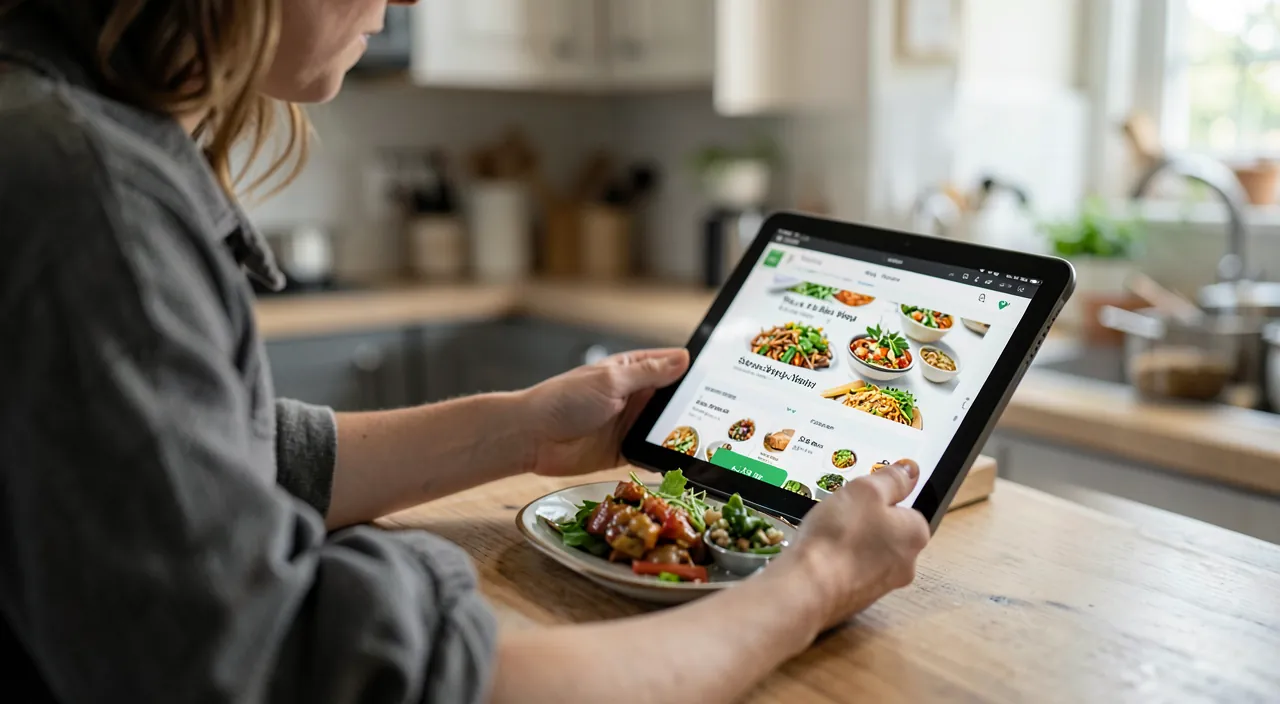
Planning your meals well with AI
Here’s how to get the most out of AI for your menus. Give your PRECISE CRITERIA — number of people, number of meals to plan (lunch, dinner, week or more), your tastes (what you like, what you don’t eat), diet or allergies, available cooking time (quick meals during the week?), budget, equipment: « plan 7 dinners for 4 people, vegetarian, quick during the week, low budget, with the shopping list »; the more precise, the better the menu fits. Ask for the SHOPPING LIST — one of the biggest gains: from the menu, AI generates the list of ingredients; you do targeted and complete shopping. Ask for VARIETY — to avoid routine, specify « varied », or ask to discover new recipes; AI renews your ideas. Integrate what you HAVE — tell it the ingredients to use up (leftovers, pantry staples); it integrates them into the menu, reducing waste. ADAPT to your real week — specify busy evenings (quick meals), days when you have time (more elaborate dishes), meals out not to count; the menu fits your rhythm. Ask for the RECIPES — for dishes you don’t know; AI provides them. PERSONALIZE and adjust — the menu is a base; replace a dish that doesn’t appeal to you, adjust quantities, keep what you like; it’s YOUR menu. A few TIPS and CAUTIONS:
- AI is NOT a dietitian — its « balanced » menus are indicative (reasonable variety), not precise nutritional recommendations; for a MEDICAL DIET (diabetes, severe allergies, pathology, pregnancy), don’t rely on AI alone: follow a healthcare professional or dietitian’s advice, and rigorously check ingredients for allergies.
- CHECK common sense: AI may suggest a far-fetched dish, a strange quantity, or an imperfect recipe; keep your judgment (our guides on AI hallucinations).
- Stay FLEXIBLE: a planned menu is not a rigid constraint; adapt it to your mood and unexpected events; the goal is to simplify, not to lock yourself in.
- Think FOOD SAFETY for recipes (cooking, storage — our guides to cooking with AI).
A PRACTICAL and ECONOMICAL point: the duo « menu + targeted shopping list » is the real game-changer: it reduces waste (you buy what you will actually cook), avoids impulse purchases, and saves money; a concrete benefit for your budget AND the planet. In short, to plan your meals well with AI: give your precise criteria (people, meals, tastes, diet, time, budget), ask for the shopping list, variety, integration of what you have, and adaptation to your week; personalize the menu, check common sense, stay flexible. Keep in mind that AI is not a dietitian (medical diet = healthcare professional), and think food safety. AI organizes; you eat better, more simply.

The right reflex. The real game-changer: ask AI for a WEEKLY MENU PLUS the SHOPPING LIST that goes with it. Give it your precise criteria — number of people, number of meals (lunch, dinner), your tastes (what you like and dislike), diet or allergies, available cooking time, budget: « plan 7 dinners for 4, vegetarian, quick during the week, low budget, with the shopping list ». In a few moments, you have a varied menu AND the list of ingredients to buy. This duo changes everything: no more daily « what are we eating tonight ? », you do TARGETED shopping (you buy what you will actually cook), which reduces waste, avoids impulse purchases, and saves money — good for the budget AND the planet. A few tips for a truly adapted menu: specify your REAL week (quick meals on busy evenings, more elaborate dishes on the weekend, meals out not to count), ask to integrate what you ALREADY have (leftovers, pantry staples — less waste), and ask for VARIETY to get out of the routine and discover recipes. The generated menu is a BASE: personalize it (replace a dish that doesn’t appeal to you, adjust quantities, keep what you like) — it’s YOUR menu, stay flexible (a schedule is not a prison: adapt it to your mood and unexpected events). Two important cautions: AI is NOT a dietitian — its « balanced » menus are indicative, not prescriptions; for a MEDICAL DIET (diabetes, pathology, pregnancy, severe allergies), follow a healthcare professional’s advice and rigorously check ingredients; and keep your common sense (AI may suggest a far-fetched dish or a strange quantity — adjust), while thinking about food safety for cooking. A menu + a shopping list adapted to your criteria and your week, personalized and kept flexible: this is how AI turns the daily chore of meals into simple organization, helps you eat more varied and better, and saves you time and money.
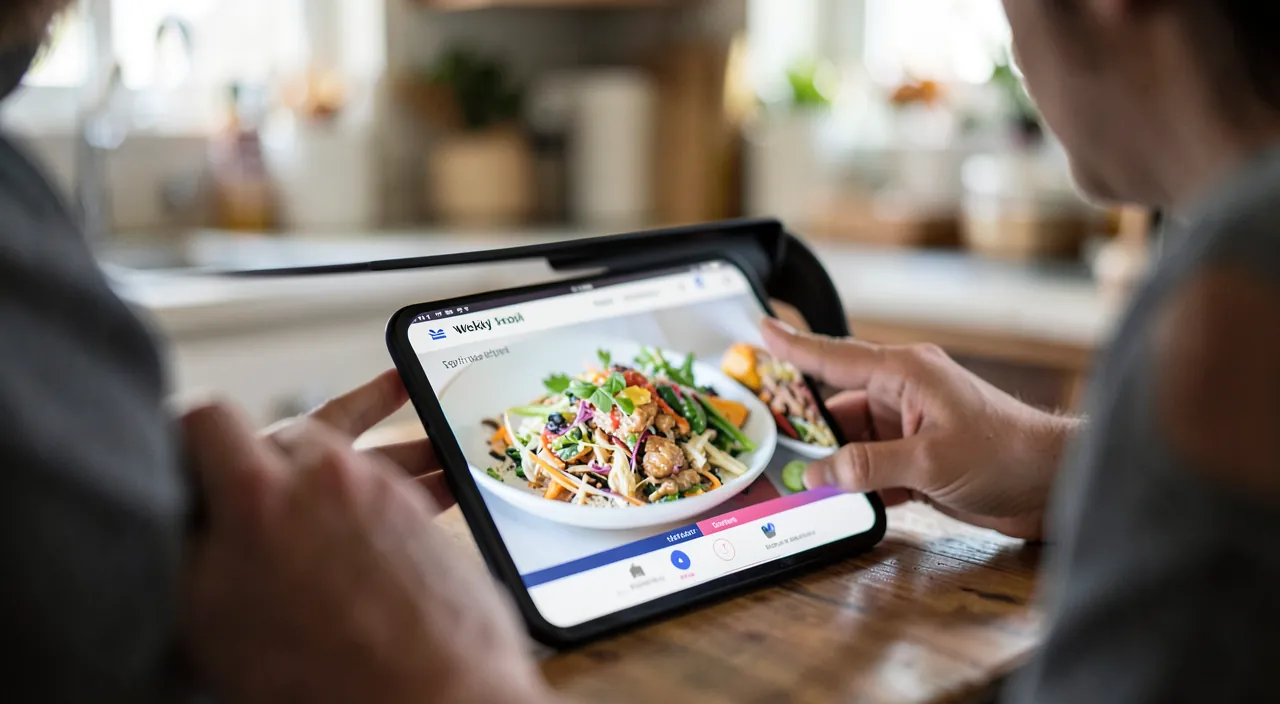
Eating better, more simply, without wasting
Planning your meals with AI means taking control of a daily chore, to eat better and more peacefully. A few guidelines. The REDUCED MENTAL LOAD: the daily « what are we eating ? » is real fatigue; planning in advance (helped by AI) eliminates it; you know, you no longer improvise in a hurry; a real daily relief. TARGETED SHOPPING: the menu + the list avoid improvisation, forgetfulness, overbuying, and impulse purchases; you buy what you will cook; less waste, more savings. A MORE VARIED diet: AI gets you out of the routine, offers diversity, introduces new ideas; you eat better and more varied without effort. SAVINGS: less waste, fewer impulse purchases, fewer takeout meals due to lack of ideas; the food budget is lighter. PERSONALIZATION: the menu adapts to YOUR tastes, constraints, rhythm; it’s yours, not an imposed model. LIMITS to know: AI is not a dietitian (indicative menus, not prescriptions; medical diet = professional), it can make mistakes (common sense required), and food safety follows established rules. FLEXIBILITY: a planned menu is a framework, not a prison; adapt it to your mood and unexpected events; the goal is to simplify, not to rigidify. ANTI-WASTE: integrating what you have and buying only what you need is good for your wallet and the environment (our anti-waste guides). In short, AI plans your weekly meals in a few moments: a complete menu adapted to your tastes, constraints, and budget, with the shopping list. It eliminates the daily hassle, allows targeted shopping, a more varied and balanced diet, savings, and time gained. To benefit from it: give your precise criteria, ask for the shopping list, integrate what you have, adapt to your real week, personalize, and stay flexible. Keep in mind its limits: AI is not a dietitian (medical diet = healthcare professional, allergies = rigorous verification), keep your common sense, and think food safety. At the bottom, AI turns a tiring organizational chore into a task of a few moments: it helps you eat better, more varied, more simply, and without wasting — a concrete benefit for your daily life, your budget, your health, and the planet. It organizes, suggests, and lists; you personalize, cook, and enjoy. Taking control of your meals without the mental load is what AI finally makes easy: a small organizational change, a big gain in daily peace of mind.
Warning: AI is not a dietitian, check allergies and food safety, stay flexible and use common sense. Caution points. NOT A DIETITIAN — the « balanced » menus proposed by AI are INDICATIVE (reasonable variety), not precise or personalized nutritional recommendations; for a MEDICAL DIET or a particular situation (diabetes, hypertension, pathology, pregnancy, feeding a young child, specific health goal), DO NOT rely on AI alone; follow a healthcare professional or dietitian’s advice; AI can help organize, but not prescribe a diet adapted to a medical condition. ALLERGIES — for a food allergy (especially severe), RIGOROUSLY check each ingredient in the menus and recipes proposed; AI is not infallible and could include an allergen or forget it; a mistake can be dangerous; do not entrust your health or that of an allergic loved one to AI alone. FOOD SAFETY — for the recipes in the menu, apply safety rules (sufficient cooking of risky foods, storage, cold chain); AI can make mistakes about cooking time — keep your common sense (insufficient cooking can make you sick — our guides to cooking with AI). Other points: AI may suggest FAR-FETCHED dishes, strange quantities, or imperfect recipes — keep your judgment and adjust; do not rigidify (a planned menu is a flexible framework, not a prison: adapt it to your mood and unexpected events, otherwise planning becomes a burdensome constraint); and do not entrust sensitive personal information to AI (health data, detailed medical diet) without precaution (our guides on AI and privacy). AI is a fantastic assistant for organizing your meals — menu, shopping list, variety, anti-waste — provided you keep its limits in mind: it is neither a dietitian, nor a food safety guarantee, nor an infallible authority. For organization and inspiration, it is excellent; for HEALTH issues (medical diet, allergies), consult a professional and verify rigorously. Used with common sense, flexibility, and vigilance — especially regarding health and allergies — it helps you eat better, more simply, and without wasting, while letting you master your choices and health.

Frequent questions
How does AI help me plan my meals?
It suggests, in a few moments, a COMPLETE and VARIED weekly menu, tailored to YOUR criteria, with the SHOPPING LIST that goes with it. Give it: the number of people, the meals to plan (lunch, dinner), your tastes and what you don’t eat, your diet or allergies, available cooking time, your budget. It generates a meal schedule (with recipes if needed) and the list of ingredients to buy. You can ask for variety, to integrate leftovers or what you already have, and to adapt to your real week (quick meals on busy evenings, more elaborate ones on the weekend). The benefits: no more daily « what are we eating ? », targeted shopping (less waste and impulse purchases), a more varied diet, savings, and time gained. It’s a fantastic organization assistant. BUT personalize the menu (it’s a base to adjust to your preferences), keep your common sense, stay flexible, and remember that AI is not a dietitian: for a medical diet or allergies, consult a professional and rigorously check ingredients.
Are the suggested menus balanced and safe?
They aim for reasonable variety, but they are INDICATIONS, not nutritional prescriptions. AI can suggest menus that are generally varied and balanced in the common sense, which is useful for eating better every day. But it is NOT a dietitian: its menus are not precise or personalized health recommendations. For everyday use (eating varied, getting out of the routine), it’s great. But for a MEDICAL DIET or a particular situation (diabetes, pathology, pregnancy, health goal, feeding a young child), do not rely on AI alone: consult a healthcare professional or dietitian. Regarding SAFETY: rigorously check ingredients if you have ALLERGIES (AI might include an allergen — a mistake can be dangerous), and apply food safety rules for recipes (sufficient cooking, storage; AI can make mistakes about cooking time). Keep your common sense (adjust a strange quantity or dish). In short: useful and generally balanced for everyday organization; but for health (medical diet, allergies), a professional’s advice and your verification take precedence over AI.

Does it really help reduce waste and save money?
Yes, it’s one of the most concrete benefits. The duo « planned menu + targeted shopping list » works on several levels. First, you buy what you will ACTUALLY cook (the list comes from the menu), so fewer purchases that will end up in the trash. Then, you avoid IMPULSE PURCHASES (you follow the list instead of filling the cart randomly). You can also ask AI to INTEGRATE what you already have (leftovers, pantry staples), which uses up food before it’s wasted. Finally, knowing in advance what to cook avoids takeout meals or last-minute orders « due to lack of ideas » (often expensive). Result: less food waste (good for the planet) AND a lighter food budget. It’s a virtuous circle: you plan, you buy just what you need, you cook what you planned, you throw less away, you spend less. To maximize this effect: follow the shopping list, integrate your leftovers into the menu, and be realistic (plan what you will actually cook). AI facilitates this organization that, otherwise, takes time and rigor: it makes anti-waste and savings accessible every day, almost effortlessly.
What to remember
AI plans your weekly meals in a few moments: it suggests a COMPLETE and VARIED menu, tailored to your tastes, constraints, and budget, with the SHOPPING LIST that goes with it. It eliminates the daily hassle of « what are we eating ? », allows TARGETED shopping (less waste, fewer impulse purchases), a more VARIED and balanced diet, SAVINGS, and TIME saved. The real game-changer: the duo « menu + shopping list », which means you buy what you will actually cook — good for the budget AND the planet. To use it well: give your PRECISE CRITERIA (people, meals to plan, tastes, diet/allergies, cooking time, budget), ask for the shopping list, ask for variety, INTEGRATE what you already have (leftovers, pantry staples — anti-waste), and ADAPT to your real week (quick meals on busy evenings, elaborate on the weekend). The menu is a BASE: personalize it (replace what doesn’t appeal to you, adjust quantities) and stay FLEXIBLE (a schedule is a framework, not a prison — adapt to your mood and unexpected events). But keep its LIMITS in mind, because food affects HEALTH: AI is NOT a dietitian — its « balanced » menus are indicative, not prescriptions; for a MEDICAL DIET (diabetes, pathology, pregnancy, young child), consult a healthcare professional; for ALLERGIES, RIGOROUSLY check each ingredient (a mistake can be dangerous — do not entrust your health to AI alone); and apply FOOD SAFETY rules for recipes (sufficient cooking, storage — AI can make mistakes). Keep your COMMON SENSE (AI may suggest a far-fetched dish or a strange quantity — adjust). At the bottom, AI turns a tiring organizational chore into a task of a few moments: it reduces mental load, helps you eat better, more varied, more simply, and without wasting — a concrete benefit for your daily life, your budget, your health, and the planet. It organizes, suggests, and lists; you personalize, verify (especially for health and allergies), cook, and enjoy. Taking control of your meals without the mental load, while keeping control of your choices and health: that’s what AI finally makes easy.


Want to master AI and make it a real asset in your daily life? Our training courses support you at your own pace.
Leave a Reply
You must be logged in to post a comment.