
Assembling furniture, fixing a leak, installing a shelf, repainting a room: DIY can be intimidating for many, due to lack of skills. Yet, with the right apps and online tutorials, you can learn to do a multitude of small tasks yourself — and save money, gain independence, and even enjoy it. Digital tools make DIY knowledge accessible to everyone, which was once passed down from person to person. Here’s how to learn DIY with the right apps and resources, and DIY with confidence (and safety).
How digital tools help you learn DIY
Learning DIY has never been so accessible, thanks to several types of digital resources. VIDEO TUTORIALS: the go-to resource; millions of videos show, step by step, how to perform almost any task (assembling furniture, fixing a faucet, laying tiles, repainting); SEEING someone do it, gesture by gesture, is worth a thousand written explanations. DIY APPS: step-by-step guides, tips by type of work, lists of materials and tools, sometimes calculators (amount of paint, tiles), ideas and inspiration. COMMUNITIES and forums: ask a specific question (“how to fix this?”), get help from experienced DIYERS, share your projects. Resources from DIY STORES: many stores offer tutorials, advice sheets, videos. PRACTICAL TOOLS: measurement, calculation, visualization apps (imagine a repainted room, a renovation). What this allows in practice: LEARN a gesture you don’t know (see how to do it before starting), SOLVE a specific problem (a repair, an assembly), GAIN confidence (knowing you’re guided is reassuring), and SAVE MONEY (doing it yourself instead of paying a professional for small tasks). FOR WHO? For all levels: the complete BEGINNER finds the basics and support to dare; the more EXPERIENCED DIYER, precise techniques and solutions to specific problems. What to understand: digital tools DEMOCRATIZE DIY skills; what was once learned from a skilled person or through experience is now accessible to everyone, in videos, for free; you can learn to do many things you wouldn’t have dared to try. BUT you also need CAUTION: DIY involves risks (electricity, tools, height, plumbing, gas), and not everything can be improvised from a video; you need to know what you can do yourself and what requires a professional. The key idea: digital tools (video tutorials, apps, communities) make DIY skills accessible to everyone; you can learn to perform many tasks yourself, gain independence and save money, while being guided step by step. Provided you keep CAUTION and common sense: DIY safely, and entrust the professional with what presents a real risk. Well used, digital tools make everyone a more capable and confident DIYER.
Digital tools like videos and apps make DIY easier for everyone. You can learn almost anything, from fixing a faucet to painting a room, by watching tutorials. But always remember: some tasks are dangerous, and you should call a professional for those.
Imagine you want to repaint your living room. A video tutorial shows you how to prepare the walls, choose the right paint, and apply it evenly. You use a DIY app to calculate how much paint you need (say, 5 liters for a 30m² room). You follow the steps carefully, take your time, and end up with a perfectly painted room—without hiring a pro and saving hundreds of euros.

Learning and DIYING effectively with these resources
Here’s how to make the most of digital resources to DIY efficiently and safely. Find the right TUTORIAL before starting — for any task you don’t master, watch one or more video tutorials showing exactly how to do it; this prepares you, shows you the gestures, tools, and pitfalls; don’t start “by feel” on something unknown. Compare SEVERAL sources — watch several tutorials on the same task: approaches vary, and cross-referencing helps understand and spot good practices (and bad ones: not everything online is high-quality). Prepare the MATERIAL and TOOLS — tutorials and apps often list what you need; gather everything before starting (nothing worse than having to stop mid-task). Use PRACTICAL TOOLS — calculators (quantities), measurement, visualization apps; they help prepare well and avoid mistakes. Ask your QUESTIONS to communities — a specific issue, a doubt? forums and DIY communities can answer you; describe your problem well (with photos). Go PROGRESSIVELY — start with SIMPLE tasks (assembling furniture, installing a shelf, small repairs) to gain confidence, before tackling more complex ones; each success strengthens your ability. Take your TIME — DIY requires patience; follow the steps without rushing, even pausing the video at each gesture. A few ESSENTIAL SAFETY TIPS (never to neglect): know your LIMITS — some tasks present real DANGERS and require a professional: ELECTRICITY (beyond simple gestures), GAS, major PLUMBING, work at HEIGHT, building STRUCTURE; don’t put yourself in danger to save money; in case of doubt about safety, call a pro. Turn off the POWER or WATER before working on electricity or plumbing. Use PROTECTIONS (gloves, goggles, mask as needed) and tools correctly. Follow RULES (some tasks have standards, especially for electricity and gas). An IMPORTANT POINT: a tutorial shows HOW to do it, but doesn’t judge IF YOU can do it safely in YOUR situation; keep your common sense; better a small well-done and safe task, and a pro for the rest, than an accident or costly damage. In summary, to learn and DIY well: find the right tutorial before starting, compare several sources, prepare materials and tools, use practical tools, ask your questions to communities, go progressively, and take your time. And ALWAYS: safety first — know your limits, protect yourself, and entrust the professional with what presents a real risk. Thus, you DIY with confidence AND caution.
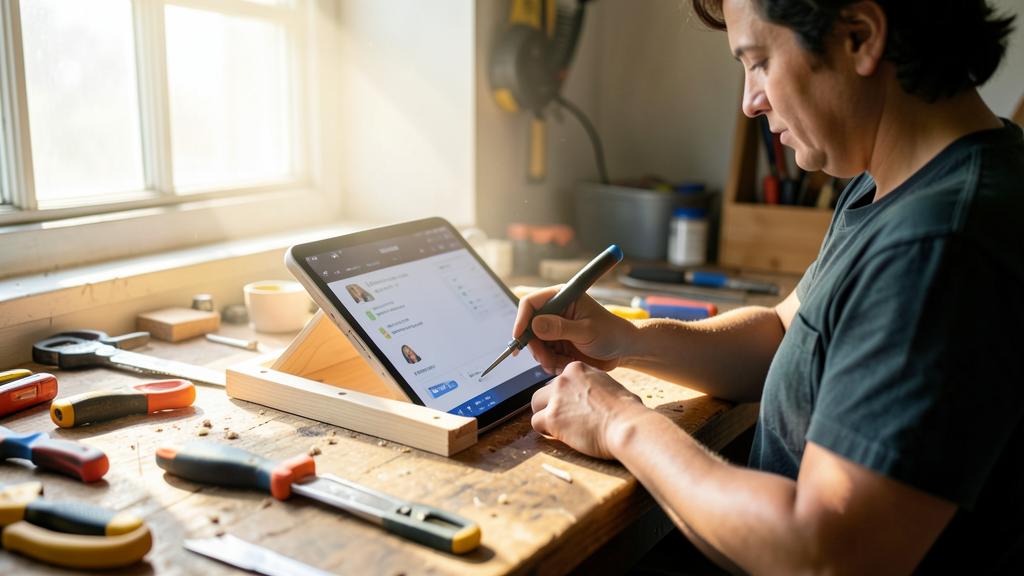
The right reflex. For any task you don’t master, never start “by feel”: watch FIRST one or more VIDEO TUTORIALS showing exactly how to do it, gesture by gesture. Seeing someone perform the task is worth a thousand explanations: it prepares you, shows you the tools, steps, and pitfalls to avoid. Compare SEVERAL sources (approaches vary, and cross-referencing helps spot good practices — not everything online is high-quality). Prepare all MATERIAL and TOOLS before starting (tutorials and apps often list them; nothing worse than having to stop mid-task), and use practical tools (quantity calculators, measurement apps). Go PROGRESSIVELY: start with simple tasks (assembling furniture, installing a shelf, small repairs) to gain confidence, before the more complex; take your TIME, even pausing the video at each gesture; and ask your questions to DIY COMMUNITIES in case of doubt (with photos of your problem). But always keep SAFETY in mind, it’s essential: know your LIMITS. Some tasks present real DANGERS and require a professional — ELECTRICITY (beyond simple gestures), GAS, major PLUMBING, work at HEIGHT, building structure; never put yourself in danger to save money. Turn off the power or water before working on them, wear appropriate protections (gloves, goggles, mask), and follow rules and standards. Remember this crucial point: a tutorial shows HOW to do it, but doesn’t judge IF you can do it safely in YOUR situation — keep your common sense; better a small well-done and safe task, and a pro for the rest, than an accident or costly damage. Preparing with tutorials, progressing step by step, and knowing your safety limits: that’s how you become a more capable and confident DIYER, without ever taking reckless risks.

Gaining autonomy, confidence, and savings
Learning DIY thanks to digital tools brings more than just completing a few tasks: it’s a source of autonomy, confidence, and savings. A few thoughts. AUTONOMY: knowing how to do small tasks yourself (repair, assemble, maintain) frees you from dependence on others for everything; you handle everyday issues without waiting or paying; it’s true freedom. CONFIDENCE: each successful task strengthens the feeling of ability (“I can do it”); DIY, long reserved for “initiated” people, becomes accessible, and you dare more and more; tutorials give you the courage to start. SAVINGS: doing small tasks yourself (instead of paying a professional for every little thing) represents real savings; digital tools make “doing it yourself” profitable. PLEASURE: many discover, by trying, a real pleasure in DIY — the satisfaction of work done with your own hands, creativity; a rewarding hobby. CONTINUOUS LEARNING: you progress with each project, you enrich your skills; digital tools support this endless skill improvement. CAUTION always: this enthusiasm must be accompanied by common sense; DIY has its dangers, and autonomy doesn’t mean doing everything yourself at any cost; knowing when to delegate to a professional what presents a risk is part of being a good DIYER. HUMAN CONNECTION: digital tools don’t exclude the human aspect; DIY communities, advice from a skilled person, a store clerk remain precious and complement tutorials. In summary, digital tools (video tutorials, apps, communities) make DIY skills accessible to everyone: you learn to perform many tasks yourself, guided step by step, which brings autonomy, confidence, and savings — and often a real pleasure. To benefit from this: find the right tutorials before starting, compare sources, prepare yourself, progress step by step, and rely on communities. But always keep safety and common sense in mind: know your limits, protect yourself, and entrust the professional with what presents a real danger (electricity, gas, height, structure). The good DIYER of today isn’t the one who knows everything in advance, but the one who knows HOW TO LEARN (thanks to digital tools) and RECOGNIZES their limits (for caution). Thus equipped, everyone can gain autonomy and confidence, save money, and enjoy doing it themselves — while DIYING safely. Skills aren’t reserved for the initiated anymore: they’re within reach of everyone who wants to learn.
Warning: safety first, know your limits, and check the quality of tutorials. Key points. SAFETY IS NON-NEGOTIABLE — DIY involves real DANGERS: electricity (risk of electrocution, fire), gas (leak, explosion), work at height (fall), tools (injuries), major plumbing (water damage); NEVER take risks to save money or out of overconfidence; always turn off the power or water before intervening, wear appropriate protections (gloves, goggles, mask), use tools correctly, and follow rules and standards (electricity and gas are particularly regulated). KNOW YOUR LIMITS — a tutorial shows HOW to do it, but doesn’t judge if YOU can do it safely in YOUR situation: some tasks require a PROFESSIONAL (major electrical installations, gas, building structure, risky work at height, major plumbing); knowing when to delegate what exceeds your skills isn’t a failure, it’s common sense; an accident or costly damage largely cancels out the intended savings. VARIABLE QUALITY OF TUTORIALS — not everything online is reliable: some tutorials are approximate, dangerous, or don’t follow standards; compare several sources, favor serious resources (recognized stores, professionals, established communities), and be wary of “miracle” methods or rushed ones; cross-reference before following advice, especially for delicate tasks. Other points: don’t start without PREPARATION (watch the tutorial in full, gather materials), don’t RUSH (patience avoids mistakes and accidents), and don’t hesitate to ASK for help (a skilled person, a store clerk, a community) if in doubt. Digital tools make everyone a more capable DIYER, but enthusiasm must always be accompanied by CAUTION: DIY safely, know your limits, and entrust the professional with what presents a real danger. The best DIYER isn’t the most daring, but the one who learns, prepares, and knows when to stop. Do it yourself, yes — but never at the expense of your safety.

Frequently asked questions
Can you really learn DIY with apps and tutorials?
Yes, and it’s one of the great benefits of digital tools. VIDEO TUTORIALS show, step by step, how to perform almost any task (assembling furniture, fixing a faucet, repainting, installing a shelf): seeing someone do it, gesture by gesture, is worth a thousand written explanations. DIY apps offer step-by-step guides, tips, material lists, calculators; communities allow you to ask precise questions to experienced DIYERS. All this makes accessible to everyone a skill that was once learned from a skilled person or through experience. You can thus learn to do many tasks you wouldn’t have dared to try, gain independence and save money. BUT two reservations: SAFETY (DIY has real dangers — electricity, gas, height; know your limits and entrust the professional with what presents a risk), and the VARIABLE QUALITY of resources (not everything online is reliable — compare several serious sources). With these precautions, yes: digital tools make everyone a more capable and confident DIYER, provided you learn with caution.
What tasks can you do yourself, and which should you entrust to a pro?
The general rule: do SIMPLE and SAFE tasks yourself, and entrust the professional with what presents a real RISK or requires expertise. Accessible to a DIYER guided by tutorials: assembling furniture, installing a shelf, repainting, small repairs, routine maintenance, simple renovations, replacing small parts. To entrust to a PROFESSIONAL (don’t take risks): major ELECTRICAL installations (beyond simple gestures: risk of electrocution, fire, and strict standards), anything related to GAS (major danger), major PLUMBING (risk of water damage), risky work at HEIGHT, and anything related to a building’s STRUCTURE (load-bearing walls). The principle: a tutorial shows how to do it, but it’s up to YOU to judge if you can do it safely in your situation; in case of doubt about safety or complexity, call a pro. Never put yourself in danger, and don’t risk costly damage to save money on a task that’s beyond you: knowing when to delegate is part of being a good DIYER. Start with the simple to gain confidence, and always keep safety as an absolute priority.
Are DIY tutorials reliable?
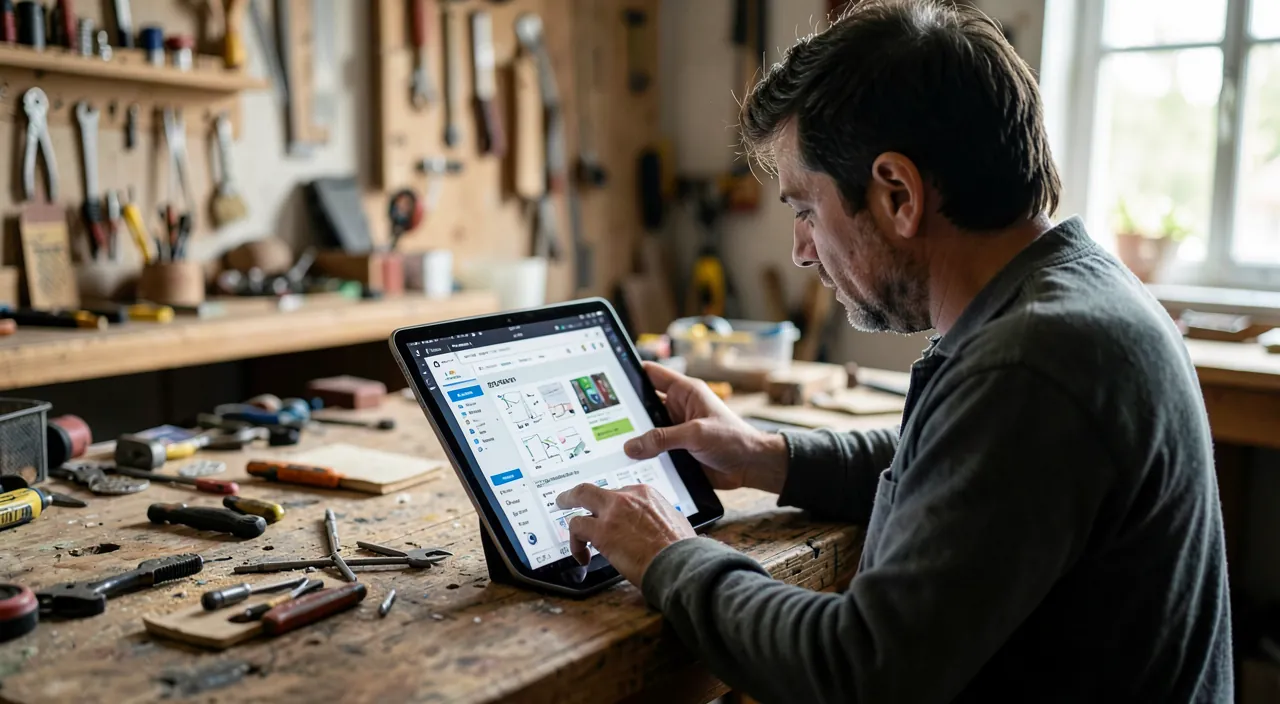
VARIABLE QUALITY: not everything online is reliable. You’ll find excellent tutorials (clear, safe, following standards), but also approximate, rushed, or even dangerous and non-compliant content. A few tips to navigate this: COMPARE several sources on the same task (cross-referencing helps spot good practices and discard bad ones); FAVOR serious resources (recognized DIY stores, professionals, established communities); be wary of “miracle” methods, dubious shortcuts, and anything that neglects safety; and for a delicate or risky task, don’t rely on a single tutorial — verify with reliable sources, or even a professional. Above all, keep your common sense: a tutorial shows how to do it, but it’s up to you to judge if it’s safe and suited to YOUR situation; if it seems to neglect a safety point (turning off the power, a protection, a standard), be wary. Tutorials are a great help for learning, provided you approach them with discernment: compare, favor seriousness, and never sacrifice safety to an online tip.
What to remember
Digital tools (VIDEO TUTORIALS, DIY APPS, COMMUNITIES and forums, store resources) make DIY skills accessible to everyone: what was once learned from a skilled person or through experience is now available in videos, for free, gesture by gesture. You can thus learn to perform many tasks yourself (assembling furniture, repairing, repainting, installing), gain AUTONOMY, CONFIDENCE, and SAVINGS, and often enjoy it. Video tutorials are the go-to resource (seeing someone do it is worth a thousand explanations), complemented by app guides and calculators and community support. To learn and DIY well: find the right tutorial BEFORE starting (never DIY “by feel” on something unknown), COMPARE several sources (not everything online is high-quality), prepare materials and tools, go PROGRESSIVELY (from simple to complex, to gain confidence), take your time, and rely on communities if in doubt. But always keep SAFETY as an absolute priority, as DIY involves real dangers: know your LIMITS — some tasks require a PROFESSIONAL (major electricity, gas, major plumbing, height, building structure); never put yourself in danger to save money; turn off the power or water before intervening, wear appropriate protections, and follow rules and standards. Crucial point: a tutorial shows HOW to do it, but doesn’t judge if YOU can do it safely in YOUR situation — it’s up to you to keep your common sense; better a small well-done and safe task (and a pro for the rest) than an accident or costly damage. The good DIYER of today isn’t the one who knows everything in advance, but the one who knows HOW TO LEARN (thanks to digital tools) and RECOGNIZES their limits (for caution). Thus, everyone can gain autonomy and confidence, save money, and enjoy doing it themselves — while DIYING safely. Skills aren’t reserved for the initiated anymore: they’re within reach of everyone who wants to learn, with enthusiasm and caution.

Want to go further with your phone and apps? Our practical training is made for you.
Leave a Reply
You must be logged in to post a comment.