
For a craftsman, a photographer, a decorator, a caterer, or any profession where the work is VISIBLE, nothing convinces better than a beautiful realization. A sales pitch remains abstract; a photo of a successful project, a plated dish, or a transformed interior speaks instantly. The portfolio is often the most visited page of a website — the one that triggers the “I want the same thing.” You still need to build it to sell, not to drown the visitor in images. Here’s how to showcase your work online.
Why the portfolio is your best argument
In visual professions, proof by image is UNBEATABLE: the prospect who hesitates seeks to PROJECT themselves, and a concrete realization allows them to do so better than any words. A well-made portfolio serves multiple purposes at once: it DEMONSTRATES your expertise (quality is visible), it REASSURES (you’ve done it before, so you can do it again), it INSPIRES (the visitor imagines their own project), and it DIFFERENTIATES (your style, your signature, what sets you apart from the competition). It’s also a powerful contact trigger: “I want something like this” is far more engaging than an abstract reflection on a service. That’s why the portfolio is often the most visited page and one of the most decisive in conversion. But its effectiveness lies in its QUALITY and ORGANIZATION, not its quantity: an overloaded portfolio with mediocre photos harms as much as a well-curated selection helps. The goal isn’t to show everything, but to showcase the BEST, well-presented, so that the visitor understands what you do and wants to entrust you with their project.
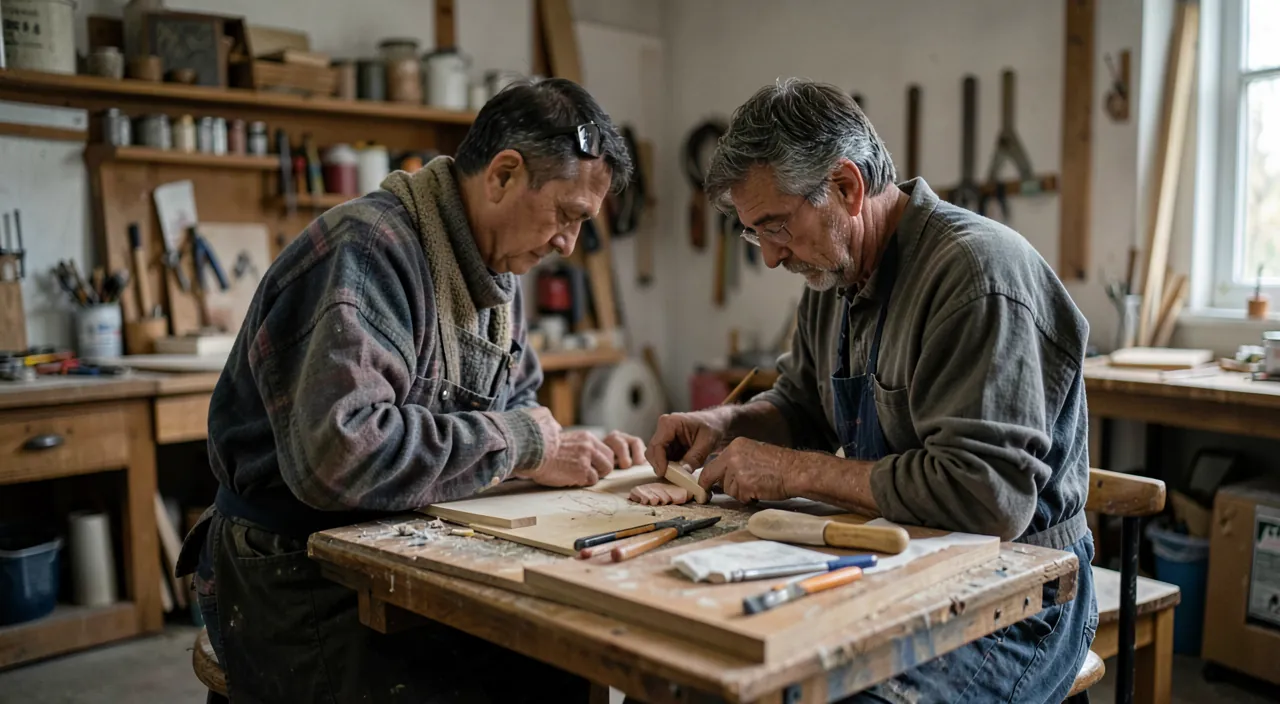
A good portfolio shows your best work clearly. It helps potential clients see what you can do, imagine their own project, and trust you. Too many low-quality photos can hurt more than help.
A wedding photographer might show 10-15 of their best photos from different weddings, each with a short description of the couple’s vision and how they brought it to life. This shows their skill and helps future clients picture their own wedding photos.
Building your portfolio: quality, selection, context
The principles of a portfolio that sells: the quality of the visuals above all — CLEAR, well-framed, well-lit photos; a stunning realization poorly photographed loses all its impact (take care with the shot, or hire a pro for your best work: our pro smartphone photography guides if you do it yourself); the selection over exhaustiveness — 15 excellent and varied realizations are better than 80 of which half are bland: each image must ENHANCE your work; the organization — categorize by project type, style, or service so the visitor finds what CONCERNS them (someone looking for a kitchen doesn’t want to browse bathrooms); the context that adds meaning — a caption, a word about the project (the client’s need, the solution provided, a before/after) transforms a pretty photo into a demonstration of skill and aids in projection; the variety — show different styles, project sizes, situations, so every type of prospect recognizes themselves; and the call to action — throughout the portfolio and at the end, invite them to take the next step (“A similar project? Let’s talk about it” — our quote form and contact page guides). Technically, ensure the images are OPTIMIZED (heavy photos slow down the site — our mobile-friendly site guides) and that the portfolio is pleasant on MOBILE (smooth scrolling, images that enlarge with a tap). A portfolio is an exhibition: you select, highlight, and tell a story — not a junk drawer where you pile everything.
The right reflex. Accompany your best realizations with a short STORY — even two or three sentences: what was the client’s need or problem, what you proposed, the result. This small context radically transforms the impact: a photo alone shows a result, but a photo + its story demonstrates your THINKING and your ability to solve problems — exactly what a future client wants to verify. “Before/after” realizations are particularly powerful in transformation professions (renovation, decoration, gardening): they make your added value spectacularly visible. You’re not selling images, you’re selling proof that you know how to meet a need like the visitor’s: the story bridges your past work and their future project.
Keeping your portfolio alive and respectful
A portfolio isn’t static: it’s maintained and follows a few rules. Update it — add your new best realizations, remove the oldest ones: a living portfolio shows sustained activity and evolution (our site update guides). Keep the best in view — your most impressive realizations should be seen first. Link to action — every convinced visitor should easily find how to contact you (our contact page and quote form guides). And above all, RESPECT important rules: the RIGHT TO IMAGE and authorization — publishing a realization at a client’s (their interior, their event, sometimes their face) often requires their CONSENT: ask for permission before posting a client’s project (a simple request avoids many issues, and it’s a matter of respect and trust); the ownership of the work — only show YOUR realizations (not photos found elsewhere to “pad” the portfolio: it’s misleading and legally risky); the confidentiality — be careful not to reveal private information visible in the photos (addresses, documents, the client’s personal items — our privacy guides). An honest, up-to-date, image-right-respecting portfolio is both more effective and risk-free. Well-built and well-maintained, it works for you constantly: it showcases your expertise to every visitor, at any time, and turns admiration into quote requests.

Warning: right to image, honesty, and photo weight. Three points not to neglect: the authorization — showing a realization done at a client’s (their home, their event, their face) most often requires their CONSENT: ask for it before any publication, it’s a matter of respect and sometimes of law (the client’s right to image and privacy — our privacy guides); the honesty — only present YOUR actual realizations: padding a portfolio with photos that aren’t yours misleads the client and exposes you (intellectual property, and above all loss of trust when it’s discovered); and the technical optimization — uncompressed high-resolution photos significantly slow down the page: the image-rich portfolio is often responsible for slow sites; optimize the weight of the visuals for fast loading, especially on mobile (our mobile-friendly site guides). Finally, check that no private client information is visible in the photos (documents, address, personal items). A beautiful portfolio that respects the right to image, remains honest, and loads quickly is a major asset; neglecting these points turns it into a source of trouble.

Frequently asked questions
How many realizations should I show?
Quality over quantity: a tight selection of your BEST realizations, varied and well-presented, is better than a mass of uneven images. Around 15 excellent examples covering your different types of projects convince more than 80 photos of which many are bland — which dilute the impression and slow down the site. Each image must enhance your work and help a type of prospect recognize themselves. Think exhibition, not archive: you select and highlight the best, you don’t pile everything.
Should I ask my clients for permission to publish their projects?
Yes, it’s often necessary: showing a realization done at a client’s (their interior, their event, and even more so their face) touches on their right to image and privacy. A simple request for authorization before publication resolves the issue, avoids any dispute, and demonstrates your respect. Many clients happily agree, sometimes proud to be featured. Take the opportunity to check that no private information (address, documents) appears in the photos. This simple precaution protects everyone and strengthens the trust relationship.
Do my photos slow down my site?
Very likely, if they’re not optimized: a gallery rich in uncompressed high-resolution images is one of the main causes of slow sites, especially on mobile. The solution: reduce the weight of the photos (compression and dimensions adapted to web display) without sacrificing visible quality. Most site creation tools do this, or you can prepare the images in advance. Fast loading is essential: a beautiful but slow gallery loses visitors before they even see your realizations (our mobile-friendly site guides).
What to remember
For visual professions, the portfolio is often the most visited and decisive page: it demonstrates expertise, reassures, inspires, and triggers the “I want the same thing.” Its effectiveness lies in QUALITY and ORGANIZATION, not quantity: clean and well-cared-for visuals, a SELECTION of the best rather than exhaustiveness, categorization by project type, and above all CONTEXT (the need, the solution, the before/after) that transforms a pretty photo into a demonstration of skill. Keep the portfolio alive (updates, best in view), link it to action (contact, quote), and optimize image weight for speed. Absolutely respect the right to image (client authorization before publication), honesty (only your actual realizations), and confidentiality (no private data visible). Think exhibition, not junk drawer: well-built and well-maintained, your portfolio showcases your work to every visitor, at any time, and turns admiration into quote requests.



Your business deserves a real online presence: showcase site, store, SEO — we create the site that reflects you.
Leave a Reply
You must be logged in to post a comment.