
The leaking toilet, the shelf to be fixed in plasterboard, the suspicious damp stain, the Swedish furniture with silent instructions: domestic DIY is a series of small problems that you solve—or pay dearly to have solved. AI has become an surprisingly capable workshop companion: diagnosis by photo, step-by-step guides tailored to YOUR case, shopping list for the hardware store, and the safeguard that tells you when to call a pro. User manual—safety included, because not everything can be DIYED.
Photo diagnosis: naming the problem
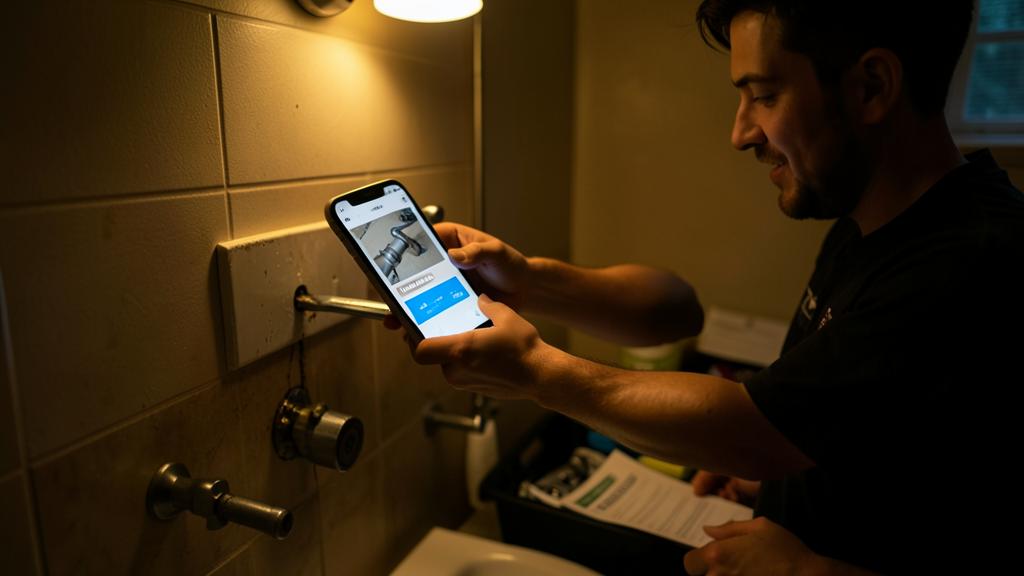
Half of DIY is a vocabulary problem: you can neither search for nor buy what you can’t name. The photo fixes that: the mystery mechanism (the inside of the toilet, the exotic hinge, the worn-out gasket) photographed → identified, named, explained—and suddenly the tutorial is found and the part is bought; the part to replace → « what is this part called, where to buy it, which compatible references » (the float, the aerator, the mixer cartridge—the AI recognizes the everyday hardware); the visible symptom (crack, stain, mold, warped wood) → possible causes ranked and checks to decide—with the required honesty: some photographed symptoms require a professional (see the safety box); and the unknown wall— »plasterboard, brick, or concrete? Here’s the knock sound and the drilling dust »—the matching plug (the most asked question in domestic DIY, and the cause of a third of shelves on the floor). Complete the photo with a description (age of the building, context, what has already been tried): like in gardening or computer troubleshooting, context makes the quality of the diagnosis.
Custom step-by-step: your tutorial, not someone else’s
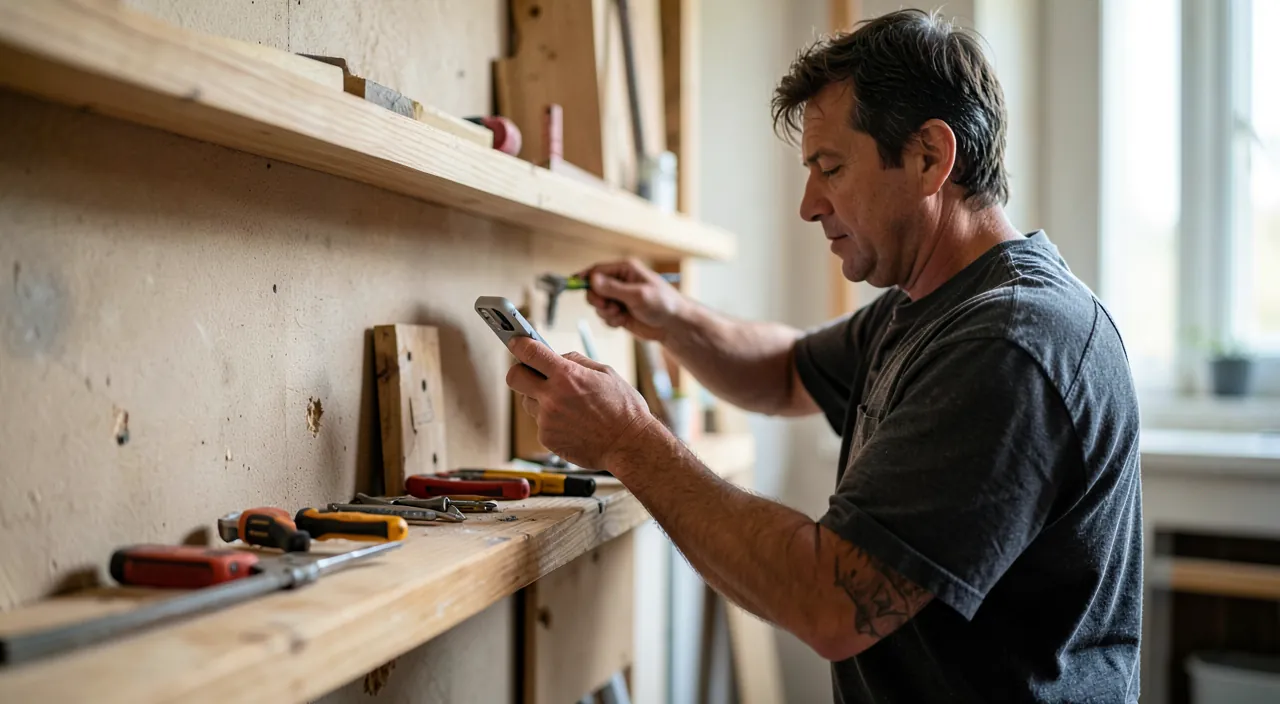
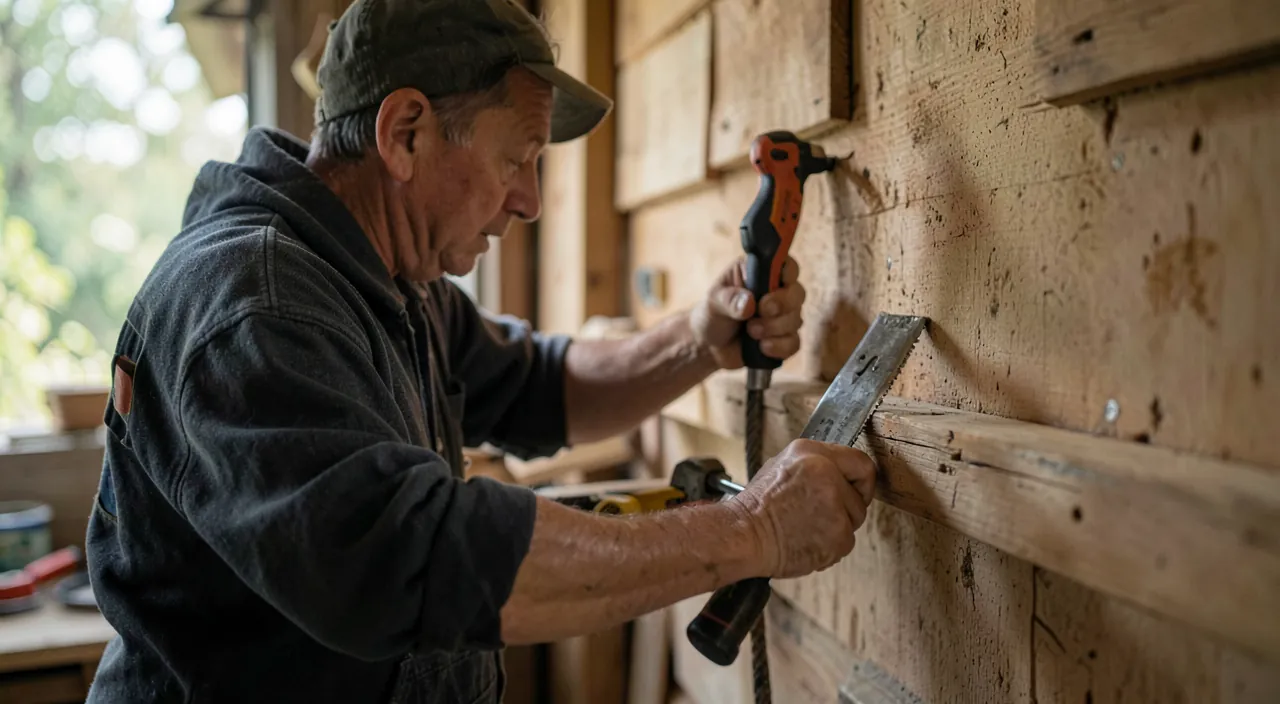
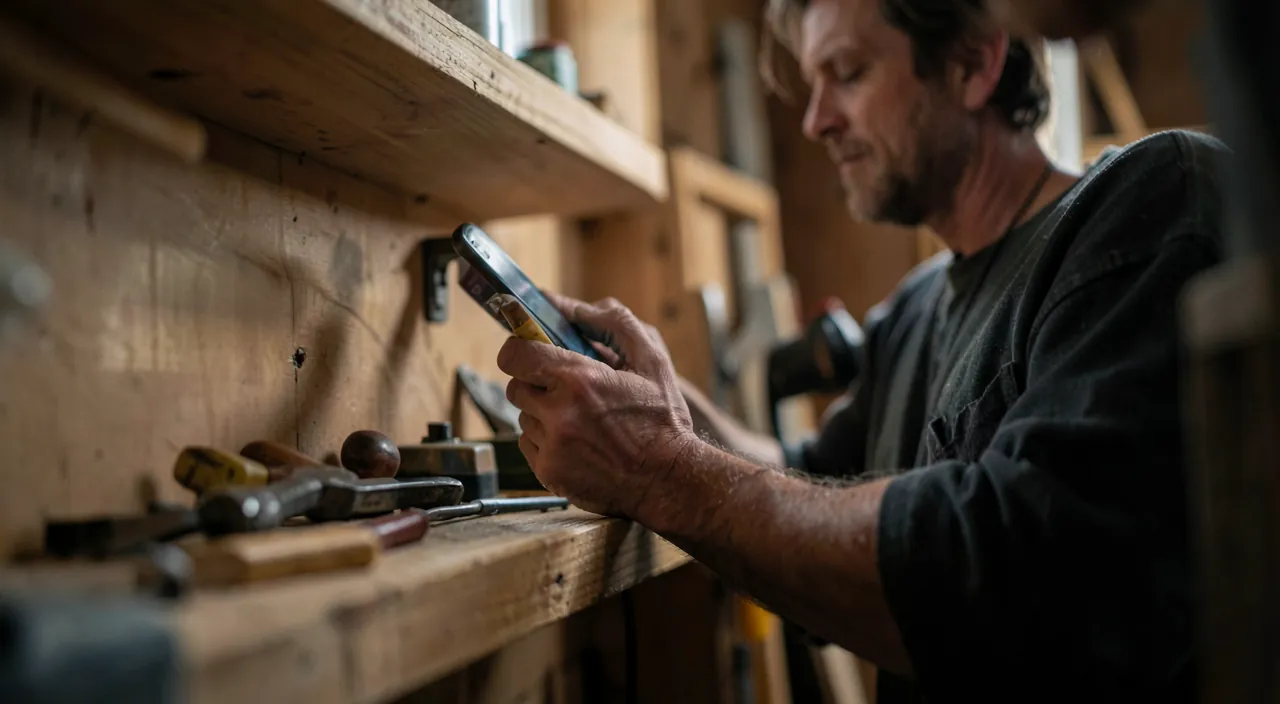
The strength of AI over classic video tutorials: adaptation. The video shows ONE case—yours is always different (the tools you don’t have, the unfindable stop valve, the step that doesn’t go as planned): AI, on the other hand, answers— »I don’t have a wrench, an alternative? », « the screw is seized, what do I do? », « at my place there are two pipes instead of one ». The winning method: ask for the complete plan BEFORE starting—steps, tools and supplies, realistic duration, honest difficulty (« rate this project from 1 to 5 for a beginner and tell me what can go wrong »—the question that avoids disaster Saturdays), and the point of no return (« at what point can I no longer go back? »—knowing where you can still back out cleanly is worth its weight in gold); then proceed step by step, phone within reach (the voice assistant answers hands-free— »and now? »), photo at every doubt; and the documented disassembly—photograph before and during (position of parts, connections): the advice that AI gives and experience engraves. For flat-pack furniture: the photo of the stuck step + « I’m stuck here » works remarkably—and AI also reads the unfindable PDF manuals (name of the furniture → the official link).
The right reflex. Before the hardware store, have the complete shopping list made: supplies with dimensions and generic references, calculated quantities (paint according to YOUR square meters, tiles with the cutting margin), required tools separating « essential » and « comfort », and the questions to ask the salesperson. The gain is double: a single round trip (the bricoleur’s bane: the third trip to the checkout for a gasket) and a project costed BEFORE starting— »this project will cost me X euros and Y hours » sometimes changes the decision, and that’s a good thing.
From troubleshooting to projects: gaining skills
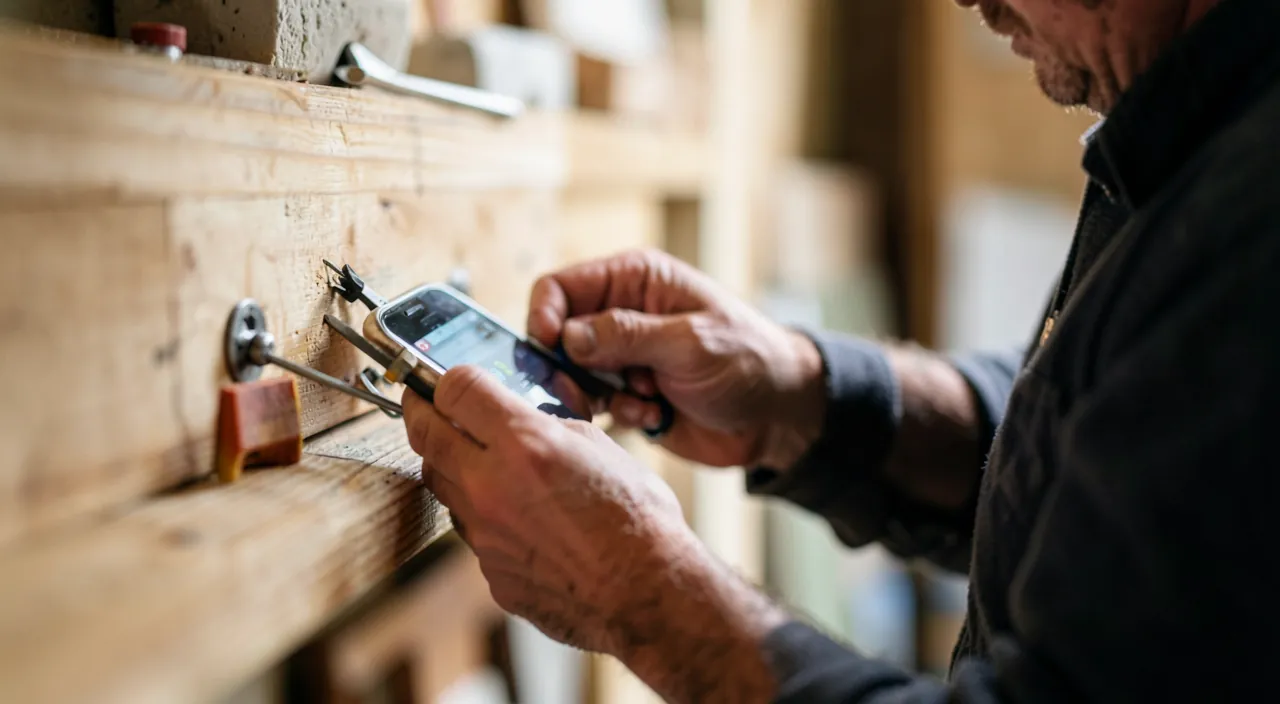
AI accompanies the entire spectrum of DIY: the maintenance that prevents breakdowns—the one-time generated home maintenance calendar (descale the water heater? bleed the radiators? gaskets to check? VMC to clean?) and added to your reminders: the preventive maintenance that no one knows and that saves interventions; the small rewarding projects—shelves, rods, painting a room (the complete plan: preparation, primer, drying time—where beginners fail), redoing the silicone seal (the adapted tutorial is worth the video); the weekend projects—headboard, raised garden bed, simple wardrobe: AI draws the cutting list (and stores cut it), the assembly plan, the finishes; and the learning in the background—each explained project is a skill gained: ask the « why » of the steps (why the primer, why this laying direction) and the dependent DIYER becomes an independent DIYER—the opposite trajectory of tutorial consumption. For inspiration finally, the bridge with visualization: the photo of the room + « what would a half-height panelled wall look like » (our decor guides)—seeing before doing also applies to DIY.
AI helps you plan and execute DIY projects by giving you step-by-step instructions, maintenance reminders, and even design ideas. It’s like having a personal assistant that knows all the tricks of the trade.
You want to paint a room. Instead of just telling you to buy paint, AI will ask for the room dimensions, suggest the right type of paint, calculate how much you need, and even remind you to sand the walls first. It’s like having a pro painter guiding you through the whole process.
Knowing when to stop: AI as a safety advisor
The best use of AI in DIY might be this one: asking if it’s reasonable. « Is this a beginner’s project? What are the risks? What does the regulation say? »—asked before each project, these questions map the territories: the green (furniture, fixings, paint, seals, small maintenance plumbing—taps, toilet, traps: legitimate DIY, water cut-off first); the orange (concealed plumbing, waterproofing, accessible roof, large drillings near networks—the material detector before any deep drilling: cables and pipes don’t forgive); and the red non-negotiable—the electricity beyond the identical replacement of a switch or a socket (and always circuit breaker off, checked with a tester): panel, circuits, any addition = electrician; the gas: nothing, ever—the slightest smell of doubt = open windows, no sparks, emergency number; the structure (load-bearing walls—our decor guide hammers this), asbestos in old homes (before sanding or drilling materials from before 1997: diagnosis), and height (the roof and the poorly secured ladder injure more than everything else combined). AI clearly states these limits when asked—that’s the reflex to instill.
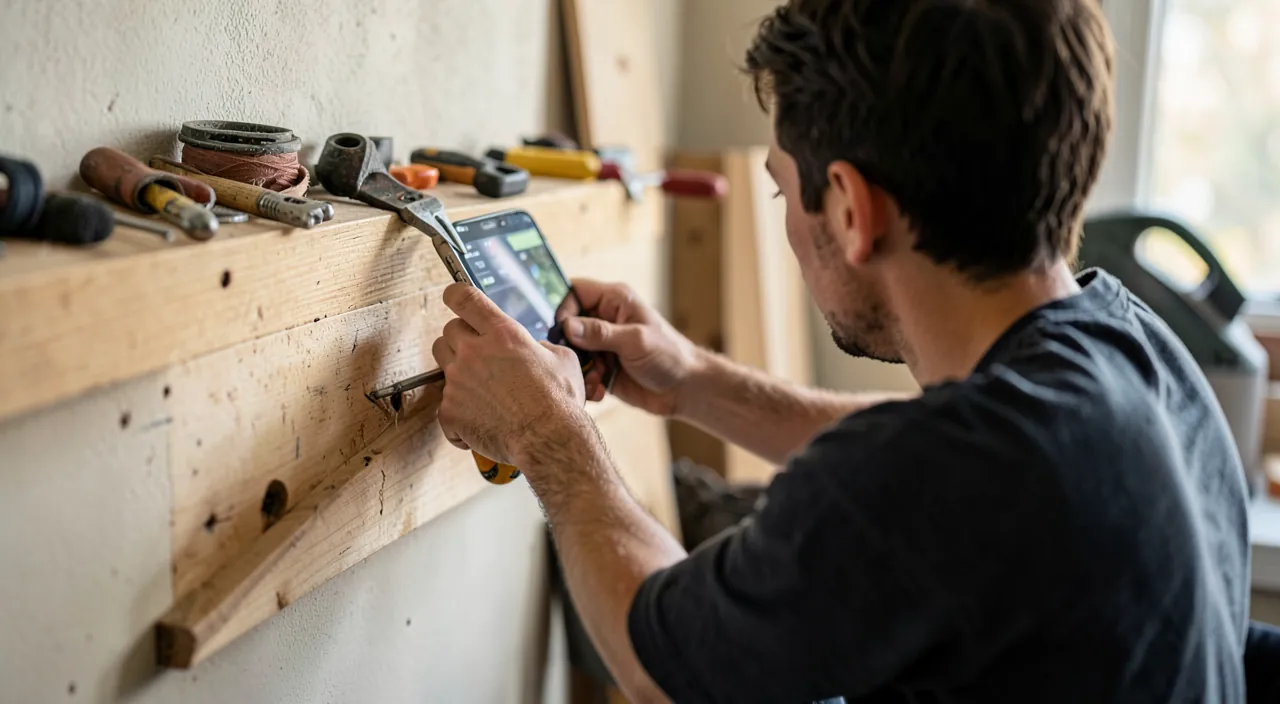
Beware of overconfidence without hands-on experience. The perfect step-by-step doesn’t convey the knack or the right force—tightening « firmly but without forcing » is learned by doing, and the first time sometimes fails: plan for a margin (spare part, project started on a SATURDAY MORNING—never on a Sunday evening, plumbing emergencies closed), accept the right to fail on what can be fixed, and double-check AI with a human for the first engaging times—the neighbor who DIYs, the initiation workshops of the stores, the Repair Cafés (our repair guides): ten minutes of demonstration are worth a thousand generated words. And if the project reveals something more serious than expected (the « small seal » that hides the rotten wood): photo, AI to understand—and quote to decide. Knowing when to pass the baton is a DIYER’s skill, not an admission of failure.
Frequently asked questions
AI or DIY videos?
Both, in that order: AI to diagnose, plan, and adapt to your case—the video to SEE the gesture (the movement of the trowel, the smoothing of the seal): ask AI « what terms to search for in video for this step ». The video tutorial shows an ideal case; AI handles your real case: together, they form a complete partnership.
Can it help me decide between repairing and replacing?
Very well—give the age, the symptom, the price of the new one, and ask for the reasoned arbitration (cost of parts, difficulty, remaining lifespan, and for appliances the repair bonus—our dedicated guide). AI is a good judge of these calculations—while keeping your part: sentimental value and the desire to learn also count, and they are yours.
What tools to start with, according to AI—and common sense?
Both agree: the basic kit (screwdriver, hammer, pliers, wrenches, measuring tape, level, cutter), a decent drill-driver, a set of varied plugs, and a material detector—the rest is bought project by project (or rented: AI willingly reminds that renting beats buying for a one-time tool). Ask « the beginner’s list for less than X euros »—and complete as projects go, not before.
What to remember
AI does for DIY what it does for troubleshooting and gardening: it names (the photo that identifies part, mechanism, symptom), it plans (the adapted step-by-step, the complete shopping list, the cost and difficulty announced BEFORE), it accompanies (hands-free by voice, photo at every blockage, documented disassembly) and it sets limits—the green of legitimate DIY, the orange of the recommended quote, the absolute red (electricity beyond the identical, gas, structure, asbestos, height). Add the preventive maintenance calendar, learning through « why », and the human for the first-time gestures: small DIY stops being a lottery—and each successful project prepares a more ambitious one. The leaking toilet this morning? It’s a matter of a photo, a stop valve, and half an hour. You have everything you need.


Want to master AI and make it a real daily asset? Our training courses support you at your own pace.
Leave a Reply
You must be logged in to post a comment.