
The garden is a knowledge that was passed down — and that many never received: which plant for this shady corner, why these leaves are yellowing, when to sow tomatoes in MY region? AI brings this knowledge within everyone’s reach: a photo identifies the plant and diagnoses the disease, a conversation plans the vegetable garden according to your exposure, a personalized calendar sets the pace for the year. From the balcony to the large vegetable garden, here’s how to garden with support — without turning the pleasure of the earth into yet another screen.
The photo that knows: identify and diagnose
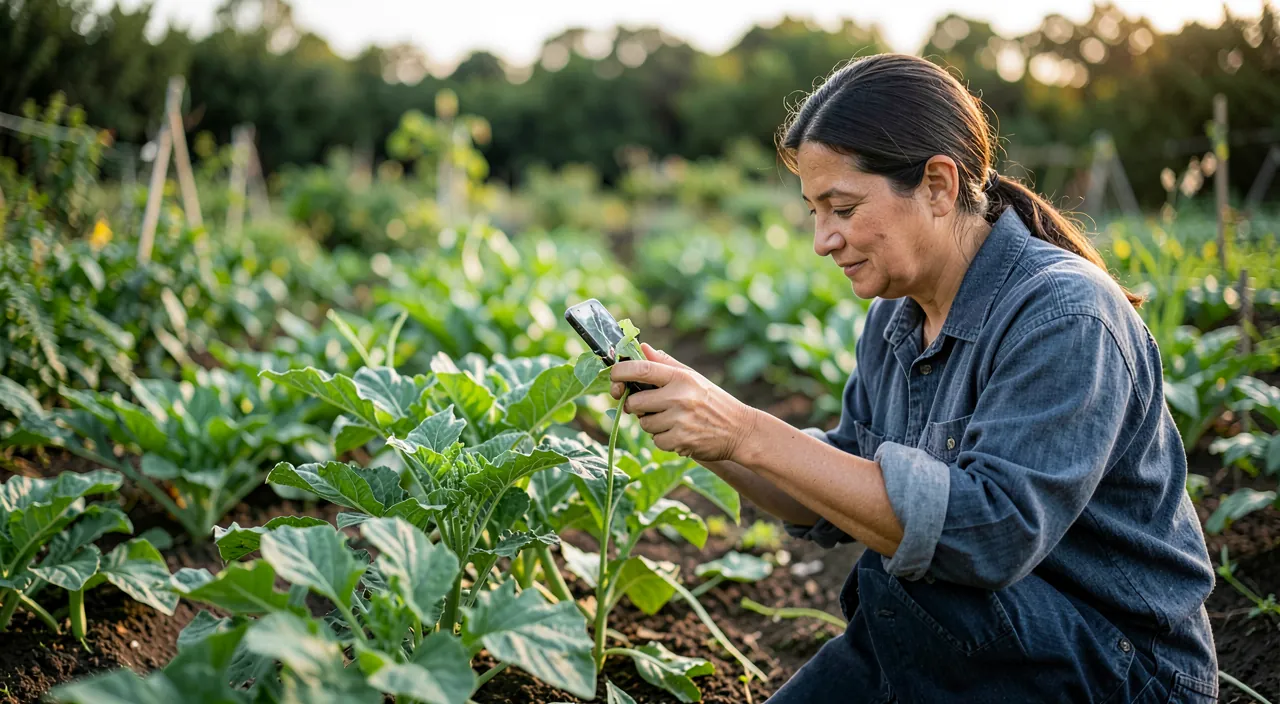
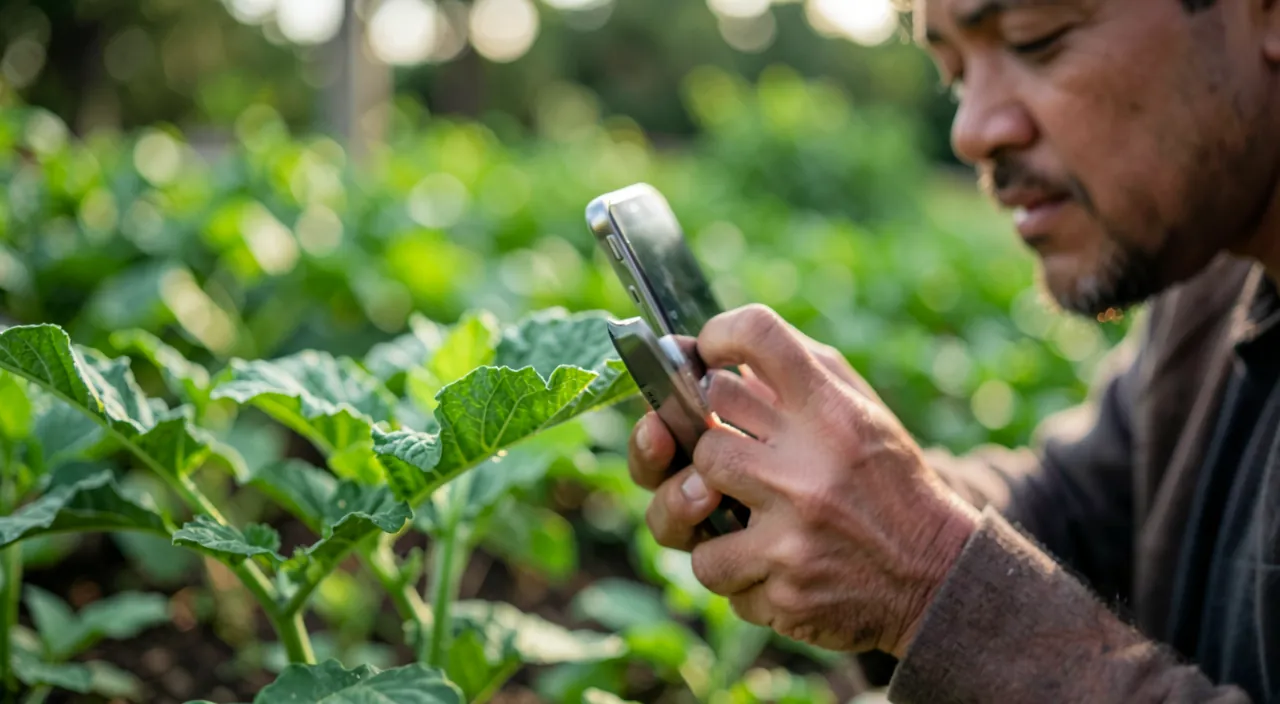
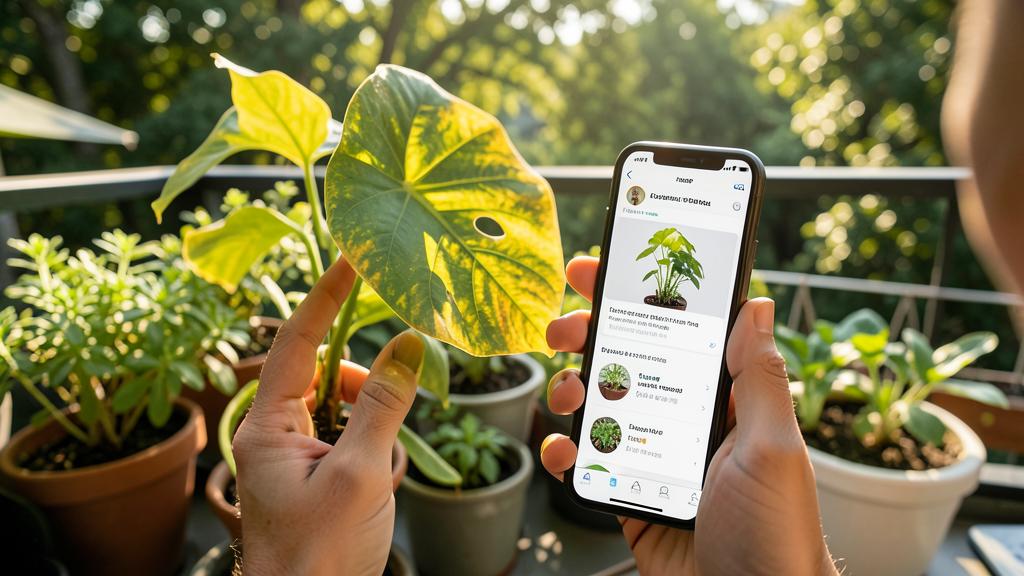
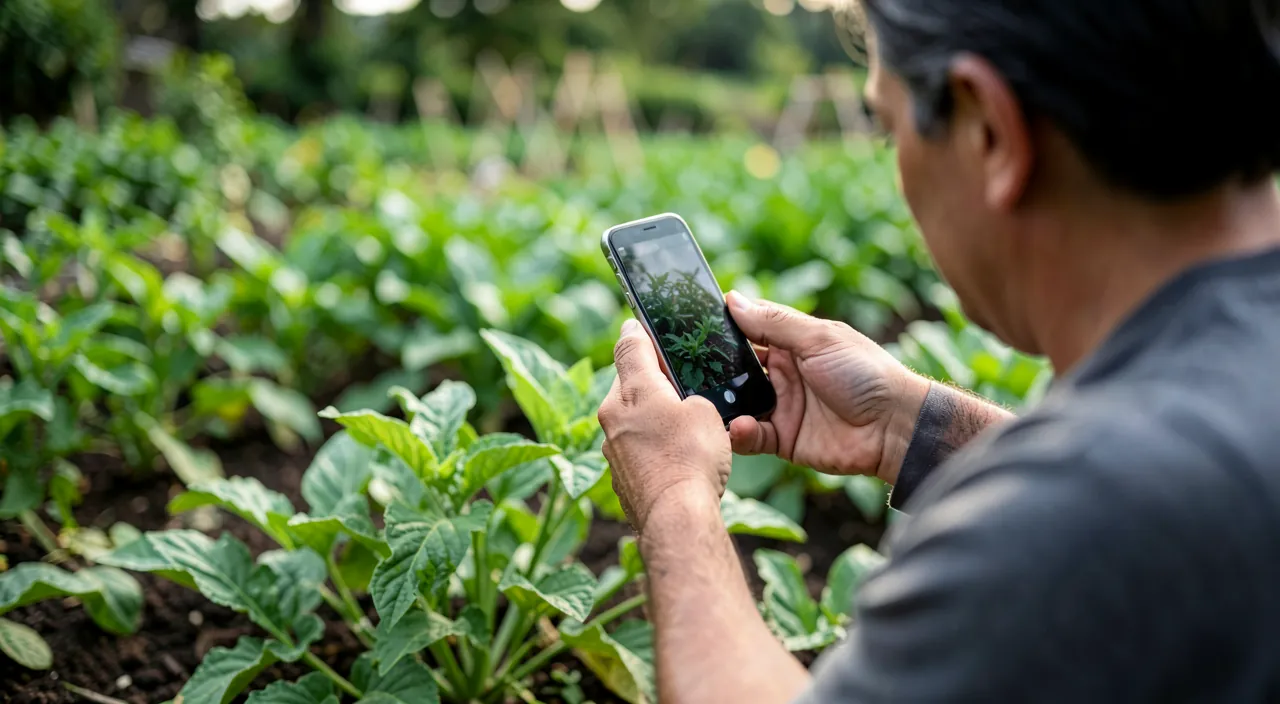
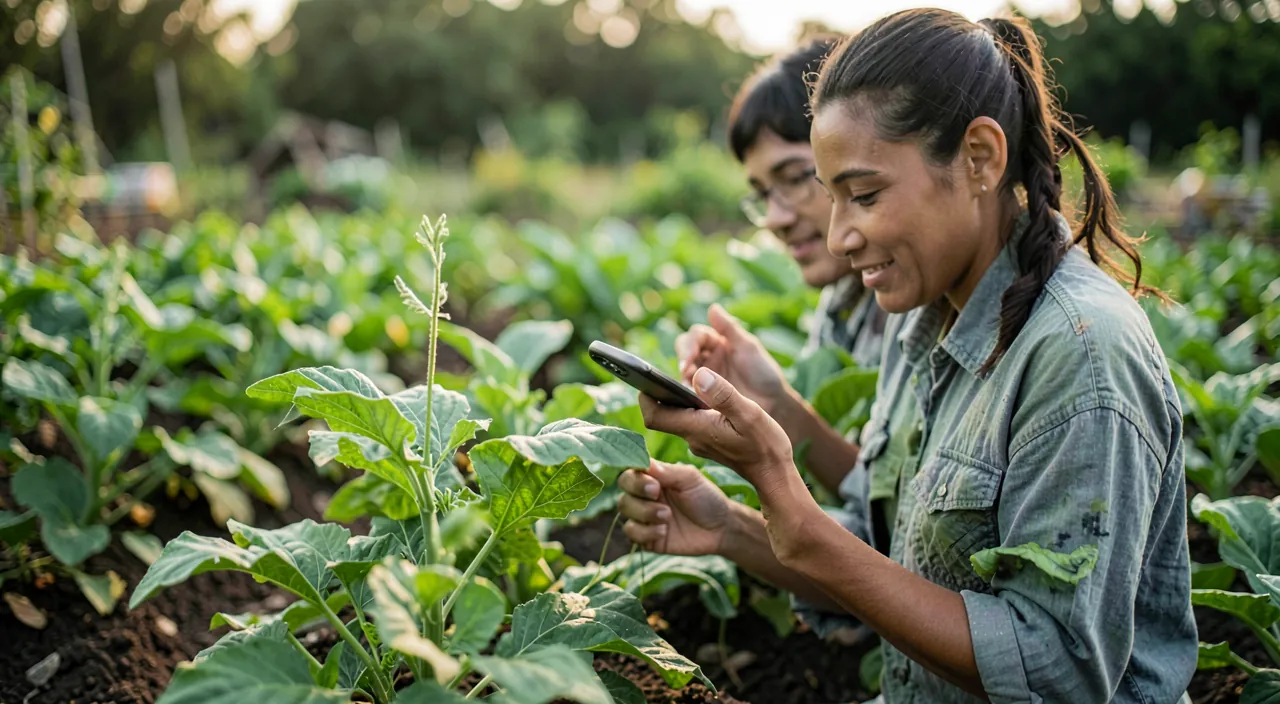
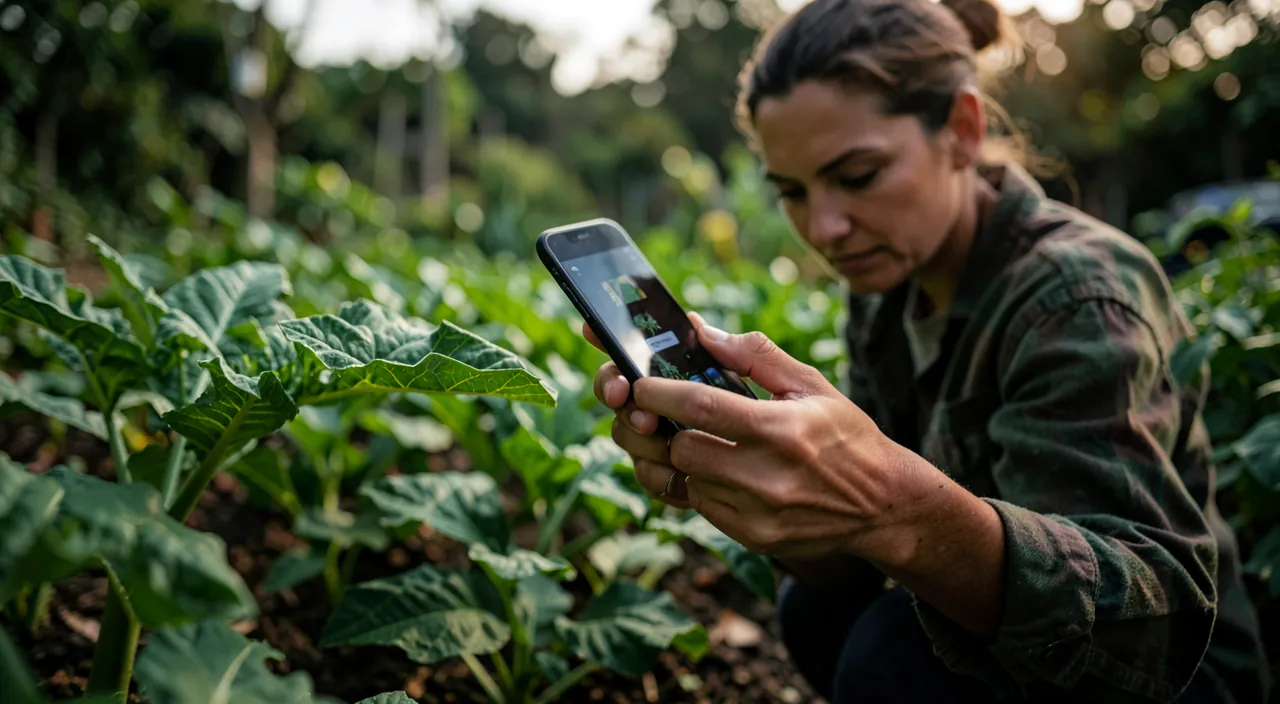
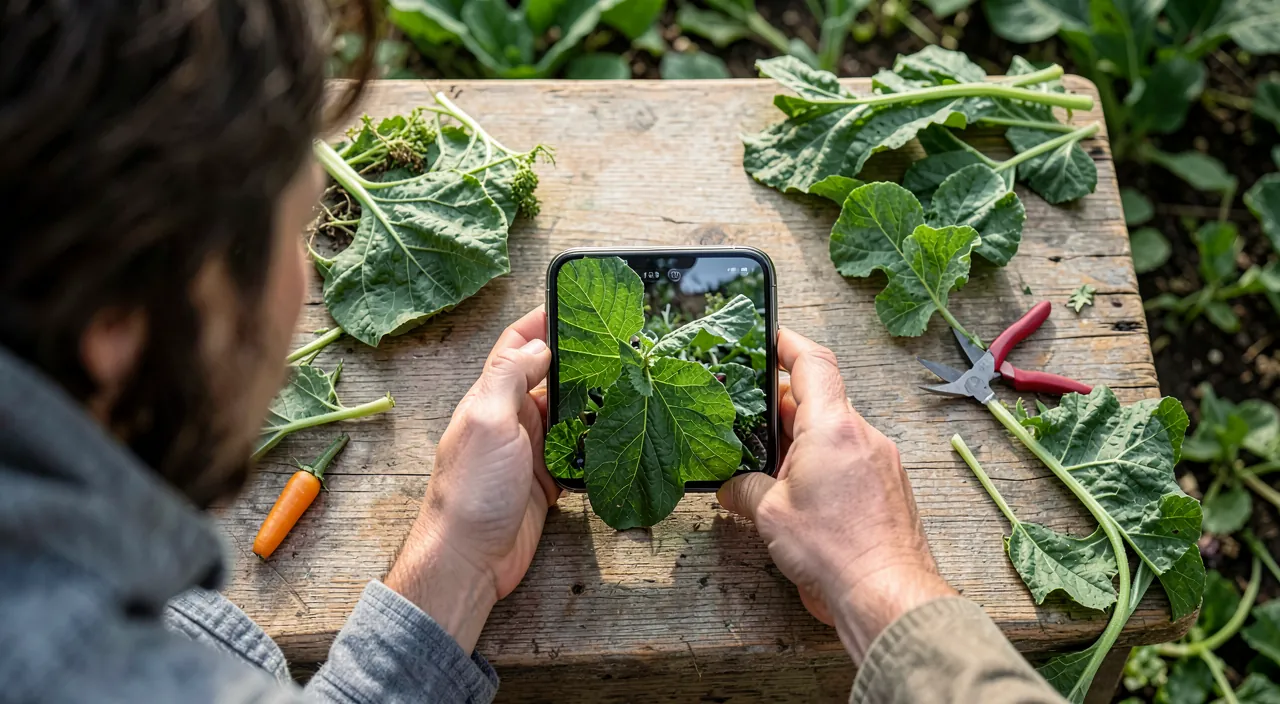
The spectacularly simple entry gesture: photograph. An unknown plant (inherited, gifted, wild) → identification in a few seconds, with associated needs (light, water, hardiness): specialized plant recognition apps and AI vision assistants now perform almost equally well on common species — and the lost label is no longer a death sentence. A sick leaf → diagnosis: spots, yellowing, holes, deposits — AI recognizes the classics (downy mildew, powdery mildew, aphids, deficiencies, overwatering — the vast majority of amateur gardener’s woes) and suggests the course of action, starting with gentle solutions. The rules of good photo diagnosis: multiple shots (the affected leaf up close, the underside, the whole plant, the context), the added description (how long, watering, recent weather, exposure — context is half the diagnosis), and the cross-checking for serious cases or large subjects (the sick tree, the entire hedge: confirm with a professional before any heavy treatment or felling — AI diagnosis guides, it does not condemn a thirty-year-old tree). And the absolute caution corollary: AI identification is NEVER sufficient for edible foraging — mushrooms and wild plants must be validated by a pharmacist or expert: deadly mistakes exist and apps can be wrong.
AI can identify plants and diagnose diseases from photos, but it’s not perfect. Always double-check serious cases with a professional, especially for edible plants like mushrooms, which can be deadly if misidentified.
You take a photo of a tomato plant with yellow leaves. The AI identifies it as a nitrogen deficiency and suggests adding compost. You confirm by checking the soil and adjusting your watering schedule, which fixes the issue in a few weeks.
Planning your vegetable garden: customizing the land
Where AI becomes a true master gardener: contextual planning. Describe your reality — region and climate, exposure (actual sun hours in each area), surface and containers (in-ground, square foot, balcony pots), soil if you know it, available time, and your harvest wishes — and ask for the plan: which crops, where, when to sow and plant in your climate (the generic calendar on seed packets ignores that Perpignan and Lille don’t have the same spring — localized AI, yes), the beneficial associations and problematic pairings, the rotation from year to year (give last year’s plan), and the staggered sowing to spread out harvests (the end of « everything ripe the same week in August »). Requests that save a season: the personalized monthly calendar (« give me the list of tasks for MARCH in MY garden » — to regenerate each month, or to request in bulk for the year), the beginner’s plan deliberately simplified (« five easy and rewarding vegetables for a first year » — radishes, zucchini, cherry tomatoes, lettuce, herbs: AI knows, and success in year one makes the gardener of year ten), and the schedule rescue (« I’m away for three weeks in July: adapt the crops and watering »).
The right reflex. Keep a photographic garden journal: a dated photo of the same areas every week or two (a dedicated album is enough). It’s a triple win: AI diagnosis improves with history (« here’s the same plant 15 days ago »), next year’s planning is based on reality (« here’s what it looked like in June — what can I improve? »), and the joy of watching things grow — accelerated by flipping through the album — is the gardener’s secret fuel. The garden’s memory was grandfather’s notebook: it’s now your photo library.
Healing without harming: AI and the living garden
On treatments, well-asked AI is an ally of the natural garden: always ask for the intervention scale — observation first (many « problems » resolve themselves or are cosmetic), cultural practices next (corrected watering, aeration, pruning affected parts, rotation), gentle solutions after (black soap, manures, netting, traps, beneficials — ladybugs against aphids), and products only as a last resort — while remembering the French framework: synthetic pesticides are banned for individuals, which AI knows if you ask for the regulations (always specify « family garden in France, authorized and natural solutions »); have it explain prevention, where the essentials are won (resistant varieties, watering at the base and in the morning, mulching, biodiversity — the duo « which flowers to attract beneficials » and « how to set up a wild corner » is worth all treatments); and beware of viral recipes that AI can recycle (vinegar weed killer that sterilizes the soil, aggressive homemade mixtures): in case of doubt, the question « what are the disadvantages and risks of this method? » rebalances — AI knows the controversies, you just have to ask. The garden is an ecosystem, not a problem to solve: the good gardening AI is the one you set to this tone.
All year, all gardens
The covered field goes beyond the vegetable garden: houseplants — the silent massacre of apartments (overwatering at the top): photo + « why is my monstera sulking? » + room conditions = the ordinary rescue, and the maintenance plan per plant (frequencies by season — reminders in your tasks app); the balcony — the potted vegetable garden has its own rules (soil volumes, watering, wind) that AI adapts very well; the orchard and hedges — pruning explained by species and season (with requestable diagrams), reasoned plantings; the lawn and its alternatives (AI is surprisingly good at advocating for flower meadows and differential mowing — ask for the pros and cons); the compost — the basics, odor diagnosis, what goes in; and the harvest and preservation — what to do with ten kilos of zucchini (the bridge to AI in the kitchen — while keeping the safety rule: preserves follow official guides, never a generated recipe). Each season has its conversation: the assisted garden is first and foremost a garden where you’re never alone with a question.
Beware of out-of-context generalities. The real flaw of AI gardening advice isn’t outright error — it’s the generic advice that ignores your situation: the average sowing date when your valley bottom freezes in May, standard watering on your draining soil, the star variety that hates your lime. The antidotes: always give the local context (region, altitude if significant, exposure, soil), cross-check with local knowledge — the neighbor who’s been gardening for thirty years, the local seed seller, gardening associations know things no model knows about your microclimate — and observe: the garden itself is the only judge, and two seasons of observation are worth all the prompts. AI provides the manual; the ground has the final say — which is, after all, all the charm of gardening.
Frequently asked questions
Dedicated gardening apps or general AI assistant?
Dedicated apps win on instant identification, illustrated fact sheets, and automatic maintenance reminders; the general assistant wins on dialogue, cross-planning, and contextual diagnosis. Many gardeners converge: a recognition app in your pocket in the garden, the assistant at home for planning and understanding. Free functions are more than enough to get started — beware of expensive plant app subscriptions.
Can AI help me create a garden from scratch?
Yes — and it’s an excellent design project: described or photographed plot plan, wishes and budget, and AI proposes zoning, plantings by layers, three-year phasing (not everything is planted in the first year). Complete with visualization (our decor guides apply to gardens — the « projected » photo of the plot helps choose) and a visit to a local nursery: the nurseryman adjusts varieties to the terroir — the IA + local duo is unbeatable.
What are smart sensors and connected watering systems worth?
Useful for demanding cases (greenhouse, frequent absences, south-facing balcony): humidity probes and controlled programmers do the job — and AI helps set them up. For an ordinary garden, the finger in the soil and mulch provide the same free service: start simple, equip what deserves it — sobriety applies to gardening too.
Key takeaways
AI gives back to the amateur gardener the knowledge that wasn’t passed down: the photo that identifies and diagnoses (with cross-checking for serious cases, and never for edible foraging), the custom vegetable garden planning (local climate, exposure, personalized calendar, associations and rotations), care through gentle scaling (observation → cultural practices → natural solutions — prevention first), and support for all domestic living things, from the monstera to the compost. Its conditions: always providing the local context, cross-checking with local knowledge, and the photo journal that serves as memory. The garden remains what it was — patience, observation, hands in the soil: AI only adds one thing, but precious — the end of unanswered questions. Yellowing leaves now have an explanation: all that’s left is to go see.
Want to master AI and make it a real asset in your daily life? Our training programs support you at your own pace.
Leave a Reply
You must be logged in to post a comment.