
This is the most underrated physical activity in the world: walking — free, no equipment, almost no injuries, doable at any age — and the science is piling up: heart, weight, mood, sleep, longevity. Your phone has been counting your steps in your pocket for years. Now, it’s about turning this passive counter into an active engine: well-calibrated goals, motivating challenges, walking integrated into daily life rather than added on top. Here’s how pedometers and their apps actually get you to walk more — without turning the stroll into a tyranny of numbers.
Your phone already counts: read what it knows
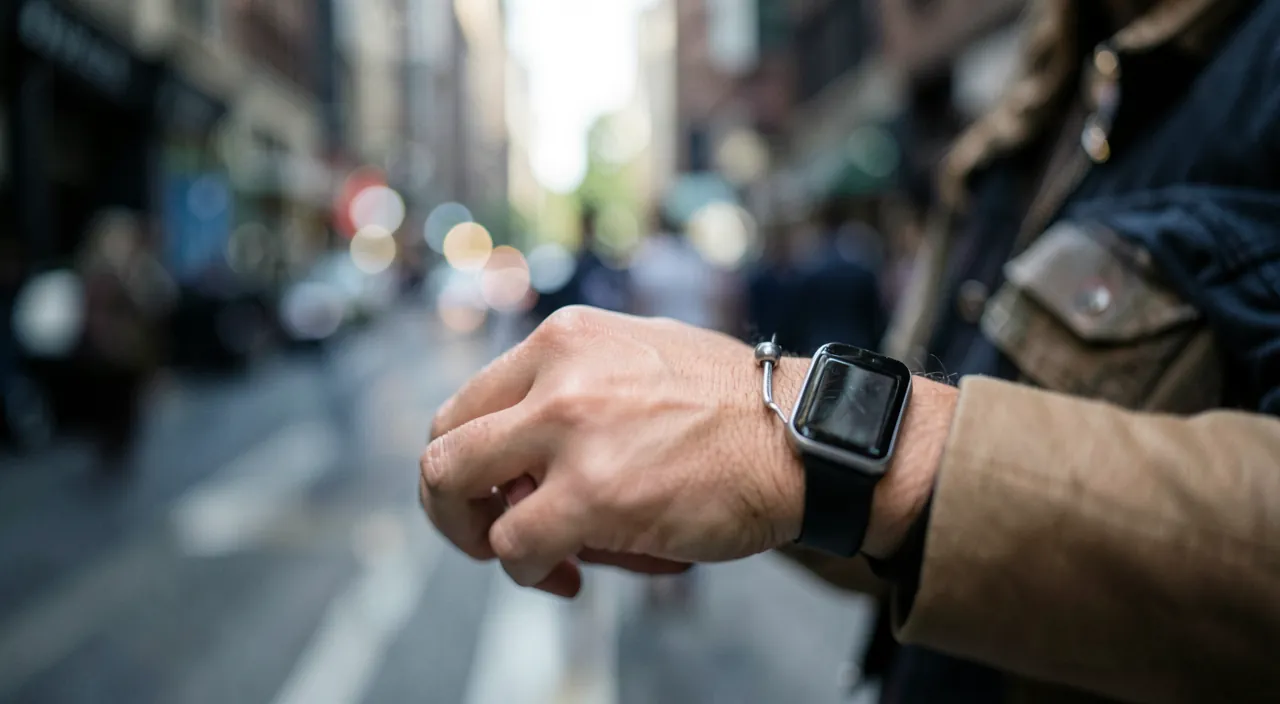
No installation required: the iPhone (Health app) and Android phones (their fitness apps) count steps as soon as the device is on you — pocket, handbag (a bit undercounted), hand. Open the history: months, often years of data are waiting for you — and the first lesson is there: your real average (usually much lower than estimated — sedentary lifestyle is poorly measured by intuition), your weak days (Sunday? Remote work?), your seasons. The smartwatch refines (more complete counting on the wrist, distance, heart rate, reminders to stand) but isn’t a requirement: the phone is enough for the whole process. A word about the mythical number: the 10,000 steps aren’t a medical truth but a historic marketing slogan (from a 1960s Japanese pedometer) — current science is more nuanced and more encouraging: major benefits appear at 6,000-8,000 daily steps, and above all, the biggest health gain is at the bottom of the scale — going from 3,000 to 6,000 steps transforms health more than from 8,000 to 11,000. Your goal isn’t a universal number: it’s YOUR current average + 15-20%, maintained for a month, then increased — the gradual progression that has proven effective everywhere.

Walking more doesn’t need fancy equipment. Your phone already tracks steps, and the biggest health boost comes from going from very little walking to just a moderate amount. Don’t aim for some magic number – just try to walk a bit more than you do now, and increase gradually.
A 40-year-old office worker checks their phone and sees they average 3,500 steps daily. They set a goal of 4,200 steps (20% increase) for a month. By walking to the train station instead of driving, taking short walks during lunch, and doing a 15-minute evening stroll, they reach 4,500 steps daily. After a month, they increase their goal to 5,000 steps.
Boosting motivation: goals, streaks, and challenges
Counting doesn’t make you walk — motivation does, and apps know the tricks: the visible goal — the ring to close, the daily gauge: the brain loves finishing what’s almost done (the evening detour to « complete the ring » is a classic — exploit it); the streaks — consecutive days of hitting the goal: powerful but double-edged (a broken streak demotivates — prefer weekly goals: 5 out of 7 successful days, the flexibility that forgives flu and the unexpected); the social challenges — the step duel with a colleague, the family weekend challenge, workplace team competitions: peer pressure multiplies commitment (choose opponents at your level — a duel with a mailman is a lost cause from the start); the virtual and real rewards — badges, trophies, and apps that convert steps into charitable donations or discounts: crutches you might find gimmicky — until they get you out one November evening; and the visualization of the path — apps that accumulate your kilometers on virtual routes (crossing France, following the Great Wall of China): imagination at the service of your legs. None of these tricks is mandatory: the right one is the one that WORKS for you — test, keep, discard.
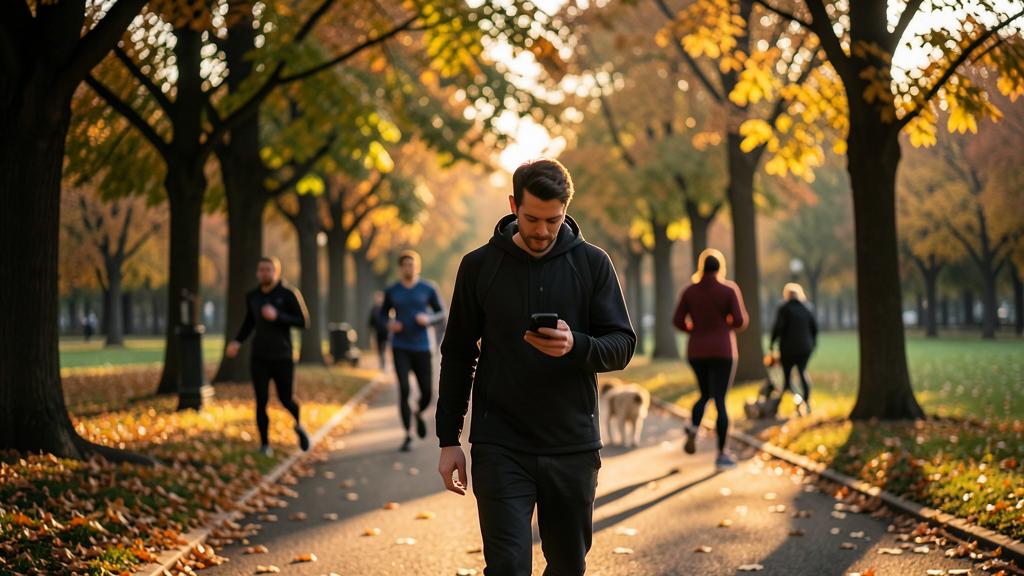
The right reflex. Don’t look for « time to walk » — convert existing trips: get off one stop earlier, park the car ten minutes away, take the stairs instead of the elevator, phone calls while walking (the phone-walking meeting is the trick of busy people), the lunch-time coffee walk. A thousand to three thousand steps slip into a day WITHOUT a dedicated slot — and what doesn’t require a slot never gets skipped. Evening voluntary walking then becomes a bonus, not a debt.
Walking better: intensity, terrain, and company
The number of steps isn’t everything — three settings enhance the practice: intensity — brisk walking (the kind that slightly shortens your breath — you can talk, but not sing) counts double for the heart: apps distinguish « active minutes » from domestic ant steps — aim for 20-30 minutes of brisk walking in your daily total, and interval walking exists (alternate 3 minutes fast / 3 minutes slow — a studied protocol with great results); the terrain — elevation turns walking into training (the stairs counted by the phone are an indicator — the neighborhood hill is a free gym), and the variety of routes keeps the motivation (local hiking apps and their rated loops renew the catalog — Sunday forest walks are also mental outings); the company — the walking partner is the best « engagement device » ever invented (you get up to not let the other down), local walking groups abound (town halls, associations, sports dating apps), and the dog remains the most reliable coach on the market. And for bodies getting back into it — after injury, illness, long sedentary periods — walking is exactly THE way in: short, flat, frequent, with gentle progression: today’s steps, however modest, are a good start (medical advice beforehand for special cases, as always).
The number at the service of life (and not the other way around)
The final, most important level: the right place for measurement. Monthly trends matter more than daily numbers — the slowly rising average is the only curve that counts (the Health app displays them: check them monthly, not daily); bad days are data, not mistakes — illness, downpour, life: the weekly goal system absorbs them without drama; walking without a phone is still walking — the uncounted contemplative stroll counts for the mind (and the mind makes you walk tomorrow): allowing phone-free outings is a sign of system health, not cheating; and the invisible benefits remind you — the counter doesn’t measure the lifted mood, the deeper sleep, the ideas unlocked on the way (great walking thinkers didn’t have pedometers): if steps increase but walking becomes a numbered chore, reverse the trend — less dashboard, more beautiful routes. The ultimate goal of the pedometer is paradoxical and healthy: to become unnecessary — the day walking is once again a reflex and a pleasure, the counter is just a discreet witness of what the body has relearned.

Beware of comparisons and data-hungry apps. Two pitfalls to avoid: the toxic comparison — public rankings where your 5,000-step comeback sits next to a bike courier’s 25,000: compare yourself to last month, never to the general table (and set challenges between peers of the same level); and the dubious « paid steps » apps — those that promise to pay you for steps in exchange for invasive ads and massive data collection (permanent location, contacts): your movement data is worth more than the promised pennies — native apps (Health, Fitness) do the job without asking for anything. A healthy pedometer is sober: it counts, it encourages, it stays silent.
Frequently asked questions
Is the phone’s step count reliable?
Enough: ±5-10% in your pocket — more than enough for trends and goals (absolute precision has no practical interest: it’s the progress that counts, and the error is constant). The watch also captures steps « without the phone » (home, office): if you often leave your phone down, it restores the truth — or accept a slightly lower count, which doesn’t change the approach.
Is walking enough as the only physical activity?
It’s an exceptional foundation — heart, weight, mood — validated by research. Recommendations ideally add muscle strengthening twice a week (especially with age: muscles and balance): a few bodyweight exercises perfectly complement walking. But if the choice is between « walking only » and « nothing while waiting for the ideal »: walk — the best is the enemy of the step.
And the 10,000 steps then, should I forget them?
Keep them as a friendly benchmark if the number motivates you — it’s neither magical nor mandatory. The real target is personal and progressive: your average +20%, maintained then increased, with a core of brisk walking. 7,000 regular steps beat 12,000 heroic steps once every three Saturdays — consistency is the only round number that counts.
What to remember
The pedometer turns walking into a measurable habit — provided you use it well: start with YOUR real average (the phone already knows it) and progress in 15-20% increments, prefer the flexible weekly goal to the tyrannical streak, slip steps into existing trips (the earlier stop, the stairs, the walking call) rather than looking for time, add a core of brisk walking, and dose the motivation triggers — peer challenges, rings, virtual routes — according to your temperament. The number remains a servant: monthly trends, bad days absorbed, uncounted strolls welcome. Walking is the only sport humanity has practiced forever without knowing it — the phone just gave it a dashboard: it’s up to you to restore its nobility, one bus stop at a time.
Want to go further with your phone and apps? Our practical training is made for you.
Leave a Reply
You must be logged in to post a comment.