
This is one of the first questions of any website project — and one of the most poorly asked: should you have a « one-page » site (everything on a single large scrolling page) or a classic multi-page site? Both formats have their evangelists, successes, and misuses. The real answer depends on three precise factors: what you have to say, who needs to find you, and how your site will grow. This guide honestly weighs the pros and cons — strengths, weaknesses, use cases — so you can choose knowingly.
The one-page: the power of simplicity
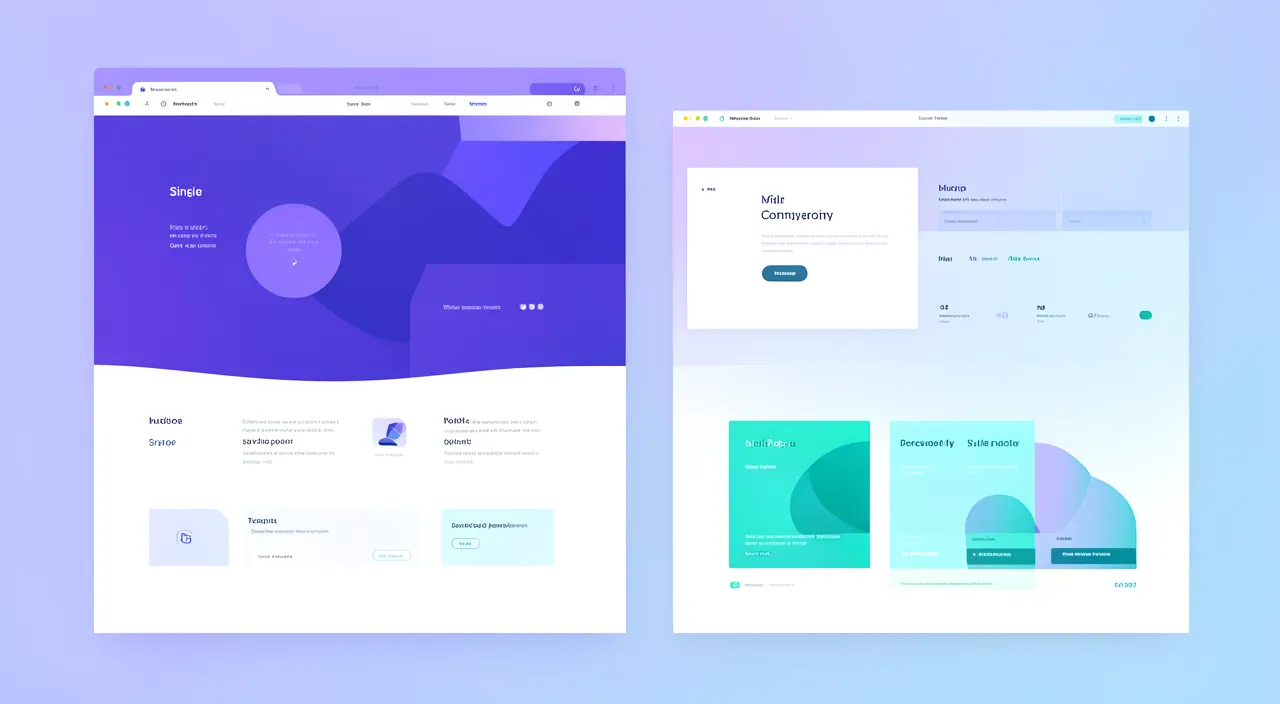
The single-page site presents your entire message in one scroll: introduction, services, proof, contact — a linear story that the visitor consumes in one gesture. Its real strengths: a controlled journey — you control the order of the narrative, no one gets lost, and the thread naturally leads to the final contact; a quick and cost-effective implementation — less content to produce, a launch in days; minimal maintenance; and true elegance on mobile, where scrolling is the natural gesture. The format shines for: launching a business that needs to exist quickly and well, a freelancer with a unique and clear offer, an event, a unique product, or an enhanced business card for a local artisan whose customers come through word-of-mouth and the local listing.
Its limits: where the one-page hits a ceiling
The downside comes down to one word: SEO. A single page can only seriously target one main subject-query — impossible to rank for « emergency roller shutter repair [city] » AND « gate motorization » AND « awning installation » with one page: each service that deserves its own search deserves its own page, and the one-page sacrifices all but one. Added to this: the impossibility of attracting content (no blog, no guides — therefore no incoming traffic over time), the page that gets bloated as you try to cram everything in (the 15-section one-page scrolls endlessly and loses its appeal), and the poor analytics — one page, one statistic: hard to know what interests visitors. The one-page is an excellent starting point and a poor endpoint for anyone who wants to grow through the web.

A one-page site is great for simple, clear messages but can’t handle multiple topics well. It’s like trying to fit a whole book into a single page—eventually, it gets messy and hard to navigate.
A local bakery with a one-page site can showcase its menu, location, and contact info perfectly. But if it also wants to rank for « gluten-free pastries [city] » and « wedding cakes [city] », it needs separate pages for each—otherwise, search engines won’t know which query to prioritize.
The right reflex. Ask yourself THE discriminating question: « Do my clients need to find me through varied searches, or do they already know me? ». Word-of-mouth, networks, local listing, business card → the one-page often suffices, brilliantly. Multiple searches to capture (services, cities, questions) → the multi-page is essential — each important query requires its own dedicated page. The format is chosen by the acquisition channel, not by aesthetics.

The multi-page: the structure that grows
The classic site — home, services pages, portfolio, about, blog, contact — perfectly addresses the limitations of the one-page: one page per subject therefore one chance per search (the heart of SEO), endlessly extensible content — the blog that attracts, local pages, guides —, depth at the service of the visitor (those who want to know everything about ONE service find THEIR complete page), and meaningful statistics — which pages attract, which convert. Its cost: more content to produce (each page must justify its existence — the multi-page with skeletal pages combines the flaws of both worlds), navigation to refine, real maintenance. This is the format for any activity that wants to make the site an acquisition channel — and not just a confirmation of existence.
The false dilemma: the trajectory rather than the choice
The good news: it’s not a definitive choice but a trajectory. The winning path for most small businesses: start with a polished one-page — exist quickly, cleanly, with a controlled narrative —, then let pages bloom when the need proves it: the most in-demand service becomes a dedicated page, then a second, then the portfolio page, then the first article — the initial one-page becoming the home page of the growing site. Conversely, some multi-pages would benefit from merging their ghost pages into a single dense page. The permanent criterion: each page must have an audience and a purpose — no graveyard pages in a multi-page, no overflowing river page in a one-page. The structure follows the real content, never the other way around.

To avoid. The two caricatures: the one-page catch-all with twenty sections that scroll for three minutes (no one reaches the contact — cut it down!), and the rushed multi-page with six pages of three lines each (search engines and visitors hate emptiness — group them!). And in both formats, the same non-negotiable requirement: speed, flawless mobile display, and an obvious contact path at all times. The format never saves the execution.
Frequently asked questions
Can a one-page site be well-ranked?
For ITS main query (often the name + the city + the profession), yes, very well — especially backed by a solid local listing. It’s the multiplication of targeted queries that eludes it structurally: one page cannot be relevant for ten subjects.

Which format is the cheapest?
The one-page at creation (less content, less design) — but the full calculation includes acquisition: if the multi-page brings you clients through searches, it pays for itself. The « cheapest » depends on what the site needs to bring in.
And for a restaurant, a guesthouse, an association?
The one-page (or almost: 2-3 pages) excels for these cases — menu/services, photos, practical info, contact: the essentials fit, and customers arrive through the local listing and word-of-mouth. The blog only justifies itself if you really want to capture searches (recipes, local tourism…).
What to remember
One-page or multi-page is not a matter of fashion but of acquisition channel: clients who already know you → polished one-page, quick to launch, with a controlled narrative; clients to capture through varied searches → multi-page, one page per important query, extensible with attractive content. And above all, think trajectory: start simple with a one-page, let pages emerge when real need proves it — the structure follows the content, never the other way around. In both cases, execution reigns: speed, flawless mobile, obvious contact. The best format is the one that serves your next client — not the one from the latest trendy tutorial.
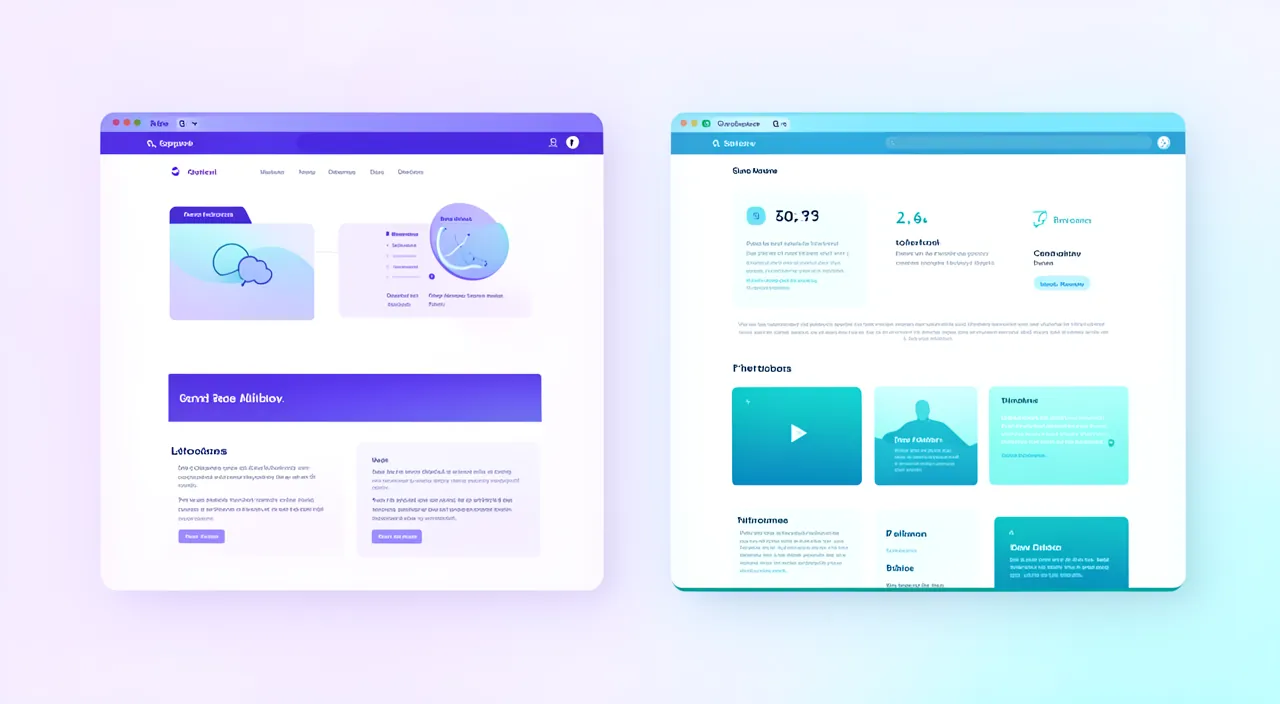
Your business deserves a real online presence: showcase site, store, SEO — we create the site that reflects you.
Leave a Reply
You must be logged in to post a comment.