
An independent or small business’s communication time is precious: two, maybe three hours per week. Should you invest them in a blog — slow to bear fruit but lasting — or in social media — immediate but fleeting? The debate is often framed as a religious war; in reality, it’s a matter of goals, time horizon, and temperament. This guide honestly compares the two channels — what each truly does, for whom, at what cost — and shows how to intelligently combine them when you can’t do everything.
Two opposing logics: heritage and flow
The fundamental difference lies in the content lifespan. A blog post is a heritage asset: published today, it attracts readers through searches for months or years — each post adds to the previous ones, traffic accumulates, and it all belongs to you (your site, your rules, your contacts). A social post is a flow: seen for a few hours or days, then swallowed up — you must republish constantly to exist, on rented land where the algorithm changes the rules without notice, and where your audience can become inaccessible overnight. The blog builds; social media maintains. Neither is « better »; they serve different purposes.
What each does better than the other
The blog excels at: capturing search queries (your future clients type their questions — your articles answer them, including via AI assistants that cite their sources), demonstrating in-depth expertise (a complete guide is more credible than a hundred posts), conversion (the reader is on your site, one click away from contact), and independence (no algorithm can take away your site). Social media excels at: immediacy (a post lives in the moment), relationship and proximity (behind-the-scenes, faces, daily life — what humanizes), recommendations and sharing (digital word-of-mouth), visual demonstration (image-based professions: crafts, food, decor…), and direct contact with a local community. Brutal summary: the blog attracts strangers who are searching; social media retains people who already know you — and both mechanisms feed each other.
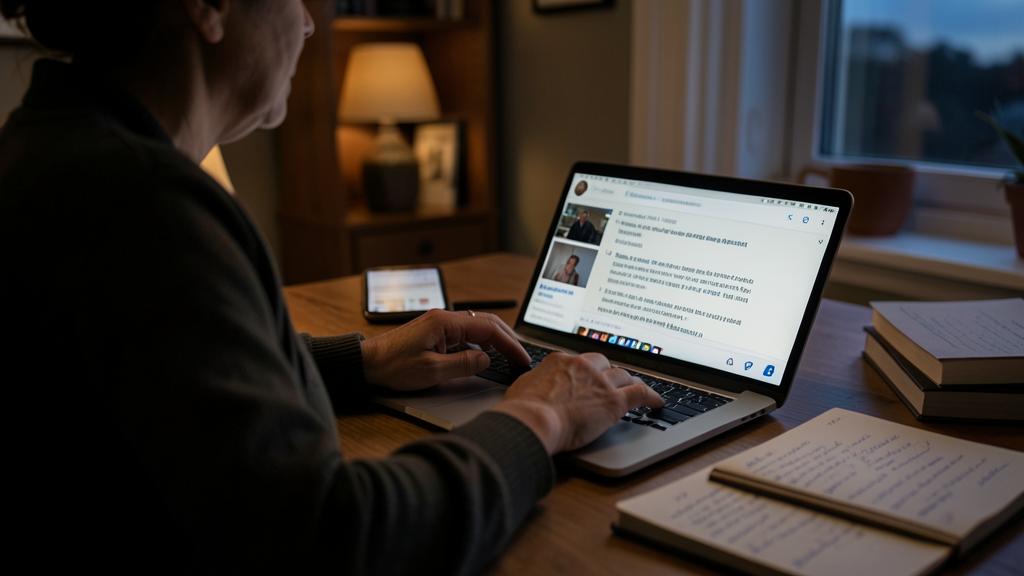
A blog is like a book: it stays on the shelf and keeps bringing readers over time. Social media are like a newspaper: you need to publish daily, and yesterday’s news is gone. The blog is yours; social media belong to someone else.
A bakery owner writes a blog post titled “How to Choose the Perfect Wedding Cake” (1,500 words, SEO-optimized). It ranks on Google for 6 months, bringing 50 inquiries. The same content is broken into 3 Instagram posts: a carousel of cake photos, a Reel showing the baking process, and a poll asking followers to vote their favorite flavor. The posts get 200 likes, but only 5 inquiries. The blog post is the long-term asset; the social posts are short-term engagement.
The right reflex. Adopt the downstream recycling strategy: write ONE solid blog post per month (the heritage), then break it down into several social posts — the key tip as a post, the statistic as a visual, the trick as a short video, the question as a poll. A single in-depth effort fuels all channels: the blog provides the content, social media distributes it — and each post leads back to the full article, therefore to you. This is the only sustainable strategy at two hours per week.

The choice based on your situation
A few typical profiles to situate yourself: the local artisan (clients through word-of-mouth and local search) — priority to business listing + a few articles answering customer questions (« how much does it cost », « how to choose »): here, a light blog beats time-consuming social media; the visual local business (florist, bakery, restaurant) — image-focused social media first (the daily showcase), a simple website as support; the consultant or expertise-based profession — the blog is king (it’s the demonstrated expertise that sells), professional networks as a relay; the online store — both, unfortunately: the blog to capture purchase searches, social media for branding — hence the vital importance of recycling. In all cases, the rule for beginners: one well-maintained channel is better than three dying ones — choose the one that matches your actual acquisition, excel at it, then expand.
The mistake to stop making: betting everything on rented platforms
The classic strategic trap: building your entire presence solely on social media — « it’s free, that’s where the people are ». Until the day when: the algorithm changes and reach collapses, the account is suspended by mistake (recourse is a wasteland), or the platform declines with your audience inside. The heritage rule: social media are excellent rented amplifiers, never the foundation — the foundation is what you own: your site, your content, and above all your contact list (newsletter): the only channel that reaches your audience for sure, without algorithmic toll. Every rented channel must lead back to the owned: the post to the article, the article to the signup — that’s the one-way flow of value.

To balance. Social media have a hidden cost the blog doesn’t: the mental load of the flow — constantly posting, reacting, enduring comparison and ego metrics (likes ≠ clients). If social media exhaust you without bringing measurable clients, you have the right — strategically — to reduce them to a minimum and reinvest that time in three in-depth articles that will work for years. Sustainable communication is the kind you can maintain without burning out.
Frequent questions
Do blogs still work in the era of AI and video?
More than ever: searches (traditional and via AI assistants) remain the first channel of purchase intent, and they feed on quality written content — which AI cites as sources. Video complements; it doesn’t replace the written answer that can be found.

How often should you publish to make it count?
Blog: one good article per month, maintained over time, beats ten articles in January then nothing. Social media: two-three posts per week suffice with recycling. Modest regularity crushes fleeting intensity — everywhere.
How to measure what actually pays off?
Through incoming requests: always ask « how did you hear about us? » and track contacts from the site vs. social media. Views flatter; quotes speak. Adjust time investment based on what generates the latter.

What to remember
Blog and social media don’t serve the same purpose: the blog is a heritage that durably captures searches and demonstrates expertise — on your own site; social media are a rented flow that maintains relationships and amplifies — on others’ platforms. The choice follows your actual acquisition channel, with the rule of starting with one well-maintained channel, and the recycling strategy (one monthly article broken into posts) to cover everything without burning out. And engrave the heritage rule: every rented channel leads back to the owned — site and contact list — because you don’t build your house on land you don’t lease. Your two hours per week are precious: invest them, don’t scatter them.

Your business deserves a real online presence: showcase site, store, SEO — we create the site that reflects you.
Leave a Reply
You must be logged in to post a comment.