
« Dad, who is answering the phone ? » Our children grow up with machines that talk, draw, and know almost everything — or almost. Faced with this AI generation, parents oscillate between fascination, concern, and the feeling of being overwhelmed. Good news: explaining AI to children requires no technical expertise — just a few accurate images, simple rules, and regular conversations. This guide gives you the words, activities, and benchmarks to turn your children into aware users rather than gullible consumers.
Explaining AI with child-friendly words
No need to talk about neural networks — one image is enough, adapted according to age. For the little ones (5-8 years old) : « it’s a machine that has read a lot of books and watched a lot of images, and guesses what to answer — like when you guess the end of a story you know well ». For the older ones (9-12 years old) : introduce learning by example — « we didn’t teach it rules, we showed it millions of examples » — and the key word: it guesses, very well, but it doesn’t know like you do. For teens : real concepts (models, data, biases, hallucinations) work well, especially illustrated by their real uses. The essential, at any age: AI is a machine very good at imitating — neither a person, nor a friend, nor an infallible authority.

The three rules to instill early
- « AI sometimes makes mistakes — we check the important things. » Show them a mistake in real time (ask for a specific fact and verify together) : nothing anchors the critical reflex better than catching the machine in the act, laughing.
- « You don’t tell your secrets to a machine. » Full name, address, school, personal photos, intimate concerns: what you don’t say to a stranger, you don’t say to an AI. Simple, memorable, vital.
- « AI helps you think — it doesn’t think for you. » The homework rule: asking for an explanation, yes; having it write your essay, no. Schools are getting better at detecting — but above all, the child who delegates learns nothing, and will pay the price alone.
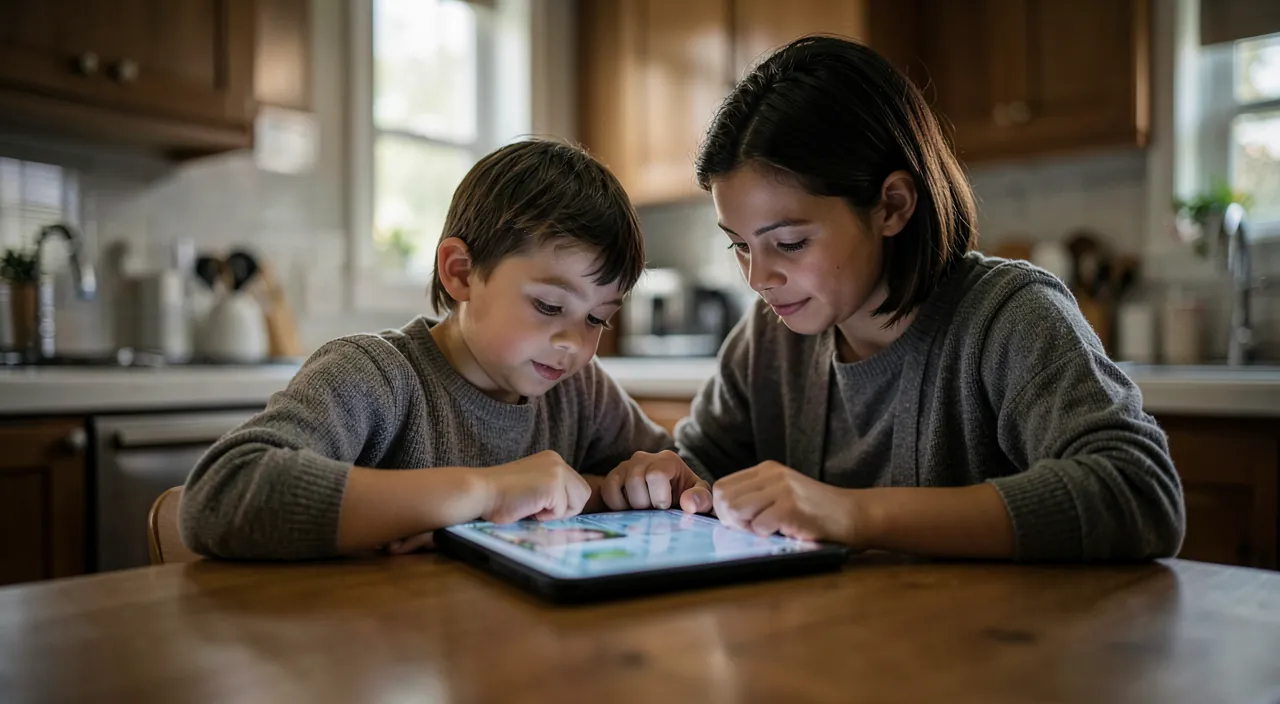
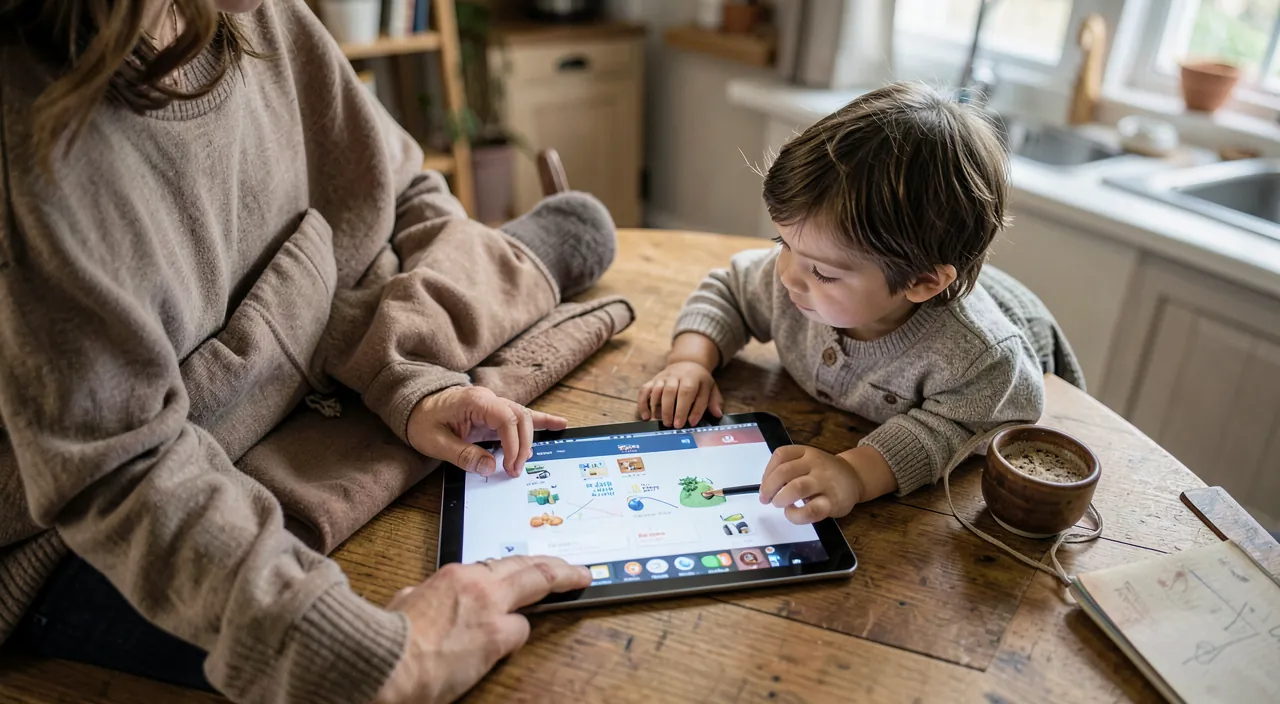
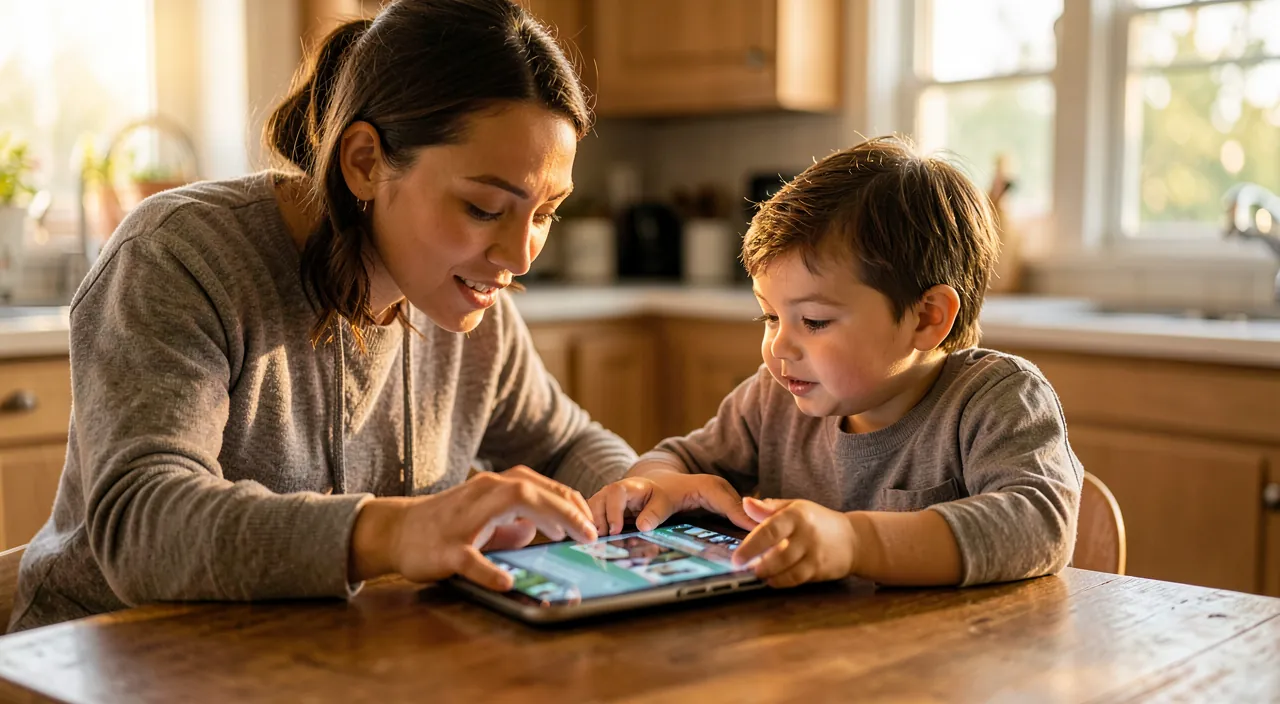
The right reflex. Use AI with them rather than leaving it to them: a quarter of an hour together per week — inventing a story with four hands, preparing a presentation, generating silly images, having it review multiplication tables. You see how they use it, they see how you use it — and the important conversations (errors, secrets, critical thinking) arise naturally, without a lecture.
Activities that make you smart
A few games are worth all the speeches. The AI trap : looking together for a question where it makes a mistake — the all-category champion to understand its limits. The detector : showing real photos and generated images, guessing which ones — and discovering that it’s difficult, so you don’t believe an image just by its looks. The contradictory debate : asking the AI for arguments for AND against (phones in school, homework…) — the living demonstration that a question has several sides. The robot interview : letting the child ask it all their « why » questions — and debriefing: what seemed strange to you? fair? These games forge exactly the reflexes this generation will need: curiosity + verification.

AI is like a super-smart parrot: it repeats what it has heard, but it doesn’t really understand. It can make mistakes, so you should always double-check important things. And just like you wouldn’t share secrets with a stranger, you shouldn’t share them with AI.
Imagine a child asks an AI, “What is the capital of France?” The AI might answer “Paris,” which is correct. But if the child asks, “What is 2+2?” and the AI answers “5,” the child should know to check because the AI made a mistake. This shows why it’s important to verify answers, especially for important questions.
The real points of vigilance
Beyond general rules, three topics deserve parents’ attention. The emotional bond : AI companions always available, always nice, can become for some children a refuge preferable to real relationships — stay attentive to the time spent and the discourse (« it’s my friend ») : AI must never replace friends, or human confidants. Generated content : fake images and voices circulate in the schoolyard — explain early that creating or sharing images of classmates is serious, and that not everything that circulates is true. Age and framework : respect the minimum ages of services, prefer children’s modes when they exist, and keep uses in common spaces for the youngest — like the rest of the screens.

What not to do. Neither total prohibition — which leads to hidden uses and deprives of an essential learning — nor laissez-faire equipped — AI in self-service without conversation or framework. Children don’t need parents who are experts in AI: they need parents present in their uses, who question, play, and set benchmarks. Technology changes; support, on the other hand, remains the same job.

Frequent questions
From what age can a child use an AI?
Accompanied, as soon as curiosity is expressed — it’s the autonomous use that must wait for maturity (and the minimum ages of services). The good indicator: as long as the child does not clearly distinguish the real from the generated, the adult stays in the loop.
My child does their homework with AI: should I punish them?
First, understand the use: having a concept explained is excellent practice; having the homework written, no. Make the distinction, test their understanding with kindness (« explain it to me in your own words ») — and remind them of the stakes: it’s THEIR brain they’re training, or not.

How to stay up to date when it changes all the time?
You don’t have to keep up with the technology: the benchmarks of this guide (verify, protect your secrets, think for yourself, keep the human connection) go through all the evolutions. And your children will be happy to show you the novelties — it’s an opportunity for golden conversations.
What to remember
Explaining AI to children boils down to one image — a machine champion at imitation, which guesses but doesn’t know — and three rules: we verify the important things, we don’t share our secrets, we think for ourselves. The best vector is not the lecture but shared practice: AI trap games, image detection, contradictory debates — a quarter of an hour together per week forges the reflexes of a generation. Stay vigilant about the emotional bond with artificial companions and fake content, avoid total prohibition as much as laissez-faire: in between, there’s you. These children will live their whole lives with AI — teaching them to look it in the face is the most beautiful of digital gifts.
Want to master AI and make it a real asset in your daily life? Our training programs support you at your own pace.
Leave a Reply
You must be logged in to post a comment.