
Manipulated images, fake texts, mimicked voices, doctored videos: as AI becomes increasingly capable of generating more credible content, distinguishing truth from falsehood is becoming a major challenge. Knowing how to spot AI-generated or falsified content is now an essential skill, to avoid being misled or spreading false information. This guide provides you with the keys to sharpen your vigilance against artificial content.
A societal issue
AI’s ability to create realistic content—images, texts, voices, videos—has a worrying downside: it facilitates disinformation, scams, and manipulation. A convincing fake visual can spread in an instant; a mimicked voice can be used for fraud. Developing a critical mindset and a few verification reflexes is no longer optional: it’s a necessary protection in a world saturated with content whose origin is unknown.

AI can create very realistic fakes, which makes it easy to spread false information. The best way to protect yourself is to always question what you see and verify the source.
Spotting generated images
While AI-generated images are becoming increasingly realistic, they often still have telltale signs. Look at the details: strange fingers, unreadable or distorted text, inconsistent background elements, abnormal symmetries, reflections that don’t match. A close examination often reveals these flaws. These signs are becoming rarer with technological advancements, but careful observation remains a good first reflex.
The right reflex. When faced with surprising or shocking content, be wary of your first emotional reaction: that’s exactly what fake content preys on. Take the time to verify the source before believing or sharing. Doubt and verification are your best protections.

In 2024, a fake image of a plane crash on a major runway (Runway 09L at Paris Charles de Gaulle, 4,100 meters long) circulated online. The image showed a Boeing 737 in flames, but the background had distorted text and unnatural shadows. A quick check revealed no such accident had occurred, and the image was traced back to an AI generation tool.
Always verify the source
Beyond examining the content itself, the most effective reflex is to verify the source. Where does this image, text, or information come from? Is it relayed by reliable and recognized sources? Important and true information is usually confirmed by several serious sources. Isolated content with a dubious or untraceable source should raise suspicion, no matter how convincing it appears.
Beware of AI scams
AI is also used for targeted scams: fake voices mimicking a loved one in distress, personalized fake messages, sophisticated impersonations. The reflex: when faced with an urgent request for money or information, even if the voice or style seems authentic, verify through another channel. Call the person on their usual number, ask a question only the real person would know. Urgency and imitation are the tools of scammers.
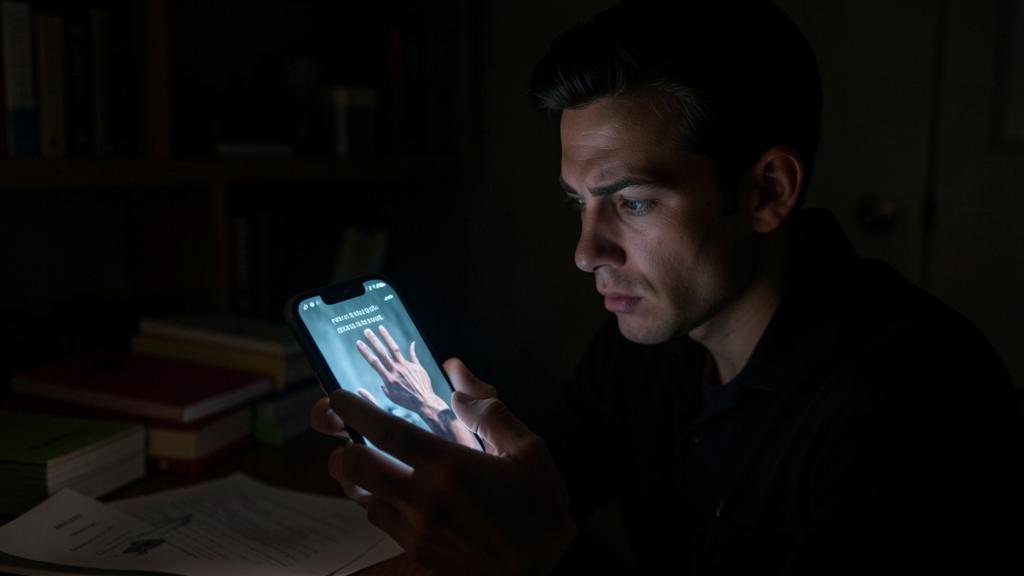

Never forget this. No detection technique is foolproof, and fakes evolve quickly. The best defense isn’t a tool, but an attitude: methodical doubt. Never blindly believe spectacular content or urgent requests without verifying, especially if they play on emotions.
Train your eye: five quick checks
When faced with a suspicious image, run through this 30-second checklist: 1. Hands and fingers—count them, AI still often fails here. 2. Text in the image—signs, labels: distorted characters betray synthesis. 3. Backgrounds—blended objects, impossible perspectives, crowds with strange faces. 4. Reflections and shadows—do they match the lighting? 5. The source—who published it, where, when, cross-checked by whom? This last check remains the most reliable: visual flaws disappear as technology advances, but source verification will always work.

Frequently asked questions
Are there detection tools?
Yes, but they are imperfect and fallible. They can help, but they don’t replace source verification and critical thinking, which remain the most reliable.
How can you protect your loved ones?
By raising their awareness, especially about scams involving fake voices. Agree on a family password or a verification question for emergency situations.

Will future generated images be marked?
Standards for marking and tracking content are gradually being deployed (origin metadata, signatures). Useful, but bypassable: they will help without eliminating the need for source verification, which remains your best long-term reflex.
Key takeaways
Distinguishing truth from falsehood in the age of AI is an increasing challenge and an essential skill. Examine the details of images, but above all always verify the source and cross-check important information. Be wary of emotional reactions that fake content exploits, and verify any urgent request through another channel. Since no tool is infallible, your best protection remains an attitude: methodical doubt and verification. That’s how you navigate lucidly in a world of artificial content.

Need to raise your team’s awareness of digital risks?
Leave a Reply
You must be logged in to post a comment.