
You have surely noticed a frustrating limitation of artificial intelligences: they sometimes « invent » answers, or ignore your documents, your company, your context. The technique called RAG (Retrieval-Augmented Generation, or « generation augmented by retrieval ») precisely solves this problem. It is today one of the most useful approaches to make an AI reliable and truly relevant. And good news: the principle can be understood without being an engineer.
In this article, we explain RAG in simple terms, why it changes everything for professional use, how it works step by step, and how to know if it is relevant for you.

The problem that RAG solves
A language model has been trained on an immense amount of text, at a given time. This results in two well-known limitations. First, it knows nothing about what is private or posterior to its training: your contracts, your catalog, your internal procedures are completely invisible to it. Then, when it doesn’t know, it tends to produce a plausible but false answer — what is called a « hallucination. »
RAG corrects these two flaws at once. The idea is intuitive: instead of asking the AI to answer « from memory, » you first provide it with the right documents, then ask it to answer based on them. A bit like the difference between a memory exam and an open-book exam.

A simple analogy to understand everything
Imagine an excellent librarian. You ask them a pointed question. Instead of answering from memory at the risk of being wrong, they will first look for the three or four most relevant books in the shelves, open them to the right pages, then formulate an answer based on what they just read. RAG is exactly this mechanism: a retrieval phase followed by a generation phase.
The result is an answer anchored in real and verifiable sources, often accompanied by references — which allows the user to control and trust.
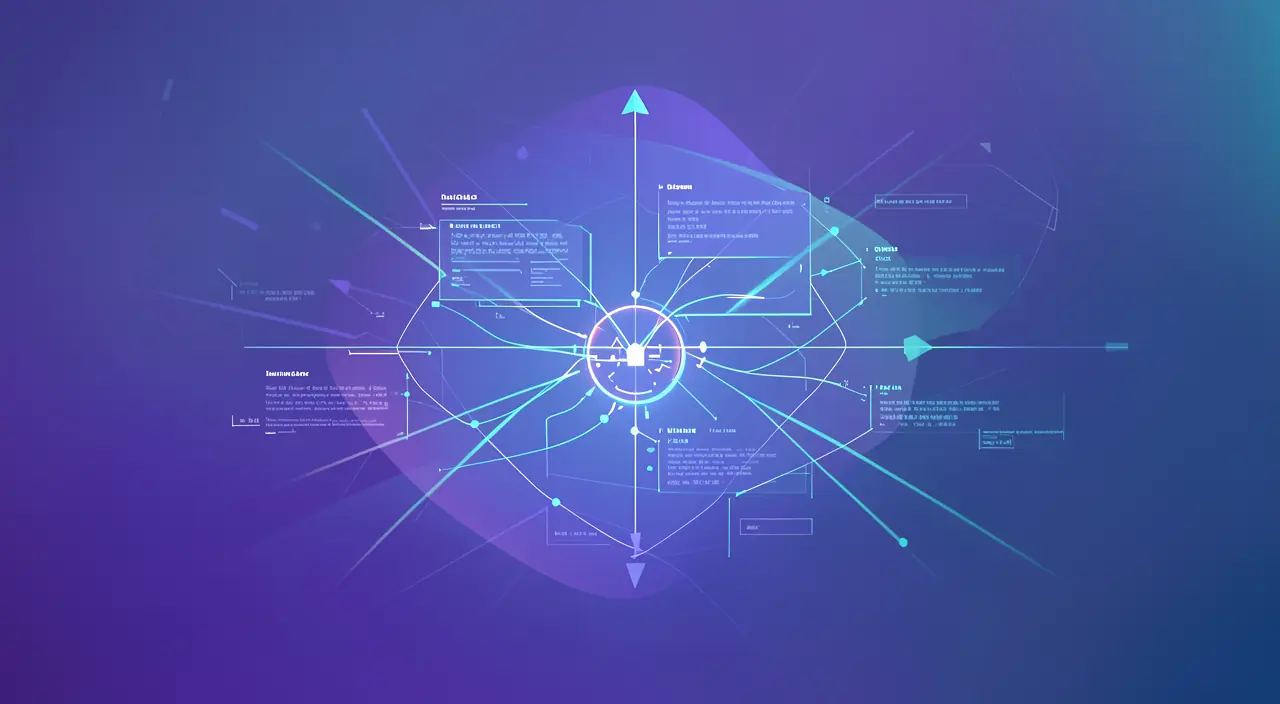
How it works, step by step
- Document preparation: your texts (PDFs, web pages, product sheets) are cut into small pieces called « chunks. »
- Vectorization: each piece is converted into a sequence of numbers that captures its meaning. Two texts close in meaning will have close vectors.
- Storage: these vectors are stored in a specialized database, the « vector database. »
- Retrieval: when you ask a question, it is also vectorized, and the system retrieves the most relevant text pieces, i.e., the closest ones.
- Generation: these pieces are transmitted to the model with your question, and it writes an answer based on them.
What is remarkable is that the retrieval is done on the meaning and not on the exact words. You can ask « how to cancel my order » and find a document that talks about « refund procedure, » even without any common words. This is what makes the experience so natural for the user.

The right reflex. The quality of a RAG system depends first on the quality and organization of your documents. Clear, up-to-date, and well-structured texts give much better answers than a mess of disorganized files. This rule is often summarized as: « garbage in, garbage out » — poor data in, poor answers out.

RAG works like a smart assistant that first looks up the right documents before answering. It’s like having a librarian who checks the books before giving you an answer, making sure it’s accurate and based on real information.
Imagine a customer service chatbot for an airline. When a user asks, “What’s the baggage allowance for a flight to Paris?” the RAG system first searches the airline’s official baggage policy documents, then generates an answer like: “Your baggage allowance is 23 kg in economy class, based on our policy updated in 2024.” This ensures the answer is always correct and up-to-date.
Why it’s a turning point for companies
RAG finally allows you to connect an AI to your own knowledge. The practical applications are numerous and immediately useful:
- An assistant that answers customer questions based on your real and up-to-date documentation.
- An internal search engine that understands questions asked in natural language.
- A technical support that draws from your guides and incident histories.
- A compliance tool that relies on your official procedures rather than generalities.
In all cases, the main advantage is traceability: the answer cites its sources, which inspires confidence and allows verification — two indispensable conditions in a professional context, where an error can be costly.

Points of caution
RAG is not a magic wand. If the provided documents are outdated or contradictory, the answer will be too. If the retrieval brings up off-topic passages, the model can be misled. Finally, you must think about confidentiality: your sensitive documents must be processed in a secure environment, with guarantees on their storage.
Avoid this. Never consider an AI answer, even with RAG, as an absolute truth on a critical subject (legal, medical, financial) without verifying it against the cited source. RAG greatly reduces errors, but it does not eliminate them completely.
Should you be interested?
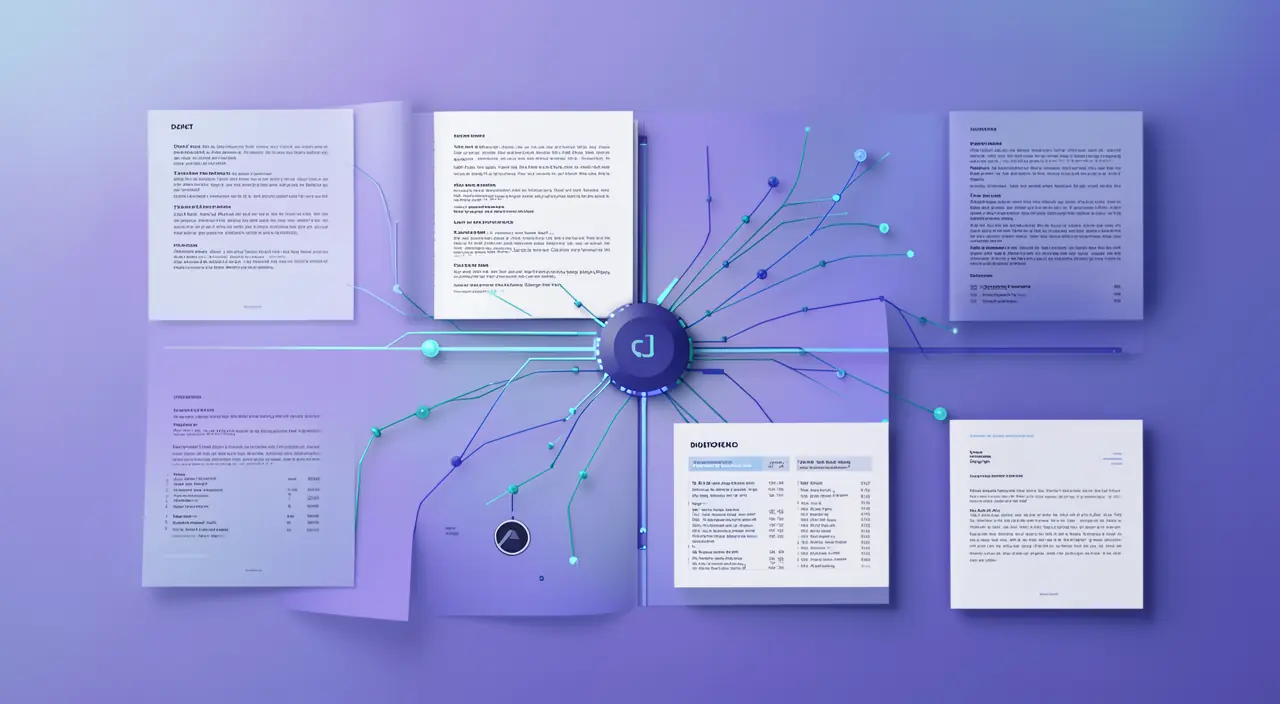
If your activity relies on a knowledge base — documentation, procedures, catalog, customer history — then yes, RAG is probably the most cost-effective way to leverage AI today. It turns a generic model into an expert in your business, without the costly retraining of a custom model. For a small structure, it is often the best balance between effort invested and value obtained.
What to remember
RAG is the art of giving the AI the right documents at the right time, so that it answers correctly rather than guessing. Easy to understand by the librarian analogy, it brings reliability, traceability, and relevance — the three qualities that were missing from generative AI for serious use. Well implemented, on clean and up-to-date documents, it radically changes the value that an organization can derive from artificial intelligence.

A project for an AI assistant on your own documents?
Leave a Reply
You must be logged in to post a comment.