
The VPN is everywhere: in ads, recommended by influencers, presented as the indispensable tool for your online security. But what does a VPN actually do? What is it really used for, and when is it useful—or not? Between marketing promises and reality, it’s useful to separate fact from fiction. This guide clearly explains what a VPN is, what it protects, and when to use it.
What is a VPN, exactly?
A VPN (virtual private network) creates an « encrypted tunnel » between your device and the internet. In concrete terms, your connection goes through an intermediate server that masks your real address and encrypts your exchanges. Two main effects result: your data circulates in a protected way, and your apparent location changes, since you seem to be connecting from the server’s location.

What is it really used for?
- Securing a connection on a public network: this is the most legitimate and useful use case.
- Protecting your privacy from certain intermediaries who might observe your traffic.
- Accessing content by appearing to be from another geographic location.
The VPN therefore has real and relevant uses. But it is not the universal security solution that marketing sometimes suggests: it protects some things, not everything.
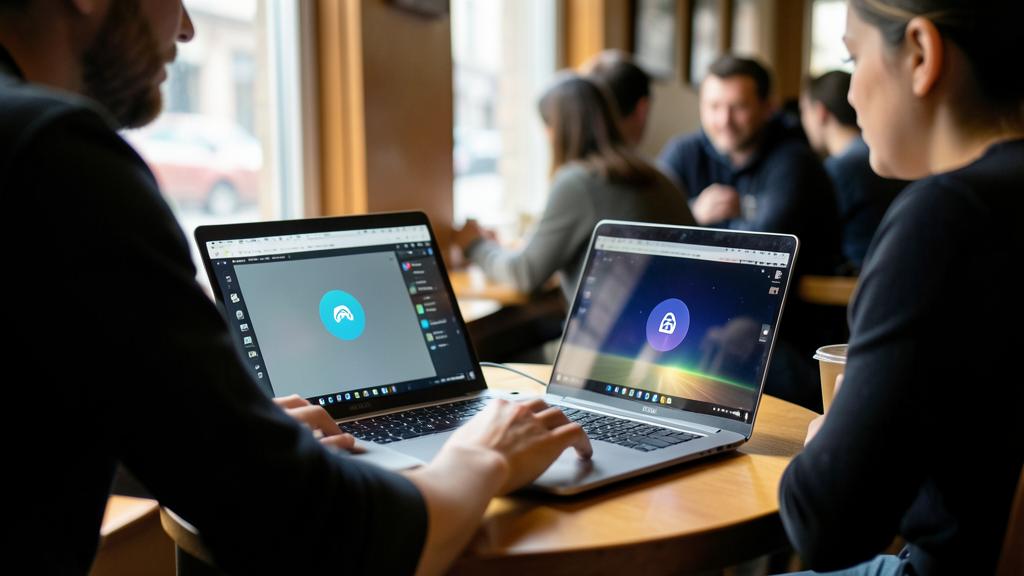
The right reflex. The most justified use of a VPN is connecting to a public Wi-Fi network (café, hotel, airport). On these open networks, a VPN encrypts your exchanges and protects you from potential interceptions. This is where it provides the most value in daily life.

What a VPN does not do
It is essential to understand the limits. A VPN does not make you anonymous or invulnerable. It does not protect you from viruses, phishing, or weak passwords. It does not keep you safe if you download a malicious file or enter your credentials on a fake site. The VPN secures the transport of your data; it does not replace an antivirus, two-factor authentication, or vigilance.
A VPN hides your location and encrypts your internet traffic, but it won’t stop you from getting a virus or falling for a scam. Think of it like a secure tunnel for your data, not a magic shield against all online threats.
If you connect to a public Wi-Fi at an airport and use a VPN, your login details for your bank won’t be visible to hackers on the same network. But if you click on a phishing link in an email, the VPN won’t protect you from that.
Choosing and using a VPN
If you decide to use one, the choice of provider is crucial, as it sees your traffic pass through: a serious service that is transparent about its privacy policy is better than a free VPN with an opaque business model. Be especially wary of free VPNs: some make money by reselling their users’ data, the exact opposite of the intended goal.

Avoid this. Do not blindly trust free VPNs. Routing all your traffic through a service whose business model you don’t know can be riskier than not using one. A VPN requires your total trust: give it to a reputable and transparent provider, not just any random one.
Frequently asked questions
Do I need a VPN at home?
On your secure home network, the benefit is limited for most uses. The VPN is most useful on public networks or for specific needs.

Does a VPN make me anonymous?
No. It masks your address and encrypts your traffic, but total anonymity is a myth. Many other elements can be used to identify you online.
What to remember
The VPN is a useful tool but often oversold: it encrypts your connection and masks your location, which is valuable on public Wi-Fi networks. But it does not replace antivirus, two-factor authentication, or vigilance: it does not make you anonymous or invulnerable. If you use one, choose a serious provider and avoid questionable free VPNs. Well understood, the VPN finds its rightful place in your security arsenal—neither a gadget nor a miracle solution.



Concerned about your online privacy? Let’s take stock.
Leave a Reply
You must be logged in to post a comment.