
Everyone has a book within them, it is said — memoirs for grandchildren, the history of the family home, a novel to be « one day, » a guide to a skill. What is lacking has never been the material: it is the mountain — structuring, writing, months of work, finishing. AI does not climb the mountain for you (a generated book is not YOUR book), but it radically changes the ascent: it interviews, structures, unlocks, re-reads — and the writing project is no longer reserved for writers. Complete method, from family memoirs to manuscript, to printed book.
The misunderstanding to be dispelled: who writes what
Let the rule that governs all be this: a book is worth what it contains of YOU — your memories, your perspective, your voice. « Write a book about my life for me » produces generic filler: no one wants to read it, not even you. The good sharing of roles: YOU provide the material (stories, memories, ideas, expertise) and the decisions (what goes in, the tone, the truth of each page); AI does the rest of the workshop — it questions (the interviewer who brings it to life), structures (the plan that holds), rewrites at YOUR request, re-reads, corrects, and especially maintains the momentum — because books do not die from being badly written, they die from being abandoned. Two postures according to the project: the dictated book — you tell it (by voice, transcribed — see our transcription guide), AI formats it while preserving your language (« keep my expressions, my rhythm, don’t smooth it out »); and the assisted writing book — you write, AI supports (outline, reminders, re-readings): the path of projects where the writing itself matters. Both produce a real book — YOUR book.
Family memoirs: the interview method
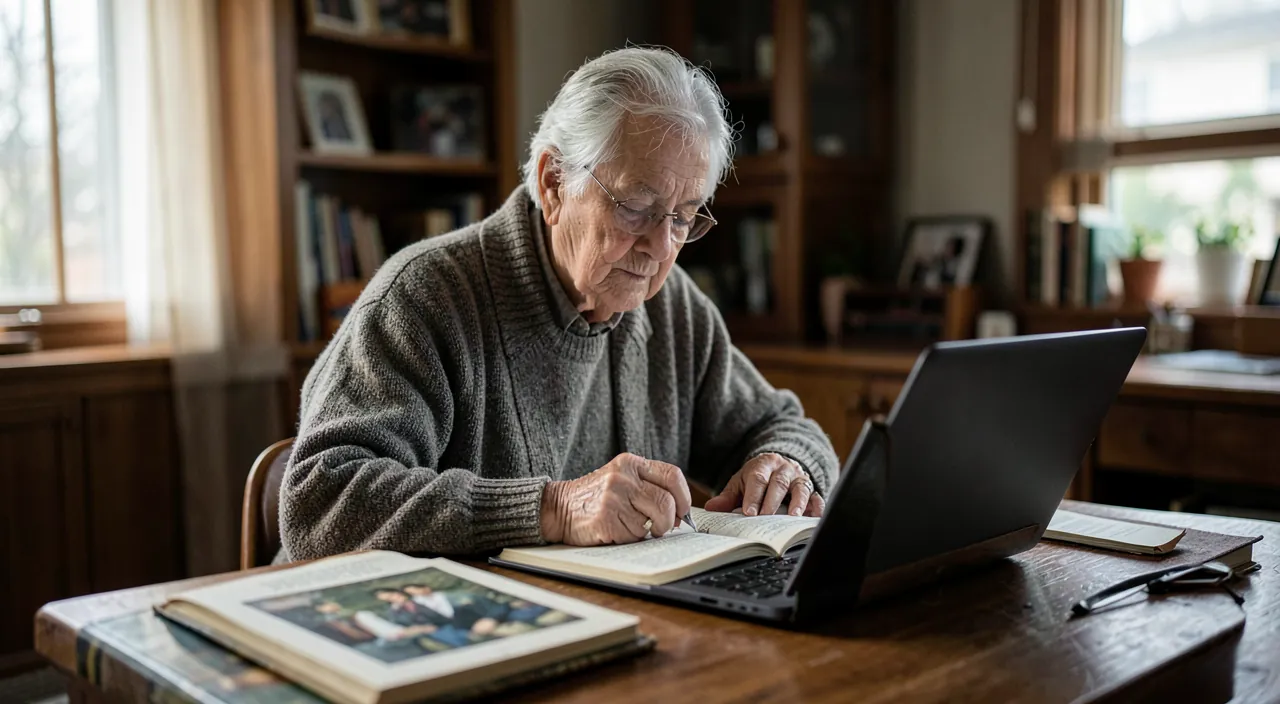
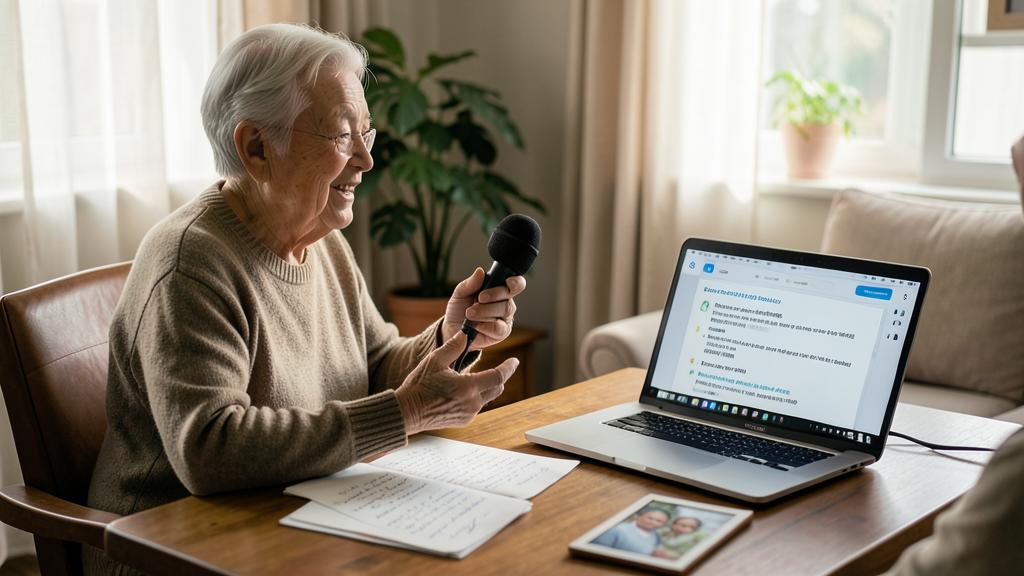
The most widespread and precious project — step by step: 1) The framework — define with AI the scope (« memories from my childhood on the farm to my marriage, » « the history of the bakery over three generations ») and the recipient (grandchildren change the tone): she proposes a chronological or thematic chaptering — choose what liberates the voice; 2) The interview — the heart of the method: session by session, AI poses the questions for the current chapter (« ask me 15 questions about the school of my childhood, one by one, and follow up on my answers »): you respond by voice or keyboard, and the questions bring up what a blank page would never have produced — the scents, the objects, the secondary characters, the ordinary days (the real material of memoirs, eclipsed by the big events); 3) The weaving — each session becomes a first-person text (transform this interview into a first-person narrative in my language, without inventing anything — the anti-invention directive is crucial: AI will happily fill in the gaps, and arranged memoirs are worthless); 4) The truth check — only you know if it’s right: correct the facts, take responsibility for uncertain memories (« it seems to me that… » is honest and charming), and have close relatives read it. Realistic rhythm: one hour a week = a memoir book in six to twelve months. It’s a project of regularity, not talent — and one of the most beautiful gifts that can be passed on.
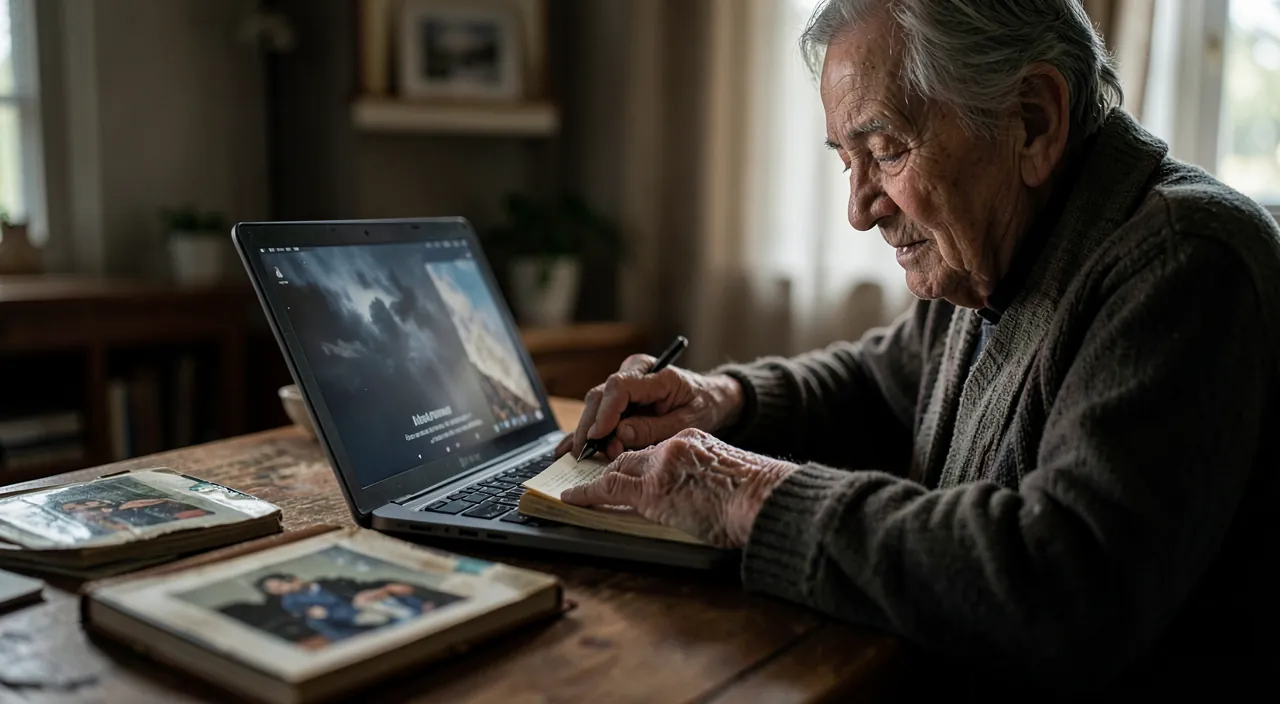
AI helps you write your memoirs by asking you questions that bring back forgotten details. You answer, and it turns your words into a book. The key is to never let AI make up anything – only your real memories belong in your book.
A 72-year-old woman wants to write about her childhood in rural France. She sets up weekly 30-minute sessions with AI. First, she defines the scope: “Memories from my village 1950-1965”. The AI asks: “Tell me about the smell of your grandmother’s kitchen”. She describes the wood stove and fresh bread. The AI weaves this into a chapter. After 10 sessions, she has 50 pages of authentic memories.
The right reflex. Open the master document from the first day: a single folder (text editor or synchronized notes app) with the outline at the top, one file per chapter, and the end-of-session ritual — paste the day’s text, note where you are and the next step. Losing your work and disorientation (« where was I? ») kills more books than discouragement: saved, synchronized, resumed in a minute — a manuscript that advances is first a manuscript that can be found.
Novel, practical guide, expanded family book: the variations
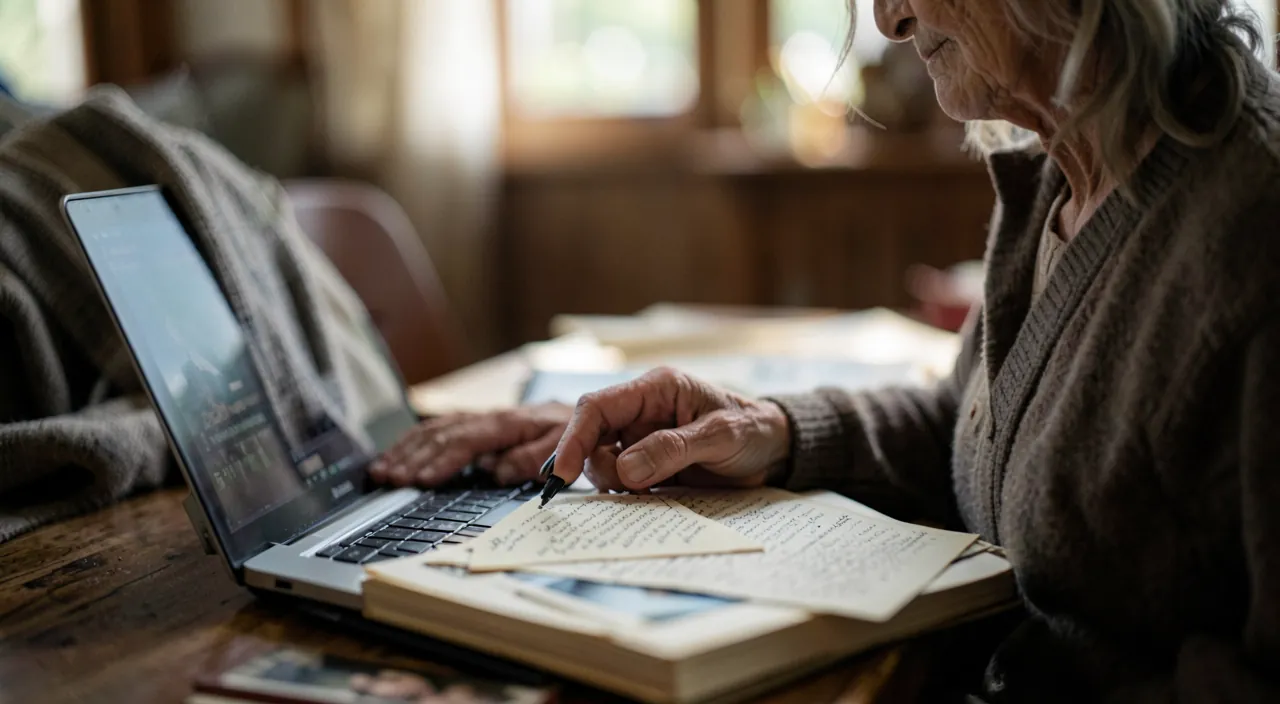
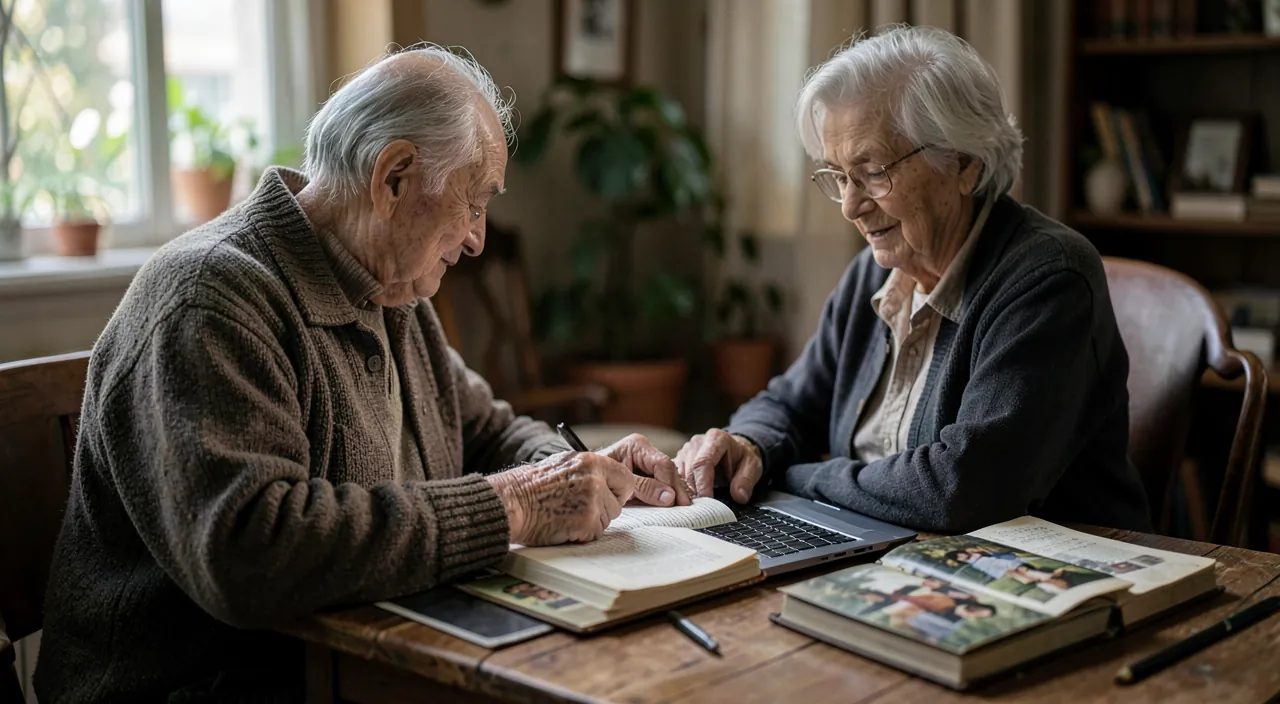
The method adapts: the novel or narrative — AI is an excellent design partner (structure in acts, consistent character sheets, timeline kept — she tracks inconsistencies: « re-read these chapters and signal date and detail contradictions ») and a formidable unblocker (« propose three directions for this scene that’s stuck — » we take one, or none: the important thing is to get going); for the prose itself, the cursor is yours — many authors reserve it for the first draft of functional passages and keep their hand on the scenes that matter (the generated prose, fluid and impersonal, is recognizable: your voice is your value — our correction guides hammer this); the practical or professional guide — your expertise structured in progressive chapters, real cases as examples, AI as a teacher (she rewrites « for a beginner » marvelously) and a completeness checker (« what would a novice reader not understand here? »); the collective family book — multiple relatives’ testimonies (each interviewed — also remotely: the question framework sent), digitized and captioned photos, recipes and documents: AI assembles, harmonizes without standardizing (each voice signed), and the whole becomes the transmitted object; and the illustrated album for creatives — AI helps with the text, the images remain a choice (yours, those of an illustrator, or generated — in assuming them). In all cases, the same hygiene: short, regular sessions, chapters finished before perfected (« finished is better than perfect » is the first book’s motto), and a declared deadline — the birthday, Christmas, the birth that awaits the book: the affectionate deadline is the best editor.
From manuscript to book: making the object
The finished manuscript, AI accompanies the final stretch: the structured revision — passes in order (overall coherence, cuts to be made — « what would you cut? » is more useful than « what would you add? » —, style, spelling last); the human test readers — two or three close friends, questions prepared by AI (« where did you get bored? »): the human return remains the standard; the layout — AI guides the choices (format, readable font, margins) and the tools (a well-set text editor to free software layout tools); and the printing — print-on-demand services make real books bound one at a time or in dozens (a few euros to a few dozen per book depending on format and color): family printing has become trivial — and for those aiming wider, online self-publishing (demand platforms, digital distribution) or submission to publishers (AI writes the letter and synopsis — the selection remains what it is). Finally, the honesty register: mentioning substantial AI assistance is increasingly expected (some platforms require it) — and for a family book, transparency is simply elegant: « written with the help of… » does not detract from the gesture, which remains entirely yours.

Beware of generated memories. The risk of the assisted book is neither legal nor technical — it is MEMORIAL: AI that formats fills in the silences with the plausible (the typical detail of the era, the invented transition, the supposed emotion), and at re-reading, the well-written false seeps into the true — then into family memory, forever (grandchildren will quote the book). Absolute defenses: the directive « do NOT add ANY fact, detail, or dialogue that I did not give — signal the gaps rather than fill them » repeated at each weaving, the systematic truth check (each detail: do I KNOW this? ), and the assumption of gaps — « I no longer remember the name » is a real memory; the invented name is contamination. A memoir book is worth its fidelity: it is the only rule of the workshop that is never negotiable.
Frequently asked questions
I don’t have « a style »: will the book be worth reading?
The style of memoirs IS the person — your way of telling, your expressions, your detours: this is precisely what your close ones want to find, and what the « don’t smooth it out » directive protects. Family books are not judged by literary critics: they are read with watery eyes. Write as you speak — AI takes care of the rest, not the essential.
How much does the entire project cost?
Almost nothing: free AI and transcription tools suffice for a personal book, the text editor is free, and on-demand printing charges per copy (a beautifully bound family book costs less than a restaurant). The real investment is time — an hour a week — and it is the gift itself.
And the copyright of a book written with AI?
Your material, your choices, your revision: the work is yours — tool assistance grants no rights to the tool. Grey areas concern texts mass-generated without human input (uncertain protection according to jurisdictions) — reason enough, if any, for the book to remain nourished by you. For commercial self-publishing, read the platform conditions on the use of AI.
What to remember
The book in you awaits less a talent than a method — here it is: the good sharing of roles (your material and decisions, the AI workshop for questioning, structuring, weaving, re-reading), the interview as the engine of memoirs (the questions bring up what the blank page buries), the anti-invention directive carved in stone (« signal the gaps, don’t fill them » — fidelity is the supreme value of life writing), the saved master document, the gentle rhythm of a weekly session, the affectionate deadline that makes you finish, and the on-demand printing that transforms the file into a transmitted object. Novel, guide, collective family book: the variations share the same secret — finished is better than perfect, and regular is better than brilliant. One day, someone you may not know will open this book to hear your voice. She deserves more than « one day »: she deserves an hour, next Sunday.

Want to master AI and make it a real daily asset? Our training programs accompany you at your own pace.
Leave a Reply
You must be logged in to post a comment.