
Playing the biggest games of the moment on a bare TV, an old tablet, or a business PC — without a console, without a €1,000 graphics card: that’s the promise of streaming gaming, « cloud gaming »: the game runs in a data center, your screen only receives a video, your controllers send the commands. Long a dream of engineers, mocked after failed launches, it has become… surprisingly good. For whom, for which games, with what connection, at what price — and the fundamental question: does the console still have a future? The full breakdown.
How it works — and why it’s now credible
The principle: the game runs on a powerful server, the compressed image streams down to you, your inputs (controller, keyboard) go back up — all in a few dozen milliseconds: latency is the hereditary enemy (the gap between the action and the effect on screen), and that’s where the past decade has changed everything — widespread fiber, nearby servers (major players have data centers in every region), next-gen video compression, Wi-Fi 6 and beyond: on a good wired connection or a recent Wi-Fi close to the router, cloud latency has become imperceptible for most players and games — adventure, role-playing, racing, strategy, family games all play without hesitation; only purists of pure reflex (competitive shooting, high-level combat) still feel the difference — and it’s a real limitation for them, acknowledged. Honest prerequisites: a stable connection of at least 15-25 Mb/s (fiber is ideal, 5G surprisingly works), Ethernet or good Wi-Fi (the old repeater in the back bedroom is the true killer of cloud gaming), and real data consumption (several GB per hour — limited plans will notice). Image quality follows the connection: up to 4K on high-tier plans — cloud gaming is no longer a visual compromise.
Cloud gaming works by running games on powerful servers and streaming the video to your device. The key challenge is latency—the delay between your action and what you see on screen. With today’s fast internet, this delay is usually small enough that most people won’t notice it, except for competitive gamers who need the fastest possible response times.
A player in Paris using a 50 Mb/s fiber connection with an Ethernet cable plays “Cyberpunk 2077” in 4K on their living room TV. The game runs on a server in France, and the latency is around 30 milliseconds—so low that the experience feels nearly identical to playing on a high-end gaming PC. The player’s data usage is about 5 GB per hour, which is manageable on their unlimited home internet plan.
The offers: three very different models
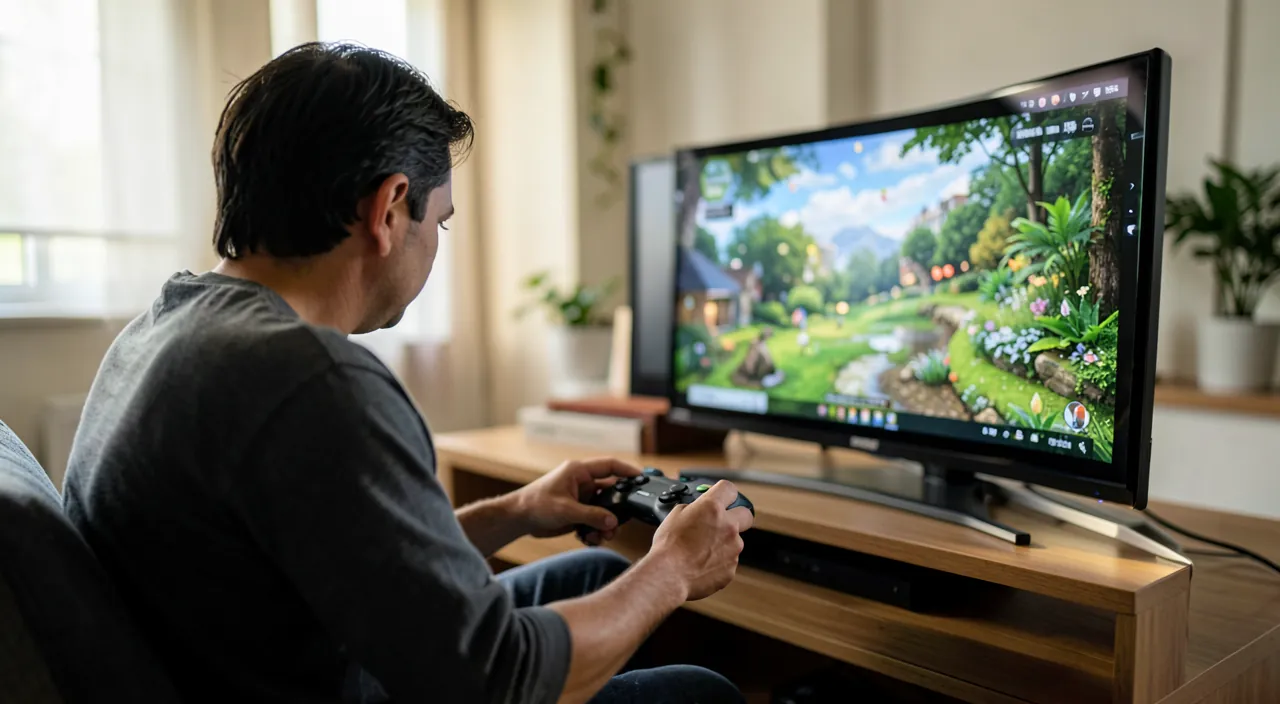
The market has structured itself into families to distinguish before paying: the subscription catalog — the « Netflix of gaming » model: a subscription, hundreds of playable games in the cloud (including the day’s big releases for the genre leader — the killer argument): ideal for curious players and families who want to try everything without buying anything; the cloud for your own games — you own your games (bought from PC stores), the service rents the machine that runs them: the model for PC gamers who want power without the hardware — often the best technical quality on the market; and the cloud integrated with consoles — the extension of existing console subscriptions (try before downloading, play on the secondary living room TV or on the go): the natural complement rather than the replacement. Added to these are the operator and TV manufacturers (cloud gaming preinstalled in recent TVs — the Bluetooth controller is enough: the « invisible console » is already in the living rooms of millions of households who don’t know it). Prices range from included in the existing subscription to a dedicated subscription — almost all with free trials: the only real way to know if YOUR connection and YOUR games are compatible is to test for a month — no article, including this one, replaces that test.
The right reflex. Before subscribing, do the real conditions test: the free trial, on the screen where you’ll actually play, at the time you actually play (Saturday night family time saturates Wi-Fi differently than Tuesday at 2 PM), with the planned controller — and a fast-paced game from the catalog to feel the latency. Two settings that make all the difference if it stutters: Ethernet all the way to the gaming screen (the €10 cable is worth all the premium subscriptions) or, failing that, the 5 GHz band near the router. Cloud gaming is binary: at home, it will be excellent or frustrating — thirty minutes of testing will tell.
Who it’s a boon for (and who it’s not)
The winning profiles: the occasional gamer — the one who plays a few hours a month and no longer justified a €500 console: the subscription turns a big investment into a small rent, cancellable (rotation, like video streaming); the parent — kids’ games on the TV or old tablet, no hardware to buy or ask for (with the parental controls of the platforms — time and catalog — to set like everywhere); the returning curious — the former gamer who wants to try the latest big titles without re-equipping: one month of subscription = catching up on five years; the nomadic PC gamer — their library on the ultraportable for travel; and the low-budget household — AAA gaming without the hardware entry ticket, on the screen they already own. The profiles who will keep local hardware: the competitive (latency, again — ranked shooting requires local), the hardcore gamer (beyond a certain number of hours, owning becomes rational again — and the local experience keeps the absolute advantage of not depending on anything), the collector (the cloud isn’t owned — games in the catalog come and go, servers close: video game history has already swallowed entire services and purchases with them — game preservation is a real cultural issue of the moment), and the poorly connected — the bandwidth gap is the cloud gaming gap: without a good connection, the subject doesn’t exist. The answer to « gaming without a console? » is therefore a real « yes, depending on who you are » — which is already a revolution: five years ago, it was no.
The big question: toward video games without machines?
The step back: will the cloud replace consoles and PCs? The forces at play — for: manufacturers’ economics are shifting to services (subscriptions, catalogs — hardware sold at low margins becomes almost an accessory to the service), the cost of high-end machines is skyrocketing (the tech price article applies to gaming PCs squared), connected screens are everywhere, and each generation of network expands the eligible base; against: physical latency will never drop to zero (light has a speed — competitive gaming will remain local), network dependency hurts resilience (the solo game unplayable during a fiber outage is an educational experience), ownership still matters culturally (preservation, mods, backward compatibility), and the industry’s history teaches caution (the deaths of cloud gaming are legendary). The likely scenario is therefore not replacement but stratified coexistence: the cloud as a universal entry point and mobile complement, local hardware for deep engagement — exactly the structure of music and video streaming, where ownership and streams coexist based on the intensity of the practice. For the household, the conclusion is comfortable: no longer need to buy a machine to know if gaming is for you — discovery has become free or almost free; the investment, on the other hand, now has to be earned.
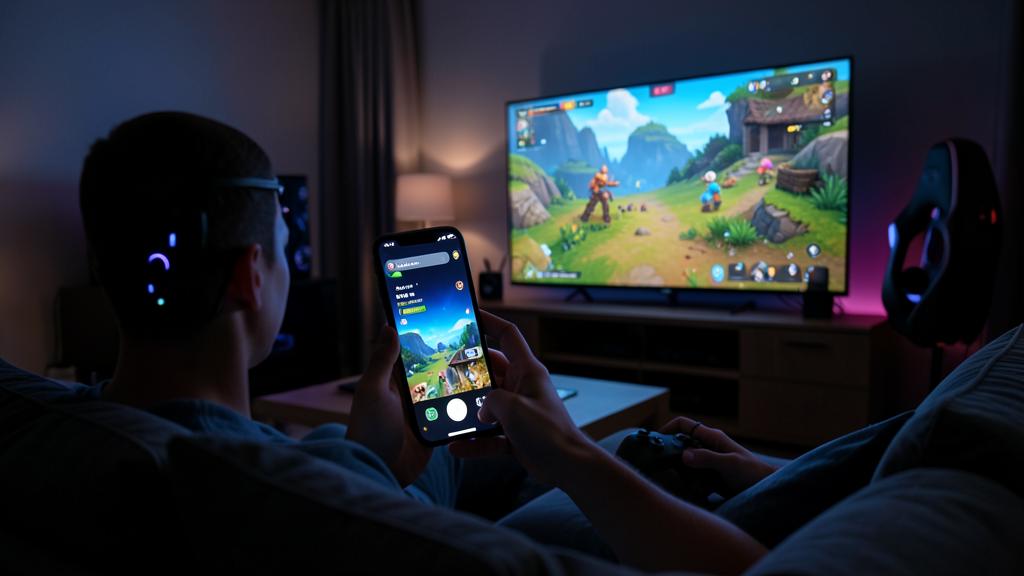
Watch out for costs and fine print. Cloud gaming has its model pitfalls: stacking (cloud subscription + console subscription + out-of-catalog game purchases — the total can exceed the old world: count everything), games leaving the catalog (a game in progress being removed — check cross-saves: progress tied to your account survives, that’s the argument for established ecosystems), data consumption (several GB/hour: mobile plans and limited connections explode quickly), and queues for free or basic plans at peak times. Nothing prohibitive — everything is read before committing, and free cancellation remains your weapon: cloud gaming is tried, kept as long as it’s useful, and left without regret.
Frequently asked questions
What controller to play in the cloud on my TV?
Any recent Bluetooth controller from major manufacturers pairs with TVs and phones — an old console’s often works (check service compatibility). For the phone, controller holders that wrap around it turn the attempt into a real session. Keyboard-mouse is also supported by several services for genres that require it.
Does cloud gaming degrade the image on a large TV?
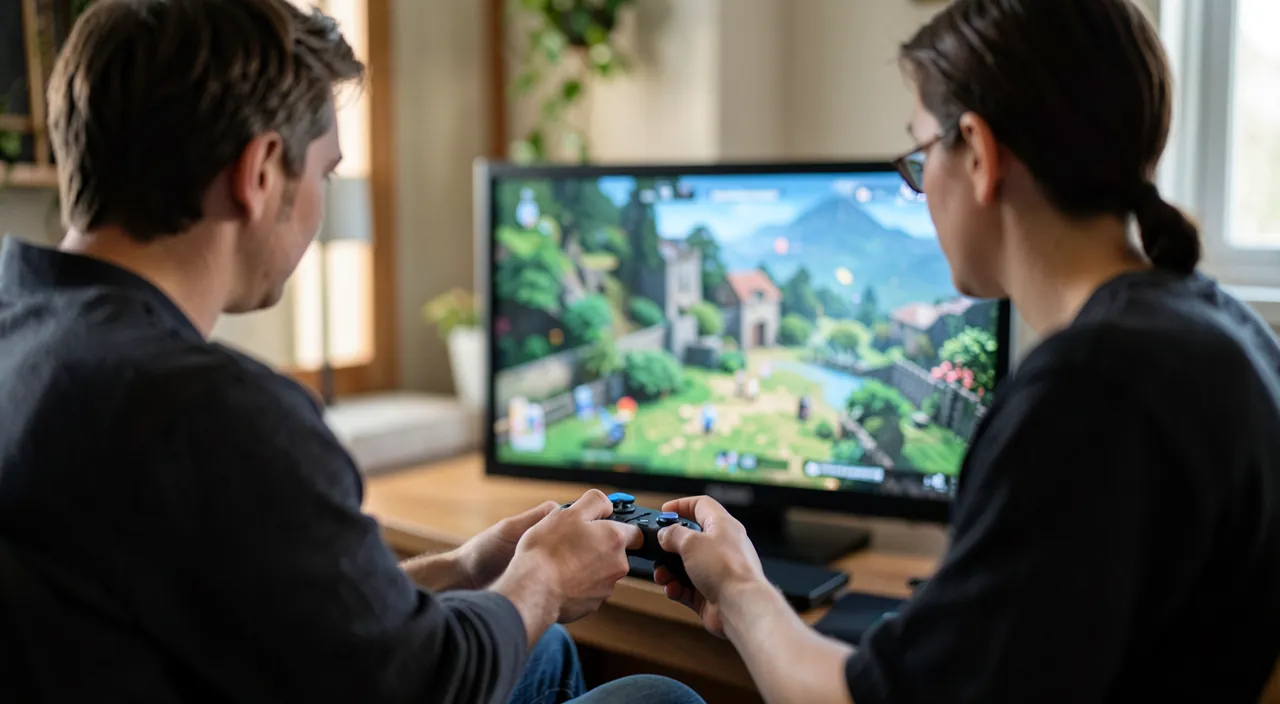
On a good connection, high-tier plans stream in 4K with a rendering very close to local — very busy scenes may briefly compress. On an average connection, the service adapts the resolution: playable but visibly softer. The rule: image quality reflects connection quality — that’s what you improve (Ethernet!), not the subscription.
Do my cloud game purchases belong to me?
Games BOUGHT from stores (and played via cloud) remain in your account — that’s the most protective model. Games FROM the subscription catalog are only rented: they leave with the subscription or the catalog. Always distinguish the two in your spending — and for the titles you care about, buying (even played in the cloud) remains ownership.
What to remember
Streaming gaming has kept its promise with a ten-year delay: on a good connection (fiber, Ethernet, or recent Wi-Fi — THE prerequisite), big games run on the screen you already own, without a console or a gaming PC — latency imperceptible outside of competitive play, image up to 4K, offers for every profile (Netflix-style catalog, power rental for your own games, console extension). The winners: occasional players, families, curious players, nomads, and low budgets — discovering gaming has become almost free; the local loyalists: competitive players, hardcore gamers, collectors (the cloud isn’t owned — catalogs change, servers close). The future is coexistence, not replacement. The user manual in one line: free trial, real conditions, Ethernet cable — thirty minutes to know if the invisible console is already in your living room.
Want to understand and master the technologies changing your daily life? Our training programs will enlighten you.
Leave a Reply
You must be logged in to post a comment.