
Proving your age without showing your birth date, presenting your driver’s license from your phone, signing a lease without printing a single page: digital identity promises to replace the photocopy of an ID card — that attachment sent a hundred times, stored everywhere, which fuels identity theft. France is rolling out its own, the EU is imposing its digital wallet in the near future, and legitimate questions arise: mandatory? traceable? risky? Here’s what’s actually happening, what it changes for your procedures — and the real limits to know.
What already exists: France Identité and FranceConnect
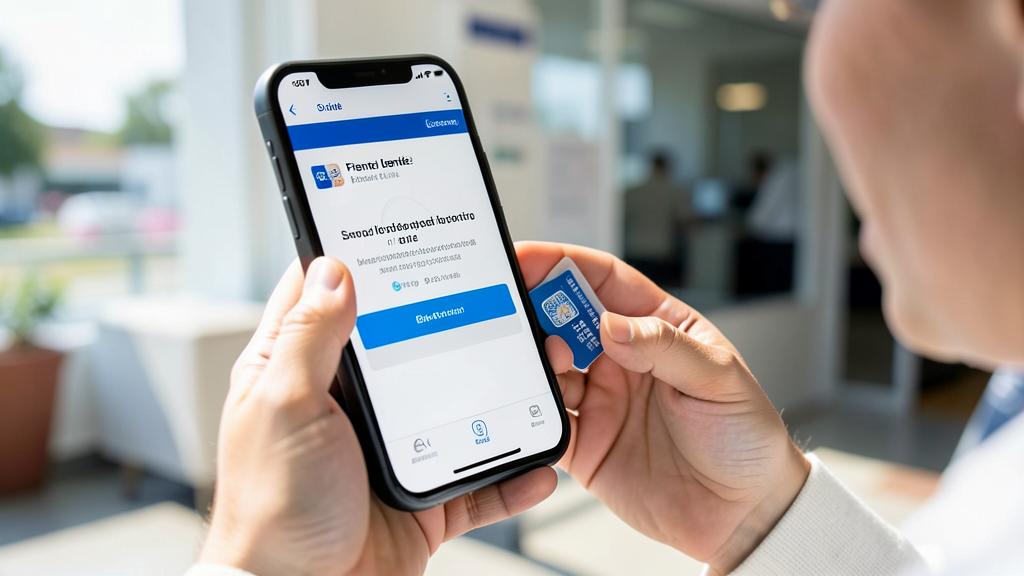
The current French landscape is based on two components not to be confused: FranceConnect — the single sign-on button for public services (taxes, Ameli, retirement…) that reuses your existing credentials: not a digital identity per se, but an authentication gateway — widely adopted, with its enhanced version (FranceConnect+) for sensitive procedures; and France Identité — the real novelty: the official app that digitizes the ID card (credit card format, with NFC chip): the card is read by the phone, a personal code unlocks it, and the app allows you to prove your identity online at the highest level, justify your age or identity without exposing all your attributes, and to include the dematerialized driver’s license (valid during checks in France) — along with the digital Vital Card in the same dematerialization movement. The key technical principle: the data remains on your phone, protected by the secure chip, presented on demand — the architecture is decentralized by design, precisely to avoid a central file of connections. The use is voluntary: the physical card remains, the app is added.
What’s coming: the European digital identity wallet
The big European deadline is set: the eIDAS 2 regulation requires each Member State to offer a European digital identity wallet (EUDI Wallet) — an app where citizens store identity, driver’s license, diplomas, prescriptions, associated payment methods, certificates — usable throughout the Union, and that major platforms and regulated sectors will be required to accept (banks, telecoms, very large online platforms): opening a bank account, proving your age, signing electronically at a qualified level, registering at a hotel abroad — all from the same sovereign app. The protective principles written in the text: voluntary use (no one can be discriminated against for refusing the wallet — the physical alternative must remain), selective disclosure (proving « adult » without giving the birth date: the attribute is presented alone — the major progress over the photocopy that gives everything), prohibition of tracking of uses by wallet providers, and a dashboard of shared data. The actual schedule will slip (major digital state projects always do) — but the direction is irreversible: in a few years, the « ID card photocopy » reflex will have an official successor — and online age verification (minors, content, social networks), a major political issue of the moment, will be one of its first drivers of mass adoption.
The right reflex. While waiting for the European wallet, stop sending your ID card as a simple photo today: when a third party legitimately requires it (rental, bank), use a watermark — the official online tool (or a watermark app) stamps « document provided on [date] for [use] only »: a watermarked copy is unusable to open credit in your name. This is THE anti-impersonation protection to adopt immediately — and the best argument to understand the interest of selective disclosure that is coming: never giving more than necessary again.

The real questions: centralization, surveillance, exclusion
Concerns deserve better than slogans — the honest point: surveillance — the theoretical risk of a State seeing all your identity presentations is precisely what the decentralized architecture (data on the device, tracking prohibition) aims to prevent: the legitimate vigilance concerns the REAL compliance of implementations with these principles — this is the work of regulators (CNIL and counterparts), security researchers, and civil society, and it has already moved the texts in the right direction; security — an identity wallet is a prime target: the level of requirement (certifications, secure chips, audits) is the highest in the civilian world, and the residual risk is comparable to the good benchmark — not to the perfect world, but to the existing one: thousands of ID card photocopies sleeping in hackable email boxes (well-designed digital identity is safer than the status quo, it’s even its main argument); digital exclusion — the real social question: without a recent phone, without ease, no wallet — hence the voluntary nature and the mandatory maintenance of physical alternatives: the day a counter requires the app, the principle will be betrayed, and it will have to be said; and usage drift — easy-to-present identity risks being requested everywhere: the safeguard is legal (proportionality of requests) and behavioral — refusing to identify when nothing requires it remains a right. Digital identity is neither Orwellian hell nor a frictionless paradise: it’s an infrastructure — its value will depend on its governance, and governance is monitored.
Digital identity is designed to be safer than sharing photocopies of your ID. The data stays on your phone, not in a central database, and you can choose what to share. But it’s important to make sure the system is used correctly and doesn’t exclude people who don’t have the right technology.
Imagine you’re renting a car in France. With the digital driver’s license, you can show it on your phone during a police check, but you’d still need the physical license for renting abroad. The app makes things easier at home, but the paper version remains useful for international travel.
In practice: preparing without rushing
What is reasonable to do today: adopt the existing useful tools — FranceConnect already simplifies your procedures (with the absolute security rule: its credentials — often those of taxes — deserve a unique and strong password, as they open many doors); if you have the new ID card, test France Identité — the app is mastered in ten minutes (NFC reading of the card, personal code), the dematerialized driver’s license is really helpful, and the voluntary use commits to nothing; secure the foundation — digital identity will be worth what your phone is worth: strong code, biometrics, updates, and the fortified recovery email account (the basics of all our guides — they become the infrastructure of your identity); protect current identity — systematic watermarking on copies, vigilance on disproportionate requests (the sports club doesn’t need your full ID), and monitoring of signs of impersonation (letters from unknown credits — classic identity fraud remains the real present danger); and keep physical documents up to date — the transition will take years: the card, the driver’s license, and the physical passport remain the basis, the app is their practical shadow. The right posture: neither enthusiastic guinea pig nor principled resistor — an attentive user of a public service under construction.

Beware of scams that will ride on the deployment. Every major digital state transition triggers its wave of phishing — expect fake SMS and emails « Activate your digital identity before [date] under penalty of blocking », « Your France Identité expires », with links to fake sites that harvest credentials and documents. The unbreakable rules: digital identity is voluntary (no mandatory deadline, no blocking for non-activation), official apps are installed from official stores only, and the administration never asks for your codes via messages. The cruel paradox would be to have your identity stolen by a fake email about digital identity — alert your loved ones now.
Frequently asked questions
Will digital identity become mandatory?
No — the voluntary nature is written in the European regulation, with a ban on discriminating against non-users and maintaining alternatives. Citizen vigilance concerns practice: if services made it de facto indispensable, it would be a drift to denounce — the texts provide the means to do so.

What happens if I lose my phone?
Digital identity is revoked and reinstalled (like a bank card is opposed): the thief is stopped by the code and biometrics, documents are deactivated remotely, and your physical documents remain valid. The recovery procedure is precisely one of the most worked points — and another reason to secure your phone and recovery account today.
Is the phone-based driver’s license accepted everywhere?
In France, during checks, yes for the official dematerialized license. Abroad and for car rentals, the physical one remains necessary (cross-border recognition is precisely what the European wallet should bring). In transition: the app helps, the paper travels.

What to remember
Digital identity is coming in two waves: the French one (France Identité — card, license, age proof, on a voluntary basis) already here, and the European one (the eIDAS 2 wallet, mandatory for banks and major platforms) that will follow — with protective principles written: data on the device, selective disclosure (prove without showing everything — the end of the photocopy that gives everything), prohibition of tracking, physical alternatives maintained. The real vigilances: the real compliance of implementations, digital exclusion, the drift of identification requests — governance issues to monitor as a citizen. In the meantime: watermark your card copies (today), strengthen your phone and accounts (tomorrow’s infrastructure), test the existing without rushing — and warn your loved ones about accompanying scams. The ID card photocopy is living its last years: it’s good news, provided you remain demanding about what follows.

Want to understand and master the technologies that change your daily life? Our training courses will enlighten you.
Leave a Reply
You must be logged in to post a comment.