
A phone with a worn-out battery thrown away due to lack of parts, a washing machine condemned by an unavailable electronic card, a cracked screen whose quote exceeds the cost of a new one: irreparability wasn’t a fate—it was a business model. It’s starting to crumble: under European and French pressure, the « right to repair » is taking hold—displayed indices, guaranteed available spare parts, bonuses that cover part of your repairs, soon replaceable batteries. Here’s what’s concretely changing for your devices, what you can already demand, and how to benefit from it the next time a breakdown occurs.
What has already changed: your new rights, concretely
The legal landscape has become denser—here’s the essential to know: the repairability index (mandatory in France for phones, computers, TVs, washing machines, and other categories—the 10-point score that assesses disassembly, availability, and price of parts, documentation): check it BEFORE buying, it predicts your power on the day of the breakdown—and it’s evolving into a more demanding durability index (including reliability); the availability of spare parts—manufacturers must provide them for minimum durations depending on the category (and delivery times are regulated): ask for the part, it must exist; the legal conformity guarantee—two years for new items, and the chosen repair now extends the guarantee (six more months): another argument to repair rather than exchange; the ban on anti-repair practices is progressing—software that degrades the repaired device with a compatible part (the « serialization » of components) is in the sights of the European legislator; and software updates guaranteed for several years—because obsolescence is also software-based: a healthy device abandoned by its updates is a planned failure. The underlying movement: repairability is no longer a manufacturer’s favor but a controlled obligation.
The law now forces companies to make devices easier to fix. They must sell spare parts, guarantee repairs, and stop tricks that break devices after repairs. This means your gadgets can last longer, and you can save money instead of buying new ones.
A 2023 smartphone with a cracked screen costs €150 to repair with the bonus (originally €200). A new phone would cost €800. The repair saves €650 and extends the device’s life by years.

The repair bonus: the State covers part of the bill
The most concrete—and least known—device: the repair bonus—an immediate discount on the bill when you repair an electrical or electronic device out of warranty with a QualiRépar-certified repairer: a few dozen euros depending on the device (rates per category—smartphone, washing machine, TV, vacuum cleaner, and the list is growing—with amounts doubled for some devices, such as phone screens, for example), directly deducted from the quote, no paperwork to fill out—the certified repairer applies the discount and gets reimbursed. How it works: when a device out of warranty breaks down, find a certified repairer (the official online directory lists them by region and specialty), ask for the bonus-deducted quote, compare with the new one in total cost. The same ecosystem includes Répar’acteurs and certified artisans, ressourceries and self-repair workshops (Repair Cafés—repairing yourself with free guidance, an experience to try at least once: half of everyday breakdowns are simple ones), and stores developing their repair counters. The bonus changes the economic balance: a repair costing 90€ becoming 55€ suddenly beats replacement—that’s exactly its purpose.
The right reflex. Before declaring a device « dead, » go through the second chance checklist:
- is it still under legal warranty (two years—the seller must repair/replace at no cost)?
- is the breakdown simple (our troubleshooting guides cover the classics—and a Repair Café diagnoses for free)?
- does a certified repairer with a bonus make the repair worthwhile?
- failing that, the device goes for take-back or recycling, never in the trash.
This four-step reflex saves a large part of devices condemned too quickly—and hundreds of euros per household per year.

What’s coming: replaceable batteries, 3D-printed parts, and an offensive Europe
The next steps are already written in the texts: replaceable batteries—the European regulation will eventually require batteries that the user can replace on portable devices (the deadline is approaching for new designs): the programmed end of the disposable device because of the battery—the component that dies first will become a consumable again; the expanded European right to repair—obligation to offer repair even out of warranty at a reasonable price for an increasing number of product families, information on part prices, progressive ban on locks; 3D printing and alternative parts—the ecosystem of compatible parts and printable designs is structuring (the unfindable dishwasher gear can be reprinted—the model banks are expanding); manufacturers switching—under pressure and for image, official self-repair is progressing: kits, manuals, and original parts sold to individuals by major manufacturers, repairability becoming a marketing argument (the scores are displayed in ads—the world has changed); and the employment sector—tens of thousands of non-offshorable repair jobs are growing: the right to repair is also an industrial policy. Not everything will change overnight—but the direction is set, and each purchase can now take it into account.
Buying repairable: the power of your next purchase
The right to repair also plays out in stores: the index first—between two comparable devices, the repairability score makes the difference (a one-point difference = potential years of lifespan—and manufacturers monitor these scores like milk on the stove: each purchase guided by the index pushes the entire industry); repairability brands—an ecosystem of devices designed to last exists (modular phones with parts sold individually, appliances with documented reliability and long-guaranteed parts): often slightly more expensive to buy, but clear winners in cost per year; questions to the seller that move the world forward— »how many years of parts? of updates? is the battery replaceable? » asked at each purchase, they go up (sellers report what customers ask); and the market for repaired second-hand devices—buying reconditioned is funding the repair sector: the complete virtuous circle. A final word of balance: repairing isn’t always ecologically optimal (a very old energy-guzzling device may deserve replacement—the 2005 freezer gets replaced, the 2022 smartphone gets repaired): the simple rule—electronics are almost always repairable, large appliances are assessed based on age and consumption.


Beware of repair market traps. The boom also attracts bad actors: non-certified repairers who promise the bonus (it only exists with certified ones—check the official directory), inflated quotes « bonus deducted, » dubious-quality parts billed as original (ask for the origin and repair guarantee—the repairs are also guaranteed), and screens/batteries at rock-bottom prices that degrade the device. For devices under legal warranty: go through the SELLER (it’s their obligation)—a third-party repair during the warranty may complicate your rights. And always back up before handing over a device: an honest repair may require a reset—your data remain your responsibility.
Frequently asked questions
Does self-repair void the warranty?
During the legal warranty, let the seller handle it—a personal intervention may give them a reason to refuse (at least for the breakdown in question). Out of warranty: your device belongs to you—self-repair is a right, official kits exist, and Repair Cafés guide first-timers. The real boundary is competence: battery and screen are accessible to a careful person with tools; motherboard and waterproofing require a professional.
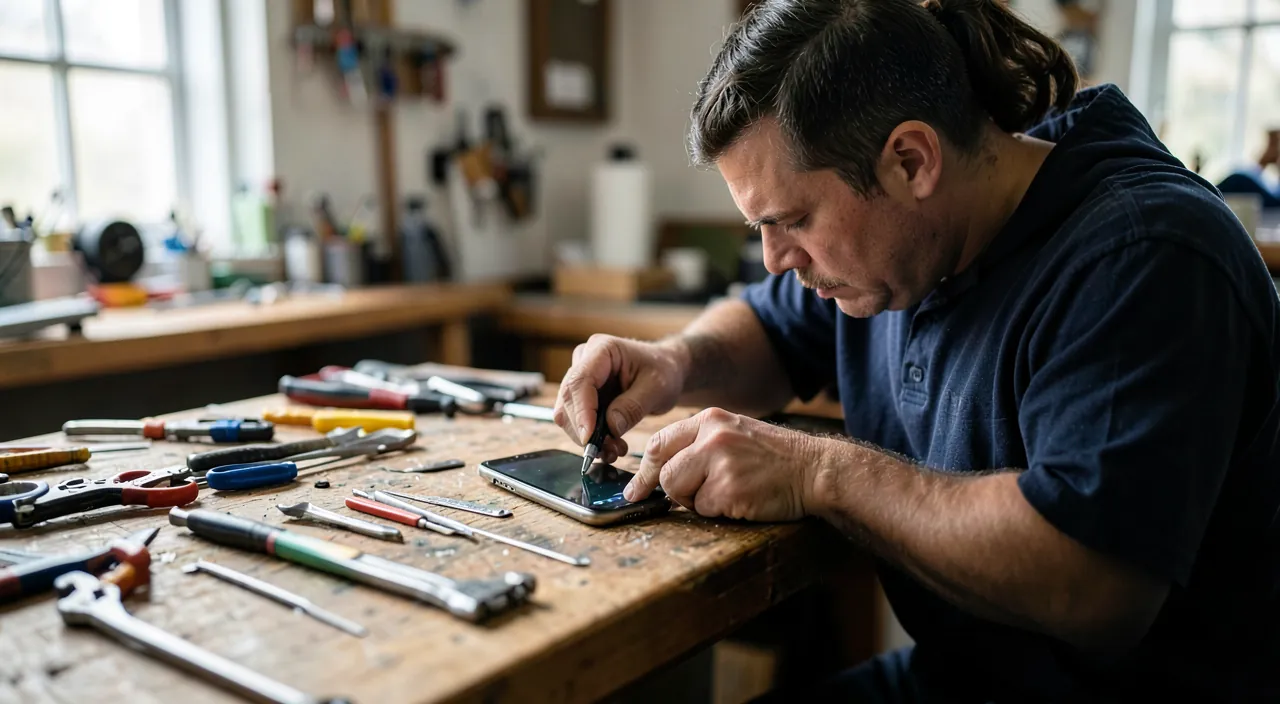
Does the repair bonus apply to a cracked smartphone screen?
Yes—it’s even one of the most supported repairs (increased amount), as screen damage is the leading cause of premature phone replacement. Conditions: device out of warranty, QualiRépar-certified repairer. Replaced screen + new battery = a phone good for years, often for a third of the cost of a new one.
How to know if a part still exists for my old device?
The availability duration is displayed at purchase for regulated categories (and the manufacturer must respond); in practice: the exact device reference + spare part websites (a very well-stocked online market, including old appliances), and repairers who know the sources (used parts, compatible, reprinted). The « unfindable » part is becoming less and less so—that’s the whole point of the movement.

What to remember
The right to repair transforms a business model into concrete rights: repairability index guiding purchases, mandatory availability of spare parts, extended warranty by repair, QualiRépar bonus covering part of out-of-warranty bills, Repair Cafés to learn—and tomorrow, replaceable batteries and expanded European obligations. Your actions that matter: the second chance checklist before condemning any device (warranty? simple breakdown? bonus?), the index checked before each purchase, durability questions asked in stores, and vigilance on real labels. The disposable device wasn’t a law of technology—it was a commercial decision: the opposite decision is being made, and each chosen repair contributes. The next breakdown is no longer an end—it’s a quote to request, bonus deducted.
Want to understand and master the technologies changing your daily life? Our training courses will enlighten you.
Leave a Reply
You must be logged in to post a comment.