
For ten years, connected speakers mostly provided weather updates, set timers, and repeated « I didn’t understand »: domestic assistants in the broadest sense of the term, they were far from it. This is changing — generative AI is entering speakers and homes: natural conversations, real understanding of context, fine control of the house, and a new wave of devices (screens, sensors, emerging robots). Real reinvention or another cycle of promises? What really changes, what remains to be proven — and how to equip (or not) intelligently.
The breakthrough: when the assistant finally understands sentences
The ongoing transformation lies in a technical shift: historical assistants worked with learned commands (« turn on the living room light » worked; « we can’t see anything here » didn’t) — the new AI-powered assistants understand natural language and context: vague requests (« put something calm, not too loud, it’s homework time »), sequences (« and turn everything off in an hour »), fundamental questions answered properly (recipe adapted to what’s left in the fridge spoken aloud, homework help, news summary requested « as for a ten-year-old child »), and routines created by voice (« from now on, when I say goodnight, turn off the ground floor, lock and set the heating to eco » — what required an app and patience yesterday is declared in one sentence). Major players are deploying their next-gen assistants on existing speakers and new devices — with uneven realities depending on languages, models, and subscriptions (paid premium AI is also entering the picture): the qualitative leap is real, the universal magic not yet — but for the first time in ten years, the utility curve is rising sharply.
The new assistants understand real sentences, not just specific commands. You can ask for a recipe based on what’s in your fridge, get homework help, or set up routines like turning off all lights when you say “goodnight.” It’s a big step up from just turning lights on and off.
A user asks, “Play something calm for homework, not too loud, and turn everything off in an hour.” The assistant understands the request, adjusts the volume, and schedules a shutdown for an hour later—all in one command, without needing an app.
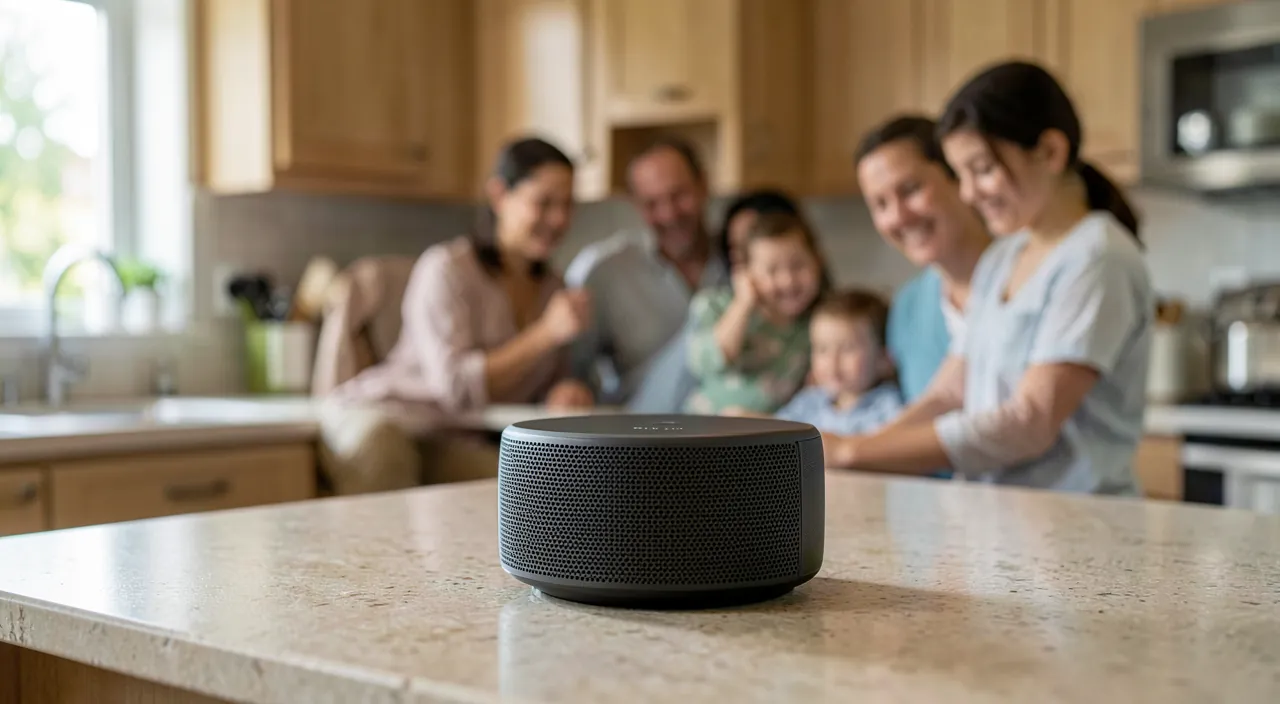
The house that follows: sensors, presence, and useful automations
The reinvented assistant relies on a better-connected home — and here too, there’s news: the Matter standard has (finally) brought order — compatible devices work with all ecosystems (no more bulbs trapped by their brand: check the logo when buying, it’s THE anti-obsolescence criterion for home automation); next-gen presence sensors (millimeter radar — the room knows you’re there without a camera) make automations finally fluid: lights that follow, heating that adjusts room by room, alerts if an elderly relative hasn’t moved at their usual time (the usage of benevolent monitoring is one of the most meaningful in the sector — see below); and the AI assistant as conductor — instead of rigid scenarios, the house controlled by intention (« we’re leaving for a week » adjusts heating, presence simulation, and notifications all at once). The uses that truly pay off: controlled heating (connected thermostats and heads remain the only home automation equipment with documented financial returns — real savings on the bill), simple security (water detection under the washing machine, opening sensors — avoided disasters at a low cost), and daily routines that eliminate friction (morning, departure, night). The rest — the bulb that changes color — is about pleasure: legitimate, but let’s stop selling it as a revolution.
The right reflex. Equip yourself by problems, not by catalog: list three real household annoyances (« the hallway heating heats for nothing, » « we leave the basement light on, » « I want to know if mom got up ») and equip THOSE three — a thermostat, a detector, a sensor: contained budget, immediate utility, and the connected home growing by proof rather than gadgets. And with each purchase: Matter logo + local power if possible — the object that works without the manufacturer’s cloud will survive the shutdown of its servers (the cemetery of orphaned connected objects is already well filled).
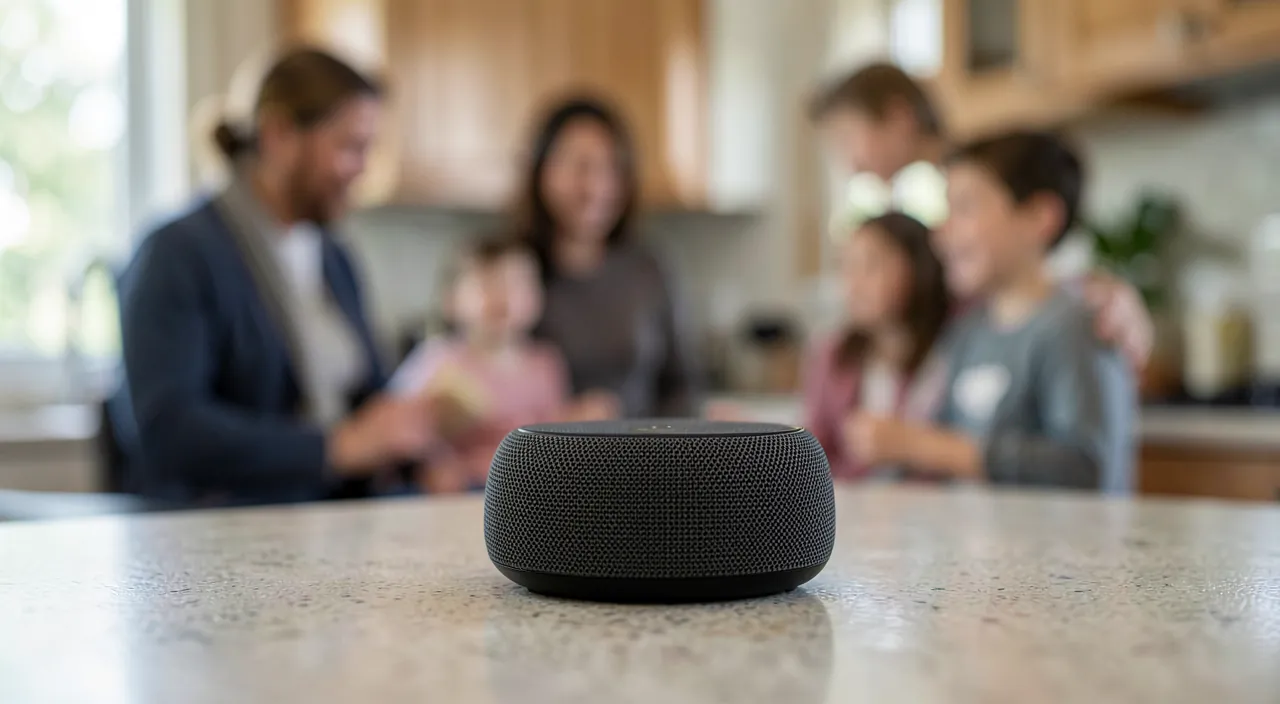
The sensitive question: increasingly intelligent microphones at home
The assistant that understands everything raises better than ever the question of what it listens to: the actual operation first — the speakers do not record continuously (the wake word detection is local; the audio only goes out after — ghost activations exist, consultable and deletable in the history): the fantasy of the permanent microphone spy is technically unfounded, BUT generative AI changes the equation — the more capable the assistant, the richer the queries sent (family context, health, moods: we confide more in what understands better), and the processing is shared between local and servers depending on the players (the local processing is progressing — a choice criterion in itself, some ecosystems make it an argument). The settings that matter, to do once: the voice history (consultation, scheduled automatic deletion), the non-use for training when the option exists, the physical microphone mute button (used during sensitive conversations — it exists for that), the recognized voices per household member (personal results — agenda, messages — reserved for their owner), and voice purchases confirmed by code (the child who orders candy from the speaker is a classic of the genre). And the simple social rule: guests are warned that a speaker listens for its wake word — the courtesy of the century.
For whom it’s already precious — and what’s coming
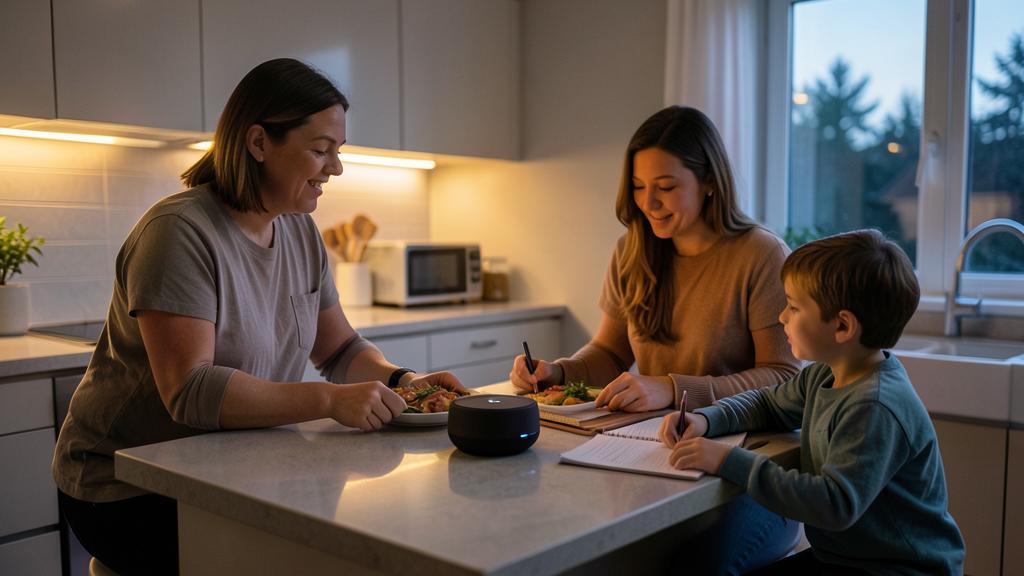
Today’s winning audiences: organized families (timers, voice lists, crossed schedules, music — the kitchen speaker is the household dashboard: our family organization guides connect naturally to it); elderly people and autonomy — the most underrated use: voice eliminates the interface barrier (calling children, the radio, medication reminders « without touching anything »), fall detection and presence monitoring provide reassurance without cameras or intrusion, and the conversational assistant keeps company — with the ethical safeguard: a complement to human presence, never a substitute; people with disabilities — the voice-controlled home is a major autonomy conquest (lights, shutters, door, calls); and automation tinkerers who finally have tools that follow. What’s coming — to welcome with cautious enthusiasm: domestic robots announced (from rolling companions to humanoids in demo — prices and real uses still need to land), assistants that see (cameras interpreted by AI: powerful and sensitive — the privacy debate squared), and proactivity (the assistant that suggests before you ask: useful or intrusive depending on the setting — demand control). The history of home automation teaches patience: each wave over-promises by two years — but this time, the direction is backed by a real leap in capability.
Beware of dependencies that set in. Three structural pitfalls of the assisted home: the breakdown — the overly connected home that no longer lights up without the cloud (golden rule: all critical automations must retain their manual control — the switch is not a relic, it’s the degraded mode); the subscriptionization — the AI assistant and security functions that switch to monthly premium: count the full cost at purchase, and prioritize what works locally without tolls; and the lock-in — the single ecosystem that makes each subsequent device « obvious » with the same actor: Matter is your freedom, demand it. And for children: the assistant that answers everything is not a tutor — child settings exist (content, purchases, time), and the conversation about « who answers you and how they can be wrong » is the real parental control of the voice era.
Frequently asked questions
Should I replace my current speaker to benefit from the new assistants?
Not necessarily — players first deploy software updates on recent speakers (with functions reserved for new models and sometimes a subscription): check what YOUR speaker will receive before any purchase. And if you’re starting from scratch: one speaker in the living room is enough to test everything — multi-room will wait for the proofs.
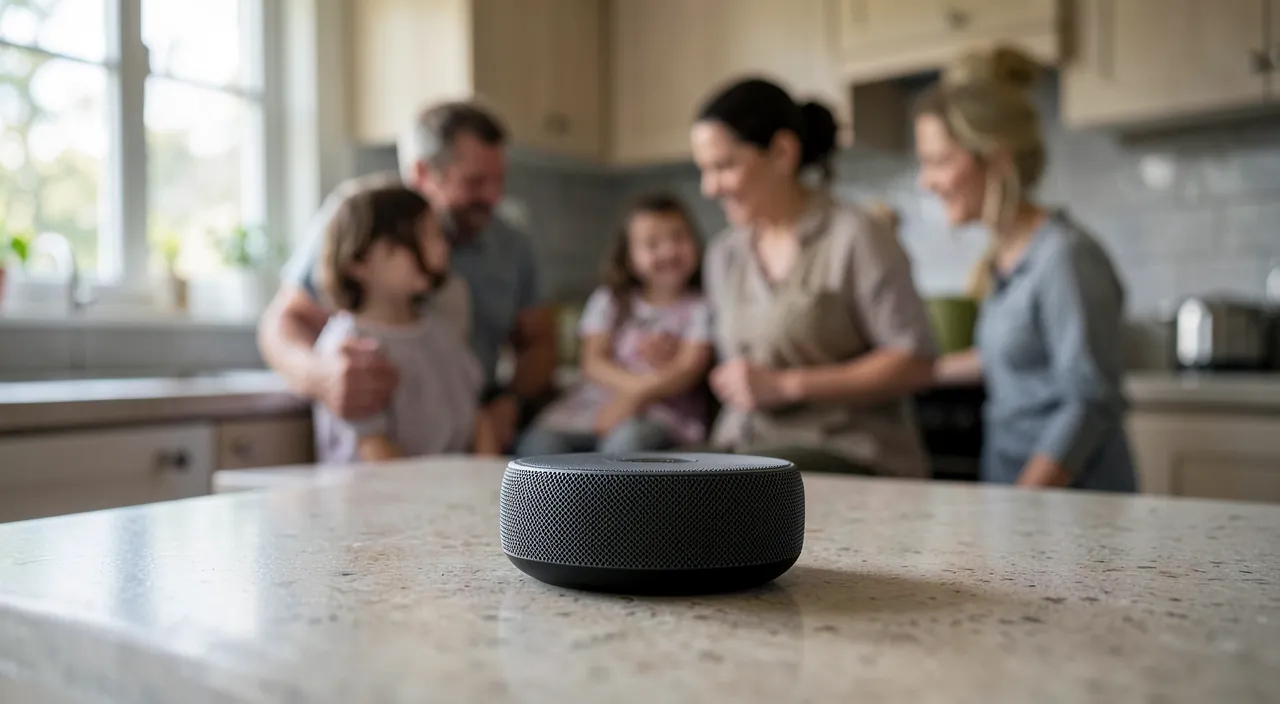
A connected speaker for an isolated elderly person: good idea?
Often excellent — under three conditions: accompanied installation (recognized voice, call contacts configured, treatment reminders), the consent of the person concerned (the imposed object ends up unplugged), and clarity on what it is: a tool for autonomy and connection (call with a word, without glasses or menu), not disguised surveillance — presence monitoring is decided WITH the person. Well positioned, it’s one of the technologies with the strongest human impact at the moment.
Are domestic AI assistants paid?
The base (commands, music according to subscriptions, home automation) remains included; advanced AI capabilities are shifting to premium plans depending on the players — sometimes included in their existing subscriptions. The budget advice: never buy a device FOR a future AI promise — judge based on what works today, in your language, without hidden surcharges.
What to remember
Domestic assistants are experiencing their first real leap since their inception: generative AI brings natural conversation, routines declared in one sentence, and home control by intention — while Matter unlocks compatibility and presence sensors make automations fluid. The safe bets: controlled heating (the only proven financial return), simple security, daily routines, and the vast field of autonomy (age, disability) where voice changes lives. The vigilances: privacy settings done once (history, microphone, voice, purchases), manual controls preserved, subscriptions counted, open ecosystems demanded. The method: equip for real problems, one proof at a time — and let humanoid robots prove themselves with others first. The house that listens deserves a response: with enthusiasm, and the finger not far from the switch.
Want to understand and master the technologies that change your daily life? Our training courses will enlighten you.
Leave a Reply
You must be logged in to post a comment.