
The museum visited at a brisk pace, the labels read diagonally, the castle about which nothing will be known due to an €8 audioguide: cultural visits have long had their frustrations—dissolved one by one by the phone: free audioguides in official apps, artworks explained by scanning, skip-the-line tickets, virtual tours to prepare or extend, and the entire heritage—including village churches—documented on demand. Visit better (not just more), with children, everywhere: the guide to apps that reopen culture.
Before the visit: prepare without spoiling
A successful visit starts in advance: the tickets and time slots—online booking now almost mandatory at major sites (the reserved time slot that SKIPS the line—and the little-known freebies to know: the first Sundays of the month at many museums, Europeans under 26 in national collections, less crowded evenings: the smart calendar divides crowds and budgets); the measured scouting—the app or website of the venue for the essentials (must-sees if time is short, the map, room closures—the disappointment of a closed room is discovered BEFORE), without looking at everything (the over-prepared visit loses its surprise—spot three works that attract you, keep the rest untouched); the virtual tours as scouts—digitized world museums (major cultural platforms—the Louvre to the virtual Grand Palais: the right use—deciding to go, preparing a trip, or VISITING the inaccessible: the museum at the other end of the world from your couch is a real winter evening out, not a fallback); and the family logistics—morning time slots with children (energy and calm), the cloakroom spotted, the HONEST duration (an hour and a half in a museum is a family victory—the half-day is a punishment: better to come back). Preparation is not scholarship—it’s organization that frees up availability.
Planning a museum visit means booking tickets in advance, checking which rooms are open, and using virtual tours to decide what to see. It’s about being organized so you can enjoy the visit without stress.
At the Louvre, you can book a time slot online to skip the long lines. Before going, you check the app to see which rooms are open and decide to focus on three key works. You also take a virtual tour of the Egyptian wing to prepare, making your visit more efficient and enjoyable.
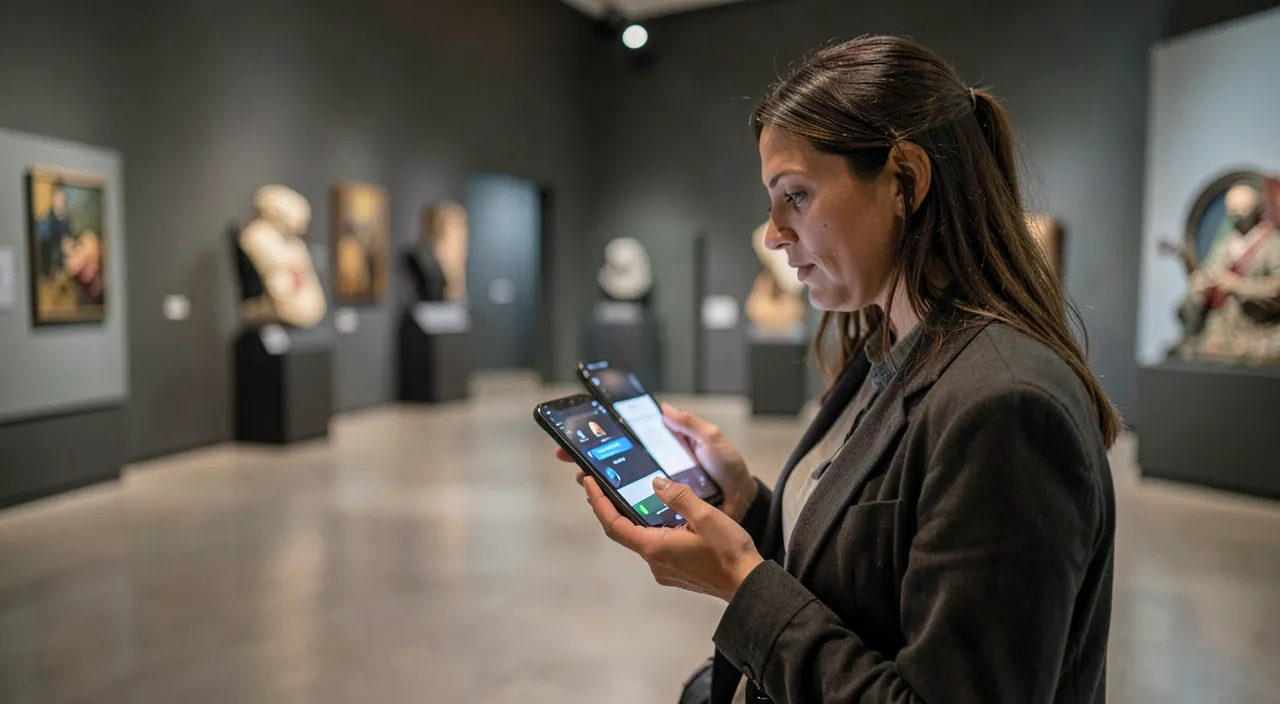
During: the reinvented audioguide (and preserved gaze)
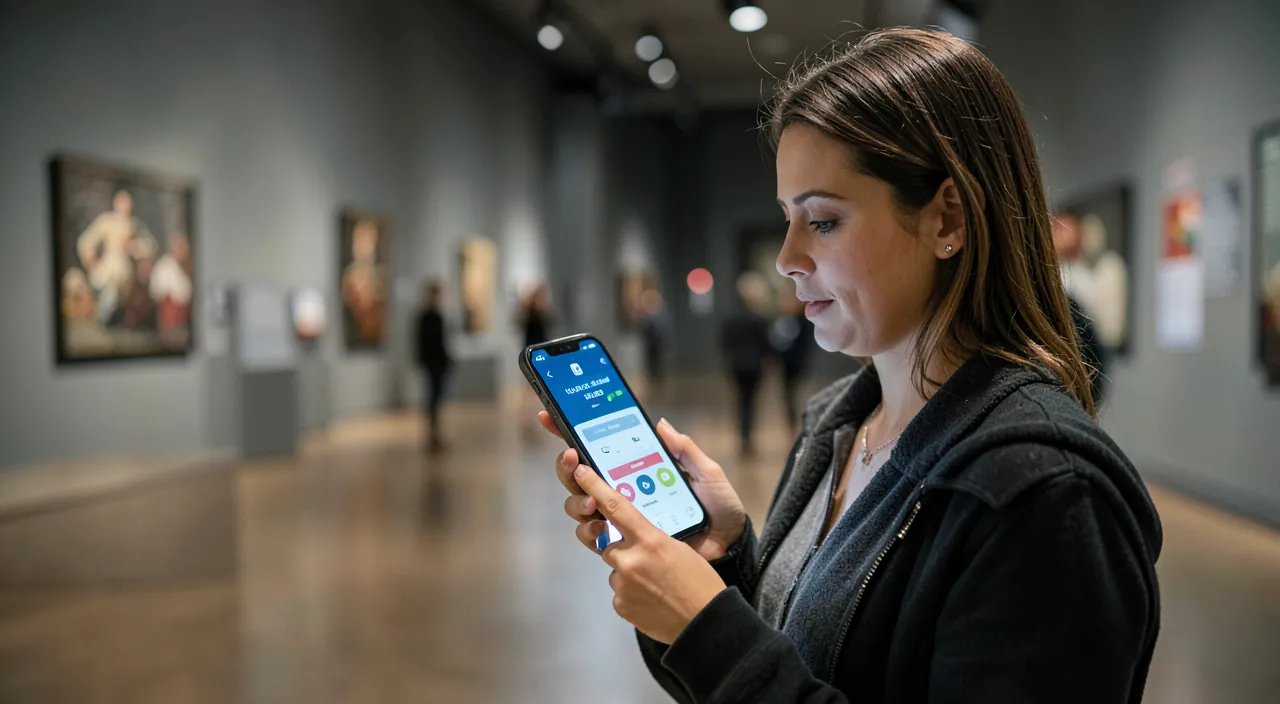
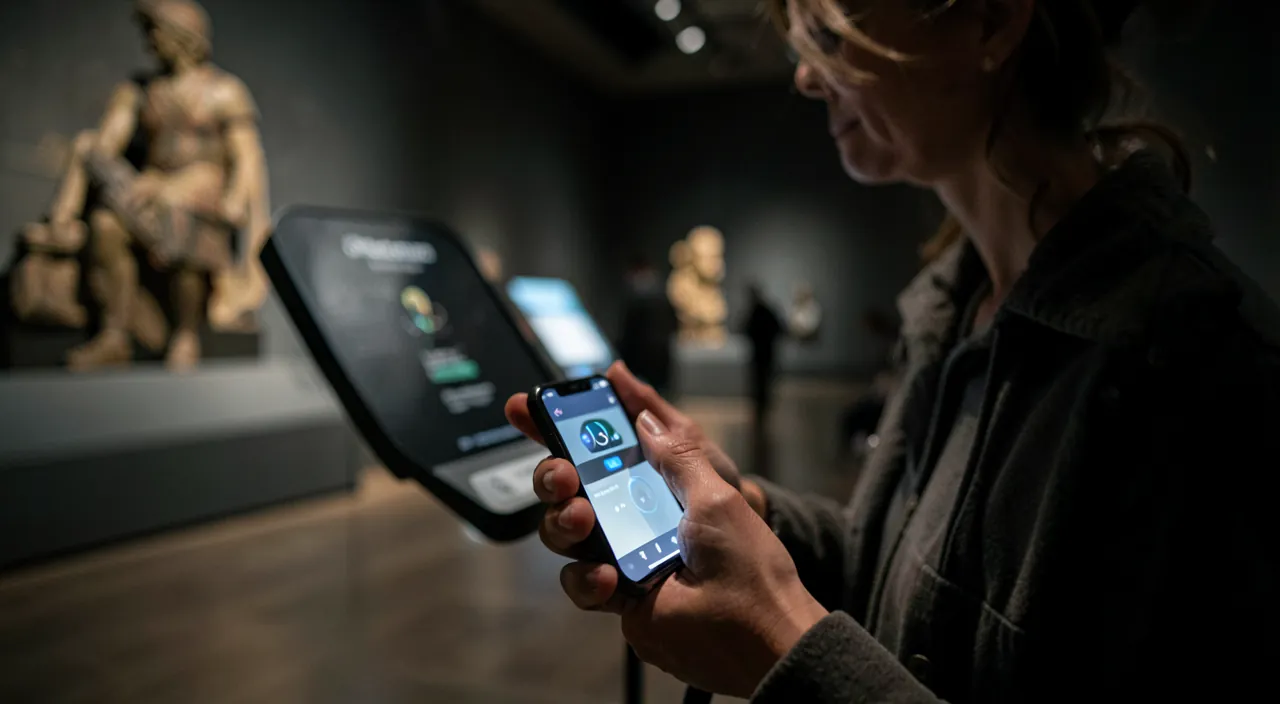
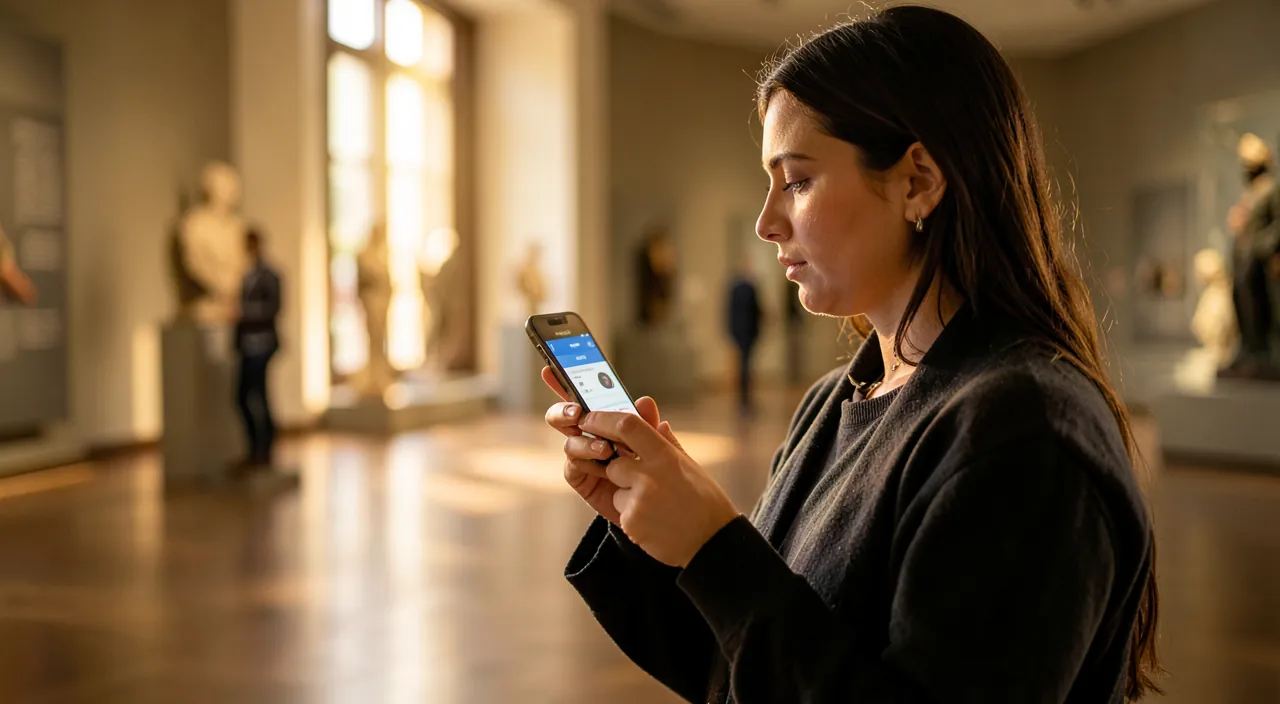
The phone as a gallery companion: the official venue apps—the FREE or almost-free audioguide more and more often (the museum app downloaded on the welcome Wi-Fi, YOUR headphones—the end of €8 combos: check the app before paying for the device), routes by duration (“the museum in one hour”) and by theme, CHILDREN’S routes (official treasure hunts—the difference between a dragged child and a hunting child: always look for the young audience route, it changes the outing); the questioned artwork—scanning the label or visual search (our guides—the camera that identifies the painting and tells its story: the three-line label becomes a story), and AI as a pocket guide (the question asked in front of the work—“why is this painter important? explain this scene”—our guides: the cultural companion that simplifies at YOUR level, provided you check the important details); and the gaze discipline—the phone as a TOOL, not a screen-shield: the work looked at FIRST (two minutes of real eyes before any mediation—the emotion precedes the explanation), the SOBER photo (the loved work photographed with its label—the duo that makes memory: see below—rather than the burst of entire rooms never revisited), and NEVER flash (works are sensitive to it, the rules say so—and silent mode out of respect for the rooms: our guide notifications are worth the museum).
The right reflex. Build your visit notebook—the cultural memory that changes everything: for each outing, the three works that TOUCHED (photo + label + a line of why—in a dedicated note or album: our guide notes), reread on the return train (the moment the visit is imprinted): over the years, the notebook becomes YOUR personal museum—the tastes that emerge, the recurring artists, the threads that weave (and the next visits that follow): culture is not what you’ve seen—it’s what you’ve retained: three works per visit beat three hundred photos.
Beyond the walls: heritage everywhere you go
Culture doesn’t just live at ticket counters: the local heritage—apps and routes from tourist offices (village circuits, churches explained, small heritage—the Sunday walk doubled with stories), QR code signs multiplying (the washhouse that finally tells its story), and visual search on ANY monument (the questioned façade—our guides: “what is this building?” now always has an answer); the events and appointments—Heritage Days prepared by app (places closed the rest of the year—the reservation of gems happens early), Museum Nights, tracked temporary exhibitions (alerts from favorite venues—the missed exhibit “because we didn’t know” shouldn’t exist anymore); the live performance—official box offices and last-minute offers (discounted unsold tickets—the apps dedicated to theater and concerts: the spontaneous Thursday outing), local culture passes and the Culture Pass for youth (the cultural credit of 15-20-year-olds—the official app: parents, check that your teens have activated it—otherwise, their cultural money is sleeping); and the cultural travel—venue apps downloaded BEFORE (our guides’ offline mode—the audioguide of the ancient site without network), translation of foreign labels (our guides—the camera that translates the Tokyo museum), and human guides rehabilitated (the guided tour booked online—the embodied narrative that nothing replaces: the app organizes, the human transmits—the two combine very well).
Extending: culture that continues at home
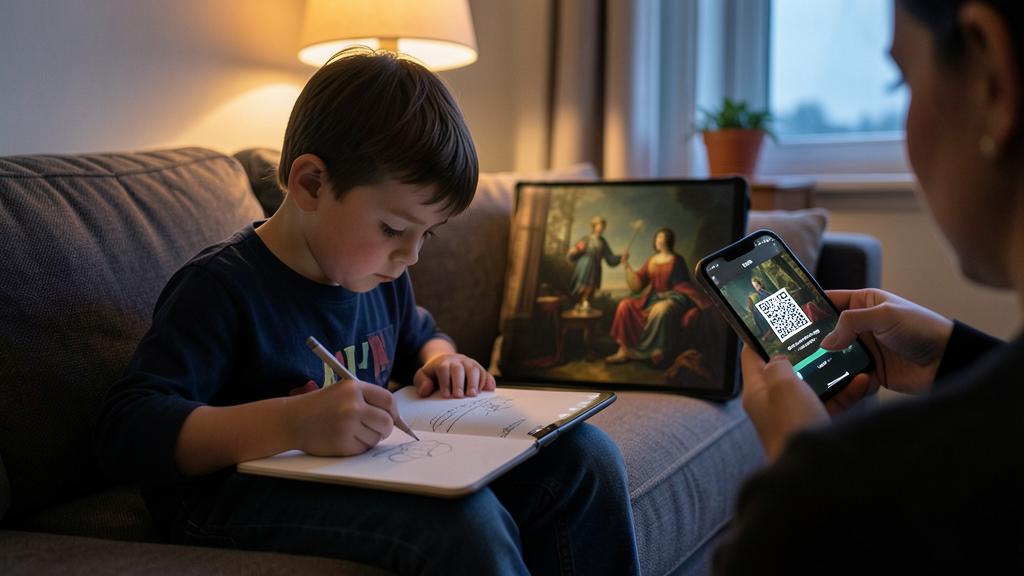
The post-visit fuels the next one: the institutions’ resources—online collections (museum works zoomable in very high definition—the detail invisible in the room is admired on the couch: the complementary, not competing, use), museums’ podcasts and lectures (free online cycles—the digital people’s university that no one exploits), documentaries from public cultural platforms (our streaming guides—the cultural replay is the most underrated free resource on the web); the on-demand deepening—the discovered artist researched (AI for the first approach, sources for the rest—our guides), the borrowed exhibition book (our library guides—the €45 catalog read for free), and online art history courses for enthusiasts; the extended children—drawing after the loved work (the visit notebook in pencil form), creative apps inspired (our drawing guides), the evening youth documentary that echoes: the visit becomes a seed, not an isolated event; and the sharing—the visit notebook told (the photo of the loved work sent with its why—the cultural conversation in the extended family: our guide albums), and useful reviews left (the real accessibility of the place, the children’s route tested—the feedback that helps the next visitors). Culture is a muscle that thrives on regularity—the app makes it daily, at zero cost most of the time.
Beware of parallel tickets and masked visits. Cultural tourism has its commercial traps: the unofficial ticket resellers at the top of searches (the €30 museum ticket that costs €17 on the official site—the overpriced “skip-the-line” tickets that resell standard access: our guides’ reflex—the OFFICIAL site of the venue first, skipped ads, and the verified address), the fake ticket offices and invalid tickets of over-touristed venues (street purchases, never), and the “guided tours” with unclear status (guiding is a profession—serious platforms display it); and the internal trap: the visit through the screen—the entire venue filmed for social media, the work seen via the story (the museum behind the raised phone—our guides’ presence: the memory photo is taken in ten seconds, the spectacle visit is lived in real time: children learn the gaze we show them—sober phone, eyes first: the only golden rule of the rooms).
Frequent questions
Do app audioguides compare to human-guided tours?
They make an excellent BASE (official content, free pace, free) — the human guide keeps the irreplaceable: interaction, anecdotes tailored to the group, questions: the amateurs’ strategy—the audioguide for regular visits, the human for places that matter (and ALWAYS for complex sites—battlefields, ancient sites: the narrative makes the place). The luxury of both is not a luxury: it’s two different visits.
How to interest a jaded teen in museums?
Through THEIR doors: the exhibit that touches their worlds (video games, fashion, street art, music—the contemporary programming is full of hooks), the Culture Pass that makes the outing FREE and autonomous (the teen who chooses with friends is worth ten imposed family outings), short formats (the one-hour evening), and the assigned role (the official photographer of the family notebook, the day’s guide via the app): culture is caught through theirs—the rest comes after.
Is there a “museum pass” worth it?
Depending on your practice: the annual cards of the venues you love (amortized in two-three visits—and the SHORT visit becomes possible: the quarter-hour in front of three works, the true luxury of subscribers), tourist passes for city trips (our guides’ calculation—the real list of planned visits against the price), and the already-mentioned freebies to know first: the best pass is often the smart calendar.
What to remember
The phone has reopened culture: before—official tickets and smart time slots (calendar freebies, reservations that skip lines), measured scouting, virtual tours as scouts; during—the official app as a free audioguide (and its children’s route—the family outing changer), the questioned artwork on demand, the gaze discipline (eyes first, the sober photo-label, never flash); everywhere—the explained local heritage, tracked events, the youth Culture Pass activated; after—the notebook of the three works (your personal museum being built), online collections, free cultural replays. By buying OFFICIAL and looking more than filming. Culture has never been so accessible—just push the doors: the next one is probably free this Sunday.
Want to go further with your phone and apps? Our practical training is made for you.
Leave a Reply
You must be logged in to post a comment.