
Do you have things to say, a passion to share, or a story to tell? Podcasting is a fantastic way to express yourself at your own pace, without a camera, and it has never been so accessible. Gone are the days when you needed a studio and professional equipment: today, with just a smartphone, a bit of method, and free apps, anyone can record, edit, and publish their own podcast, listenable worldwide. Whether for fun, to share expertise, or to build a community around a topic, getting started is within your reach. Let’s see, step by step, how to create and publish your podcast without breaking the bank or being a sound engineer.
What a podcast is and what you need to get started
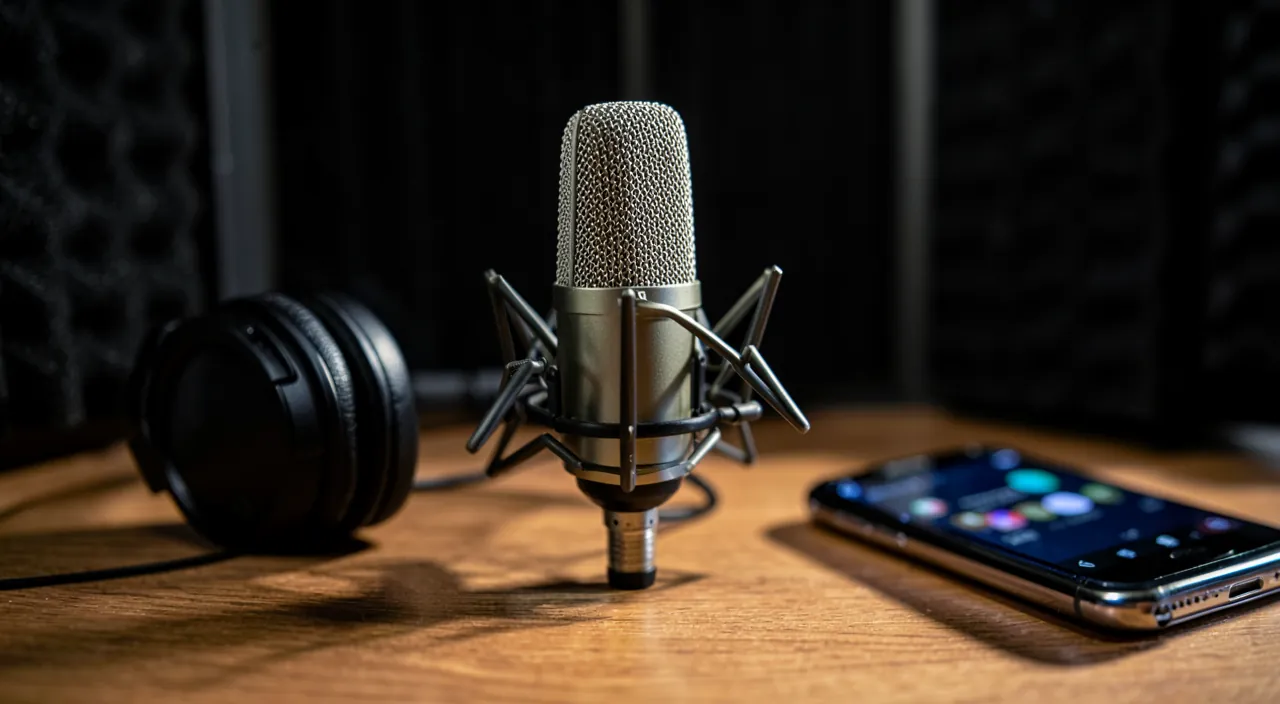
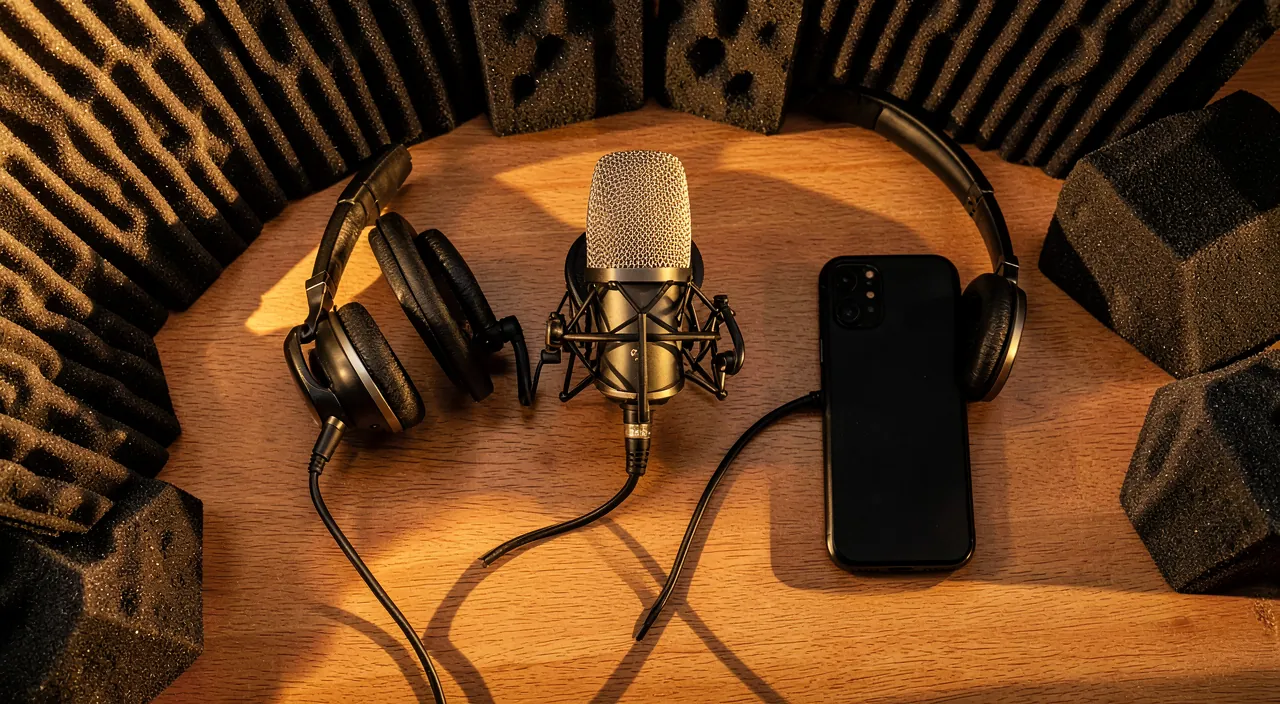
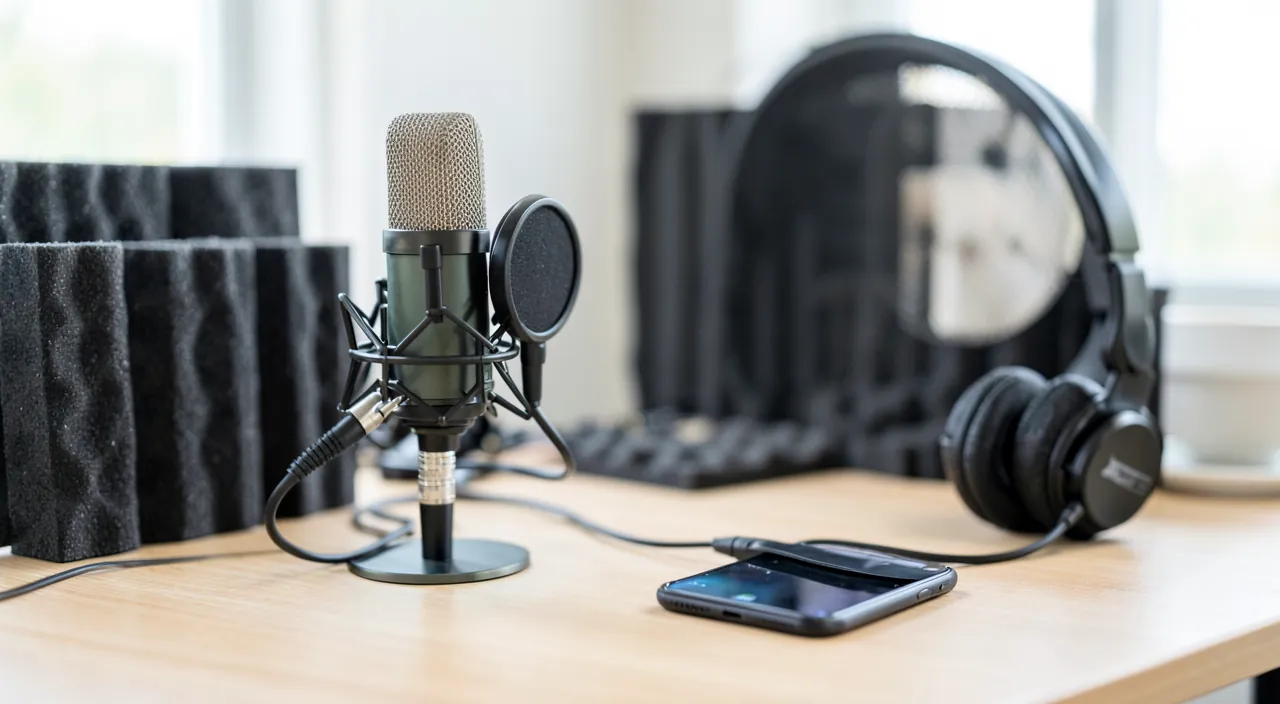
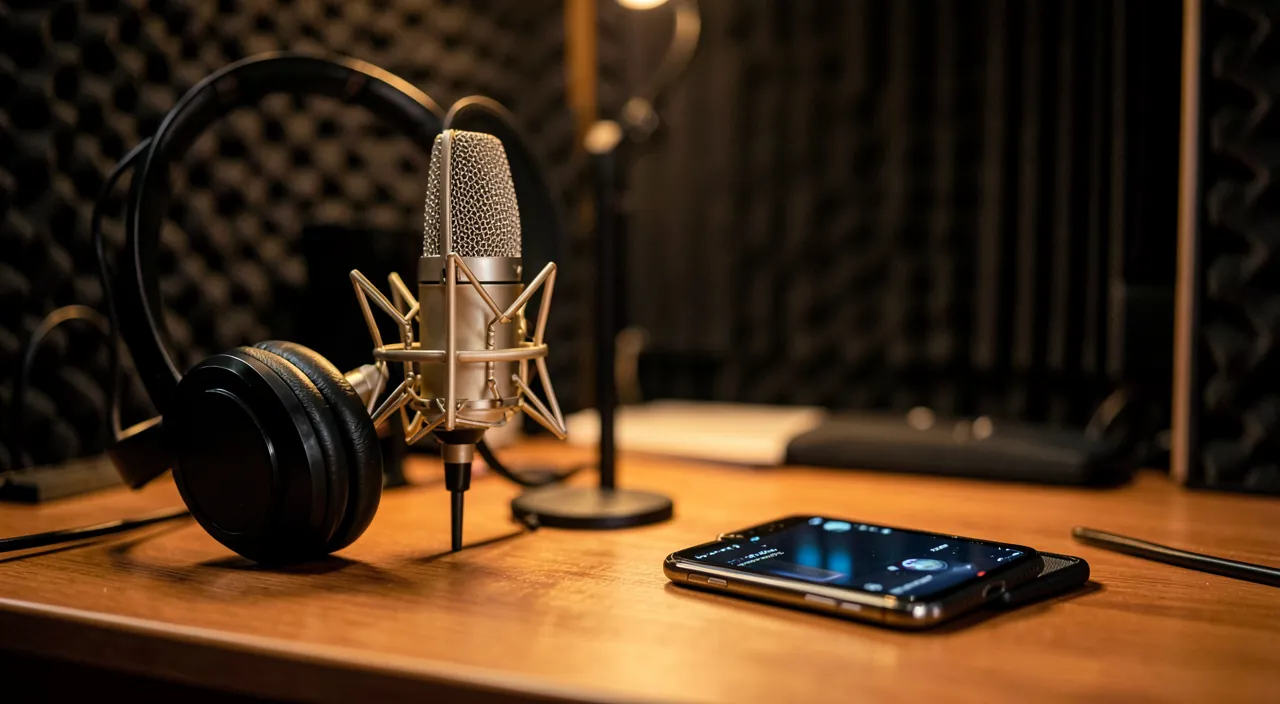
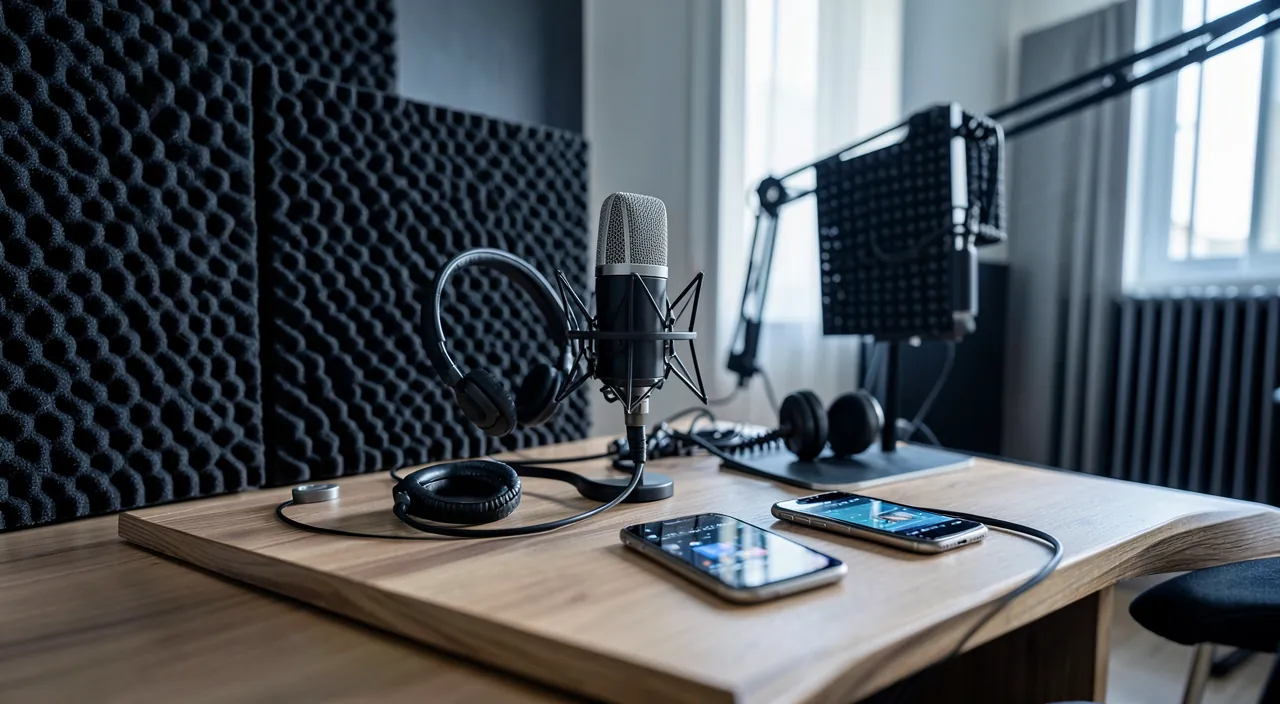
Before you begin, let’s clarify what a podcast is and what you truly need. WHAT IS a podcast? An AUDIO show, published in episodes, that listeners can listen to whenever they want, on their listening app (the “podcast platforms”); it’s a bit like “on-demand radio,” which anyone can now create. POSSIBLE FORMATS: monologue (you speak alone about a topic), interview (you host guests), group discussion, storytelling, documentary; choose what suits you. WHAT YOU REALLY NEED to start (less than you think): a TOPIC and a DESIRE (the most important: something to say and the will to share it); a DECENT MICROPHONE (your phone can suffice to begin, but an affordable lavalier mic or a headset with a microphone greatly improves the sound); a QUIET PLACE (sound matters more than image in podcasting); an app to RECORD and EDIT (free to start); and a service to HOST and PUBLISH your podcast (we’ll get to that). WHAT YOU DON’T NEED to start: a studio, expensive equipment, a team; you can start simply and improve. SOUND QUALITY is key: in podcasting, listeners forgive a lot, except poor sound (background noise, echo, inaudible voice); prioritizing audio is the number one priority, even before equipment: a recording in a quiet room with a modest microphone is better than a great microphone in a reverberant room. The main idea: creating a podcast is now within everyone’s reach; you just need a topic you care about, a decent microphone (your phone can work to start), a quiet place, and free apps to record, edit, and publish. The essential isn’t the equipment, but having something to say and taking care of the sound quality. You start simply and progress episode by episode. The hardest part isn’t the technique: it’s launching and sticking with it.
The steps to create and publish your podcast
Here’s the process, from idea to publication, step by step. DEFINE your podcast — choose a TOPIC (specific enough to be identifiable, broad enough to last), a FORMAT (monologue, interview…), a TYPICAL EPISODE LENGTH, and a REALISTIC PUBLISHING RHYTHM (better to have one episode per month consistently than one per week and then abandon it); give it a NAME. PREPARE your episode — even if you’re improvising, a bit of preparation helps: an outline, a few notes, an idea for an introduction and conclusion; this avoids hesitations and long-windedness. TAKE CARE of the recording location — set up in a QUIET ROOM, with no echo (a furnished room, with curtains, rugs, “absorbs” sound better than an empty, tiled room); move away from noise sources; it’s free and makes all the difference. RECORD — with your phone’s voice recorder app to start, or a dedicated recording app; speak clearly, at a good distance from the microphone; don’t be afraid to redo a botched sentence (you’ll cut it in editing). EDIT — with a free audio editing app: cut out the silences, hesitations, mistakes; optionally add a short intro music (royalty-free!); adjust the volume; editing transforms a raw recording into an enjoyable episode. EXPORT — save your finished episode in a common audio format (like MP3), in good quality. CHOOSE a podcast host — to be listenable on platforms (everyone’s podcast app), your podcast must be hosted by a dedicated service that generates a “feed” (a stream that platforms read); several hosting services exist, some free; this is the key technical step. PUBLISH and DISTRIBUTE — upload your episode to the host (with a title, description, cover image); the host then distributes it to major listening platforms, where your listeners can subscribe. SHARE — promote your podcast (social media, word of mouth, your circle); the first listeners are hard-earned. PERSIST — consistency and duration make podcasts that find their audience; you improve episode by episode. In short: define your podcast (topic, format, rhythm), prepare and record in a quiet place, edit to clean up and pace, export, host with a dedicated service that distributes to platforms, publish with a nice title and cover, share, and above all, persist. From idea to your listeners’ ears, every step is within your reach.
The tip that changes everything. If you had to remember just one thing to succeed in podcasting, it would be this: prioritize SOUND above all else. It’s the least glamorous but most important secret. Podcast listeners are remarkably tolerant: they forgive a less-than-perfect edit, a hesitant host, a niche topic; but there’s one thing they can’t stand and that makes them leave in seconds: bad sound. A distant voice, an empty room echo, constant breathing, background noise (traffic, fan, notifications); and the ear tunes out, no matter how engaging the content. The good news is that good sound doesn’t depend first on expensive equipment, but on two free (or almost) things. First, the LOCATION: record in a quiet and “dressed” room — furnished, with curtains, rugs, books, a wardrobe — because these surfaces absorb sound and prevent echo, while an empty, tiled, or bare-walled room makes your voice resonate like in a bathroom. Some beginner podcasters even record in a closet full of clothes, and the result is excellent! Second, the MICROPHONE PROXIMITY: speak close to your microphone (without pressing your mouth against it), because the closer the microphone, the more your voice dominates over ambient noise. With these two free habits, even your phone’s microphone will give a very decent result. Only then, if you want to progress, an affordable lavalier microphone or a headset with a microphone will improve things further — but always after fixing the location and distance, never instead. One last tip in the same spirit: always do a 30-second test and RE-LISTEN to it with headphones before recording an entire episode; you’ll spot background noise, echo, or low volume, and you’ll avoid the disappointment of discovering an unusable recording after an hour of work. Sound first: it’s the foundation on which everything else rests.
Good sound is the most important thing in podcasting. You don’t need expensive equipment – just record in a quiet, furnished room and speak close to your microphone. Always test your recording before starting.
A podcaster named Sarah started with just her smartphone and a closet full of clothes. She hung blankets on the walls and recorded 10 inches from her phone’s microphone. Her first 10 episodes had clear audio and gained 500 listeners before she invested in a $50 lavalier microphone.
Succeeding in the long term and avoiding beginner mistakes
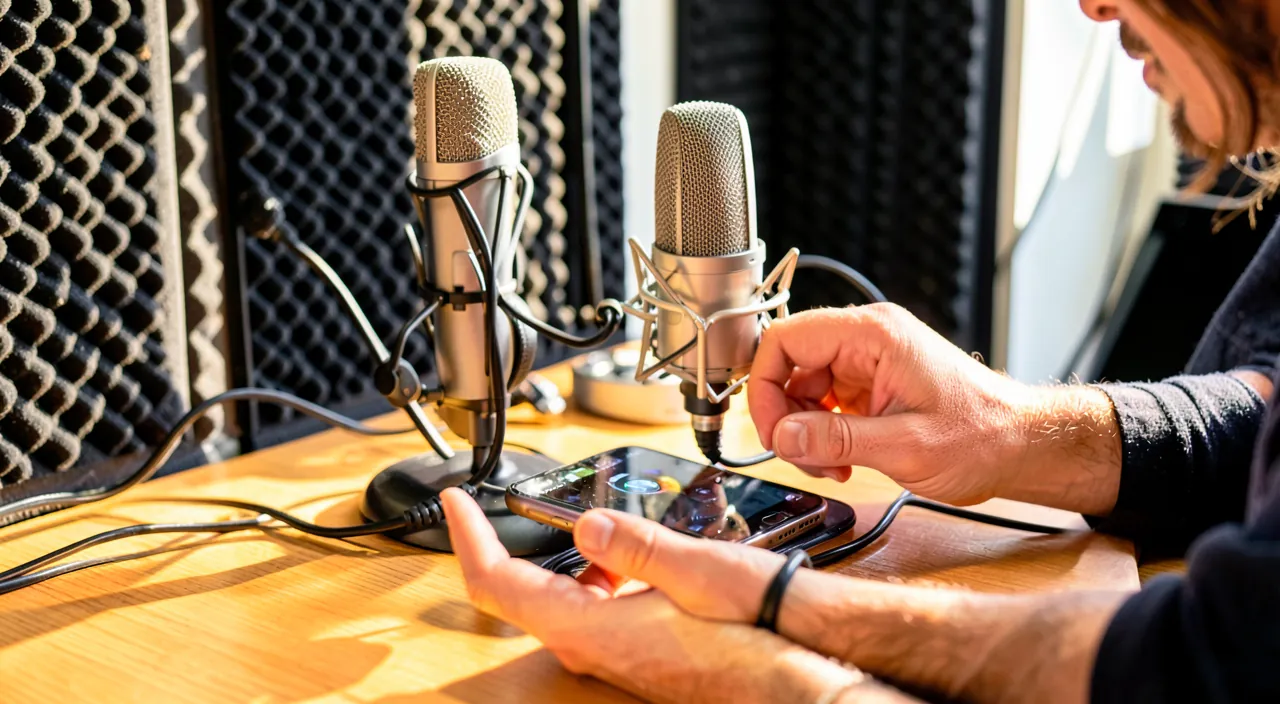
Creating a first episode is one thing; keeping a podcast alive is another; here’s how to last and avoid common pitfalls. The PERFECTION trap: many never publish, striving for a perfect result; the best is the enemy of the good; publish, imperfect but real, and improve afterward; the first episode won’t be the best, and that’s normal. REGULARITY over frequency: choose a SUSTAINABLE pace; one episode per month published faithfully is better than an intense rhythm that fizzles out and stops; listeners appreciate consistency. DURATION (persistence): podcasts that find their audience are often those that last; the audience builds slowly, episode by episode; don’t be discouraged by low listen counts at first, it’s normal; persistence pays. MUSIC and sounds: DON’T use music protected by copyright (a known song) without permission; this can cause serious issues; use ROYALTY-FREE music (there are free banks) or music created for you. RESPECT for people: if you quote or host people, respect them; ask your guests for permission to broadcast; be careful what you say about others (defamation exists in podcasting too). Don’t NEGLECT the title and description: a good episode title and clear description help listeners find and choose to listen to you; also take care of your cover image. CONSISTENCY in format: a recognizable identity (same intro, same structure, same tone) builds loyalty; listeners like to find their bearings. Interact with your COMMUNITY: respond to feedback, build connections; an engaged community keeps a podcast alive. Don’t COMPARE yourself: big podcasts have resources and history; compare yourself to yourself (are you progressing?), not to the stars. FUN first: if you’re having fun, it shows, and you’ll last; a podcast made reluctantly fizzles out quickly. In short, to last: publish without seeking perfection, keep a realistic pace, persist (the audience builds slowly), respect rights (royalty-free music) and people, take care of titles, descriptions, and cover, cultivate a recognizable identity and your community, don’t compare yourself to giants, and keep the fun. It’s consistency and authenticity, far more than technique, that make podcasts that last.
Warning: never use copyrighted music without permission, and respect the people you quote or host. This is the most common — and most serious — legal pitfall for beginner podcasters, yet it’s easy to avoid. First rule: MUSIC. It’s tempting to start your episode with your favorite song, a hit, a movie soundtrack; NEVER do this without permission. These tracks are protected by copyright, and using them without permission in publicly broadcasted content is an infringement that can have real consequences: removal of your episode by platforms, claims, or even lawsuits. The solution is simple and free: use ROYALTY-FREE music and sounds, specifically made available for this purpose. There are banks of free music and sounds where you’ll find intros, ambiances, jingles you can legally use (always check the conditions of each track — some require crediting the author). You can also have music composed for you, or do without: many excellent podcasts have minimal or no sound branding. Second rule: RESPECT for people. A podcast is a public broadcast, with the responsibilities that entails. If you host GUESTS, clearly ask for their permission to be recorded and broadcast, and respect what was agreed (some “off-mic” comments should stay that way). If you TALK about other people, keep in mind that defamation, insult, and invasion of privacy exist just as much in podcasting as elsewhere: making false and harmful statements about someone, or revealing private details of their life, can expose you legally; express your opinions, but with moderation and honesty. Third point of vigilance: EXCERPTS from other content (sound clips, passages from other works) are also subject to rights; don’t reuse them freely without ensuring it’s allowed. Finally, if your podcast collects data from your listeners (sign-ups, comments), respect data protection rules. None of this should discourage you: these are simple precautions, and the vast majority of podcasters respect them without difficulty by using royalty-free music and showing common sense and respect. Create, express yourself, share; but do it within the rules, so your podcast remains a pleasure without any bad surprises. Original content, royalty-free music, and respect for others: that’s the basis of a serene and lasting podcast.
Frequently asked questions
Do you need expensive equipment to get started?
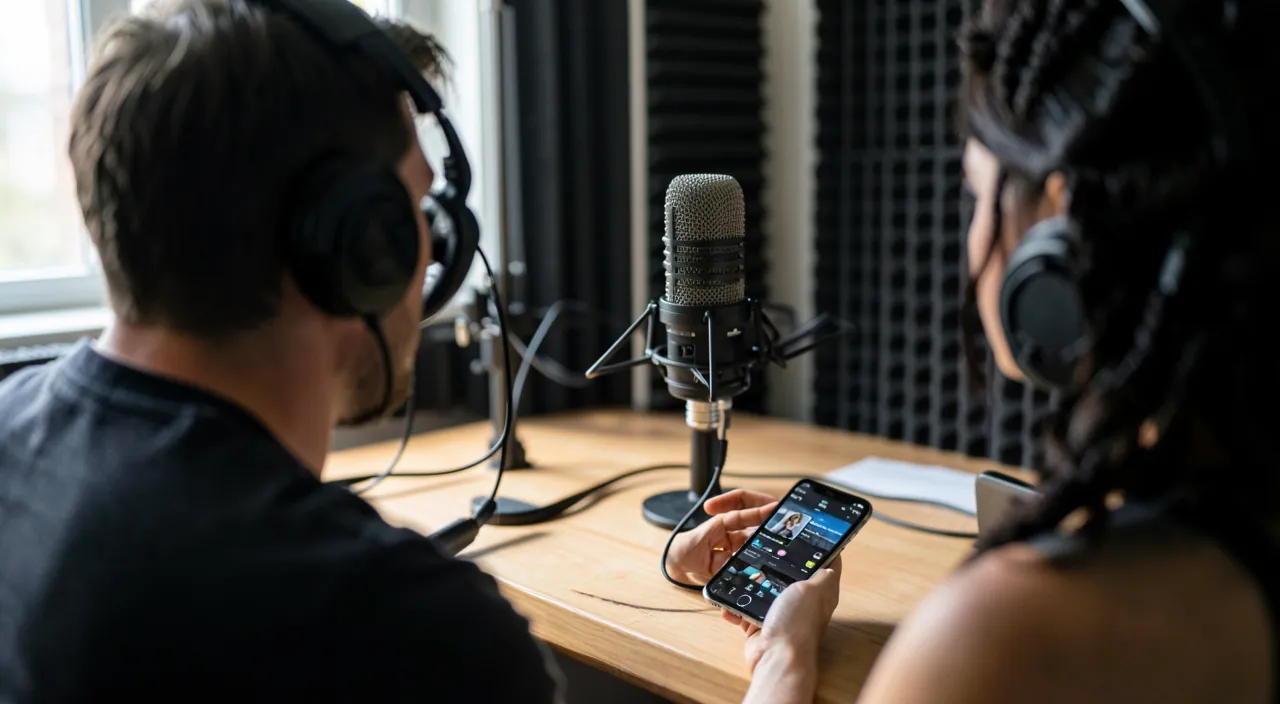
No, absolutely not: you can start with very little, and it’s better to start modestly than to wait for “the right equipment.” Here’s the essential. For your FIRST episode, your phone can suffice: its built-in microphone, combined with a good recording location (a quiet, non-reverberant room) and a proper speaking distance, gives a perfectly decent result to start; add a free recording app and a free editing app, and you have everything you need for zero euros. So never let the lack of equipment prevent you from starting: the most important things are your topic, your desire, and the quality of your sound (which depends mostly on the location, not the price of the microphone). When you want to IMPROVE, the most cost-effective investment is a good MICROPHONE, as it improves perceived quality the most: an affordable lavalier microphone that plugs into the phone, or a headset with a microphone, already brings a real improvement for a modest budget; later, a dedicated USB microphone will do even better. HEADPHONES (to listen to yourself and spot issues) are also very useful and inexpensive. On the other hand, everything else — mixing desk, studio, professional equipment — is completely unnecessary to start, and often even afterward: many successful podcasts are recorded with modest equipment. The priority hierarchy: first the location (free); then a good microphone (affordable); the rest is accessory. My advice: start now with what you have (your phone), publish a few episodes, and only invest in a microphone when you’re sure you want to continue; you’ll then know exactly what you need. In short, no, expensive equipment isn’t necessary: you can start very well with a phone and free apps; the only really useful investment, when the time comes, is an affordable good microphone. The important thing is to start.
Where and how to publish your podcast so it’s listenable everywhere?
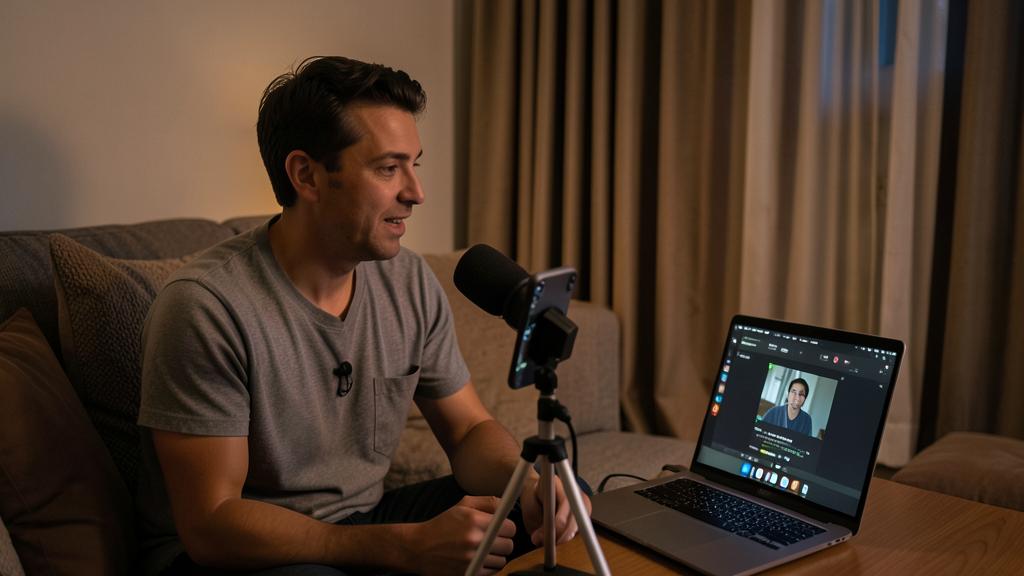
The principle is as follows: you don’t publish directly on each listening platform; you go through a PODCAST HOST, which then distributes your podcast to all platforms. Let’s explain this mechanism, which often confuses beginners. For a podcast to be listenable everywhere (in the different listening apps people use), it must have a “feed” — a technical stream, updated with each new episode, that platforms come to read automatically. This is the role of the PODCAST HOST: an online service where you upload your episodes (with their title, description, your cover image); the host stores your audio files and generates this famous feed. The process: choose a podcast hosting service (several exist, some offer a free plan, others paid formulas depending on your needs); create your podcast there (name, description, category, cover image); upload your first episode; then, from the host, SUBMIT your podcast to major listening platforms (the host guides you: it usually involves providing the link to your feed to each platform, just once). Once your podcast is accepted on these platforms, the magic happens: every time you publish a new episode with your host, it will APPEAR AUTOMATICALLY on all platforms where you’re listed, without any further action; your listeners, subscribed from their favorite app, will receive it automatically. A few tips: take care of your podcast’s page (clear name, engaging description, nice square cover), as that’s what potential listeners will see; choose a relevant category to be found; and check the conditions and longevity of the host you choose (your episodes are stored there). In short, to publish your podcast everywhere: host it with a dedicated service (which generates the feed), submit this feed to major listening platforms just once, then simply publish your episodes with the host — they’ll automatically distribute everywhere. The host is the link between you and all listening apps.
How long does it take to find listeners?
It often takes time and persistence: a podcast’s audience builds slowly, and you shouldn’t be discouraged by modest beginnings, which are the norm. Let’s be honest to avoid false expectations. AT THE BEGINNING, your listen counts will probably be low: a few dozen listeners, often your circle and a few curious people; this is ABSOLUTELY NORMAL, even for podcasts that will later become popular; no one starts with a large audience. So don’t judge your podcast on its early numbers, and don’t give up; this is the mistake that makes most beginners quit, just before things start to take off. The audience builds OVER TIME, thanks to several factors: REGULARITY (publishing faithfully, episode after episode, builds a catalog and loyalty); WORD OF MOUTH (satisfied listeners bring others, but this takes time); REFERENCE (the more episodes and history you have, the more discoverable you are); and PROMOTION (sharing on your networks, talking about it, appearing elsewhere). There’s no guaranteed timeline: some podcasts find their audience in a few months, others in one or two years, others remain niche but loyal; it all depends on the topic, the niche, the regularity, and the promotion. What’s certain is that PERSISTENCE is the determining factor: podcasts that find their audience are almost always those that lasted. A few tips to speed things up: choose a specific topic (a niche builds loyalty better than a too-broad theme); take care of discoverability (title, description, category); encourage your listeners to subscribe and share; and promote each episode. But above all, set your goal as FUN and regularity rather than a number of listeners: if you’re having fun and publishing faithfully, the audience will come in its own time. In short, finding listeners takes time — often months, sometimes more — modest beginnings are normal, and the key is to persist without giving up; regularity, patience, and fun are your best allies to gradually build a loyal audience.
What to remember
Creating and publishing your podcast is now within everyone’s reach: with just a smartphone, free apps, and a bit of method, anyone can record, edit, and broadcast an audio show listenable worldwide. The essential isn’t the equipment — you can start very well with your phone’s microphone — but having something to say, the desire to share it, and a concern for SOUND QUALITY, which is the absolute priority: listeners forgive a lot, except bad sound. And good sound depends first on free things: recording in a quiet, non-reverberant room (furnished, with curtains and rugs), speaking close to the microphone, and always doing a test listened to with headphones before starting. The process: define your podcast (specific topic, format, sustainable pace), prepare and record, edit to clean up and pace, export in good quality, host with a dedicated service that generates the “feed” and automatically distributes to all listening platforms (you submit this feed just once), publish with a nice title and cover, then share. The only really useful investment, when the time comes, is an affordable good microphone; the rest is accessory. To last — because that’s the real challenge — avoid the perfection trap (publish imperfect but real, you’ll improve afterward), keep a realistic pace, and above all, PERSIST: the audience builds slowly, modest beginnings are the norm, and it’s the podcasts that last that find their audience. Strictly respect the rules: never use copyrighted music without permission (use ROYALTY-FREE music, free), and respect the people you quote or host (guests’ permission, no defamatory statements). Cultivate a recognizable identity, your community, and above all, the fun: if it’s heard, it will make you last and keep your listeners loyal. The hardest part isn’t the technique, which is accessible: it’s launching and lasting. So go for it: your first episode won’t be perfect, and that’s fine; the important thing is to start.
Want to go further with your phone and apps? Our practical training is made for you.
Leave a Reply
You must be logged in to post a comment.