
Your phone number has become, without anyone deciding it, the master key to your digital life: bank codes arrive there, accounts are recovered, identity is verified — and it’s everywhere: forms, leaks, directories, networks. Result: stealing, diverting, or simply knowing it opens doors that your strongest password no longer protects. SIM hijacking, scams starting with a call, reflexes to secure the line: the guide for a key you’ve been carrying all along — without knowing it was one.
Why your number is worth gold (in the wrong hands)
The silent shift: the number has gone from IDENTIFIER to AUTHENTICATOR — it proves who you are: the SMS codes from the bank and accounts (double authentication by SMS — better than nothing, our guides, but entirely dependent on the line), the account recoveries (“reset by phone” — the number that receives this link controls the account), the identity validations (the bank that calls back, services that verify): who CONTROLS your number controls this cascade; and who simply KNOWS it already has a lever — targeted fraudulent solicitation (data leaks associate number + name + services used: the fake advisor who “knows” is credible — our guides), industrial voice and SMS spam, display spoofing (your number DISPLAYED by others by scammers — spoofing: strangers call you furious from a call “from you”: annoying, usually temporary, and without real access to your line — the distinction that avoids panic), and harassment. The structuring conclusion: the number is PROTECTED like a sensitive identifier (expose it less) and DEFENDED like an authenticator (lock the line — the rest).

Your phone number is now like a password that unlocks many of your accounts. If someone gets it, they can reset passwords, receive sensitive codes, and even impersonate you. Protecting it means keeping it private and securing your phone line.
SIM hijacking: the queen attack, and its defenses
The most serious scenario — the SIM swap: the attacker impersonates you to the OPERATOR (“I lost my SIM, transfer my number to this one”) or diverts portability — and YOUR number now rings at their place: the bank’s SMS codes, account recoveries — the entire cascade (real cases count in emptied accounts — the targets: anyone, and particularly visible crypto holders and victims of rich leaks); the signals — your phone losing network WITHOUT reason and durably (the SIM is dead while the number lives elsewhere: the absolute signal — test with a call from another line: if your number rings ELSEWHERE or responds strangely busy, the urgency is there), unexpected operator SMS (“your request for a new SIM…” — which you didn’t make: react TO THIS SMS, it’s the early alert), cascading connection alerts; the defenses — the operator customer code reinforced (the line’s customer area protected like a critical account: unique password, and the confidential/verbal code that operators offer for any sensitive operation — ask for it: it’s THE anti-swap lock), discretion about the info that allows impersonation (our guides — social engineering thrives on details), and above all the migration away from SMS: double authentication for critical accounts moved to the authentication app or passkeys (our guides — the code that is BORN IN your device is not diverted with the line: each migrated account is one that SIM swap no longer touches — start with the bank and email); and the reaction if it happens: the operator IMMEDIATELY (the line is recovered — the fraud service knows), then the preventive cascade of our hacked account guides (email, bank — from a healthy device), and the complaint.
The right reflex. Activate the SIM card PIN — the setting forgotten since phones no longer ask for it by default: without PIN, your STOLEN SIM (or extracted from a stolen phone — our guides) slips into any phone and receives YOUR codes in ten seconds: with PIN (Settings → Cellular Data/SIM → PIN code — change the default code!), it’s inert outside your device. Thirty seconds of setup, one entry at reboot — and half of the physical problem disappears. (The eSIM of recent phones improves even more: no card to extract — another argument for it on the occasion.)
In 2023, a crypto investor lost $1.2 million after a SIM swap attack. Hackers called his mobile operator, pretended to be him, and transferred his number to a new SIM. They then received the 2FA codes sent by his bank and emptied his accounts within minutes.
Expose less: the daily hygiene of the number
Reduce the surface, methodically: the two-speed number — the main one reserved for humans and critical accounts, and for the rest: the aliases and second numbers (the second app or eSIM number for classifieds, registrations, deliveries — the logic of email aliases from our guides applied to the phone: the disposable number takes the spam, the real one stays clean — and sales platforms are increasingly masking numbers: use their relays); the questioned forms — the “mandatory” number that isn’t (the legitimacy question from our guides: the merchant, the Wi-Fi, the content site don’t need it — the field is left blank or receives the alias), and the directories and networks purged (your number in plain sight on social profiles, online lists, old sites: searching for your own number in quotes reveals the exposure — and the “who can find me by my number” settings of messengers and networks are adjusted: the setting that almost no one has visited and that allows anyone to find your profile from a leak); the incoming filtering — silent unknown calls (our guides), anti-solicitation registration (useful against the legal ones — the illegal ones don’t care: technical filtering does the rest), unwanted SMS reported (transfer to the reporting service — each report feeds the blocks); and the controlled portability — the RIO and operator change procedures done by YOU alone (any solicitation to “confirm your portability” not initiated is an attack — the immediate operator reflex).
The number in the family: children, elders, and the lines that are passed on
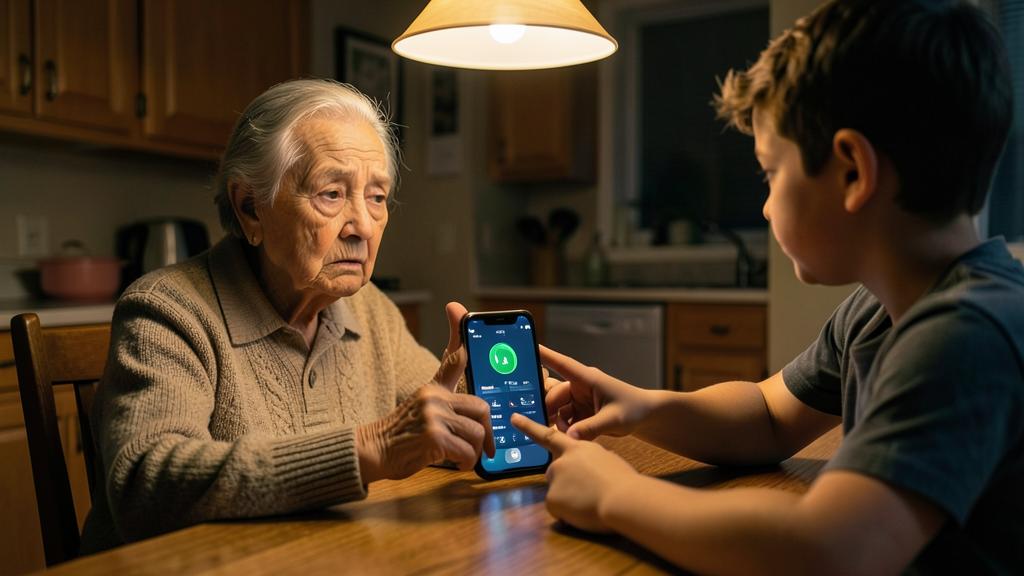
The family angles: the children — the first number (our first phone guides) is exposed LITTLE from the start (no number on networks, registrations strictly as needed — hygiene learned from the start costs less than cleaning at 25), and the child’s number NEVER serves as recovery for the parents’ accounts (the reversed cascade — each has their own chain); the elders — targets of fraudulent solicitation: filtering set on their phone (silent unknowns — with the contact book well filled so that LEGITIMATE ones ring), the vaccine conversation about “bank/support” calls (our guides — the displayed number IS FALSIFIED: the “My Bank” display proves nothing, only the outgoing callback rule holds), and their operator customer area is also locked; the lines that change hands — the RETURNED number (termination) is RECYCLED after a delay: the new owner will receive the SMS intended for the previous one (including forgotten account codes — the documented risk): before abandoning a number, the round of accounts that reference it (our guides for updating contact details — the obsolete recovery number is a door given to a stranger), and conversely, the FRESH number received may carry the past of another (unknown SMS are reported and ignored — never do you “use” a code received by mistake); and the death — the deceased’s line maintained for the duration of the settlement (our succession guides: it’s the 2FA key to everything — terminating it too early locks the succession).
Beware of calls and SMS that “prove” — falsification is the norm. The mental foundation to install: DISPLAY PROVES NOTHING — the caller number is falsified (the call “from your bank” at the exact number of your bank: technically trivial), the SMS sender too (the fraudulent SMS that inserts itself into the REAL message thread of your bank — the pinnacle of credibility, documented and common: the authentic thread contaminated by an intruder): the practical consequences — an incoming call is authenticated ONLY by the outgoing callback (our guides — the universal rule), an SMS with a link is never clicked (even in a legitimate thread — ESPECIALLY in a legitimate thread: the real service doesn’t send a login link), and a received code is NEVER communicated to anyone (the code is a signature — who asks for it makes you sign something). Network protections are progressing (call authentication is coming) — in the meantime, these three rules are your network.
Frequent questions
Changing your number after years of spam: good idea?
The last resort — costly in procedures (all accounts, all contacts) and effective only WITH new hygiene (the new number exposed the same way will be spammed the same way): try first the trio of filtering + alias for the future + purge of existing exposure — most lines can be rehabilitated. If you change: the complete checklist of accounts BEFORE returning the old one (the recycled number, still).
Is SMS-based two-factor authentication still worth anything?
Yes — infinitely better than nothing (it stops the ordinary hacker who only has your password): the hierarchy of our guides remains — passkeys and authentication apps for CRITICAL accounts (bank, email, cloud — immune to SIM swap), SMS accepted for the rest. The migration is done in order of importance, not all at once — and every service that offers better than SMS deserves the click.
My number is circulating in a data leak: what to do concretely?
No panic (the number alone opens little) but three levels of vigilance: targeted fraudulent solicitation to expect (the fake advisor who “knows” — the outgoing callback rule in maximum alert), critical accounts migrated away from SMS (the time to do it), and the operator lock in place (the anti-swap confidential code). The leak cannot be undone — the cascade it allows, if: it’s that which is cut off.

What to remember
The phone number has become a master key — it is defended on two fronts: the locked line (the SIM PIN reactivated, the operator customer area as a critical account with anti-swap confidential code, known diversion signals — unexplained network loss, unsolicited operator SMS — and the lightning reaction: operator, then email and bank from a healthy device) and the reduced exposure (the main number for humans and critical accounts, aliases for the rest, questioned forms, “who can find me” settings visited, abandoned numbers purged from accounts BEFORE recycling). Above all, the migration of critical accounts AWAY FROM SMS (passkeys, apps — immune to diversion) and the mental foundation of the era: the display proves nothing — outgoing callback, never a link, never a communicated code. Ten digits that open everything deserved a guide: yours is now a key that is no longer so easily copied.

Doubts about your security, a device to check or clean? Our assistance service guides you step by step.
Leave a Reply
You must be logged in to post a comment.