
No time or no desire to go to the gym? Good news: you can train effectively at home, with little or no equipment, guided by an app. Video sessions, programs tailored to your level, a virtual coach to motivate you: home fitness apps make physical activity accessible, flexible, and free (or affordable). Whether you’re a beginner or an athlete, they help you move regularly at home. Here’s how to train at home with an app, how to choose and practice well, and how to do it safely.
How to train at home with an app
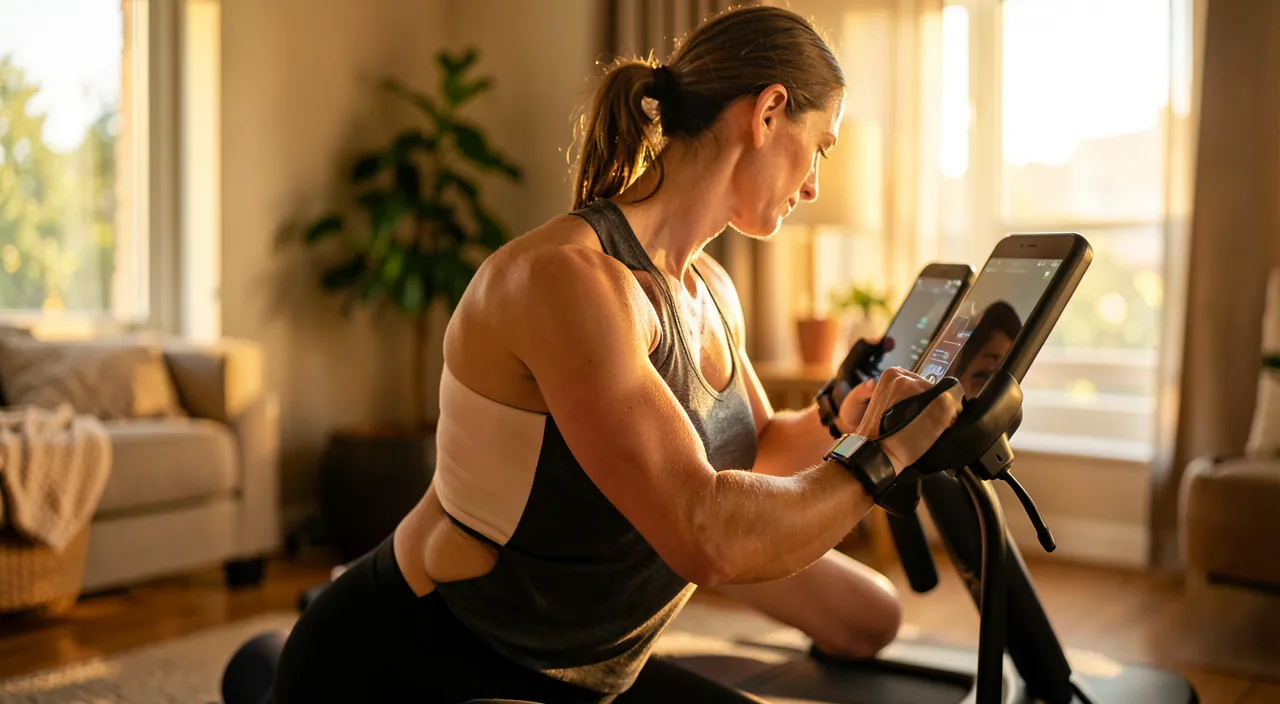
Home fitness apps GUIDE you to exercise at home, without a gym: they offer sessions, programs, and support, designed for home use with little or no equipment. What they generally provide: GUIDED SESSIONS (video or animated) where a “coach” demonstrates the exercises to do, with the pace, repetitions, and rest times; just FOLLOW. PROGRAMS tailored to your LEVEL and GOALS: beginner or advanced; getting back in shape, building muscle, stretching, losing weight, relaxing (yoga, stretching); the programs structure your training over time. A wide VARIETY of activities: muscle strengthening, cardio, yoga, Pilates, stretching, dance… something for everyone. Sessions of VARYING LENGTHS: from a few minutes to longer; you can move even with little time. Little or NO EQUIPMENT: many sessions are done with bodyweight (no equipment), or with minimal equipment (a mat, possibly some weights); accessible at home. TRACKING and MOTIVATION: track your sessions, your progress, with reminders and encouragement to stay consistent. The ADVANTAGES of home fitness guided by an app: FLEXIBILITY (train when you want, at home, at your own pace; no commute, no schedules); ACCESSIBILITY (often free or affordable; no gym membership; for all levels); COMFORT (at home, without others watching—reassuring for beginners or shy people); GUIDANCE (you’re accompanied, you know what to do; no need to be an expert); and REGULARITY (the ease helps you stick to it; moving a little often is better than a lot rarely). FOR WHOM? For everyone: the BEGINNER who wants to (re)start sports gently, without intimidation; the one who LACKS time or doesn’t like the gym; the athlete who wants to complement their routine; and for many goals (fitness, health, relaxation). What you need to understand: these apps DEMOCRATIZE physical activity; they remove barriers (time, cost, intimidation, lack of know-how) and make sports accessible at home; but you must practice SAFELY and with common sense (see below). The key idea: home fitness apps guide you to exercise at home, with sessions tailored to your level, little or no equipment, and a virtual coach who supports and motivates you; flexible, accessible, and comfortable, they make regular physical activity possible at home, for all levels and goals. A simple way to move more—provided you do it safely and at your own pace.
Home fitness apps help you exercise at home with guided sessions, no gym, and little equipment. They offer flexibility, comfort, and motivation to keep you moving regularly. The key is to choose the right app for your level and goals, and to practice safely to avoid injuries.
A 30-year-old office worker with no gym experience downloads a beginner-friendly app. They follow a 20-minute yoga session three times a week, using just a mat. After a month, they notice improved flexibility and reduced back pain, all without leaving their living room.
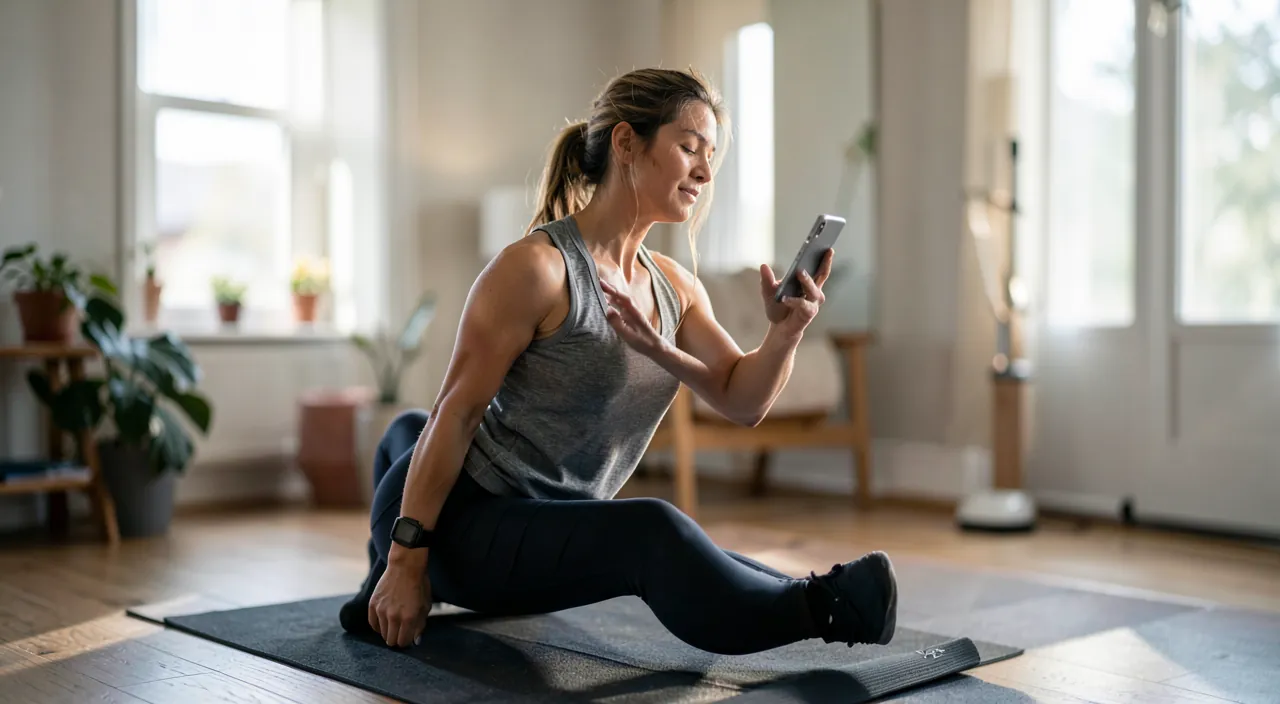
How to choose and practice safely
Here’s how to make the most of these apps effectively and safely. To CHOOSE: According to your LEVEL and GOALS—beginner or advanced? Getting back in shape, muscle building, flexibility, relaxation? Choose an app and a program that suit you; a beginner should start GENTLY (a “beginner” app or program). According to your TASTES—the best sport is the one you ENJOY and stick to: cardio, yoga, strength training, dance; try what you like. According to the EQUIPMENT and space—check that it offers sessions adapted to what you have (bodyweight if you have nothing). Beware of SUBSCRIPTIONS—many have a free part and paid options; start with the free version to test before committing. To PRACTICE SAFELY (essential): START progressively—especially if you’re a beginner or restarting after a break; go easy, don’t push; your body needs to adapt; progress comes with time, not in a day. WARM UP and STRETCH—a warm-up before, stretches after, reduce the risk of injury; good apps include them. Focus on the TECHNIQUE—do the movements CORRECTLY (the app shows how); a poorly executed exercise can injure you; better to do well and less than poorly and too much. LISTEN to your body—a pain (other than normal effort) is a STOP signal; don’t push through pain; adapt to your abilities. HYDRATE and REST—drink, and give your body rest days (muscles build during rest; overtraining injures). Arrange a SAFE SPACE—clear, non-slip floor, enough room to move. A few TIPS: REGULARITY matters more than intensity (better to do 20 minutes often than 2 hours once a month); set REALISTIC goals (to stick to in the long run); and keep the FUN (if it’s a chore, change activities). An IMPORTANT point on HEALTH: these apps are not healthcare professionals; if you have a health issue, a specific condition (heart, joints, pregnancy…), an injury, or any doubt, CONSULT a doctor BEFORE starting an intense program; always adapt to YOUR condition; if you feel unwell, stop and consult (see our guides on moving safely). In short, to choose well: according to your level, goals, tastes, equipment, by testing the free version. To practice safely: start gradually, warm up, focus on technique, listen to your body (pain is a stop), hydrate, rest, and arrange a safe space. Regularity, realism, and fun, and medical advice if needed: that’s how you move at home effectively and without injury.
The right reflex. Choose an app suited to your LEVEL and TASTES: if you’re a beginner or restarting after a break, start with a “beginner” program, GENTLY; and prefer an activity you LOVE (cardio, yoga, strength training, dance), because the best sport is the one you stick to long-term. Test the free version before committing to a subscription. But the essential thing is to practice SAFELY, to progress without injuring yourself. A few golden rules: START gradually (your body needs to adapt; progress comes with time, not in a day—don’t push at the start); WARM UP before and STRETCH after (good apps include this; it reduces the risk of injury); focus on the TECHNIQUE (do the movements correctly as the app shows; a poorly executed exercise can injure—better to do well and less than poorly and too much); and above all, LISTEN to your body: a pain (other than normal muscle effort) is a STOP signal, never a challenge. Hydrate, take REST days (your body recovers and strengthens during rest; overtraining injures), and arrange a clear, safe space (non-slip floor). Remember that REGULARITY matters more than intensity: 20 minutes often are better than 2 hours once a month; set realistic goals to stick to, and keep the fun (if it’s a chore, change activities). IMPORTANT health point: these apps are not healthcare professionals; if you have a health issue, a specific condition (heart, joints, pregnancy), an injury, or any doubt, CONSULT a doctor BEFORE starting an intense program, always adapt to YOUR condition, and if you feel unwell, stop and consult. An app suited to you, progressive and well-executed practice, listening to your body, and medical advice if needed: that’s how you benefit from home fitness to move more, effectively and without injury.
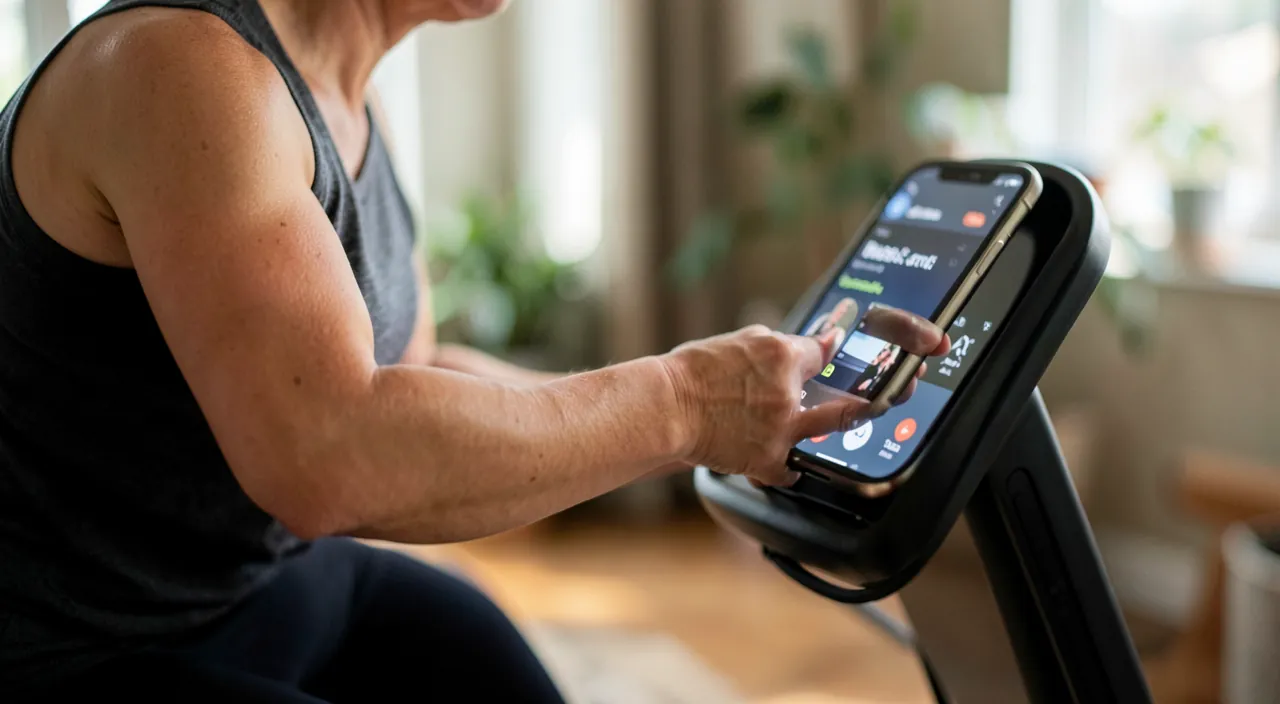
Move more, at your own pace and at home
The real benefit of these apps isn’t to achieve feats, but to make regular physical activity POSSIBLE for as many people as possible: move more, at your own pace, at home. A few thoughts. BARRIERS REMOVED: lack of time, the cost of a gym, intimidation, lack of know-how held many people back; home fitness guided removes these obstacles: you move when you want, at home, for free or almost, accompanied and without outside judgment; physical activity becomes accessible. REGULARITY, the key: for health, the important thing is to move REGULARLY, even moderately; the flexibility of home fitness helps you stick to it (no commute, short sessions possible); a little often is better than a lot rarely. The COMFORT of home: training without others watching reassures beginners and shy people; you dare to start, you progress at your own pace, without complexes. FUN before performance: the goal is to move and feel better, not to set records or have a “perfect” body; choose what you like, and make it a pleasure, not a punishment; that’s how you stick to it. SAFETY always: moving is good, but well: progressiveness, technique, listening to your body, medical advice if needed; sports should do you good, not injure you. A COMPLEMENT, not a substitute: home fitness is a great option, but varying (walking, getting fresh air, other activities) is beneficial; the app is one tool among others for an active life. The TECHNOLOGICAL MEASURE: don’t obsess over statistics and “performances” displayed; the important thing is to move and feel good, not to collect numbers. In short, home fitness apps guide you to exercise at home: sessions tailored to your level, little or no equipment, a virtual coach who accompanies and motivates you; flexible, accessible, and comfortable, they make regular physical activity possible at home, for everyone. To benefit from them: choose according to your level, goals, and tastes; and practice SAFELY (progressively, good technique, listening to your body, warm-up, rest, medical advice if needed). At the end of the day, these apps remove barriers to physical activity and make it accessible to everyone at home; their value is to help you MOVE MORE, regularly, at your own pace—a real benefit for health and morale. Without aiming for feats or performance, but the pleasure of moving and the well-being that follows: that’s how home fitness, guided and safe, becomes a lasting and rewarding habit. Move at your own pace, at home, safely—your body and morale will thank you.
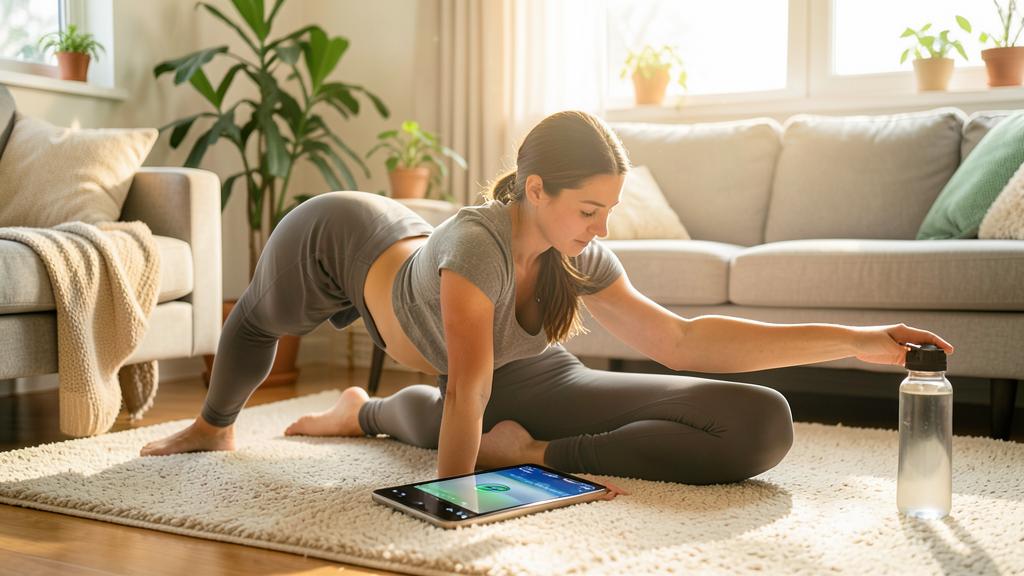
Warning: safety first, medical advice if needed, and these apps are not healthcare professionals. Key points. SAFETY BEFORE PERFORMANCE—poorly practiced sports INJURE: don’t push (especially as a beginner or restarting), start gradually, warm up and stretch, focus on the TECHNIQUE (a poorly executed movement can injure—better to do well and less), and above all LISTEN to your body: a pain (other than normal muscle effort) is a STOP signal, never a challenge to overcome; overtraining and rushing cause injuries that will keep you away from sports; progressiveness and rest are your allies. MEDICAL ADVICE—these apps don’t know YOUR health status or YOUR limits; if you have a health issue, a specific condition (heart, joints, blood pressure, pregnancy…), an injury, an advanced age, or any doubt, CONSULT a doctor BEFORE starting an intense program; always adapt to YOUR condition, and in case of discomfort (chest pain, abnormal shortness of breath, dizziness), stop immediately and consult. NOT HEALTHCARE PROFESSIONALS—an app is neither a doctor nor a real coach who sees you: it doesn’t correct your posture in real time, doesn’t know your medical history, and doesn’t replace professional advice; don’t take its programs or “health tips” as medical prescriptions. Other points: beware of programs promising MIRACULOUS or “quick” results (unrealistic, sometimes dangerous), be careful with expensive subscriptions (test the free version first), don’t OBSESS over statistics and “performance” (the important thing is to move and feel good, not to collect numbers), and arrange a SAFE space (clear, non-slip floor). Home fitness guided by an app is an excellent way to move more, provided you practice with CAUTION and common sense: progressiveness, good technique, listening to your body, rest, and medical advice if needed. The goal isn’t feats or a “perfect” body, but moving regularly and feeling better, without injuring yourself. A sport that does you good is a sport practiced safely and with pleasure: keep that in mind, and physical activity will remain an ally of your health, not a source of injury.
Frequently asked questions
Can you really build muscle or get back in shape at home with an app?
Yes: you can train effectively at home, guided by an app, for many goals (getting back in shape, muscle building, flexibility, cardio, relaxation). Apps offer guided sessions where a coach demonstrates the exercises, programs tailored to your level and goals, a variety of activities, and many bodyweight sessions (no equipment) or with minimal equipment. Many people make real progress this way. The keys to success: REGULARITY (moving often, even moderately, is better than intense sessions spaced out), CHOOSING an activity you enjoy (to stick to long-term), progressive and well-executed practice (good technique), and REALISTIC goals (results come with time, not in a few days—beware of “miracle” promises). Home fitness has real advantages: flexibility, accessibility (often free or affordable), comfort (at home, without outside judgment). It doesn’t necessarily replace everything (a real coach corrects posture, a gym offers equipment), but to move regularly and get back in shape, it’s an excellent option, to be practiced safely and at your own pace.
How to avoid injuring yourself while training alone at home?
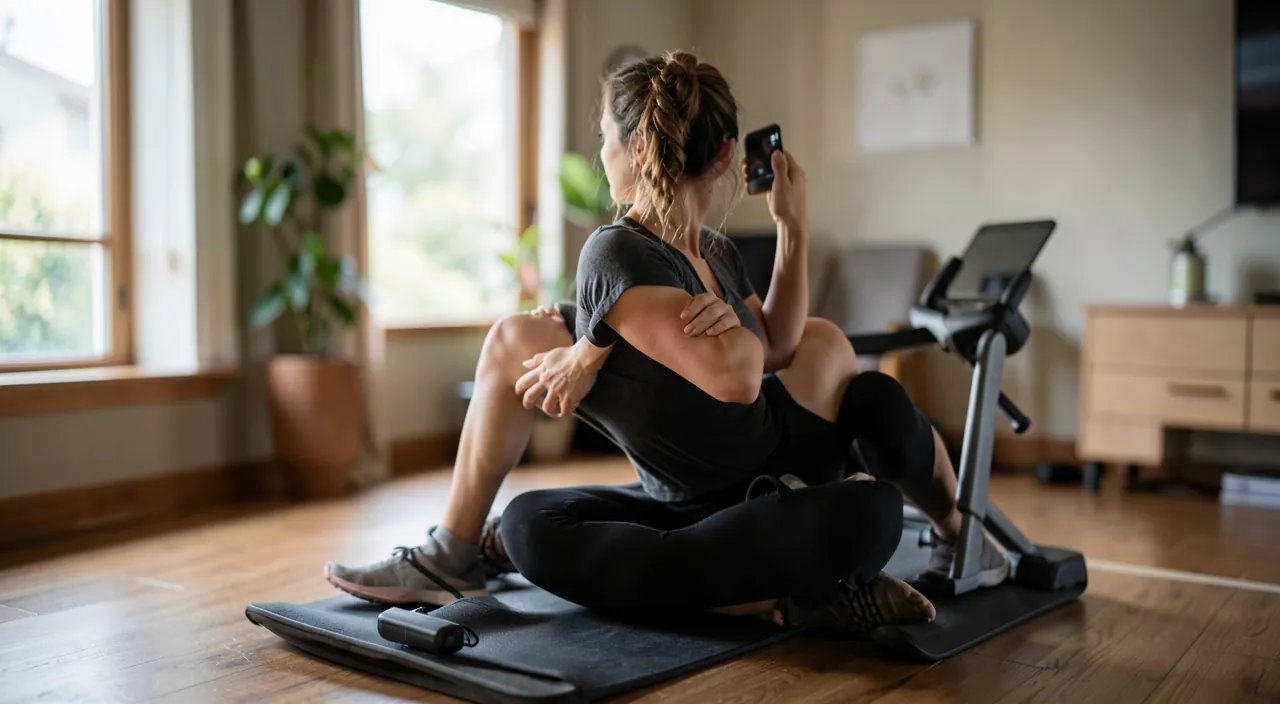
Several golden rules. START gradually: especially as a beginner or restarting, go easy, don’t push; your body needs to adapt. WARM UP before and STRETCH after (good apps include this). Focus on the TECHNIQUE: do the movements correctly as the app shows; a poorly executed exercise is a common cause of injury; better to do well and less than poorly and too much. LISTEN to your body: a pain (other than normal muscle effort) is a STOP signal, never a challenge; adapt to your abilities. Take REST days (your body recovers and strengthens during rest; overtraining injures), hydrate, and arrange a SAFE space (clear, non-slip floor). Finally, if you have a health issue, a specific condition, or any doubt, consult a DOCTOR before an intense program, and if you feel unwell, stop and consult. The app guides you, but doesn’t see you and doesn’t know your limits: it’s up to you to practice with caution. Progressiveness, good technique, listening to your body, and rest: these reflexes allow you to move at home effectively and without injury.
Should you consult a doctor before starting?
It depends on your situation, but in some cases, yes, it’s recommended. These apps don’t know your health status or your limits, and aren’t healthcare professionals. Consult a DOCTOR BEFORE starting (especially for an intense program) if: you have a health issue (heart, blood pressure, respiratory), a specific condition (joints, back, pregnancy), an injury or medical history, an advanced age, if you’ve been very sedentary for a long time, or if you have any doubt. The doctor can tell you what’s suitable for your condition and what to avoid. If you’re in good health and have no risk factors, you can generally start a moderate activity gently, but always listening to your body: if you feel unwell during exercise (chest pain, abnormal shortness of breath, dizziness), stop immediately and consult. In all cases, adapt to YOUR condition, start gradually, and don’t take an app’s programs as medical prescriptions. Better to have a reassuring medical opinion before starting than a problem during exercise; if in doubt, ask: your safety and health matter more than the urge to start right away.
What to remember
Home fitness apps GUIDE you to exercise at home, without a gym: guided sessions (a coach shows the exercises), programs tailored to your LEVEL and GOALS (getting back in shape, muscle building, flexibility, cardio, relaxation), a wide variety of activities, sessions of varying lengths, and little or NO EQUIPMENT (often bodyweight). Their advantages: FLEXIBILITY (when you want, at home, no commute or schedules), ACCESSIBILITY (often free or affordable, for all levels), COMFORT (at home, without outside judgment—reassuring for beginners), GUIDANCE (you know what to do), and REGULARITY (the ease helps you stick to it). They democratize physical activity by removing barriers (time, cost, intimidation, know-how). To choose well: according to your level (start gently as a beginner!), your goals, your tastes (the best sport is the one you enjoy and stick to), your equipment, by testing the free version before paying. But practice SAFELY, it’s essential: START gradually (don’t push), warm up and stretch, focus on the TECHNIQUE (a poorly executed movement injures—better to do well and less than poorly and too much), LISTEN to your body (pain is a STOP, never a challenge), hydrate, take REST (your body strengthens during rest), and arrange a safe space. REGULARITY matters more than intensity (20 minutes often are better than 2 hours rarely), set realistic goals, and keep the FUN. Crucial health point: these apps are NOT healthcare professionals (they don’t see you, don’t know your limits); in case of health issue, specific condition, injury, or doubt, CONSULT a doctor before an intense program, adapt to YOUR condition, and stop if you feel unwell. Beware of “miracle” promises and don’t obsess over statistics. At the end of the day, these apps help you MOVE MORE, regularly, at your own pace and at home—a real benefit for health and morale. The goal isn’t feats or a “perfect” body, but moving and feeling better, without injuring yourself. An app suited to you, progressive and safe practice, listening to your body, and medical advice if needed: that’s how home fitness becomes a lasting, rewarding, and healthy habit.
Want to go further with your phone and apps? Our practical training courses are for you.
Leave a Reply
You must be logged in to post a comment.