
Sleep apps promise to improve the one-third of life spent sleeping — the third that governs the other two: energy, mood, memory, health. They offer night tracking, sounds to fall asleep, smart alarms, and complete programs. How effective are they? Very — provided they’re used for what they do best: shedding light on habits and easing sleep, not obsessively scrutinizing curves. Here’s the breakdown between what’s useful and what’s gimmicky, and the method to finally make your phone serve your nights instead of eating into them.
Measuring your nights: what tracking really reveals
Sleep tracking comes through three channels: the smartwatch or fitness band (movements + heart rate — the most complete estimate: duration, regularity, approximate phases, nighttime heart rate), the phone placed near the bed (detection via microphone and movements — more basic but honest about duration and timing), and the simple self-report in the Health app (bedtime/wake-up times — already very informative). The real value isn’t in the details of the phases (the « deep sleep » estimated by a wrist sensor remains an approximation — sleep labs use electrodes, not accelerometers): it’s in the trends and correlations that two weeks of tracking make visible — the drifting bedtime, the actual duration (often an hour less than you think), the regularity (the most underestimated factor: going to bed at a fixed time matters more than « sleeping a lot »), and the cause-and-effect links — alcohol-heavy evenings, late dinners, evening exercise, screens in bed: their effects show up in black and white in the following nights. Use tracking as a 15-day mirror to identify YOUR two or three levers — that’s where the measurement pays off.
Sleep apps show you patterns in your sleep, like when you go to bed and how long you actually sleep. They can help you see what habits (like drinking alcohol or using your phone) affect your sleep. The key is to use this info to make small changes, not to stress over every detail.
A user tracks their sleep for two weeks and notices they fall asleep faster on nights when they avoid screens before bed. They also realize they often wake up at 3 a.m. after drinking coffee in the afternoon. By adjusting these habits, their sleep improves without needing any other changes.
Falling asleep: sounds, breathing, and nighttime companions
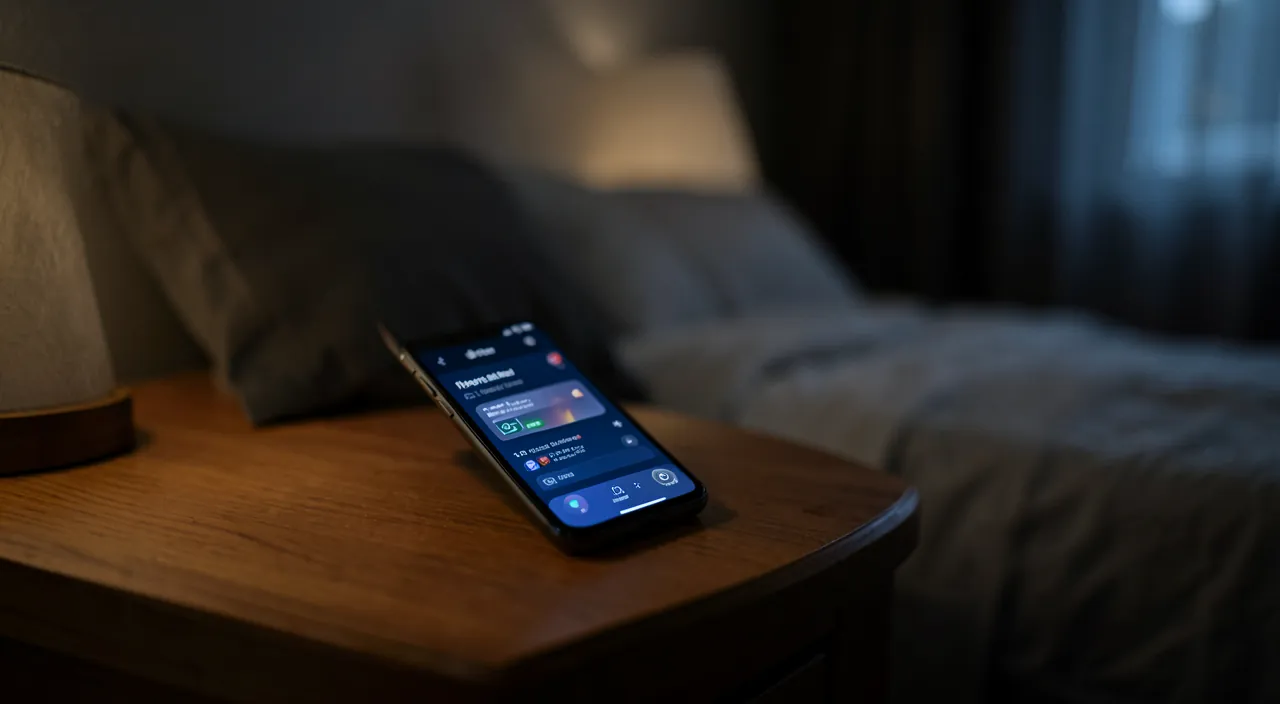
Second category, the most immediately effective: sleep aids. Soundscapes — rain, waves, white/pink noise, muted ambiances: they mask disruptive noises (neighbors, street, snoring partner) and create a conditioning signal (« this sound = sleep ») — with a timer, and choosing a constant sound rather than melodic (music grabs attention, regular noise dissolves it); sleep stories — the surprising success of the genre: deliberately slow narratives, read in a monotone voice, designed to disengage the mind from rumination (surprisingly effective for adults « who overthink » — the bedtime story principle has no age limit); breathing exercises and guided relaxations — heart coherence, body scan, ten minutes that ground the nervous system (the bridge between sleep apps and meditation apps, often the same); and the phone settings themselves — Sleep Mode that silences notifications, the screen that warms up in the evening, and the nighttime home screen stripped down: the best sleep app starts with a phone that stays quiet.
The right reflex. Establish the 30-minute ritual orchestrated by the phone — then without it: at a fixed time, Sleep Mode activates automatically (notifications silenced, screen dimmed), a sound or story starts with a timer… and the phone is placed out of reach — charger at the other end of the room or in the hallway, wake-up ensured by the watch or a classic alarm clock. The app prepares the night; the distance protects against scrolling relapses — the winning duo is a setting and a meter and a half.
Waking up: smart alarms and regularity
On the morning side, two contributions: the smart alarm — instead of a fixed time, a window (7 a.m.–7:30 a.m.) in which the app chooses the moment when your sleep is lightest (detected by movements): waking up in a light phase is much less abrupt than being ripped out of deep sleep — many users rank this as the top benefit of their app; and the gradual alarms — increasing light (dawn simulators, precious in winter), sounds that rise gently, watch vibration (which wakes you up without ringing — your partner will appreciate it). But the real morning revolution is elsewhere, and it’s free: the regularity of waking up — waking up at the same time every day (weekends included, within an hour) is the most powerful intervention in all of sleep science: it sets the internal clock, and evening sleep follows mechanically. The app then serves as a benevolent safeguard: the fixed wake-up time, reminders to go to bed calculated in advance (« for your 7:30 hours of sleep, go to bed at 11 p.m. »), and the regularity curve that rewards consistency — the dashboard of a single habit, but the right one.
What apps don’t fix: knowing when to hand over
Honesty dictates the scope: apps improve the sleep of ordinary sleepers with habits that can be improved — irregular bedtimes, difficulty falling asleep due to overthinking, noisy environment, unclear sleep hygiene: there, their results are real and quick. They do NOT treat sleep disorders: chronic insomnia (more than three months of frequent bad nights) requires dedicated care — Cognitive Behavioral Therapy for Insomnia, the gold standard, is available in serious digital programs and through professionals; severe snoring with breathing pauses (described by the partner, or revealed by app recordings — some apps detect snoring: listen to these excerpts) suggests sleep apnea — morning fatigue despite « complete » nights, daytime sleepiness: consultation, screening has come a long way, and treatment changes lives; and restless legs, sleepwalking, traumatic nightmares have their own pathways. The simple rule: the app optimizes healthy sleep, the doctor treats sick sleep — and the app can serve as a scout (its data documents the complaint), never as a substitute.
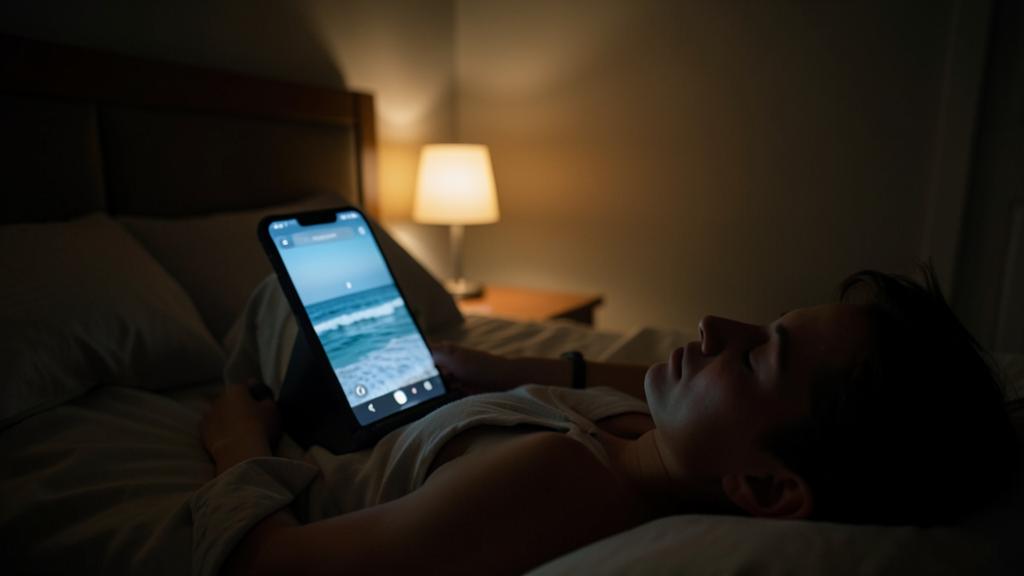
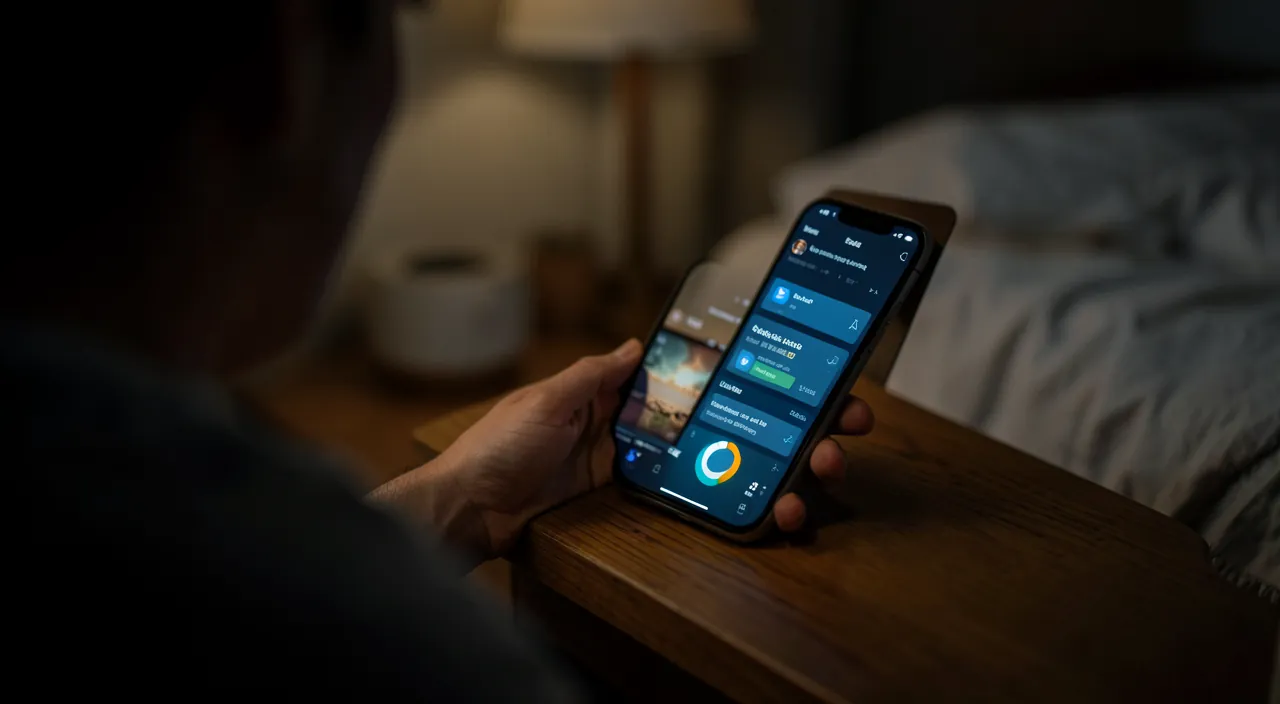
Beware of orthosomnia — the modern disorder of the connected sleeper: sleep performance anxiety, where you scrutinize your « score » every morning and a bad grade… ruins the day and causes anxiety the following night — the measurement becomes the cause of the problem it measures. The signs: compulsive checking, stressed bedtime « for the score, » bad mood correlated with the curve more than with actual form. The remedy: go back to the single judge: how do you feel during the day? An average score with great energy is a good night; an excellent score with chronic fatigue deserves a doctor, not an app. And if the measurement stresses you out: turn it off for a month — sleeping without a report card is also a right.
Frequently asked questions
Do you need a smartwatch to track your sleep?
No to start: the phone (or the simple entry of times) is enough to reveal trends and correlations — the essence of the value. The watch refines (precise duration, nighttime heart rate, vibration wake-up) and automates everything: a real comfort plus if you already wear one, not a prerequisite.
Is it a good idea to play « white noise » all night?
To mask a noisy environment, yes — at moderate volume. Otherwise, the timer (30-45 minutes) is preferable: the sound is for falling asleep, not for accompanying the whole night — and the ear unaccustoms itself better. For babies and children, very low volumes and at a distance: their hearing is precious.
My app shows little « deep sleep »: should I worry?
No — the estimation of phases by accelerometer is approximate, the displayed standards debatable, and individual variation huge. No decision is made based on this number. The only signals that deserve attention: persistent daytime fatigue, heard breathing pauses, chronic insomnia — and they are assessed in consultation, not in a graph.
What to remember
Sleep apps provide three real services: the mirror (two weeks of tracking that reveal actual times, drifts, and correlations — your personal levers), easier falling asleep (constant sounds, slow stories, guided breathing, phone put to sleep too), and instrumented regularity (waking up at a fixed time — the queen intervention —, bedtime reminders, waking up in a light phase). Their limits are just as clear: the estimated phases are indicative, the scores are not diagnoses, and chronic insomnia and apnea require care — the app documents, the doctor treats. And the supreme judge remains analog: your energy the next day. Used this way — two weeks of mirror, an evening ritual, a sacred wake-up time —, they keep their promise: giving the sleeping third of your life the place it deserves, without turning it into another exam.
Want to go further with your phone and apps? Our practical training is for you.
Leave a Reply
You must be logged in to post a comment.